





Why Not UW?: The Three Half-Truths Killing Unconventional Warfare

Why Not UW?: The Three Half-Truths Killing Unconventional Warfare: Substack| October 26, 2026
In the latest article for his new Substack page, retired U.S. Army Special Forces Chief Warrant Officer 5 and Small Wars Journal contributor Maurice “Duc” Duclos puts forth a vital analysis of three critical biases that weaken the case for unconventional warfare.
The Three Half-Truths
Duclos lays out the three pitfalls of UW:
1. The day after UW action—the ramifications of covert action-induced regume change
2. The partner—the detrimental weaknesses of partner forces essential to UW
3. Force protection and political risk—the unsuitability of UW to the dangers of the modern security environment
The Overthrow Bias
Duclos warns against bias in favor of regime change, a frequent but not necessary aspect of UW:
Overthrow is one of UW’s three doctrinal purposes, not a universal requirement. Yet professional military discourse repeatedly defaults to it as the standard.
The Composite Organism
He then considers the nuances of “the composite organism,” the sponsor-irregular partner hybrid that forms during the working arrangement of UW.
None of this makes partnership simple. As the proxy warfare theorist Amos Fox argues, partners’ interests and relative power can drift apart over time. A composite organism is a working arrangement, not a merger of interests, and its cohesion and durability have to be assessed, not assumed.
The With Obsession
Duclos then addresses the modality bias—the fixation of UW practitioners on the “with” of “by, with and through” alone.
The with model builds capacity and width through fighters trained and led side by side. The through model builds capability and depth, allowing the partner to carry support into areas foreign personnel cannot enter.
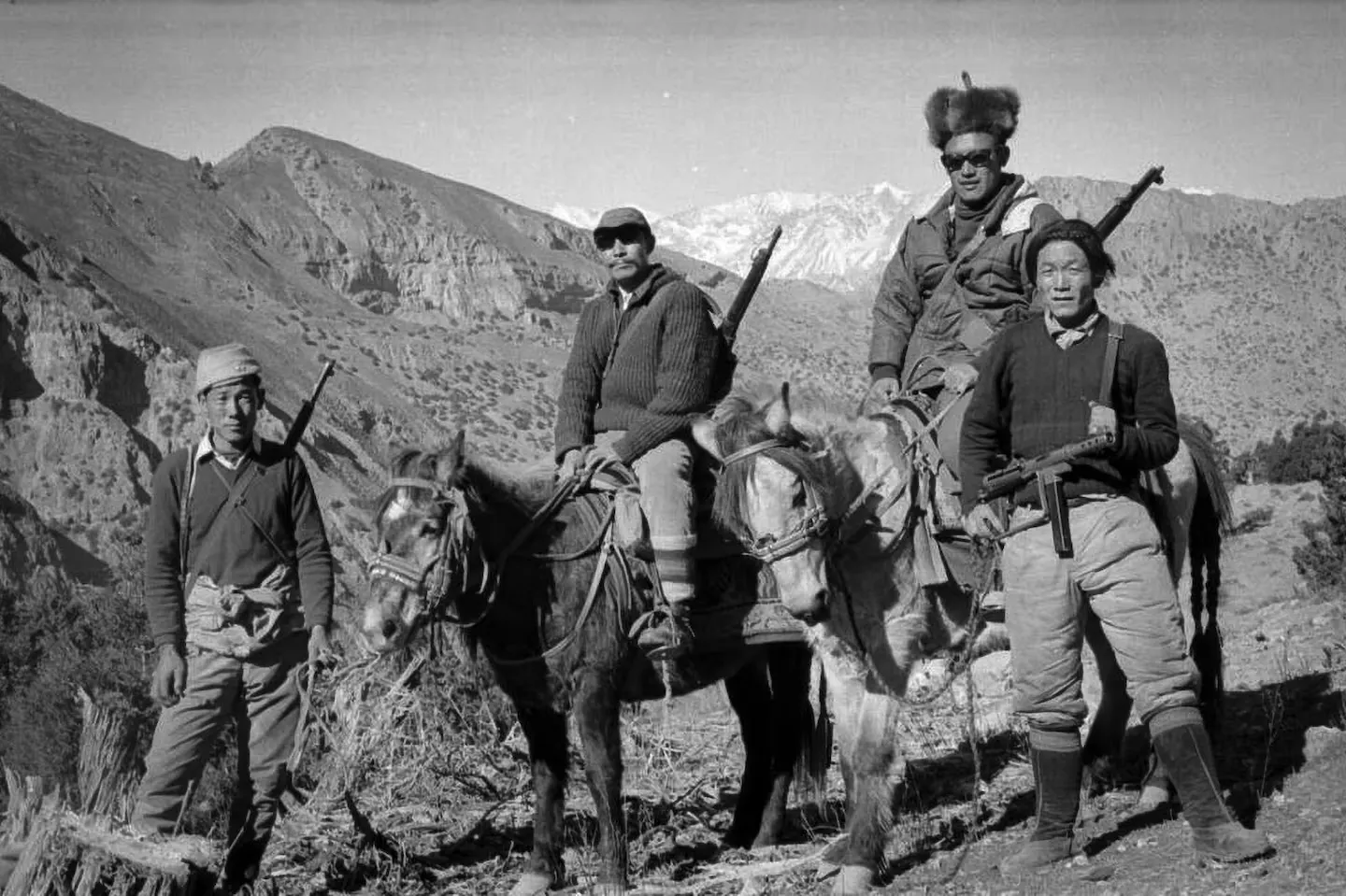
The Mustang Raid
Duclos highlights as a key case study for these questions a 1961 raid by Tibetan fighters into Chinese-held Tibet that resulted in an intelligence coup:
The historical case of Tibet, alongside the recent debate over the potential use of Iran’s Kurds, exposes three half-truths behind this default. Each rests on an incomplete reading of the doctrinal definition, turning a legitimate operational concern into a reason to rule out the option entirely. Because each contains a grain of truth, the resulting bias is easy to miss.
Why Not UW
The author concludes by laying out a crucial series of questions that should determine the usefulness of unconventional warfare in a given situation:
Five questions provide a better test. The first four ask whether UW could work. The fifth asks whether it should.
1. The task. What effect must the irregular partner produce (coercion, disruption, or overthrow), and against which adversary vulnerability?
2. The gap. What are the proposed partner’s current capabilities to complete that specific task, and what is missing?
3. The bridge. What can the sponsor provide (train, advise, assist, enable) to close the gap and build the composite organism, and do the authorities, access, and time exist to deliver them?
4. The modality. Can the sponsor work with the partner, or only through it, and what are the associated risks regarding sponsor exposure, loss of control, and compromised ground truth?
5. The right choice. Would employing this composite organism complement the joint force or serve policy better than the alternatives, once the adversary’s response and the aftermath are considered?
Interested in reading more of the author’s contribution to the discourse? Here are just some of his previous articles for Small Wars Journal:
- Visible vs. Valuable: Why Restructuring U.S. Special Forces Won’t Fix a Failure of Perception
- Defining the Indefinable: A Critical Analysis of Current Irregular Warfare Doctrine
While you’re here…
Check out Kurdish forces have posed a genuine headache on the viability of unconventional warfare:
For more coverage of irregular warfare in Tibet and the CIA-Tibet relationship:


