





(Re)making the A-Team | Irregular Warfare Initiative
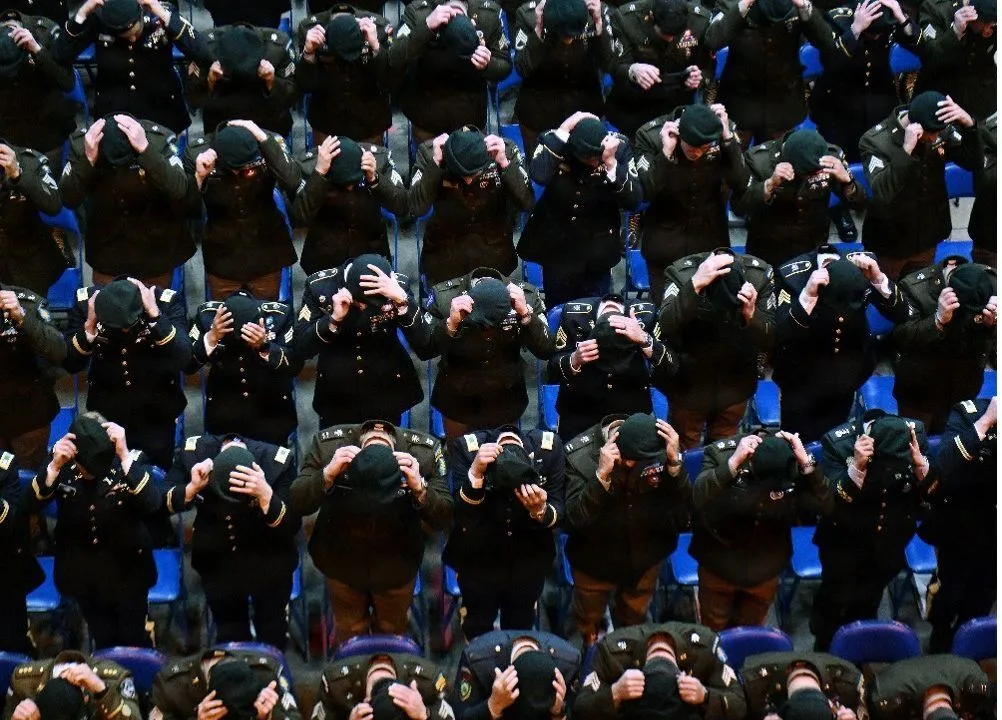

The United States Army Special Forces are becoming irrelevant, argues Col. Ned Marsh in an Irregular Warfare Initiative piece called “The Last A-Team: Special Forces Aren’t Special Anymore.”
What’s the Problem?
For one thing, they are too big. They conduct training operations in up to ninety countries annually. They are continually deployed to every combatant command. Before 9/11, Special Ops numbered 15,000. Now that’s up to 70,000. Quality over quantity was part of the mantra. This needs to be re-instilled.
“Army Special Forces are the B-52 of the United States Army: designed in the 1950s, continuously upgraded, still flying, still capable in certain environments, but never fundamentally redesigned for the world it now operates in.”
For another, they haven’t caught up with the digital age. Asymmetric warfare has expanded and evolved faster than Special Ops. Digital fluency, and the ability to operate in the digital realm, has gone by the wayside over the War on Terror. Adversaries, on the other hand, have adapted.
“As Salafist terrorism spread globally, SF counterterrorism efforts grew with it, spurring strike operations across multiple theaters simultaneously…. The institution answered the demand signal, but at a cost it has never honestly accounted for.”
And they simply were designed for a different world. They were created in the 1950s to operate in ambiguous, technical, remote environments. They worked with– and fought– forces in South East Asia, Korea, South America, and into the Middle East, largely the same way: analog; make contact, intersperse, train, organize, win. Things are different now. To put it bluntly, their track record in Iraq and against insurgencies in Africa is not that strong. Even in the Philippines and South America, success didn’t translate to stable governance.
Down This Road Before
In 2013, commander of USASOC Lt. Gen. Charles Cleveland published ARSOF 2022, a ten-year transformation roadmap that pointed directly to Special Operations’ Irregular Warfare mission-set as its central weakness and point to improve. He was spot on, writes Marsh. The institution, on the other hand, didn’t change.
The Fix
The current Special Forces model needs three things.
First, survivability in hyper-contested space. What we have was built with low-tech adversaries in mind adversaries with limited surveillance capabilities. Nowadays we face adversaries in mega cities with extensive surveillance, database capacity, and technology dominance. We simply won’t survive in modern China or North Korea.
Second, multi-domain capabilities. The modern battlespace fuses space, cyber, IT ops and other realms. The SF Qualification Course doesn’t teach this.
Third, real cultural know-how. “The adversaries SF would need to penetrate have the most closed, controlled, and surveilled populations on earth.” There is a gap between current skillsets and what is actually required to operate.
To get there, Marsh says we need three Rs: Redesign, Repurposing, and Restructuring.
In other words:
- Consolidate one Special Forces Group, one Civil Affairs Company, and one Psychological Operations Company within Joint Special Operations Command.
- Focus on a full-scale sprint to design, build, train, and test an updated model relevant to the contemporary and future environment.
- Bring elements back online for employment based on real priorities, not as part of global force management.
What Does This All Mean?
An institution in constant, overextended use lacks the ability to come for fresh air, look around, and reassess. That’s why “Special Forces remain an afterthought in operational planning to this day.” Time to take an honest look. In Marsh’s words: “It is time to bury the beret and build what comes next.”
~~~
While you’re here, check out Emina Umarov’s recent article: “Redefining Readiness: Why US Special Operations Forces Must Be Optimized for Irregular Competition.“

