




Commentary: How will the 2026 Brazilian Elections Affect Criminal Factions in Brazil?
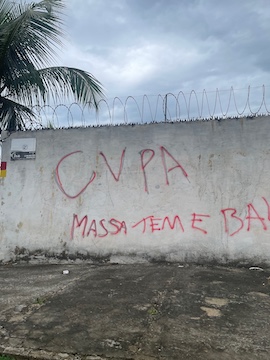

Brazilian criminal factions have become more diverse, fragmented, and transnational over the last decade, making them harder to contain. Kingpin strategies, the availability of guns, and the lack of collaboration between the investigative civil police and the ostensive military police between states contributed to this worrisome situation. In 2024, the Ministry of Justice and Public Security’s Secretariat for Penal Policy estimated that there were 88 gangs, most of them rooted in the penitentiary system.[1] The oldest and most notorious, the Red Command (Comando Vermelho – CV) and the First Capital Command (Primeiro Comando da Capital – PCC) are today not only acting in the southern states where they initially appeared, Rio de Janeiro and São Paulo. They operate in many states of the Federation, often in alliances with local groups, and internationally, including in Paraguay and at the Amazon border with Peru and Bolivia.[2] As the Red Command was the gang most targeted by police raids in the state of Rio de Janeiro, it spread to other eighteen states trying to conquer new markets.[3] In the international drug trade, Brazil has a permanent seat as a cocaine corridor exporter to Europe and a consumption site for various recreational drugs. Meanwhile, criminal factions have also expanded their grip over the real estate market, agriculture, environmental licensing, and politics.
Criminal gangs were central to the 2026 election debate, as violence continues to be Brazilians’ top concern, ahead of the economy, health, and corruption.[4] The far-right candidate Flavio Bolsonaro promised to label Red Command and PCC as terrorist groups in alignment with the US administration and advocated lowering the age of criminal responsibility to 16 years old. He also defended a tougher handling of prisoners and increasing the number of prisons, praising El Salvador’s measures.[5]
Lula, by contrast, in a desperate attempt to win the votes of those most worried by violence, adopted a new motto in the second round: “for the citizen protection, for the criminal prison (Para o cidadão, proteção; Para o bandido, prisão).” He also said, for the first time in his long political career, that he favored lowering the age of criminal responsibility for the most serious crimes.[6] The opposition criticized Lula for being too soft with criminals and allowing these groups to proliferate, as left wing candidates are generally associated with the human rights agenda. Yet this is not just a matter of federal responsibility, as state governors oversee the investigative and ostensive police and are the first responders for public security issues.
Brazil has the third-largest prison population in the world, the majority of which are overcrowded, which makes a convenient environment for the proliferation of gangs.[7] Amid the exchange of accusations between the left and the right, the Senate approved the proposed Public Security Amendment to the Constitution (PEC [Proposta de Emenda à Constituição] da Segurança Pública).[8] A victory of the federal government, the proposal aims at strengthening federal competencies to fight off criminal organizations, increase intelligence and police cooperation between states and cities, provide more funding for public security policies and rise penalties for being part of criminal gangs.
Yet, it must be highlighted that the lines between politics and organized crime are increasingly blurry, following Latin American trends. Former candidate Flavio Bolsonaro, currently living in the United States after fleeing a Federal Police money-laundering investigation, was linked to a series of scandals involving the use of part of his cabinet’s salaries to finance militia-related projects. He also paid tribute to a known hitman that works for the underworld, Adriano da Nóbrega, when he was Rio de Janeiro’s state deputy.[9]
Milícias (militias) were formed as “justice groups” to fight drug gangs in carioca outskirts in the 1980s, yet milícias have grown powerful, increasingly connected to the international drug trade.[10] Milicianos have a political project and act as “electoral herds” to ensure their candidates are elected in their zone as city councils, state and federal deputies.[11] Coincidence or not, Flavio Bolsonaro won in 86% of milícia-controlled areas.[12]
Investigations into the murder of the city councilor Marielle Franco, a left-wing feminist promising leader, revealed close ties between some state deputies, the state audit office and groups of milicianos that plotted her death. She threatened the thriving illegal land-grabbing business in the eastern zone (zona oeste).[13] When questioned during debate, Flavio Bolsonaro did not justify why he acted free of charge as a lawyer while he was Senator in Ana Clara’s case. Bolsonaro defended a policeman who killed the five-year-old child in front of her house while playing with a doll.[14]
The next government will face pressure to curb the growth of criminal gangs while cutting spending and promoting fiscal adjustment. Governmental responses will still depend on cooperation with the opposition, as the Liberal Party (Partido Liberal – PL) has a record of voting for state governors. Technical improvements in the National System of Public Security (Sistema Nacional de Segurança Pública – SUSP), enhancing police and intelligence cooperation, and investment in targeting organized crime finances are top measures that need to be prioritized in the coming years.
Endnotes
[1] “Segurança Pública e Crime Organizado no Brasil.” Fórum Brasileiro de Segurança Pública. 2024, https://publicacoes.forumseguranca.org.br/server/api/core/bitstreams/bf4dee40-c103-4dd9-8bf6-a62d5bbd0384/content.
[2] Marcos Alan Ferreira, Criminal Non-State Actors: Historical Developments and Impacts in South America. Cham: Springer Nature, 2025, https://doi.org/10.1007/978-3-031-92509-2.
[3] Op. Cit., “Segurança Pública” at Note 1.
[4] Victória Cócolo, “Quaest: 33% apontam violência como principal preocupação,” G1, 14 August 2026, https://g1.globo.com/politica/eleicoes/2026/noticia/2026/08/14/violencia-e-maior-preocupacao-entre-eleitores-mostra-quaest.ghtml.
[5] Renato Biazzi, “Flávio Encontra Ministro de Bukele Em SP, Ignora Violações Em El Salvador e Defende Mais Prisões: ‘tem Pouco Preso No Brasil, Tinha Que Ter Mais.’” TV Globo e G1 SP, 30 August 2026, https://g1.globo.com/sp/sao-paulo/eleicoes/2026/noticia/2026/08/30/flavio-encontra-ministro-de-bukele-em-sp-ignora-violacoes-em-el-salvador-e-defende-mais-prisoes-tem-pouco-preso-no-brasil-tinha-que-ter-mais.ghtml.
[6] Kellen Barreto, “Lula defende pela primeira vez redução da maioridade penal para crimes hediondos.” G1 (Globo), 16 October 2026, https://g1.globo.com/politica/noticia/2026/10/16/lula-defende-reduzir-maioridade-penal-para-16-anos-em-casos-de-crimes-hediondos.ghtml.
[7] “Política Penitenciária Está Em Debate No Senado; Brasil Tem a 3a Maior População Carcerária Do Mundo,” TV Senado. 2024, https://www.youtube.com/watch?v=dQ0oxRScJgo.
[8] Proposta de Emenda à Constituição n° 18, de 2025 (Proposed Amendment to the Constitution No. 18, of 2025). See “Senado aprova PEC da Segurança Pública sem redução da maioridade penal,” Senado Federal (Brazil), 11 March 2026, https://www12.senado.leg.br/noticias/materias/2026/11/03/senado-aprova-pec-da-seguranca-publica-sem-reducao-da-maioridade-penal.
[9] “Adriano Da Nóbrega, Major Ronald e Peixe: Veja Histórico de Flávio Bolsonaro Com Milicianos,” Brasil de Fato. 19 October 2026, https://www.brasildefato.com.br/2026/10/19/adriano-da-nobrega-major-ronald-e-peixe-veja-historico-de-flavio-bolsonaro-com-milicianos/.
[10] Bruno Paes Manso. A república das milícias: Dos esquadrões da morte à era Bolsonaro. São Paulo: Ed. Todavia, 2020.
[11] “Relatório Final da Comissão Parlamentar de Inquérito destinada a investigar a ação de milícias no âmbito do Estado do Rio de Janeiro.” Rio de Janeiro: Assembleia Legislativa do Estado do Rio de Janeiro. Comissão Parlamentar de Inquérito. 2008, https://static.poder360.com.br/2024/01/relatorio-final-cpi-das-milicias-marcelo-alerj-2008.pdf.
[12] Jan Niklas, “Flávio Teve Vitórias Acima de Sua Média Em Áreas de Milícia e Dominadas Pelo Crime No Rio.” Economico Valor. 2026, https://valor.globo.com/politica/eleicoes-2026/noticia/2026/10/21/flvio-teve-vitrias-acima-de-sua-mdia-em-reas-de-milcia-e-dominadas-pelo-crime-no-rio.ghtml.
[13] Ana Pompeu and Constança Rezende. “Procuradoria diz que assassinato de Marielle foi o ápice de desavenças entre os Brazão e o PSOL.” Folha de São Paulo. 9 May 2024, https://www1.folha.uol.com.br/cotidiano/2024/05/promotoria-diz-que-assassinato-de-marielle-foi-o-apice-de-desavencas-entre-os-brazao-e-o-psol.shtml.
[14] Jeniffer Cavalcanti and Talita Brandão, “A Morte de Ana Clara e a Batalha Contra a Necroinfância No Brasil.” The Conversation, 5 November 2026, https://doi.org/10.64628/ADE.ythtxu9wh.



Commenting is available to active SWJ members and staff.