Third Generation Gangs Strategic Note No. 61: Drone Strikes from Haitian ‘Task Force’ PMSC Vectus Global Kill Over Twelve-Hundred People
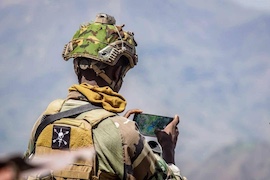

From March 2025 to January 2026, at least 1,243 people have been confirmed killed by drone strikes attributed to a Haitian state-sponsored ‘Task Force’ created by Haitian Prime Minister Alix Didier Fils-Aimé. This ‘Task Force’ is a part of a contract with a new private military and security company (PMSC) called Vectus Global, led by former Blackwater PMSC leader Erik Prince.[1] Some of the death toll from drone strikes are individuals who were not affiliated with any criminal armed group, including children.[2] The situation in Haiti is that of a full blown criminal insurgency, as well as a massive humanitarian tragedy. Ultimately, contracted mercenaries are engaging in legally questionable activities to stave off violent armed gangs from taking over full control of the capital Port-au-Prince.
Key Information: “Haiti: Drone Strikes Put Residents at Risk.” Human Rights Watch. 10 March 2026, https://www.hrw.org/news/2026/03/10/haiti-drone-strikes-put-residents-at-risk:
Haitian security forces and private contractors working with them have conducted extensive and apparently unlawful lethal drone strikes, Human Rights Watch said today. The strikes, at least some of which appear to be deliberate extrajudicial killings, have been carried out with quadcopter drones armed with explosives in densely populated urban areas, in some cases killing and injuring dozens of people, including children and other residents who are not members of criminal groups.
According to data from multiple sources reviewed by Human Rights Watch, at least 1,243 people were killed by drone strikes in 141 operations between March 1, 2025, and January 21, 2026, including at least 43 adults who were reportedly not members of criminal groups, and 17 children. The data also shows that the drone strikes injured 738 people, at least 49 of whom were reportedly not members of criminal groups.
“Dozens of ordinary people, including many children, have been killed and injured in these lethal drone operations,” said Juanita Goebertus, Americas director at Human Rights Watch. “Haitian authorities should urgently rein in the security forces and private contractors working for them before more children die.”
The United Nations Integrated Office in Haiti has attributed the drone attacks in Haiti to a specialized “Task Force” established by Prime Minister Alix Didier Fils-Aimé that is operated with support from the private military company Vectus Global. The US ambassador to Haiti has confirmed that the US State Department issued a license to Vectus Global to export defense services to Haiti.
Key Information: “Situation of Human Rights in Haiti: Report of the United Nations High Commissioner for Human Rights. A/HRC/61/74.” United Nations Office of the High Commissioner for Human Rights (OHCHR). 17 May 2025, https://www.ohchr.org/sites/default/files/documents/hrbodies/hrcouncil/sessions-regular/session61/advance-version/a-hrc-61-74-auv.pdf:
During the period under review, at least 61 per cent of all casualties were documented during security forces operations. Of these, 16 per cent were members of the population not involved in the violence, including young children. The involvement of a private military company – in particular through the use of armed drone strikes and helicopter gunfire – raise serious concerns, as such conduct could be characterized as targeted killings, inconsistent with international human rights law.
Vectus Global’s first operation took place on 1 March 2025. Since then, it began conducting a series of drone strikes and firing from helicopters targeting gang members in the capital, particularly in Cabaret, Cité Soleil, Croix-des-Bouquets, Delmas, Kenscoff, Léogâne, Pétion Ville, Port-au-Prince, and Tabarre. Between 1 March 2025 and 15 January 2026, among the casualties documented during these drone and helicopter operations primarily targeting gang members – were 60 persons not affiliated with gangs killed (28 men, 19 women, seven boys and six girls), and 49 injured (nine men, 30 women, seven boys and three girls). These individuals were struck in proximity to the targeted locations. For instance, in September 2025, four children playing in a street in Simon Pelé (Cité Soleil) were killed by explosive blasts from drones launched at a nearby party attended by gang members.
Key Information: “Haiti: More than 1,600 People Killed in the First Quarter of 2026, a Human Rights Situation That Remains Extremely Worrying.” United Nations Integrated Office in Haiti–BINUH. 8 May 2026, https://binuh.unmissions.org/en/accueil/press-releases/haiti-more-than-1600-people-killed-in-the-first-quarter-of-2026-a-human:
According to the United Nations Integrated Office in Haiti (BINUH), during the first quarter of the year (January–March 2026), at least 1,642 people were killed and 745 others injured.
… Overall, during the quarter, gang members were responsible for 27% of those killed and injured. They were also responsible for sexual violence, including gang rapes or cases of sexual exploitation, against more than 292 victims, mainly women and girls aged 12 to 17. Sexual violence continues to be used by gangs as a means of punishing populations living under their control, like the trafficking of children.
In parallel with this gang violence, BINUH estimates that 4% of murders and injuries are attributable to self-defence groups targeting gang members and people suspected of collaborating with them.
Finally, more than 69% of those killed or injured during the quarter were the result of operations carried out by security forces against gangs, sometimes supported by a private military company using drones. Of all the victims of drone strikes, 69 were members of the population, including five children. Two girls aged seven and nine are among the seriously injured, following the fall of a drone in the courtyard of their home, in Martissant, in the month of March.
Key Information: “Brokers and Patrons: Unstitching Gangs from Haiti’s Political Fabric.” Global Initiative Against Transnational Organized Crime. March 2026, https://globalinitiative.net/wp-content/uploads/2026/03/Brokers-and-patrons-Unstitching-gangs-from-Haitis-political-fabric-GI-TOC-March-2026.pdf:
Since March 2025, the government has turned to explosive drones as its key instrument of military action. Between 1 March and 20 September 2025, UN reporting attributed at least 547 deaths to drone operations, including those of 527 alleged gang members and 20 civilians, and 489 injuries, of which 28 were civilians. The tactical effect of drone operations on criminal groups has been significant, forcing leaders to move constantly, and limiting their capacity to conduct attacks in broad daylight. However, despite this onslaught, no major gang leaders have been neutralized or arrested. Instead, drone pressure has produced adaptation. Gang leaders have reportedly fortified buildings, dug underground shelters and surrounded themselves with civilians to deter strikes. The latter did not stop the authorities. A drone strike on 23 September 2025, in the area of Simon Pelé, in Port-au-Prince, killed 15 civilians, including eight children. This marked the first recorded case of drone fire in a dense residential area.
Since gangs are using civilians as human shields, the latter risk becoming part of gangs’ warfare strategy – used simultaneously as camouflage and as defensive infrastructure. This makes security operations both deadly and tactically complex. This pattern has been observed in Bel-Air: since the beginning of 2026, at least 50 civilians have reportedly been killed, and 5,800 individuals have been displaced as a result of security operations. According to interviews conducted in Port-au-Prince, ground police forces are going door to door, with direct support of explosive drone strikes. The protection of civilian lives in neighbourhoods where residents are often constrained by gang leaders to remain, and where avenues for safe exit are virtually non-existent, does not appear to be consistently prioritized. The resulting dynamics resemble destructive urban warfare; while producing short-term territorial gains, they are unlikely to offer a long-term solution.
Key Information: “Quarterly Report on Human Rights Situation in Haiti: January–March 2026.” United Nations Integrated Office in Haiti–BINUH. Accessed 27 May 2026, https://binuh.unmissions.org/sites/default/files/2026-05/Q1%202026%20-%20ENGLISH.pdf:
According to data from the HRS, 24 per cent of the people killed or injured were members of the population who were not associated with gangs and lived in the capital. They were struck by stray bullets or by drone explosions while they were in their homes or in the streets. Among these victims were 11 children killed and 10 others injured. During security force operations, one member of the Haitian National Police (HNP) was killed and nine others were injured.
In line with the trend observed since March 2025, two types of interventions were carried out: on the one hand, ground operations, conducted notably by specialized units of the Haitian National Police (HNP), sometimes supported by the Armed Forces of Haiti (FAd’H) and the Gang Suppression Force (GSF); and, on the other hand, operations in support of the fight against gangs involving the use of explosive drones and a foreign private military company.
… Similarly, no significant progress has been reported in the case concerning the alleged acquisition of drones by gang members in the Dominican Republic. To date, 23 of the 36 individuals implicated have been released by the public prosecutor’s office at the Port-au-Prince Court of First Instance.
Third Generation Gang Analysis
The composition of Haitian State and state-sponsored forces have shifted from 2025 to mid-2026. The ineffective Multinational Security Support (MSS) mission transitioned into the Gang Suppression Force (GSF) in October 2025, with the first of its troops finally setting foot in Haiti half a year later.[3] Meanwhile, Haitian Prime Minister Alix Didier Fils-Aimé contracted with Vectus Global, a newer PMSC operated by Erik Prince of the infamous Blackwater PMSC, to form the ‘Task Force’ to conduct operations in Haiti, including the use of explosive drone strikes.[4] From March 2025 to January 2026, at least 1,243 people have been killed from explosive drones alone, including 17 children.[5] The Vectus Global tied ‘Task Force’ is a parallel state operation running in tandem with the far less bellicose, and some might argue less effective, GSF which is operating under the principals of international law and the rules of armed conflict.
The use of explosive drones is having many negative effects on the Haitian state. First, the Haitian gangs have quickly adapted to the new threat by forcing their leaders to move constantly in the shadows, fortifying buildings against explosions, and creating underground safe havens. The leadership of the gangs are using Haitian civilians as a ‘collateral shield’ by surrounding themselves with large numbers of non-combatants including unarmed women and children.[6] The latter tactic does not seem to have stopped drone operations. In early 2026, a drone operation was conducted on the residence of a gang leader, killing 69 members of the citizenry, including five children.[7] The number of monthly incidents involving armed drones have also significantly increased in the fourth quarter of 2025 into 2026. More than 20 incidents occurred in January 2026 compared to the prior year, but with the death toll increasing over 60%, from under 150 in November 2025 to over 250 in the beginning of 2026.[8]
Second, there is a disconnect in the acceptability of the use of weaponized drones between the Haitian state and the international community. The United Nation Human Rights Council warned that the use of armed drone strikes and helicopter gunfire would draw serious concerns, being seen as “targeted killing” which is inconsistent with international human rights law.[9]
Finally, the use of explosive drones has created a new layer of fear for Haitian citizens. For example, a drone attack occurred on 20 September 2025 in the Simon Pelé neighborhood of Port-au-Prince in which 13 people, including 3 children were killed.[10] Haitian residents told Human Rights Watch that drones “are a constant source of terror, leaving some afraid to leave their homes” and “that people kept their children close when they saw them for fear of what happened on September 20.”[11]
Mixed messages are being sent to the Haitian populace with the international GSF and the state sponsored ‘Task Force’ functioning under differing rules of engagement. Jeopardizing the trust of the community—per the ‘Task Force’ activities—is the opposite of appropriately addressing a criminal insurgency:
Restoring and expanding this public trust requires tactical proficiency, cooperation from all levels of government, and deployment of the most effective legal regime available. This may require enacting new criminal laws or penal codes, it may require augmenting criminal law with IHL in cases where the violence rises to sufficient intensity and organization to constitute a NIAC, it certainly must respect International Human Rights Law, and it must sustain the Rule of Law while protecting the community and sustaining human rights and due process.[12]
The use of explosive drones may provide short-term gains against the Haitian criminal insurgency but, until a comprehensive approach is presented and maintained that fosters trust in the Haitian citizens, it is feared such actions will only sustain criminal efforts:
Efforts deployed by the Haitian authorities to address impunity and corruption are encouraging. Nevertheless, shortcomings continue hindering respect for human rights, including the rights to life and personal integrity, as well as economic, social and cultural rights. The lack of governance and accountability also contribute to emboldening criminal networks, enabling them to pursue increasingly aggressive territorial expansion. Ensuring security while respecting human rights, tackling corruption and impunity, and focusing on comprehensive prevention, protection and community-based approaches—with particular attention to children—are paramount.[13]
While it is acknowledged that Haiti is a failed-state teetering on the brink of total collapse, with Vectus Global initially engaging all alone in a last-ditch effort to stave off armed gangs’ complete takeover of the capital Port-au-Prince, the question is at what cost is targeted weaponized drone use acceptable vis-à-vis the tenets of international law.[14]
The situation in Haiti is especially protracted and complex. It is, in our view, an example of the extreme edge of criminal insurgency where the state implodes.[15] Haiti is dominated by gang violence with around 90% of Port-au-Prince under gang control.[16] This territorial control is expanding to other parts of the state with increases in both gang violence and state counter-gang violence including the use of drones against gangs.[17] The situation has continued to devolve since we first reported that “Barbecue,” G9 gang leader Jimmy Chérizier, declared his ‘revolution’ against the state in 2021.[18] The situation demands more than drones strikes and employing PMSCs to repress criminal armed violence.[19] These gangs operating as criminal armed groups (CAGs) are political as well as criminal actors and stabilizing the situation demands political discourse and diplomacy as well as policing and stability and support operations to secure the conditions necessary for stable governance and preserving the rule of law.[20]
Sources
“Haiti: Drone Strikes Put Residents at Risk.” Human Rights Watch. 10 March 2026, https://www.hrw.org/news/2026/03/10/haiti-drone-strikes-put-residents-at-risk.
“Situation of Human Rights in Haiti: Report of the United Nations High Commissioner for Human Rights. A/HRC/61/74.” United Nations Office of the High Commissioner for Human Rights (OHCHR). 17 May 2025,https://www.ohchr.org/sites/default/files/documents/hrbodies/hrcouncil/sessions-regular/session61/advance-version/a-hrc-61-74-auv.pdf.
“Haiti: More than 1,600 People Killed in the First Quarter of 2026, a Human Rights Situation That Remains Extremely Worrying.” United Nations Integrated Office in Haiti–BINUH. 8 May 2026, https://binuh.unmissions.org/en/accueil/press-releases/haiti-more-than-1600-people-killed-in-the-first-quarter-of-2026-a-human.
“Brokers and Patrons: Unstitching Gangs from Haiti’s Political Fabric.” Global Initiative Against Transnational Organized Crime. March 2026, https://globalinitiative.net/wp-content/uploads/2026/03/Brokers-and-patrons-Unstitching-gangs-from-Haitis-political-fabric-GI-TOC-March-2026.pdf.
“Quarterly Report on Human Rights Situation in Haiti: January–March 2026.” United Nations Integrated Office in Haiti–BINUH. Accessed 27 May 2026, https://binuh.unmissions.org/sites/default/files/2026-05/Q1%202026%20-%20ENGLISH.pdf.
Endnotes
[1] “Quarterly Report on the Human Rights Watch in Haiti: July – September 2025.” United Nations Integrated Office in Haiti–BINUH. Accessed 28 May 2026, https://binuh.unmissions.org/sites/default/files/2026-01/Quarterly Report on the human rights situation in Haiti (july – september 2025).pdf.
[2] “Situation of Human Rights in Haiti: Report of the United Nations High Commissioner for Human Rights. A /HRC/61/74.” United Nations Office of the High Commissioner for Human Rights (OHCHR). 23 March 2026,https://www.ohchr.org/sites/default/files/documents/hrbodies/hrcouncil/sessions-regular/session61/advance-version/a-hrc-61-74-auv.pdf.
[3] “First Troops from UN-Backed Gang Suppression Force Arrive in Haiti.” Al Jazeera. 26 May 2026, https://www.aljazeera.com/news/2026/4/1/first-troops-from-un-backed-gang-suppression-force-arrive-in-haiti.
[4] Op Cit., BINUH at Note 1.
[5] “Haiti: Drone Strikes Put Residents at Risk.” Human Rights Watch. 10 March 2026, https://www.hrw.org/news/2026/03/10/haiti-drone-strikes-put-residents-at-risk.
[6] “Brokers and Patrons: Unstitching Gangs from Haiti’s Political Fabric.” Global Initiative Against Transnational Organized Crime. March 2026, https://globalinitiative.net/wp-content/uploads/2026/03/Brokers-and-patrons-Unstitching-gangs-from-Haitis-political-fabric-GI-TOC-March-2026.pdf.
[7] Op Cit., BINUH at Note 1.
[8] Op Cit., Human Rights Watch at Note 5.
[9] “Situation of Human Rights in Haiti: Report of the United Nations High Commissioner for Human Rights. A /HRC/61/74.” United Nations Office of the High Commissioner for Human Rights (OHCHR). 23 March 2026,https://www.ohchr.org/sites/default/files/documents/hrbodies/hrcouncil/sessions-regular/session61/advance-version/a-hrc-61-74-auv.pdf.
[10] “Civilians in Haiti Are Caught in Deadly, Escalating Violence” Médecins Sans Frontières/Doctors Without Borders. 2 October 2025.https://www.doctorswithoutborders.org/latest/civilians-haiti-are-caught-deadly-escalating-violence.
[11] Op Cit., Human Rights Watch at Note 5.
[12] John P. Sullivan, “The Challenges of Territorial Gangs: Civil Strife, Criminal Insurgencies and Crime Wars.” Revista Do Ministério Público Militar. Vol. 46, no. 31, 2023: pp. 13–30, https://revista.mpm.mp.br/rmpm/article/view/149.
[13] Op Cit., OHCHR at Note 2.
[14] This is further promoting a debate on whether PMSCs should be directly engaging organized crime—though it could be argue using them is likely better than witnessing total state capture by criminal entities. See Walter Kemp and Romain Le-Cour-Grandmaison, “Guns for hire: Should private military companies take on organized crime?” Global Initiative Against Transnational Organized Crime. 8 September 2025, https://globalinitiative.net/analysis/haiti-military-companies-organized-crime-gangs/?fbclid=IwY2xjawSIUmVleHRuA2FlbQIxMQBicmlkETFXakdrYkdJeWtsbTQ3Q3I3c3J0YwZhcHBfaWQQMjIyMDM5MTc4ODIwMDg5MgABHjFG_q-Ki5Q_ffIXPs5NRqBxHbewbmm0Eowe5u4msiWWXLkZimJ4vTwyQ-p__aem_tSKvsU9zlsyXJ3Yo-juAow.
[15] See John P. Sullivan, “From Drug Wars to Criminal Insurgency: Mexican Cartels, Criminal Enclaves and Criminal Insurgency in Mexico and Central America. Implications for Criminal Insurgency.” Working Paper No9, Paris: Fondation Maison des sciences de l’homme. April 2012, p. 6, https://shs.hal.science/halshs-00694083v1/document.
[16] “Ghada Waly, “UN Security Council Briefing on the Situation in Haiti.” United Nations Office on Drugs and Crime. 2 July 2025, https://www.unodc.org/unodc/en/speeches/2025/020725-unsc-briefing-haiti.html.
[17] Evens Sanon and Dánica Coto, “Drone attack in gang-controlled slum in Haiti kills at least 8 children, injures 6 others.” AP (Associated Press). 22 September 2025, https://apnews.com/article/haiti-drone-attack-cite-soleil-children-killed-339677efb2e5926b182f1934fafd6e5e.
[18] John P. Sullivan and Robert J. Bunker, “Third Generation Gangs Strategic Note No. 41: Criminal Insurgency and ‘Revolution’ in Haiti?” Small Wars Journal. 2 July 2021, https://smallwarsjournal.com/2021/07/02/third-generation-gangs-strategic-note-no-41-criminal-insurgency-and-revolution-haiti/.
[19] Diego Da Rin and Renata Segura, “There’s a Way for Haiti to Dismantle Its Gangs. It Might Not Like It.” New York Times. 10 April 2026, https://www.nytimes.com/2026/04/10/opinion/haiti-gangs-drones-massacre.html.
[20] John P. Sullivan and Keith Weston, “Afterward: Law Enforcement Response Strategies for Criminal-states and Criminal-soldiers. Global Crime. Vol. 7, No. 3–4,. 2006: pp. 615–628, https://www.tandfonline.com/doi/abs/10.1080/17440570601073897.
For Additional Reading
John P. Sullivan and Robert J. Bunker, Eds., Third Generation Gangs and Transnational Cartels. Bloomington: Xlibris, 2025.
Jean-michel Newberg and Robert J. Bunker, “Third Generation Gangs Subject Bibliography No. 2: Haitian Gangs.” Small Wars Journal. 11 March 2025, https://smallwarsjournal.com/2025/03/11/third-generation-gangs-subject-bibliography-no-2-haitian-gangs/.
Jean-michel Newberg, Robert J. Bunker, and John P. Sullivan, “Third Generation Gangs Strategic Note No. 57: Designation of Haitian Viv Ansanm and Gran Grif as Foreign Terrorist Organizations (FTOs).” Small Wars Journal. 5 June 2025, https://smallwarsjournal.com/2025/06/05/third-generation-gangs-strategic-note-no-57-designation-of-haitian-viv-ansanm-and-gran-grif-as-foreign-terrorist-organizations-ftos/.
Robert J. Bunker, John P. Sullivan, and Jean-michel Newberg, “Third Generation Gangs Strategic Note No. 58: Contracting of Former PMC Blackwater Founder Erik Prince by the Haitian Government for Port-au-Prince Intervention.” Small Wars Journal. 18 June 2025, https://smallwarsjournal.com/2025/06/18/third-generation-gangs-strategic-note-no-58-contracting-of-former-pmc-blackwater-founder-erik-prince-by-the-haitian-government-for-port-au-prince-intervention/.
John P. Sullivan and Robert J. Bunker, “Third Generation Gangs Strategic Note No. 41: Criminal Insurgency and ‘Revolution’ in Haiti?” Small Wars Journal. 2 July 2021, https://smallwarsjournal.com/2021/07/02/third-generation-gangs-strategic-note-no-41-criminal-insurgency-and-revolution-haiti/.