





Train to Lie: Small-Unit Deception on a Transparent Battlefield

Abstract: Drones and multi-domain sensors make the modern battlefield transparent, rendering traditional efforts to hide from enemy detection insufficient. To increase survivability and regain the tactical initiative, the United States Army must institutionalize and train small-unit deception tactics. By adopting a formal framework and empowering young leaders to innovate, the Army can mitigate critical vulnerabilities associated with persistent enemy observation.
Introduction: A Warning from the Near Past
Between 2014 and 2022, a collection of articles from defense thinkers offered urgent warnings: the proliferation of cheap, commercially available drones would fundamentally change warfare. However, these arguments were often confined to professional forums and did not translate into widespread institutional change; the broader U.S. Army certainly did not fully internalize this message. As a result, the Army found itself scrambling to adapt when the drone-saturated reality of the Ukraine war arrived. The Army is now paying the price for failing to act on these early warnings.
The Army is at a similar inflection point today with tactical deception. If the Army ignores its rising importance, it risks playing catch up in a decade when it is forced to learn these lessons in blood. While the Army has long recognized the value of deception at operational and strategic levels, it remains an ad-hoc skill at the small unit level, largely untaught in our schools and unrecorded in our doctrine. The proliferation of multi-domain sensors has made the battlefield transparent. In this new reality, simply trying to hide better isn’t enough. Instead, we must proactively manage what the enemy sees and turn their tools to identify us into a critical vulnerability through disciplined and institutionalized small-unit deception.
Challenges of a Transparent Battlefield
The Army must now operate under the assumption that its ground units are always under observation. The modern battlespace is a web of layered sensors; our near-peer competitors have demonstrated a sophisticated capability to detect any electronic emission, triangulate its position, and immediately cue indirect fires. This electronic warfare (EW) threat is overlaid with widely available satellite images and mass-produced aerial drones that can loiter for hours and unmask any movement with powerful thermal and night-vision cameras.
While these foundational tactics, techniques, and procedures (TTPs) remain essential, they are fundamentally reactive and highly fallible – camouflage nets tear, perfect discipline is difficult to maintain through the stressors of large-scale combat operations (LSCO), and dispersion demands increased electromagnetic signatures to maintain cohesion.
Current conflicts provide undeniable proof of this new reality. In Ukraine, the sheer density of unmanned aerial vehicles (UAV) and electronic warfare sensors means that virtually no part of the front line remains unobserved. This threat consists of two powerful elements: a mix of cheap, one-way attack drones capable of destroying main battle tanks and sophisticated electronic warfare systems that can intercept encrypted tactical communications in nearly real time. Outside of the Ukraine War, the use of Iranian-made Shahed UAVs by both state and non-state actors in the Middle East further demonstrates the lethality and reach of such systems against conventional forces.
In response to these threats, our institutional default is to double down on our existing survivability toolkit: better camouflage, stricter emissions discipline, and wider dispersion. While these foundational tactics, techniques, and procedures (TTPs) remain essential, they are fundamentally reactive and highly fallible – camouflage nets tear, perfect discipline is difficult to maintain through the stressors of large-scale combat operations (LSCO), and dispersion demands increased electromagnetic signatures to maintain cohesion. Relying solely on these TTPs means we are always a step behind, hoping our opponent’s sensors fail to find us and relegated to purely reactive measures when they do. We must add a proactive layer to our survivability posture: small-unit deception.
Deception: An Old Art for a New Reality
A drone spotting a single fighting position or an EW asset detecting the radios of a friendly squad provides actionable intelligence directly to enemy small-unit commanders who can bring operational-level assets to bear. For the first time in history, an individual soldier is visible at the highest levels.
Relying solely on existing countermeasures places the Army in a perpetual, resource-intensive race against an adaptive enemy. When concealment fails, we must deceive. The history of combat provides a rich precedent for the value of deception. From the operational feints of the U.S. Army’s “Ghost Army” and its inflatable tanks in World War II (Rick Beyer and Elizabeth Sayles, The Ghost Army of World War II), to the tactical diversions of the British Special Air Service in North Africa (Ben Macintyre, SAS: Rogue Heroes), and the electronic subterfuge of Military Assistance Command Vietnam-Studies and Observation Group (MACV-SOG) teams in Vietnam (John L. Plaster, SOG), the principle remains the same: manipulate the enemy’s perception to create an advantage.
However, when viewed through a modern lens these historical examples reveal a fundamental shift. Historically, deception was largely reserved for higher echelons as a way to counter an enemy’s reconnaissance and lethal effect assets. The actions of a squad were largely irrelevant to an enemy brigade commander. Today, that is no longer true. A drone spotting a single fighting position or an EW asset detecting the radios of a friendly squad provides actionable intelligence directly to enemy small-unit commanders who can bring operational-level assets to bear. For the first time in history, an individual soldier is visible at the highest levels.
This level of transparency means we must push the principle and practice of deception down to the lowest levels. By empowering our squads to use false Observation Posts (OP), decoy obstacles, and unoccupied thermally enhanced tents, they can become architects of their own survival and turn a critical vulnerability into their most effective defense.
Defining Deception for the Modern Battlefield
Current Army doctrine has a gap in coverage. FM 3-13.4 (Army Support to Military Deception) describes Military Deception (MILDEC) and Tactical Deception (TACDEC), but only covers deception at the brigade, division, and theater levels. No doctrine specifies any approved vernacular that defines the localized deception tactics required for modern survival, nor are there established references to guide the creation of a framework for decentralized use. To win on a transparent battlefield, we must bridge this doctrinal gap by formally defining and managing the different levels of deception.
Doctrinal Deception (MILDEC and TACDEC)
As currently defined in applicable Army doctrine, Doctrinal Deception is the classic, high-level effort to mislead an enemy’s analytical mind—primarily the unit intelligence section and commander—to achieve an operational or strategic effect. It is highly synchronized and controlled at the highest levels of a theater command (MILDEC) and operationally as low as a brigade (TACDEC). Modern training continues to refine this capability:
- During a Joint Pacific Multinational Readiness Center (JPMRC) rotation, my brigade established a deception taskforce to mimic the brigade Command Post (CP). Using a combination of physical decoys and electronic emitters, the taskforce created a convincing signature that drew the attention of a supporting team from the Army’s Space and Missile Defense Command Center of Excellence (SMDC CoE). Following the training event, the SMDC team later confirmed they had identified the false CP and were prepared to engage it with jamming and signal denial. Through this successful deception, my brigade’s actual command post remained unobserved, aided by a misleading naming convention for all WiFi pucks used by the real brigade CP.
Small-Unit Deception
The point is not the specific TTP, but the fact that we do not currently emphasize, record, or institutionalize this creative thinking. We don’t have a formal process to measure the effectiveness of these TTPs or to capture them for future use, relying almost entirely on the isolated ingenuity of individual junior leaders.
Small unit deception must be conceptualized and trained at our squad, platoon, and company levels distinct from any current military deception doctrine. This lowest level of deception is not intended to manipulate an enemy theater commander or his staff but to increase the survivability of a fighting position, fool the enemy into wasting their time and effort, or give a squad a decisive advantage in the opening seconds of a fire fight. The following examples demonstrate the breadth of possibilities:
- As an OPFOR platoon leader at the Joint Readiness Training Center (JRTC), my platoon was tasked to disrupt a rotational training unit’s entry into their area of operations. A small team emplaced a realistic-looking improvised explosive device (IED), constructed from a painted air tank and wires, on a key road. Following their standard procedures, the training unit’s lead convoy halted and secured the area while waiting for a brigade-level explosive ordinance disposal (EOD) team to arrive. This single, low-cost deception by a three-man team held the convoy stationary for over 12 hours, significantly disrupting the training unit’s operational timeline.
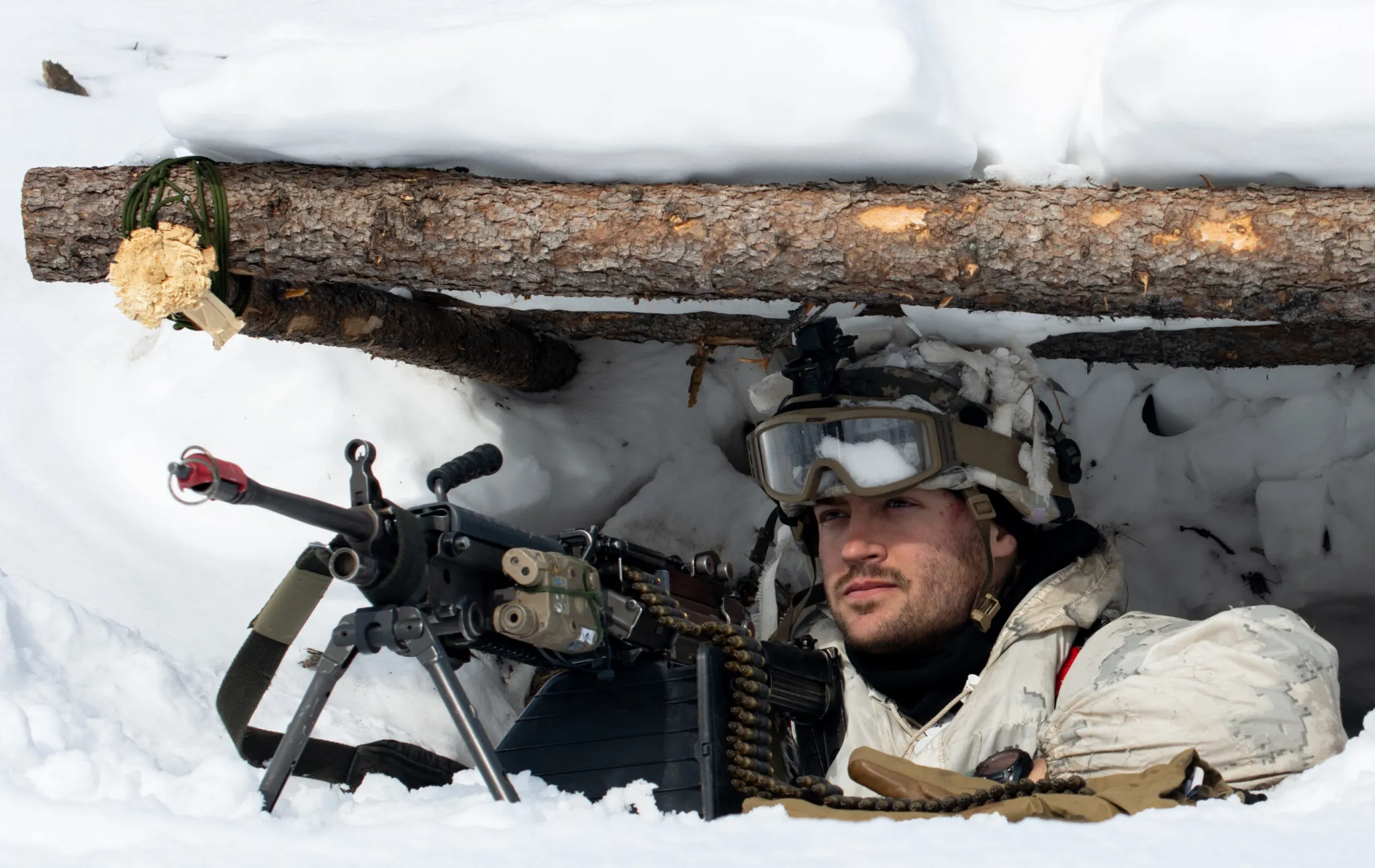
- During an exercise in Finland, my Troop integrated a multi-layered deception effort to assist our delay of an opposing force (OPFOR) comprised of a Finnish task force with an attached tank company. First, we established decoy OPs with thermal signatures in predictable, high-value terrain. This successfully baited the Finns into expending significant artillery on empty positions, leaving our real observation posts undetected. Second, our scouts emplaced dummy anti-tank mines along the enemy’s likely avenue of approach. These decoy mines caused the lead enemy tanks to halt, creating perfect targets for our anti-tank teams. This initial deception created a secondary effect: complacency. After clearing the fake mines, OPFOR advanced with less caution, driving them directly into our real anti-tank minefields.
- At a brigade training event in Alaska, my Troop tailored our deception efforts to exploit the specific TTPs of a U.S. OPFOR. Knowing this opponent favored using EW assets to cue their drones, we emplaced “ghost radios” broadcasting in unoccupied areas. These were co-located with heated arctic tents and surrounded by false snowmobile trails to create a believable, multi-domain signature. The deception successfully triggered OPFOR’s collection cycle: their EW assets detected the signal and cued a reconnaissance drone to investigate. The drone operator saw a heat signature and trails, confirming a “valid” target. This, in turn, occasionally triggered the launch of one-way attack drones, forcing OPFOR to spend significant time and effort destroying an empty tent, kilometers from our actual positions.
These examples stretch across multiple environments, but the principles are universal. A tanker at the National Training Center (NTC) can create a false thermal signature for a tank hull after a night movement. A Forward Support Company in Hawaii can emplace empty crates on an unused jungle intersection to bait enemy drones to investigate. A platoon defending key terrain can create a false fighting position to give an attacking enemy something other than them to shoot at. The point is not the specific TTP, but the fact that we do not currently emphasize, record, or institutionalize this creative thinking. We don’t have a formal process to measure the effectiveness of these TTPs or to capture them for future use, relying almost entirely on the isolated ingenuity of individual junior leaders.
This ad-hoc innovation is not unique to U.S. training environments; it is an emergent reality on the battlefields of Ukraine. Reports indicate both Ukrainian and Russian forces are using similar small-unit deception tactics to survive. The Ukrainian military has employed wooden decoys of high-value assets like HIMARS missile launchers, successfully baiting Russia into expending expensive cruise missiles on worthless targets. On the electronic front, Russian forces are employing deception measures that “generate a large number of fake UAVs on enemy systems and replicate ground control stations.” The fact that soldiers on both sides independently develop and employ these TTPs out of battlefield necessity is the clearest possible indication that small-unit deception is no longer a niche skill but a core component of modern tactical survivability.
Unintended Consequences
Danger lies in the unmanaged intersection of these two levels. Without clear guidance, a platoon leader could execute a “small-unit” deception that has unintended operational effects. A well-intentioned company commander who renames their WiFi puck to “Brigade Main” could catastrophically draw enemy attention toward a real high-value asset the Brigade is trying to conceal. For decentralized mission command to be effective, small units must be able to act without asking for permission at every turn. Therefore, it is essential for tactical leaders to have a clear framework that distinguishes between authorities.
A Call to Action – Institutionalizing Deception
Harnessing the power of deception while managing its inherent risks requires a deliberate and structured approach. To empower junior leaders to act decisively without jeopardizing the broader operational picture, we must develop a formal system that categorizes deception techniques and establishes clear approval authorities. Adopting a framework such as the one proposed below provides the necessary structure to enable decentralized execution while ensuring actions remain synchronized. It is the starting point for building this capability across the army.
Proposed Doctrinal Framework:
| Category | Description | Examples | Approval Authority |
| Military Deception
(MILDEC) Current Doctrine |
Deliberate actions to mislead adversary decision-makers at the operational/strategic level to influence the theater campaign. | Theater-wide feints, massive ghost communications networks simulating Division/Corps movements, fake staging areas. | Division, Corps, or Theater Commander (IAW FM 3-13.4) |
| Tactical Deception
(TACDEC) Current Doctrine |
Deception in support of battles and engagements to influence enemy battalion/brigade-level decisions and shape the local scheme of maneuver | Establishing a fake Battalion/Brigade TOC, large-scale false obstacle breaching operations, a fake Role 1. | Battalion or Brigade Commander (requires express approval and synchronization within the operational scheme of maneuver) |
| Small-Unit Deception – Maneuver
(SUD-M) Proposed Doctrinal Framework |
Techniques designed to influence enemy platoon/company-level maneuver or draw sustained tactical ISR attention. | A false obstacle belt, a simulated platoon patrol base, renaming a WiFi puck to a misleading name. | Pre-approved for Company Commanders (requires Battalion Commander notification) |
| Small-Unit Deception – Local
(SUD-L) Proposed Doctrinal Framework |
Techniques with effects strictly limited to the immediate tactical area, used primarily to increase survivability and waste enemy tactical assets/resources. | False thermal signatures, decoy individual fighting positions, misleading tracks, a single false radio emitter. | Pre-approved for Team/Squad/Platoon Leaders (requires Platoon Leader or Company Commander notification) |
For this framework to function, commanders must empower their subordinates through the genuine application of Mission Command. This requires commanders to provide clear intent that specifies the desired deceptive effects and the acceptable level of risk and trust the disciplined initiative of junior leaders to achieve those effects. In turn, subordinate leaders must earn the trust of their leaders by demonstrating their ability to execute small-unit deception without neglecting the fundamentals of security and survival. Crucially, experimentation must occur during training, where commanders must treat failures as learning opportunities, not career liabilities. With Mission Command as the foundation, leaders at all levels should take the following actions:
- Foster and Capture Imagination: Soldiers at the front line are best positioned to devise creative and believable deceptions. We must not only empower this creativity but also create a formal process to capture it. Deception TTPs should be a mandatory block on After Action Reports (AARs) so that individual brilliance can become institutional knowledge.
- Resource and Mandate Experimentation: Commanders must dedicate time and resources for deception experimentation. To support this, units should issue simple, low-cost “Deception Kits” at the platoon level, containing items like reusable thermal blankets and decoy antennas to make deception a tangible, resourced requirement.
- Integrate into the Battle Rhythm: Deception must be a reflexive action, not an afterthought. It must be integrated into our established Priorities of Work, immediately following security and maintenance, to frame it as a critical component of survivability. A real fighting position protects you from fires; a fake one draws that fire elsewhere. Together, they keep soldiers alive.
Conclusion
The reality of the modern battlefield is one of constant observation. Our traditional methods of concealment are no longer sufficient for survival. History teaches us that when concealment fails, deception becomes paramount. We must institutionalize the use of deception at the small-unit level, especially given that even our smallest elements are visible to enemy commanders. By formally defining the different levels of deception and adopting a doctrinal framework to manage their use, we can empower our junior leaders to proactively ensure their own survival. This requires a renewed commitment to Mission Command and a dedication to foster imagination, resource experimentation, and integrate deception into our daily battle rhythm. We must train to lie, because on the transparent battlefield, the truth will get you killed.
Acknowledgments
The author gratefully acknowledges Lieutenant Colonel Daniel Ludwig for his mentorship, which was instrumental in formulating the paper’s central thesis, and for his critical insights into Brigade-level deception operations. The author also thanks First Sergeant Darren Link, whose collaboration in developing and executing the deception tactics described herein provided the practical foundation for this research.


