





Distributed Combat Power: How Ukraine is Redefining Fires, Electronic Warfare, and Air Defense at the Tactical Level
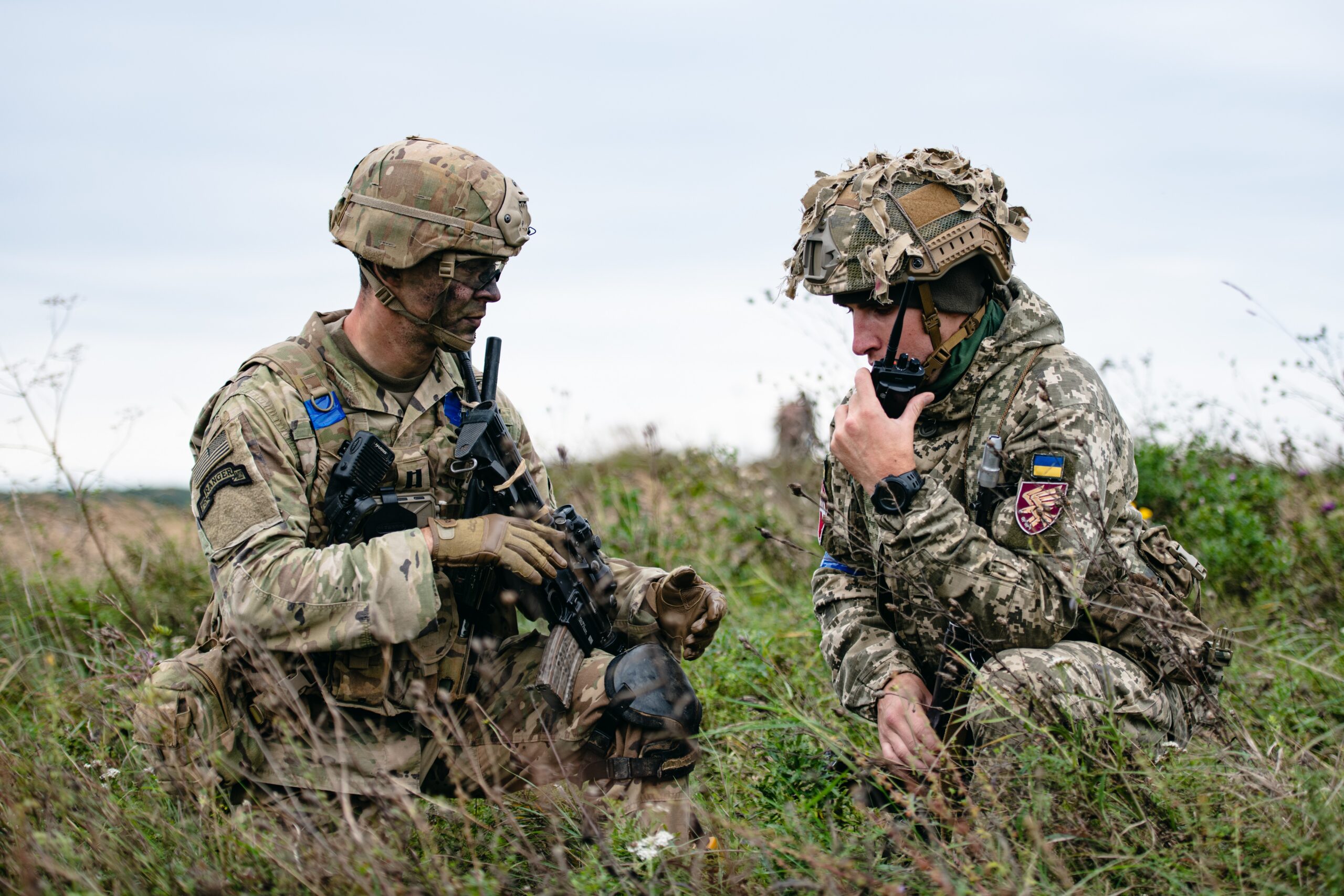

The insights in this article are drawn from the author’s experience serving with the Security Assistance Group–Ukraine (SAG-U).
Abstract
The war in Ukraine reveals a fundamental shift in how combat power is generated at the tactical level. The proliferation of cheap, rapidly adaptable systems has enabled a profound decentralization of leadership and responsibilities across fires, electronic warfare, and air defense. In contrast, U.S. Army formations, shaped by decades of operational dominance, retain a comparatively centralized model that may leave them ill-prepared for the demands of a persistently contested environment. This article examines Ukrainian adaptations—both technological and cultural—across three warfighting functions and draws lessons for the U.S. Army.
Introduction
The U.S. Army fields some of the most technologically advanced infantry brigades in the world. These formations possess an extensive array of capabilities, including encrypted communications, precision fires, protected mobility platforms, and access to national-level intelligence reachback. Platform for platform, few adversaries can match the sophistication of these systems. Moreover, the U.S. Army’s rigorous training cycles and professional military education system ensure that brigades are manned by tactically proficient soldiers.
Yet the war in Ukraine suggests a growing asymmetry in how tactical effectiveness is generated. Ukrainian brigades—operating under persistent unmanned aerial vehicle (UAV) surveillance, continuous electronic warfare (EW), degraded GPS and communications, and constant artillery and drone threats—have adapted inexpensive, rapidly modifiable systems to solve complex tactical problems. These platforms have been distributed far and wide, resulting in a profound decentralization of leadership and responsibility across warfighting functions. From the agricultural fields of the Donbas to the urban strongholds of Kharkiv, Ukrainian forces at the battalion, platoon, and squad level actively manage and conduct EW, counter-unmanned aerial systems (cUAS), and execute their own kill chains.
The recent Hedgehog 2025 exercise in Estonia illustrates the lethality of this combination of ubiquitous, low-cost technology and entrepreneurial junior leadership. During the multinational exercise involving over 16,000 troops from 12 NATO countries, a small team of roughly ten Ukrainian drone operators—acting as the opposing force—rendered two NATO battalions, including U.S. forces, combat ineffective.
U.S. formations remain the most lethal in the world. However, the Ukrainian battlefield demonstrates how the proliferation of low-cost systems has enabled the decentralization of combat power to the lowest levels. As these technologies have become more accessible, tasks associated with fires, EW, air defense, and beyond have shifted to lower echelons in parallel. In contrast, U.S. formations remain comparatively centralized, shaped by recent operational experiences, stringent command authorities, and reliance on higher echelons and adjacent units to set conditions for maneuver. This is not a direct comparison of military strength, but rather an observation about leadership, adaptability, and survivability in a contested environment.
The Contested Brigade
For the past twenty years, the U.S. Army’s primary warfighting formation—the infantry brigade—has been built, trained, and equipped to deploy as a stand-alone formation in support of expeditionary operations worldwide. These brigades were tailored to the operational environment of the Global War on Terrorism: uncontested airspace, effective precision fires, freedom of maneuver, and a technologically inferior enemy.
The Russo-Ukrainian war, alongside threats from near-peer adversaries such as China, has accelerated a shift in how the. military understands the future operating environment. As reflected in successive National Defense Strategy documents, the Joint Force must now be prepared to operate “across warfighting domains” and throughout the full spectrum of conflict. In response, the Army has adopted multi-domain Operations (MDO) as its operational framework, emphasizing the integration of capabilities across domains to create localized advantages against sophisticated anti-access and area-denial systems.
MDO and large-scale combat operations (LSCO) have become a rallying cry for the Army, permeating every level of the institution from professional military education to leader professional development sessions. This conceptual shift has driven meaningful changes in structure and technology. For example, the Army Structure initiative, or ARSTRUC, has inactivated cavalry squadrons in Stryker and Infantry Brigade Combat Teams (BCTs); established Multi-Domain Task Forces (MDTFs) to penetrate A2/AD networks, and created cUAS battalions to address drone threats. And the Transformation in Contact (TiC) initiative delivers new equipment directly to operational units for experimentation. Together, these efforts reflect meaningful progress in adapting to the changing character of warfare.
However, technological innovation, doctrinal adaptation, and structural reform are not sufficient on their own. A clearer picture of the remaining gap emerges when examining how Ukrainian tactical formations employ these capabilities at lower echelons. Ukraine’s most significant adaptation is not the technology itself, but how formations from the brigade level down to the squad have absorbed and operationalized it. Lower-echelon units routinely assume responsibility for localized air defense, fires, and other functions traditionally associated with higher headquarters.
These developments are driven by necessity. Ukrainian units cannot assume air superiority, spectrum dominance, or the successful suppression of enemy air defenses before maneuver. Instead, they operate under the expectation that these domains will remain contested throughout the fight.
In contrast, despite the Army’s adoption of MDO and LSCO concepts, an implicit assumption persists within maneuver formations in the U.S. Army: that higher and adjacent echelons will successfully shape the battlefield before maneuver begins. This assumption is reinforced by training scenarios that prioritize validation of Mission Essential Tasks (METs) over realism. In a future fight, if shaping operations prove incomplete, U.S. formations may find themselves solving problems that Ukrainian units already address as routine.
Fires
Few aspects of the war in Ukraine have evolved as rapidly as the fires warfighting function. Since the First World War, combined arms warfare has largely centered on artillery as the ‘King of Battle,’ with maneuver forces relying on centrally coordinated fires to suppress enemy positions and enable movement. The composition of U.S. Army BCTs largely reflects this paradigm. Mortars, tube artillery, and attached precision systems such as the M142 HIMARS enable accurate strikes against high-value targets, while digital fire-control networks synchronize sensors and shooters across the formation.
Within American formations, this process remains largely centralized. Mortar sections are controlled at the company level, mortar platoons at battalion, and artillery companies at brigade. During a firefight, it is largely the responsibility of the platoon leader or company commander and their respective fire support specialists to trigger preplanned targets or dynamically call for fire.
Although soldiers and noncommissioned officers (NCOs) are trained in call-for-fire procedures, fires are generally treated as a capability requested from specialists rather than generated organically by small units. Training reinforces this distinction. Fire Support Coordination Exercises (FSCX), for example, are typically reserved for company commanders, platoon leaders, and fire support officers, reflecting a fires process that remains centralized in both planning and execution.
In Ukraine, the character of the fires fight has shifted dramatically. The modern frontline now includes a broad ‘gray zone’, often extending ten kilometers or more, where neither side exercises full control of the territory, and persistent drone surveillance makes movement extremely hazardous. Artillery and mortar systems remain essential, but their survivability and responsiveness are constrained by the constant threat of unmanned aerial systems (UAS).
The proliferation of drones capable of both Intelligence, Surveillance, and Reconnaissance (ISR) and strike has also expanded the fires warfighting function beyond centralized artillery and mortars into a network of low-cost platforms able to rapidly identify and engage targets. The resulting ‘fires-intel fusion’ means that tasks once concentrated in artillery battalions and fire support elements are now increasingly executed by small units operating near the Forward Line of Troops (FLOT).
Ukrainian brigades employ a diverse mix of unmanned systems to generate tactical fires. Although formations vary—partly because Ukrainian Corps often raise funds and equip units independently—most brigades field at least one drone strike company, and in some cases entire drone battalions. However, these capabilities are not confined to specialized units.

Figure 1. Ukrainian FOXTAC UGV.
Source: Ukrainian Ministry of Defense, 2024.
FPV and reconnaissance drones are also ubiquitous at the company and, increasingly, the platoon and squad level. Junior leaders, including NCOs, are expected to know how to build, operate, and employ UAS systems. They understand the capabilities and limitations of each platform, and how weather, terrain, and the electromagnetic spectrum—particularly Russian jamming—affect employment. They frequently modify or repair equipment themselves rather than relying on specialists from an adjacent unit. When a lower-echelon Ukrainian unit identifies an enemy position it cannot immediately strike, the information is rapidly passed to higher headquarters through software such as Delta, contributing to a continuously updated Common Operating Picture (COP) and enabling follow-on fires.
The most significant shift, however, is conceptual. Ukrainian small units treat drones as an organic component of maneuver rather than a specialized capability. Squads rarely leave covered positions without drone overwatch and preparatory strikes. Higher echelons may employ UAS to coordinate engagements or deliver fires, but subordinate units are not dependent on this support. The first instinct of a squad or platoon leader is self-sufficiency—using organic platforms to identify routes, locate enemy positions, and, when possible, initiate and close a kill chain independently. Ukrainian infantry are not merely consumers of indirect fire. With 60–70 percent of Russian equipment losses attributed to drones, they are actively producing their own kill chains. The ability to observe, decide, and strike is no longer concentrated at higher headquarters but distributed across the force.
Electronic Warfare
If drones have transformed the fires warfighting function in Ukraine, EW has become the invisible battlefield that determines whether drones, communications networks, and other systems can function. Control of the electromagnetic spectrum now shapes nearly every activity on the frontline. Units that fail to manage their electromagnetic signature risk rapid detection and targeting by artillery or drones. Similarly, units that fail to recognize changes in the EW environment risk failed drone strikes, wasted munitions, and dismounted soldiers maneuvering without support.
Within the U.S. Army, EW capabilities have historically been concentrated in specialized units and intelligence formations. At the brigade level, these capabilities remain limited. Prior to ARSTRUC, BCTs typically fielded a single military intelligence company with the formation’s only EW platoon. Until 2018, many brigades lacked organic EW platforms altogether. Early systems such as the Versatile Radio Observation and Direction (VROD) and VMAX (VROD Modular Adaptive Transmission) represented the Army’s first attempts to provide brigades with the ability to survey and contest the electromagnetic spectrum. More recent developments—including backpack-based systems such as Beast+ and Kraken—reflect a shift toward more distributed capabilities. However, these systems remain scarce and are generally concentrated within specialized elements such as the Multi-Functional Reconnaissance Company (MFRC).
This lack of capability reflects a broader institutional tendency to treat EW as a niche capability rather than a persistent condition. In many units, EW is addressed primarily in the context of spectrum management, if at all. It is largely viewed as a defensive concern focused on avoiding detection rather than an active, continuously managed aspect of both defensive and offensive operations. Before a Combat Training Center (CTC) rotation, for example, a brigade S6 (signals) may outline the detection risks associated with certain communications platforms, but these considerations rarely shape day-to-day behavior. Only during after-action reviews (AARs)—when overhead imagery reveals widespread use of personal devices and other emitters—do the implications become fully apparent.
In Ukraine, EW spans every level of conflict. At the strategic and operational level, Ukrainian forces employ systems such as the Lima platform, which disrupts satellite positioning signals across large portions of eastern Ukraine in order to degrade the navigation controls in One Way Attack drones and missiles. At the tactical level, the electromagnetic fight is even more contested. Ukrainian units employ a range of low-cost detection and countermeasure systems to identify and disrupt enemy drones and communications. Devices such as the Tsukorok drone detector or chest-mounted GoTak—similar in appearance to the American ATAK device—enable soldiers at the squad level to detect nearby UAS, determine their direction of approach, and provide early warning to cUAS teams. Other systems, including the Chuyka, can detect and even intercept analog drone video feeds, allowing operators to observe enemy drone activity in real time.
EW countermeasures are equally widespread. Across the frontlines, nearly every vehicle—from aging Soviet-era sedans to infantry fighting vehicles (IFVs)—carries mounted jamming systems designed to disrupt incoming drone control links. These systems range from commercially produced platforms such as the Shield System Jammer to improvised devices constructed from radios and power amplifiers. Regardless of their form, they typically broadcast powerful signals across various radio frequencies, including those used by drones for control. Even Ukrainian and Russian drones are designed with EW in mind, incorporating signal amplification, frequency hopping, or onboard jamming systems intended to defeat interceptor drones.
The result is a battlefield where spectrum awareness is a core skill for all Ukrainian tactical leaders. Ukrainian UAS teams preparing to support an offensive operation must first conduct deliberate spectrum analysis to determine which frequencies are being jammed and reconfigure their UAS and communications equipment accordingly. Soldiers infiltrating urban terrain not only monitor their physical environment but also changes in the electromagnetic spectrum. A well-trained Ukrainian soldier knows that the appearance of a system operating in the 720–1020 MHz range means trouble. And vehicle operators test their mounted jammers before departing a position, in much the same way American units conduct equipment checks. In this context, EW is no longer a niche domain managed by specialists. It is a contested layer of the battlefield that small units must actively fight to win.
Air Defense
Nowhere is the convergence of drones, fires, and EW more visible in Ukraine than in the struggle for control of airspace below one thousand feet. While traditional air defense systems remain essential for defeating aircraft and cruise and ballistic missiles, the widespread availability of small drones has fundamentally altered the nature of the threat.
Within the U.S. Army, the prevailing assumption remains that control of the air domain is largely the responsibility of higher echelons. BCTs typically rely on attached Air Defense Artillery (ADA) units equipped with systems such as the Patriot, M-SHORAD, or Avenger. Fixed installations may employ systems such as C-RAM, and novel platforms like M-LIDS are beginning to appear in training environments. These systems are highly capable, but what they provide in quality, they lack in quantity. Truly organic ADA capabilities at the brigade level remain singular, with the FIM-92 shoulder-launch system serving as the only platform.
This lack of capability reflects a broader cultural issue within BCTs. Among the U.S. Army’s warfighting functions, protection often receives the least attention at the tactical level. Brigade protection cells are typically staffed by ADA officers who—due to limited organic capabilities—are often focused on airspace deconfliction and the employment of Stinger teams they do not formally control. At the battalion level, protection responsibilities are often assigned to Chemical, Biological, Radiological, and Nuclear (CBRN) officers serving in quasi-AS3 roles, often focused on tasks such as water purification procedures rather than preparing to defeat aerial threats. In training in garrison and during CTC rotations, operations generally begin with the implicit and unexamined assumption that the air domain has already been secured.
Developments from the battlefield in Ukraine have shattered this paradigm. After four years of continuous conflict, both Ukrainian and Russian forces operate in an environment saturated with drones. Reporting shows that Ukraine sees more than 600 drone attacks per day. In this environment, every soldier understands that the biggest threat to survival comes not from a mortar tube or rifle, but from the drone overhead.
Ukraine has responded with layered cUAS defenses spanning every echelon. At the strategic level, Ukraine has built an acoustic detection system known as Sky Fortress that uses distributed sensors to identify the distinctive sounds of incoming drones and disseminate warnings across the frontline. Specialized ADA units may employ systems such as the U.S.-provided Patriot Missile System or interceptor drones like the Sting to destroy incoming ballistic or cruise missiles and drones. Yet the responsibility of air defense along the frontline falls to maneuver formations themselves. Utilizing little more than pickup trucks equipped with heavy machine guns and infrared binoculars with self-mounted lasers, Mobile Fire Teams (MFTs) serve as the primary means of kinetic response to drone threats.
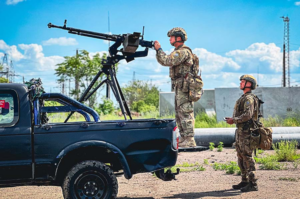
Figure 2. Ukrainian Mobile Fire Team.
Source: Ukrainian Ministry of Defense, 2023.
In addition to EW jammers, Ukrainian units have also adopted numerous physical countermeasures to reduce vulnerability to drone attack. Anti-FPV netting is installed along major roadways and above key infrastructure to prevent low-flying drones from striking vehicles or personnel. Armored vehicles are also modified with improvised ‘anti-drone armor’ designed to detonate incoming munitions before they reach critical components.
The most important adaptation, however, is cultural. At Ukrainian training sites, reacting to UAS is treated as a fundamental battle drill. Simulated artillery grenades—used to teach U.S. Army basic trainees and Ranger School students to react to indirect fire—have been replaced by roaming DJI Mavic drones. The visual or auditory confirmation of a drone overhead sends soldiers to cover and into firing positions as they attempt to shoot it down. Dedicated cUAS ranges train soldiers to engage drones using shotguns and standard rifles, reinforcing the difficulty of hitting a moving aerial target and the importance of teamwork. In much the same way that route clearance became a universal task during the wars in Iraq and Afghanistan, cUAS competency has become a baseline necessity in Ukraine.
Even routine battlefield movement reflects this mindset. Junior soldiers positioned in bunkers often serve as dedicated drone lookouts, coordinating when personnel can safely move between positions. Traditional observation techniques such as Stop, Look, Listen, and Smell (SLLS) have been adapted to focus primarily on the sky rather than the ground. And offensive operations are often tied to inclement weather, when fog, wind, and rain degrade the ability for UAS systems to operate.
Together, these adaptations illustrate a fundamental shift in how protection is generated on the battlefield. Rather than relying solely on a small number of exquisite air defense systems, Ukrainian formations have created a layered network of measures distributed across formations. Counter-UAS is no longer a supporting activity but a central component of protection. It shapes how units organize, move, and fight at every level.
Conclusion
Taken together, the evolution of fires, EW, and air defense in Ukraine reveals a common pattern: responsibilities traditionally executed at higher echelons are now decentralized to the lowest tactical levels. Ukrainian units are not simply recipients of combat power generated elsewhere, but active participants in managing fires, EW, and air defense in their own battle space. Certainly, this decentralization is neither uniform nor absolute. Functions that rely on scarce, high-value, or technically complex assets—such as fixed-wing aircraft—remain centralized in Ukraine. This shift has occurred in direct proportion to the availability of low-cost equipment.
Not every aspect of Ukrainian adaptation is directly transferable to the U.S. Army. Ukraine represents a single conflict, shaped by specific constraints, resource limitations, and history. The decentralization of Ukrainian fires enables speed and responsiveness, but it also introduces risks in synchronization, mass, and legal authorities. U.S. military formations, by contrast, retain advantages in technological sophistication and integration that allow higher echelons to shape the fight in ways Ukrainian units often cannot.
A more useful framework is to view the U.S. and Ukraine as opposite ends of a spectrum. Ukrainian units, driven by necessity and enabled by cheap technology, have pushed responsibility downward to an extreme degree, accepting risk to survive in a persistently contested environment. The U.S. Army, shaped by decades of operational dominance, has retained a more centralized approach that prioritizes coordination, precision, and control. The challenge is not to replicate either model, but to determine where along this spectrum the U.S. Army must adapt.
For junior leaders in the U.S. Army, the implication remains clear. Urgency in understanding the changing character of war—and the technologies that define it—must be matched by urgency in adapting culture and training at the tactical level. To that end, units must begin adapting headquarters companies at echelon to integrate UAS technology and consolidate the resulting fires and intelligence capabilities. Leaders at every level, including junior officers and NCOs, must develop working knowledge of drone platforms, employment techniques, and call-for-fire procedures. UAS must be embedded in training at every opportunity, both to challenge the cultural assumption of air superiority and to build organic fires and intelligence capability.
Knowledge of the electromagnetic spectrum can no longer reside exclusively in S6 shops and intelligence cells. Every leader must understand what operates in the spectrum around them, how to minimize their own signature, and how to read shifts in the EW environment as tactical indicators. Finally, the solution to persistent drone threats lies in early detection and kinetic response. Existing weapons and systems must be assessed for cUAS potential—vehicles, mounted and dismounted machine guns, infrared optics, and other organic platforms can be repurposed with minimal investment.
None of this requires new doctrine or additional resources. It only requires the decision to begin.
The views expressed are those of the author(s) and do not reflect the official position of the United States Military Academy, Department of the Army, or Department of Defense.


