





The Coming Wave of High-Powered Microwaves

Abstract
High powered microwave weapons will play a central role in the anti-drone operations of militaries in the coming years as they are deployed onto battlefields. Its ability to bypass electromagnetic hardening methods and its practically unlimited magazine capacity makes it a key asymmetric weapon to counter the swarms of drones that modern militaries are beginning to field.
Introduction
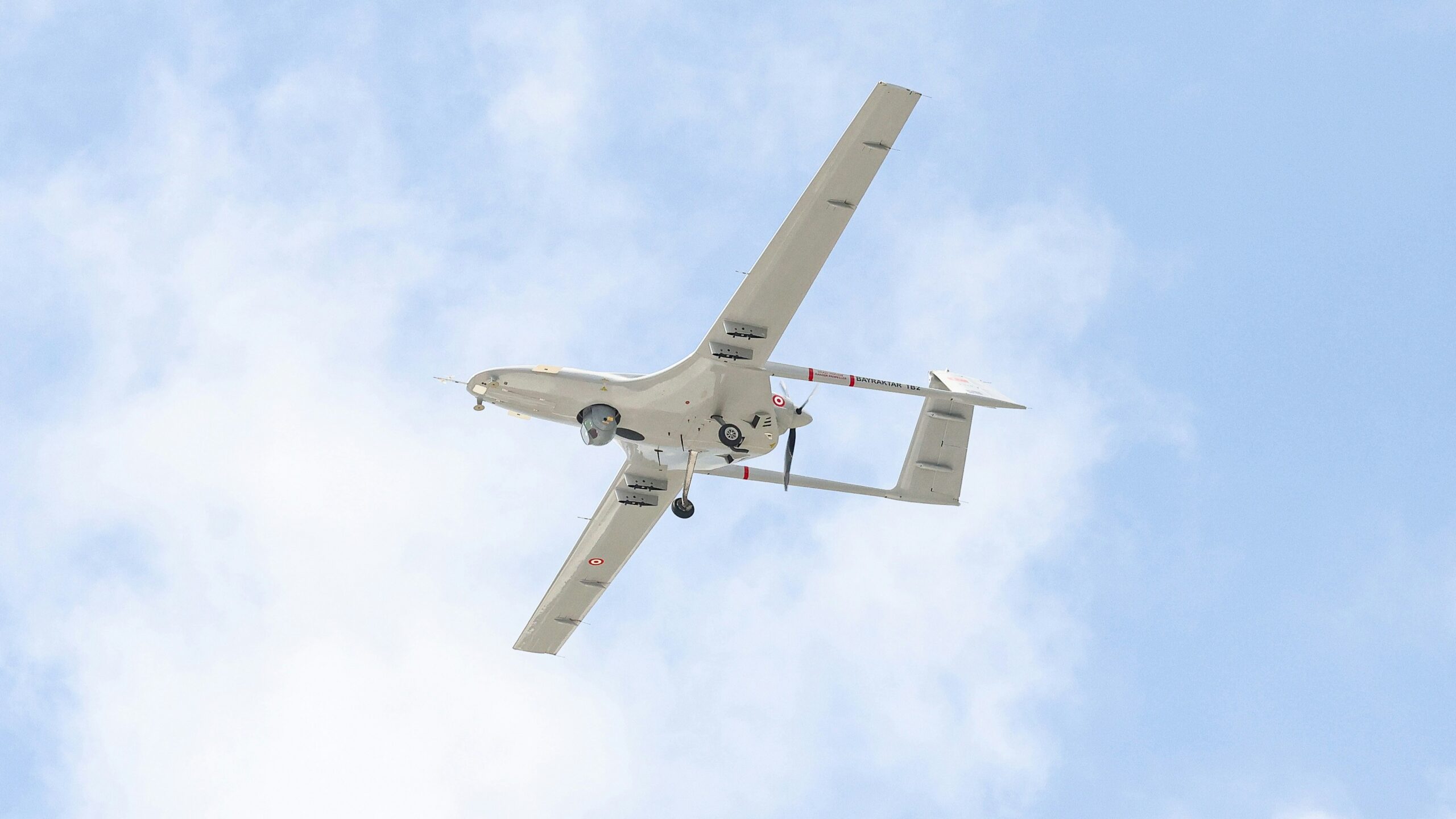
As drones become a central component of militaries across the world, nations are scrambling to find effective ways to counter the waves of unmanned systems they now face on the battlefield. Many of the defensive measures, ranging from jamming to “counter-drone” drones, are temporary stopgaps to the constantly improving drone industry that have so far found ways to circumvent these defenses ranging from fiber-optic cables, frequency hopping, and saturation attacks.
However, there remains one glaring vulnerability facing drones that lack any short-term solution. All drones still rely on metal circuitry and wiring that can be targeted by electromagnetic pulses (EMP), which are invisible rays of energy that when coupled with conducting materials, such as metal, induce electric surges that disable or destroy electronics. High Powered Microwaves (HPM) have emerged as the primary EMP weapon nations are pursuing to counter drones due to their effectiveness and practically infinite magazine capacity. Once these systems enter the battlefield, HPMs have the potential to become the most capable and cost-effective anti-drone system in the near future.
The Ultimate Anti-Drone Weapon
There are a few ways EMPs can be produced. High-altitude EMPs are generated via a nuclear blast in the atmosphere that creates an EMP that stretches hundreds of miles. On a smaller scale, there are e-bombs which can be made by converting the energy of a conventional explosive charge into electromagnetic energy through a flux generator. And then there are High Powered Microwave weapons which are devices that convert electricity into concentrated beams of electromagnetic energy through a device called a vircator to induce electrical surges that can disable or destroy electronics.
HPMs have become the EMP weapon of choice to defend against drones for technologically advanced nations. Its effectiveness lies in its focused range that allows it to discriminate against targets, high-power, and its deep magazine capacity. In contrast, the vast range of nuclear generated high-altitude EMP attacks risks high levels of collateral damage while e-bombs are single use weapons, the conventional detonation destroys the device, with limited range.
Most HPMs systems are typically land or ship based and have an appearance of a satellite with its large panel that rotates on swivels emitting focused EMP waves at moving targets in the air, on land, and at sea. These weapons emit a concentrated beam of EMPs at a specific target kilometers away, disabling its electronics.
HPMs are difficult to defend against. Faraday cages and surge protectors can be applied to protect the electronic components of drones, but these can be heavy and expensive to apply to what are supposed to be light and affordable systems. Even then, these protections can be bypassed with the extremely powerful HPM weapons coming online today and into the future.
US military regulation requires all systems to be protected with at least 80 decibel attenuation for EMPs up to 1 gigahertz frequency. Attenuation is the measurement of the degree to which an EMP loses its intensity through hardening, with every 20 decibels of attenuation reducing the voltage of an EMP by a factor of ten. The frequency of an EMP, measured in hertz, is the distance between each consecutive pulse of electromagnetic energy. Lower frequency EMPs are effective at coupling with long and large conduits such as transmission lines while higher frequency EMPs can penetrate miniature apertures and couple with smaller antennas. The US military standard of 80 decibel attenuation reduces the electrical charge of an EMP by a factor of 10,000 for all frequencies up to 1 gigahertz making it highly effective against relatively lower frequency EMPs, like those created by high-altitude nuclear blasts or geomagnetic storms.
That said, for HPMs, this level of protection is not enough. Modern HPM weapons can emit high frequency EMPs well above the 1gigahertz frequency bypassing much of the hardening measures. Additionally, HPMs produce EMPs that induce much more powerful electrical charges that even when attenuated by a factor of 10,000 can be enough to disable or destroy electronics.
Cost-effectiveness
HPM systems are expensive to procure, with the most advanced systems, such as the Leonidas, costing upwards of $22 million. In contrast, Ukraine’s Sky Sentinel anti-drone turret only costs $150 thousand while drone interceptors cost approximately $15 thousand dollars per system. The high cost of HPMs is reflective of the precision equipment and expertise required to produce such exquisite weapons. Therefore, the mass procurement and the broad deployment of HPMs to all areas of the battlefield are unlikely in the near future. Additionally, HPMs are untested in battle spaces where environmental factors could disrupt their function, and the need for a stable energy source limits their movement.
That said, if HPMs prove to be resilient in combat spaces they will be more cost-effective than other contemporary anti-drone measures due to reasons stated above. Each strike from a HPM cost anywhere from a few cents to a few dollars, as it generally uses just a few kilowatts of electricity per strike, depending on the strength and duration of the EMP. The heavy caliber rounds used by anti-drone turrets can be an order of magnitude more expensive, which after years of operations and thousands of drones targeted would surpass the initially high price tag of HPMs. The same can be said of drone interceptors, which are one-way systems that are destroyed on impact with the target.
Moreover, HPMs can disable or destroy large quantities of drones in single strikes, making it much more suited towards countering dense swarms of drone formations which will become more prevalent with the advent of AI-enabled drone swarms. In a 2025 live-fire demonstration, Epirus’s Leonidas HPM system disabled 49 drones in one single EMP strike. Turrets, drone interceptors, and other anti-drone systems, including lasers (which similarly have unlimited magazine capacity), are designed only to neutralize one drone at a time with higher costs expended per target. Therefore, the longer a conflict lasts, the more effective HPMs’ become when compared to their alternatives.
The Race for HPM Dominance
Recognizing the potential these systems present in countering drones, major military powers like the US, the People’s Republic of China (PRC) and several European nations have developed and are beginning to field advanced HPM weapons.
The US has the largest array of HPM weapons in the world. On land, the US Army deploys the Leonidas HPM system. Developed by Epirus a California based defense firm, making its first appearance in the field last year during the Balikatan joint exercises in the Philippines. Additionally, the US Air Force Research Laboratory has successfully tested another land-based HPM anti-drone system called the Tactical High-power Operational Responder. On the sea, the US Navy is scheduled to deploy its own HPM system developed under its METEOR project on one of its ships sometime this year. The Navy claims that this system is capable of not only disabling drones but also electronically guided anti-ship missiles. The US also fields the only known missile-borne HPM weapons designed for offensive strikes to disable targets from the air deep in enemy territory. Developed by the US Air Force, the latest version of this missile-borne HPM is the High Power Joint Electromagnetic Non-Kinetic Strike (HIJENKS) system.
Across the Pacific, in 2024 the PRC revealed its latest HPM systems, the Hurricane 2000 and 3000, alongside its FK-4000 model, all of which are mobile land-based anti-drone systems developed by the China North Industries Group Corporation and the China Aerospace Science and Technology Corporation respectively. As of 2022, 90 percent of all HPM related patents originated from PRC based companies and institutions. The PRC is also the largest producer of drones and their components in the world. Their dominance of both fields of offensive and defensive drone technology gives them a tremendous advantage in the age of drone-centric warfare.
In Europe, the Thales corporation has developed its RapidDestroyer and ThunderShield HPM weapons in the United Kingdom and France respectively. The RapidDestroyer is still being tested and the ThunderShield has been deployed by the French government to help secure public events. Germany’s Diehl Group has also developed its own indigenous SkyWolf HPM system which has reportedly been purchased by an undisclosed African nation.
Outside of these countries, Japan and Russia have invested heavily in HPM development. Japan’s Ministry of Defense’s Acquisition, Technology & Logistics Agency will be completing its prototype development phase of an indigenous HPM system this year, followed by testing the following year. Russia has reportedly developed its own land based HPM weapon with its Ranet-Ye system. However, reporting on this system is dated and they have yet to make an appearance in Russia’s invasion of Ukraine.
The Future of Warfare
Currently, HPMs are exquisite systems that require high levels of technological investment and expertise to develop, making them expensive weapons that only the most advanced nations can afford. Moreover, although they have shown their prowess on the testing grounds, disabling swarms of drones, they have yet to be deployed in active combat where its ability to function in crowded and fast-paced battlespaces will need to be evaluated.
That said, the underlying logic driving the development of HPM systems make them the lead contender in the race to find an effective counterweight to the rise of drones. The ability to target a drone’s electronic components, of which are irreplaceable or difficult to defend, makes HPMs a long-term defense measure to the coming waves of ever more complex drone formations. Additionally, its practically unlimited magazine capacity will reverse the asymmetric advantage drones have held over defending militaries, by dramatically lowering the costs of sustained anti-drone operations.
Disclaimer: This article represent the views of the author and do not represent an official position from the Department of State publication. Additionally, the views and information presented are those of the author and do not represent the Fulbright Program, ECA, the Post, Fulbright Commission, or any government or institution.


