





Old Paradigms for an Evolving Threat: Rethinking Brazil’s Fight Against Organized Crime
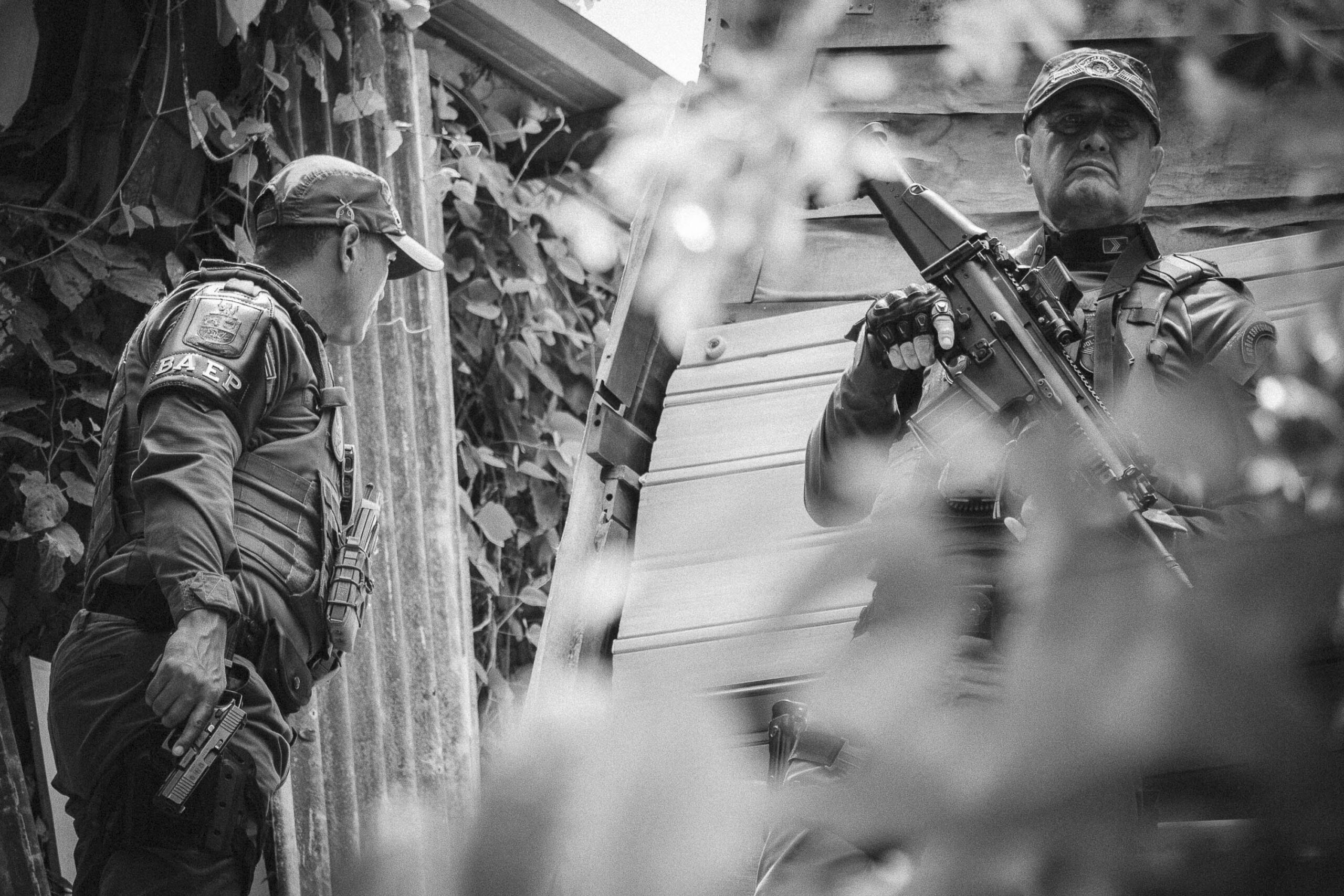

Brazil’s Ministry of Justice and Public Security officially recognizes the existence of 88 criminal organizations operating across the country. According to the Ministry, 58 percent of these groups have carried out direct attacks against the Brazilian state over the past three years.[1] At the same time, media reports indicate that, across large portions of the country, these criminal organizations exercise armed territorial control and rigidly enforce their own parallel legal systems.[2]
This parallel system of governance is recognized by the Brazilian population. A recent national survey found that 41 percent of Brazil’s more than 200 million inhabitants report the presence of organized crime in their own neighborhoods. Among those respondents, more than 80 percent stated that criminal organizations influence—either significantly or to some extent—the rules governing daily social life within their communities. These findings suggest that organized crime in Brazil extends well beyond the pursuit of profit. These organizations shape community behavior according to their own interests, establish and enforce their own rules, administer their own systems of justice, and organize local communities in direct competition with the Brazilian state.[3]
These facts suggest that Brazil is confronting armed groups that use violence to impose their will on the population across vast areas of the national territory, thereby challenging the authority and sovereignty of the Brazilian state. This phenomenon is not new. It has long been described in military literature and falls squarely within established definitions of insurgency:
- Using subversion and violence to seize, nullify, or challenge political control of a region.[4]
- Waging a violent struggle among state and nonstate actors for legitimacy and influence over the relevant populations.[5]
Given the realities on the ground and the applicable doctrinal concepts, it becomes evident that Brazil is confronting an irregular war against insurgent groups. Despite the Brazilian government’s formal recognition of these criminal organizations, the fact that more than 80 million Brazilians acknowledge the presence of organized crime in their daily lives, and the clear doctrinal convergence between the situation in Brazil and established definitions of insurgency, the primary focus of the country’s leading public security research institutes and policy forums remains the oversight and regulation of police activity.
The principal public security forums and research centers in Brazil argue that, despite the undeniable expansion of criminal organizations, the country’s foremost priority should be increasing police accountability and reducing the use of force in state security operations.
The Brazilian Forum on Public Security (Fórum Brasileiro de Segurança Pública), for example, is a nongovernmental organization that seeks to promote technical cooperation and serve as a national reference in the field of public security. Among its principal recommendations are redefining the scope of police powers; limiting the coercive authority of law enforcement agencies; developing a national doctrine on the use of force; strengthening accountability mechanisms; expanding transparency; replacing the traditional “war on drugs” model with a new drug policy; and strengthening oversight of police activities.[6]
Conectas Human Rights is one of Brazil’s most prominent nongovernmental organizations in the legal and human rights field. It describes itself as more than an NGO, presenting itself as a global movement engaged in decision-making spaces.[7]
Its principal areas of activity include the protection of socio-environmental rights, efforts to combat institutional violence, and the promotion of democracy and human rights. In the field of public security, its primary policy positions include expanding the use of body-worn cameras by Military Police officers, strengthening external oversight of police activities, increasing accountability for deaths resulting from police interventions, and imposing greater restrictions on the use of force by law enforcement agencies.[8]
Brazil’s leading academic center dedicated to public security research is the Center for the Study of Violence (Núcleo de Estudos da Violência—NEV) at the University of São Paulo. An examination of its publications reveals a consistent emphasis on police use of force, advocacy for the adoption of body-worn cameras by Military Police officers, reforms to police training, and the argument that military songs sung by security forces are detrimental to public security because they reinforce what the researchers describe as a “warfare mentality.”[9]
Other influential policy institutes and research organizations—including the Igarapé Institute[10], the Sou da Paz Institute[11], and Human Rights Watch[12]—advance a similar perspective, interpreting Brazil’s public security and organized crime challenges primarily as consequences of police violence, mass incarceration, and social inequality. Collectively, these organizations have generated such a significant body of research and public debate that they have come to shape Brazil’s national discussion on public security and exert substantial influence over the formulation of public security policies. As a result, the principal statutes governing Brazilian law enforcement explicitly identify controlling police use of force as one of their central priorities.[13]
Although much of the Brazilian academic community continues to interpret organized crime and shape public security policies along the lines described above, some scholars have reached markedly different conclusions. In the work Competition in Order and Progress, John P. Sullivan and Robert J. Bunker offer an alternative analytical framework. The two American scholars argue that Brazilian criminal organizations such as the Primeiro Comando da Capital (PCC) do not operate primarily to redress social inequality or respond to state abuses. Instead, they engage in activities that are fundamentally mercenary and power-oriented, seeking to accumulate political influence and establish what amount to criminal mini-states.[14]
Bunker further argues that organized crime has evolved beyond a conventional public security problem and should instead be understood as a phenomenon involving organizations capable of waging wars and competing with the state for control. Their members are no longer merely violent entrepreneurs, but criminal-soldiers belonging to organizations capable of creating zones of impunity known as criminal enclaves.[15] Sullivan argues that contemporary warfare is no longer fought exclusively by traditional military forces. Today, terrorist organizations, drug cartels, organized crime groups, and militias have also become significant actors in modern armed conflict.[16]
Examining Latin America, Sullivan further argues that criminal organizations can evolve from first-generation gangs, which dominate streets, to second-generation gangs, which control markets, and ultimately to third-generation gangs, which pursue political objectives. At this stage, these groups may engage in direct confrontation with the state while simultaneously eroding state legitimacy and capacity.[17] Sullivan’s and Bunker’s analyses appear to align more closely with the Brazilian experience.
This can be observed in the case of the Primeiro Comando da Capital (PCC), which launched direct attacks against the Brazilian state in 2002[18], 2003[19], 2006[20], and 2012.[21] In each of these episodes, the organization’s objective was not financial gain or the expansion of illicit markets. Rather, its actions were intended to impose its will upon the Brazilian state.
Nor are attacks against the state unique to the PCC. As cited earlier, 58 percent of the country’s 88 identified criminal organizations have carried out attacks against the Brazilian state during the last few years.[22] Equally significant is the fact that Primeiro Comando da Capital (PCC), Comando Vermelho (CV), and other criminal organizations have established systems of parallel governance in parts of Brazil. In these areas, they perform functions traditionally associated with the state by creating and enforcing their own rules of conduct, imposing sanctions, and influencing various aspects of community life and local culture.[23]
These realities suggest that the Brazilian experience aligns far more closely with the analytical frameworks proposed by Sullivan and Bunker than with those advanced by Brazil’s principal research institutes and nongovernmental organizations. The academic institutions that shape the ideas underlying Brazil’s public security policies generally argue that combating crime should prioritize reducing the use of force, demilitarization, and, in some cases, even the abolition of existing law enforcement institutions.[24] Consequently, Brazil’s public security strategies have largely been developed around these underlying assumptions.
These assumptions, however, have influenced Brazilian academic thought, legislation, and public security policy for decades. Since the 1970s, a substantial portion of the debate has focused on questioning and limiting police actions involving the use of force.[25] These ideas have produced strategies that have clearly failed to contain organized crime, which emerged, consolidated itself, and evolved during this same period. The failure of this approach should serve as the starting point for new ideas and, consequently, for the adoption of new strategies.
Some theorists argue that defeating criminal organizations at their current stage of development in Brazil requires neither a purely military response nor one based exclusively on social programs. Rather, it requires a comprehensive strategy that combines targeted enforcement operations with sustained efforts to establish state control and expand the provision of public services. Bunker argues that defeating criminal insurgent groups requires a combination of punitive strikes against criminal organizations for actions they have carried out or are planning to carry out; the neutralization of their assets, infrastructure, leadership, and organizational cohesion; the co-option and/or social reintegration of their members; and the dismantling of the armed groups’ coercive capacity.[26]
Bunker further contends that dismantling an insurgent group inevitably creates a power vacuum, because the conditions that gave rise to the insurgency remain unchanged even after the insurgents themselves have been eliminated. For this reason, he also proposes strategies aimed at transforming the operational environment to prevent the emergence of new insurgencies. These include stabilizing the environment through the provision of essential services such as water, food, and housing; expanding social services, including education, employment, recreation, and sports; and promoting meaningful democratic participation for the local population.[27]
This approach is far more consistent with Brazil’s current security environment because it neither rejects nor seeks to reduce the use of force by the police. Instead, it recognizes that force—including, when necessary, lethal force—remains an indispensable instrument, while directing it against the critical support structures of criminal insurgent organizations. At the same time, it emphasizes the need to protect the population and provide the public services necessary to prevent the emergence of future insurgencies.
Despite the direction taken by much of the Brazilian academic debate, the struggle against Brazil’s criminal organizations constitutes an irregular war and is therefore fundamentally a struggle for legitimacy.[28] Consequently, the persistent adoption of policies and narratives that undermine the legitimacy and operational capacity of the state’s security forces represents a fundamental strategic flaw.
After decades of academic debate, public policy, and legislative reforms aimed primarily at limiting the coercive capacity of Brazil’s security institutions, organized crime has continued to expand, consolidate, and become increasingly powerful. It is time to adopt a new strategic approach.
Endnotes
[1] Secretaria Nacional de Políticas Penais (SENAPPEN), Ministério da Justiça e da Segurança Pública (National Secretariat of Penal Policies (SENAPPEN), Ministry of Justice and Public Security). “Mapa das ORCRIMs (Map of Criminal Organizations).” Gov.br. 2024, https://www.gov.br/senappen/pt-br/assuntos/inteligencia-penal/mapa-das-orcrims.
[2] Aline Ribeiro, “Terrorismo, soberania e controle territorial: como o crime dita as regras nas periferias brasileiras” (Terrorism, Sovereignty, and Territorial Control: How Crime Dictates the Rules in Brazil’s Peripheries). O Globo. 28 June 2026, https://oglobo.globo.com/brasil/noticia/2026/06/28/terrorismo-soberania-e-controle-territorial-como-o-crime-dita-as-regras-nas-periferias-brasileiras.ghtml.
[3] Renato Sérgio de Lima and Samira Bueno, Eds., Medo do crime e eleições 2026: os gatilhos da insegurança (Fear of Crime and the 2026 Elections: The Triggers of Insecurity). São Paulo: Fórum Brasileiro de Segurança Pública {Brazilian Forum on Public Security), 2026, https://forumseguranca.org.br/wp-content/uploads/2026/05/os-gatilhos-da-inseguranca-relatorio-completo-2026.pdf.
[4] US Marine Corps and US Army, MCWP 3-33.5: Insurgencies and Countering Insurgencies. Washington, DC: Department of the Navy, May 2014, https://www.marines.mil/Portals/1/Publications/MCWP%203-33.5%20Insurgencies%20and%20Countering%20Insurgencies.pdf.
[5] US Department of Defense, Irregular Warfare Joint Operating Concept. Washington, DC: Joint Chiefs of Staff, 11 September 2007, https://www.jcs.mil/Portals/36/Documents/Doctrine/concepts/joc_iw_v1.pdf.
[6] Brazilian Forum on Public Security, 18º Anuário Brasileiro de Segurança Pública: 2024 (18th Brazilian Yearbook of Public Security). São Paulo: Fórum Brasileiro de Segurança Pública (Brazilian Forum on Public Security), 2024, https://publicacoes.forumseguranca.org.br/handle/123456789/253.
[7] “A Conectas existe para proteger, efetivar e ampliar os direitos humanos” (About Conectas).” Conectas Human Rights,” https://conectas.org/sobre-a-conectas/.
[8] “Enfrentamento À Violência Institucional (Confronting Institutional Violence).” Conectas Human Rights, https://conectas.org/iniciativas/violencia-institucional/.
[9] , “NEV-USP,” Núcleo de Estudos da Violência da Universidade de São Paulo–NEV (Center for the Study of Violence–NEV. University of São Paulo, https://nev.prp.usp.br/.
[10] “Segurança Pública (Public Security).” Igarapé Institute, https://igarape.org.br/temas/seguranca-publica/.
[11] “Pesquisa e projeto (Research and Projects).” Instituto Sou da Paz (Sou da Paz Institute),https://soudapaz.org/pesquisa-e-projeto/.
[12] “Brazil.” Human Rights Watch, https://www.hrw.org/americas/brazil.
[13] Lei Nº 13.675, de 11 de Junho de 2018 (Law No. 13,675 of 11 June 2018. Unified Public Security System (SUSP), Brasilia: República Federativa do Brasil (Federative Republic of Brazil), https://www.planalto.gov.br/ccivil_03/_ato2015-2018/2018/lei/l13675.htm and Lei nº 11.530 de 24 de outubro de 2007 (Law No. 11,530 of 24 October 2007). Institui O Programa Nacional De Segurança Pública Com Cidadania – Pronasci E Dá Outras Providências (National Program for Public Security with Citizenship – PRONASCI). Brasilia: República Federativa do Brasil (Federative Republic of Brazil),https://www.planalto.gov.br/ccivil_03/_ato2007-2010/2007/lei/l11530.htm.
[14] John P. Sullivan and Robert J. Bunker, Eds., Competition in Order and Progress: Criminal Insurgencies and Governance in Brazil. Bloomington: Xlibris, 2022,.
[15] Robert J. Bunker, “Introduction: The Mexican Cartels—Organized Crime vs. Criminal Insurgency.” Trends in Organized Crime. Vol. 16, no. 2. 2013: pp. 129–137, https://doi.org/10.1007/s12117-013-9194-4.
[16] John P. Sullivan, “Crime Wars: Operational Perspectives on Criminal Armed Groups in Mexico and Brazil.” International Review of the Red Cross. IRRC no. 923. June 2023: pp. 849–875, https://international-review.icrc.org/articles/crime-wars-operational-perspectives-923.
[17] Ibid.
[18] Alessandro Silva, “PCC Promotes Attacks in São Paulo (Ala radical do PCC planejou atentados em SP).” Folha de S.Paulo. 31 May 2002, https://www1.folha.uol.com.br/fsp/cotidian/ff3105200201.htm.
[19] “Ataques do PCC matam 2 e ferem 7 em SP (PCC Organizes New Wave of Attacks).” Folha de S.Paulo. 4 November 2003, https://www1.folha.uol.com.br/fsp/cotidian/ff0411200301.htm.
[20] “Maior ataque do PCC faz 32 mortos em SP (São Paulo Suffers Attacks Attributed to the PCC).” Folha de S.Paulo. 14 May 2006, https://www1.folha.uol.com.br/fsp/cotidian/ff1405200601.htm.
[21] Josmar Jozino, “2012, o ano em que o PCC matou 106 policiais militares no estado de SP (The Year the PCC Killed 106 Military Police Officers in São Paulo State).” UOL Notícias. 6 January 2022,https://noticias.uol.com.br/colunas/josmar-jozino/2022/01/06/2012-o-ano-em-que-o-pcc-matou-106-policiais-militares-no-estado-de-sp.htm.
[22] National Secretariat of Penal Policies (SENAPPEN), Ministry of Justice and Public Security. Mapa das ORCRIMs (Map of Criminal Organizations). 2024, https://www.gov.br/senappen/pt-br/assuntos/inteligencia-penal/mapa-das-orcrims.
[23] Jacqueline de Oliveira Muniz and Camila Nunes Dias, “Domínios armados e seus governos criminais – uma abordagem não fantasmagórica do ‘crime organizado’ (Armed Domains and Their Criminal Governments–A Non-Fantastical Approach to ‘Organized Crime’).” Estudos Avançados. Vol. 36, no. 105. 2022: pp. 131–151, https://doi.org/10.1590/S0103-4014.2022.36105.009.
[24] Olavo Hamilton, “Pelo Fim da Polícia Militar (For the End of the Military Police).” Instituto dos Advogados Brasileiros (Brazilian Lawyers Institute), 15 October 2024, https://iabnacional.org.br/pelo-fim-da-policia-militar/; Justiça Global, “Statement Calling for an End to the Militarization of Favelas and Peripheries (Nota da Justiça Global pelo Fim da Militarização das Favelas e Periferias).” Justiça Global. 31 October 2014,https://www.global.org.br/blog/nota-da-justica-global-pelo-fim-da-militarizacao-das-favelas-e-periferias/; and Fernando Carlos Wanderley Rocha, Desmilitarização das Polícias Militares e Unificação de Polícias – Desconstruindo Mitos (Demilitarisation Of The Military Police And Unification of The Police Forces – Debunking Myths). Brasília: Consultoria Legislativa, Câmara dos Deputados (Chamber of Deputies. Legislative Consulting Office). November 2009, https://www2.camara.leg.br/atividade-legislativa/estudos-e-notas-tecnicas/publicacoes-da-consultoria-legislativa/fiquePorDentro/temas/unificacao-de-policias/Texto%20Consultoria.pdf.
[25] Paulo Sérgio Pinheiro, “Violência do Estado e Classes Populares (State Violence and the Popular Classes).” Dados: Revista de Ciências Sociais. Vol. 22, no. 1, 1979, https://drive.google.com/file/d/1PkotUMgpbiVo22JjzHyPp8KhnoTNphpZ/edit; Paulo Sérgio Pinheiro, Eduardo A. Izumino, and Maria Cristina Jakimiak Fernandes, “Violência Fatal: Conflitos Policiais em São Paulo (81–89) (Fatal Violence: Police Conflicts in São Paulo (1981–1989)),” Revista USP. No. 9. 1991: pp. 95–112,https://doi.org/10.11606/issn.2316-9036.v0i9p95-112; Ignácio Cano, The Use of Lethal Force by Police in Rio de Janeiro. Rio de Janeiro: ISER, 1997, https://lav-uerj.org/wp-content/uploads/2020/06/Letalidade-da-ação-policial-no-Rio-de-Janeiro.pdf; Ignácio Cano, Relatório do Rio de Janeiro Sobre Execuções Sumárias (Summary Executions in Brazil: The Use of Force by State Agents). Rio de Janeiro: Justiça Global, 2003, https://www.dhnet.org.br/dados/relatorios/a_pdf/r_rj_exec_sumarias.pdf; and, Anexo: Programa Nacional De Direitos Humanos (Annex: National Human Rights Program (PNDH I)). Brasília: Presidency of the Republic, 1996, https://www2.camara.leg.br/legin/fed/decret/1996/decreto-1904-13-maio-1996-431671-anexo-pe.pdf.
[26] Robert J. Bunker, “Defeating Violent Nonstate Actors.” Parameters. Vol. 43, no. 4. Winter 2013: pp. 57–65, https://press.armywarcollege.edu/parameters/vol43/iss4/10/.
[27] Ibid.
[28] David H. Ucko and Thomas A. Marks, A Framework for Countering Organized Crime: Strategy, Planning, and the Lessons of Irregular Warfare. Washington, DC: National Defense University Press, 2025, https://ndupress.ndu.edu/Media/News/News-Article-View/Article/4244891/a-framework-for-countering-organized-crime/.


