





Cartel Drones as Tools of Coercion
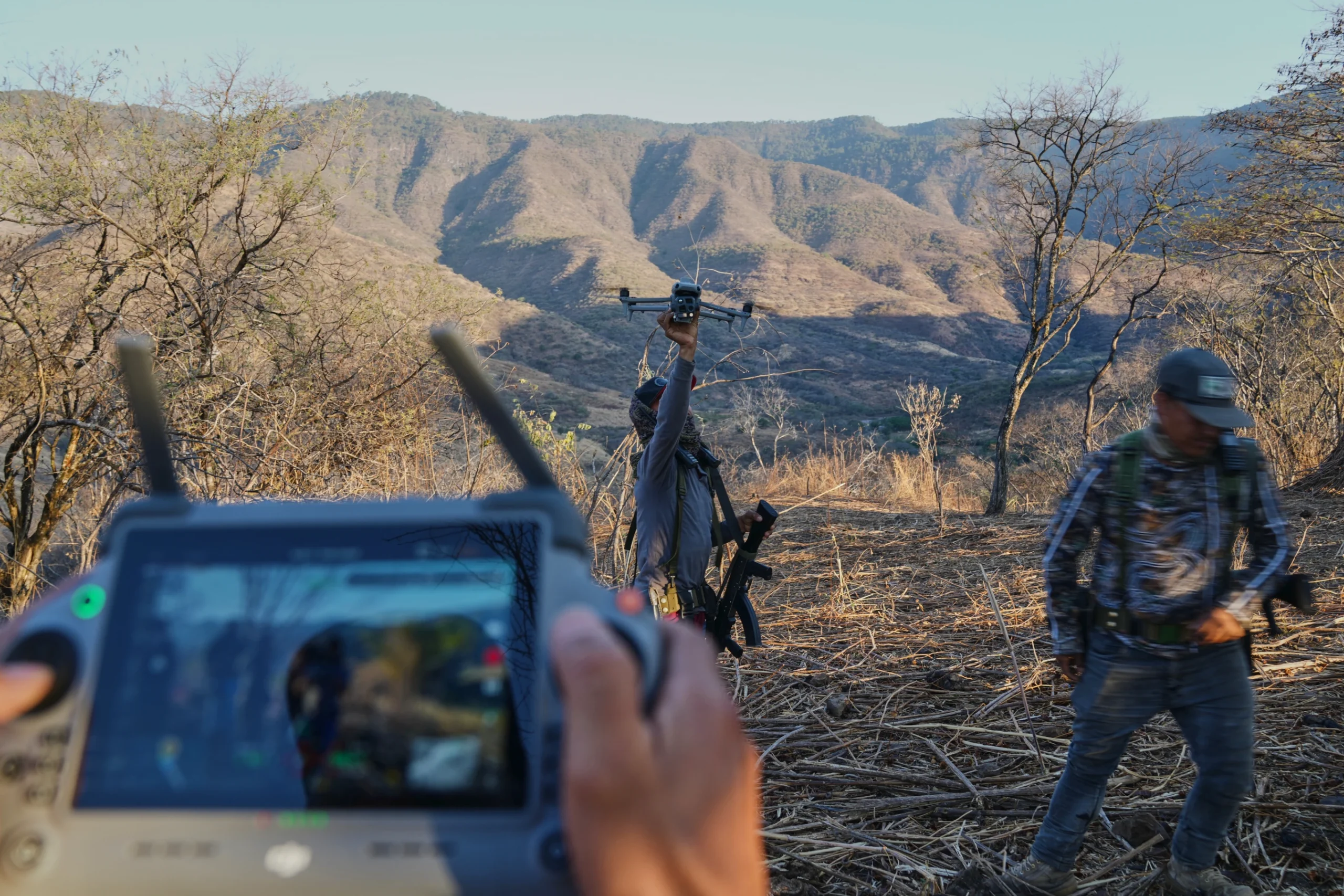

Håvard Haugstvedt’s study in Dynamics of Asymmetric Conflicts titled “Cartel aerial operations: exploring Latin American cartels’ use of unmanned aerial vehicles (UAVs) as a tool for strategic coercion,” pushes the drone-warfare conversation the Middle East and into Michoacán and Guerrero. Drawing on 44 documented incidents between 2017 and 2024, Haugstvedt argues that Mexican cartels have built an aerial coercion playbook that looks like miniature strategic bombing campaigns more than insurgent reactionism.
A look at the numbers
Jalisco New Generation Cartel (CJNG) leads with 18 attacks, followed by La Familia Michoacana with 14. Most incidents cluster in Michoacán and Guerrero, contested ground for methamphetamine production and trafficking routes.
What sets cartels apart from groups like ISIS or the Houthis is who gets hit. Where most violent non-state actors overwhelmingly strike military and security targets, cartels turn their UAVs on civilians and private property far more often. That’s the central finding from the paper.
What this means
Haugstvedt reads this civilian targeting as deliberate signaling. Drone strikes on farming communities like El Caracol or Petatlán are messages meant to hollow out support for rivals and remind entire towns who hold territorial authority.
Haugstvedt also stresses the informational half of the equation. The idea is that filmed and circulated attacks matter almost as much as the actual explosives.
What to do
In short, Haugstvedt recommends treating cartel drones as a governance problem, not merely a munitions problem. Additionally, he calls for building cross-border intelligence sharing before the tactic spreads to smaller criminal groups in the U.S. and Europe. The thing is, given the pace of adoption already visible in the data, that window may be closing fast.
While you’re here, check out our recent Discourses:
“How Armed Groups Are Contesting Colombia’s Airspace With Drones”
“Ecuador Bets on Drones to Beat the Cartels — At What Cost?”

