





Ecuador Bets on Drones to Beat the Cartels — At What Cost?
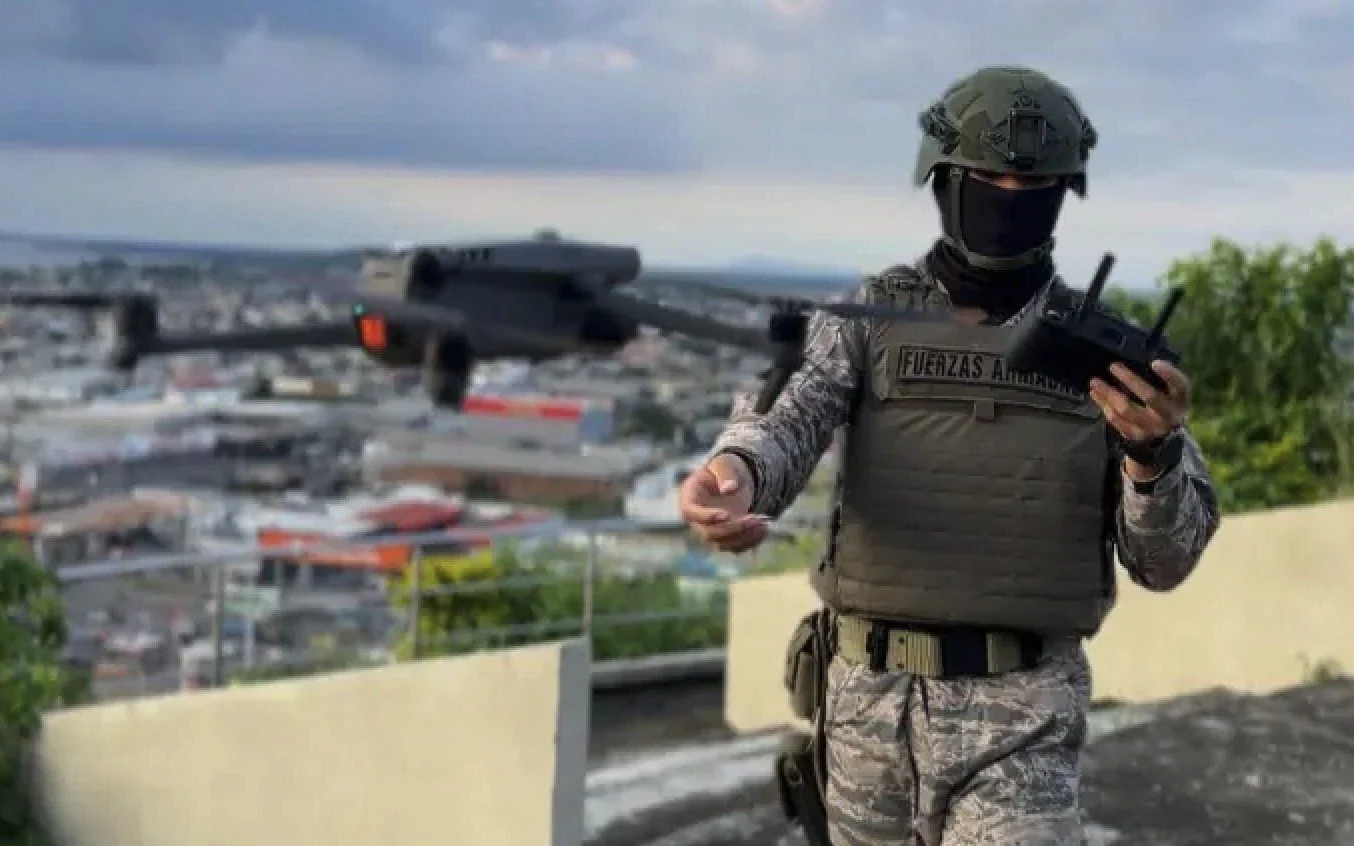

Ecuador’s pivot to drone warfare against narco-trafficking networks illustrates both the promise and peril of technology-driven counterinsurgency, writes The Telegraph’s Gemma Brown in “How Ecuador’s ‘cocaine superhighway’ is being dismantled with drones.” With roughly 70 per cent of global cocaine flows transiting the country, President Noboa’s “internal armed conflict” declaration, which is backed by $19m in US funding (including $6m earmarked for drones), reflects how state forces are leaning on unmanned systems to offset risk to personnel while scaling surveillance across ungoverned spaces.
The Logic
Drones extend reconnaissance into jungle and coastal areas traffickers have long exploited. They also let police track fleeing suspects without exposing officers to ambush. This “Ukraine effect,” where battlefield-tested commercial platforms like the DJI Matrice 30T are migrating into domestic security missions, signals a maturing market for attritable ISR assets outside traditional state-on-state conflict.
Familiar Friction Points
Problems arise with this new approach. For one thing, target identification under ambiguous legal frameworks is tricky. Contested strike outcomes are common. And of course there’s the risk to civilians, as with the Galápagos fishing-boat strike.
It all comes down to how technological overmatch does not resolve the human-intelligence and legal-interpretation gaps that determine whether a strike is precise or pretextual.
The Case Study
Drones can compress the find-fix-finish cycle against trafficking networks, but without transparent rules of engagement and independent incident review, the same tools risk eroding the legitimacy counter-narco operations depend on. As Washington exports this model regionally via Southcom’s new autonomous warfare command, the durability of host-nation human rights oversight will determine whether this becomes a template or a cautionary tale.

