





Guerrillas With FPV Drones: Ukrainian Battlefield Lessons for Kurdish Warfare

Introduction
The war in Ukraine has catalyzed a fundamental transformation in the economics of warfare. Commercial drones and improvised first-person-view (FPV) systems, often assembled from inexpensive civilian components, are now destroying armored vehicles, artillery systems, communication and command infrastructure as well as fortified positions worth potentially millions of dollars. What began as an improvised adaptation by Ukrainian units in the initial stages of the war has quickly evolved into a defining feature of modern combat.
This development carries profound implications for insurgent warfare. Historically, irregular forces confronting technologically superior state militaries have faced persistent structural disadvantage. Guerrilla tactics could impose costs on stronger adversaries through ambushes, sabotage, and attrition, but insurgents seldom possessed reliable means of destroying high-value military equipment without exposing themselves to significant risk. The emergence of inexpensive drone strike capabilities has begun to change this dynamic.
The Ukrainian battlefield demonstrates that small unmanned systems can provide irregular forces with a form of low-cost precision strike capability. Improvised FPV drones allow small units to conduct precision strikes against armored vehicles, logistics assets, and defensive positions while minimizing their exposure to enemy fire. Combined with commercial reconnaissance drones that provide persistent situational awareness, these systems dramatically expand the tactical capabilities available to decentralized forces.
These developments are particularly relevant for Kurdish insurgent movements operating across the Middle East. Kurdish fighters, particularly those associated with the Syrian Democratic Forces (SDF) and the People’s Protection Units (YPG), possess decades of experience conducting guerrilla warfare against stronger adversaries. Kurdish insurgencies have historically relied on decentralized organization, terrain exploitation, and local support networks to offset conventional military disadvantages. However, they typically lacked reliable methods for destroying armored military equipment or striking hardened infrastructure targets.
As tensions between Kurdish armed groups and the Iranian state escalate, lessons emerging from Ukraine deserve close examination. Ukrainian drone warfare shows how irregular warfare can leverage inexpensive technology to offset conventional military advantages. If Kurdish insurgent movements successfully integrate similar capabilities into their existing guerrilla warfare model, the operational dynamics of Kurdish insurgency could shift with significant implications for their operations.
Kurdish Insurgency and the Evolution of Asymmetric Warfare
Kurdish insurgent movements have a long history of confronting technologically superior adversaries. From the designated terror group Kurdistan Workers’ Party (PKK) insurgency against Turkey to Kurdish militant groups operating in Iraq, Syria and Iran, Kurdish fighters have consistently relied on guerrilla tactics to survive and occasionally challenge more powerful state militaries. These tactics include ambushes, decentralized command structures, and the exploitation of terrain to mitigate the advantages of conventional forces.
The emergence of Kurdish forces in northern Syria against the Islamic State demonstrated the adaptability of Kurdish armed movements in modern conflict atmospherics. The YPG and later the broader SDF coalition successfully combined guerrilla warfare experience with external support, allowing them to operate as hybrid forces capable of conducting both irregular and semi-conventional operations. Western support, including intelligence sharing, training and military equipment, directly enabled Kurdish forces to expand their operational capabilities.
Despite these developments, Kurdish insurgent movements have historically lacked access to reliable precision strike capabilities. While guerrilla warfare can disrupt enemy operations and impose attritional costs, insurgents typically struggle to destroy heavily armored vehicles, fortified positions, or critical infrastructure without significant risk to their own fighters. As a result, insurgent groups often rely heavily on improvised explosive devices, ambush tactics, and favorable small arms engagements to counter stronger adversaries.
The war in Ukraine demonstrates how this limitation is no longer absolute. The widespread use of inexpensive drones, particularly improvised FPV strike systems, introduces a new capability that fundamentally alters the balance between irregular forces and conventional militaries. With relatively minimal financial investment, small units can now conduct precision attacks against high-value military assets. For insurgent movements operating against technologically superior states, this represents a fundamental shift in the cost dynamics of warfare.
FPV Drones as Low-Cost Precision Airpower
This asymmetry means insurgent forces can now threaten high-value military systems using platforms that are orders of magnitude cheaper than the targets they destroy. This represents one of the most dramatic reversals of the traditional cost asymmetry between insurgent and state forces in modern warfare.
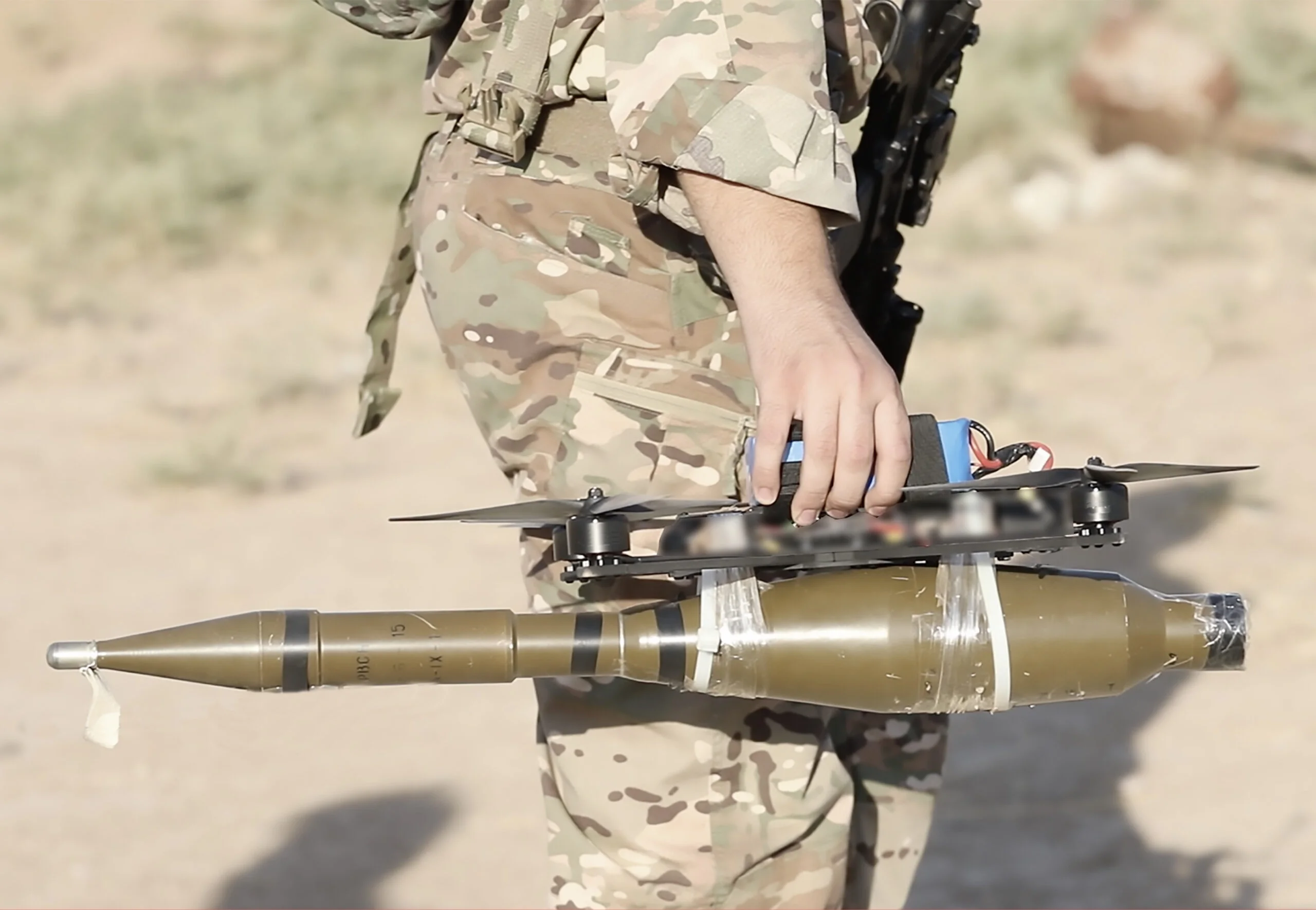
Among the innovations emerging from the war in Ukraine, improvised FPV drones represent the most significant development for insurgent warfare. Originally designed for recreational drone racing, FPV drones are small, highly maneuverable platforms that transmit live video feeds to an operator either by goggles or handheld display. These drones can be modified to carry explosive payloads and guided directly into targets. The operational significance of these systems lies in their cost-effectiveness. Many Ukrainian FPV drones are assembled using commercially available components and cost between $400 and $800 per unit. Despite their relatively low cost, these systems can destroy armored vehicles, artillery systems, radar installations, and logistical assets worth millions of dollars.
This asymmetry means insurgent forces can now threaten high-value military systems using platforms that are orders of magnitude cheaper than the targets they destroy. This represents one of the most dramatic reversals of the traditional cost asymmetry between insurgent and state forces in modern warfare. Unlike traditional anti-tank weapons, which require direct line-of-sight engagement and expose operators to counterfire, FPV drones allow insurgents to conduct precision strikes from concealed positions at stand-off distances. In practice, they allow irregular forces to field a form of distributed precision airpower without the infrastructure traditionally required to support it.
Operationally, FPV drones provide irregular forces with a form of low-cost precision airpower. Unlike traditional anti-tank weapons, FPV drones allow operators to guide the munition directly into vulnerable areas of a target. Drone operators can maneuver their platforms into exposed engine compartments, turret rings, or open hatches, exploiting vulnerabilities in even heavily armored vehicles. Operational reporting from the Ukrainian battlefield suggests that FPV drones have become one of the most effective anti-armor tools available to small units. Unlike conventional anti-tank systems, FPV drones can be employed at relatively long distances while operators remain concealed and protected from direct engagement.
Reconnaissance and Persistent Surveillance
While FPV drones represent the most visible innovation, commercial reconnaissance drones remain equally important for insurgent warfare. Small quadcopters equipped with cameras provide real-time battlefield intelligence previously available only to conventional militaries. The effectiveness of FPV strike systems depends heavily on the availability of reliable aerial reconnaissance.
In Ukraine, reconnaissance drones are a routine tool for monitoring enemy positions, observing logistics routes, and identifying potential targets for follow-on attacks. These drones allow small units to conduct surveillance from safe distances, dramatically reducing the risks traditionally associated with reconnaissance patrols. This capability is particularly valuable for insurgent forces. Traditional guerrilla reconnaissance often requires fighters to physically observe enemy positions, exposing them to detection or ambush. Small drones allow insurgent units to gather similar intelligence remotely while maintaining concealment.
Reconnaissance drones also function as early warning systems. Unit equipped with an aerial surveillance platforms can detect approaching vehicles, troop movements, or logistical activity long before these elements reach friendly positions. This enhanced situational awareness allows insurgent forces to avoid unfavorable engagements and identify opportunities for an ambush or strike.
Permanent Aerial Observation
Kurdish fighters possess a unique advantage in adapting to this environment. Kurdish militant groups have already faced extensive drone surveillance during conflicts with Turkey.
One of the most important lessons from Ukraine is that modern battlefields increasingly operate under conditions of near-constant aerial observation. Both Ukrainian and Russian forces deploy large numbers of reconnaissance drones that create an environment in which movement is detected quickly and engagements occur with minimal warning. On the modern battlefield, there is no longer an assumption of invisibility. Units must instead assume they are always being observed and plan operations accordingly. As previously argued in a personal analysis of reconnaissance operations on the Ukrainian battlefield, units must increasingly assume that they are being observed even when drones are not immediately detectable. This reality forces both conventional and irregular forces to adapt their tactics to account for persistent surveillance.
Operating effectively under these conditions requires dispersion, movement discipline, and rapid repositioning after engagements. Units must minimize their electronic signatures, avoid predictable patterns of movement, and exploit terrain features that reduce exposure to aerial observation. Kurdish fighters possess a unique advantage in adapting to this environment. Kurdish militant groups have already faced extensive drone surveillance during conflicts with Turkey. Turkish armed forces employed unmanned aerial systems such as the Bayraktar TB2 and the Anka UAV to conduct persistent surveillance and targeted strikes against Kurdish militants operating in Iraq and Syria.
This experience has forced Kurdish fighters to develop operational practices designed to mitigate the threat posed by hostile drones. Movement discipline, dispersed operating structures, and the use of terrain to reduce exposure to aerial observation have become critical survival strategies. Subsequently, Kurdish insurgent groups may already possess a level of “drone survival literacy” that many irregular forces currently lack.
Decentralized Drone Warfare
Integrating drone capabilities into these structures would allow insurgent forces to enhance their operational reach without fundamentally changing their organizational model.
Another pertinent lesson from Ukraine is the decentralized nature of drone operations. Ukrainian forces frequently employ small drone teams responsible for reconnaissance and FPV strike missions at the platoon or company level. These teams operate with significant autonomy, allowing them to respond rapidly to emerging targets. These systems integrate naturally into the decentralized command structures typical of insurgent movements because small teams can conduct drone operations with minimal logistical support.
This model aligns closely with traditional insurgent organizational structures. Guerrilla movements typically rely on small, semi-autonomous cells capable of conducting operations independently while maintaining loose coordination with larger networks. Integrating drone capabilities into these structures would allow insurgent forces to enhance their operational reach without fundamentally changing their organizational model. Small insurgent units equipped with reconnaissance and FPV drones can monitor enemy activity, identify targets, and conduct precision strikes without requiring direct support from centralized command structures. This capability dramatically increases the tactical independence of guerrilla units while complicating enemy efforts to disrupt insurgent networks.
Drone Production and Logistics
The Ukrainian drone ecosystem also highlights the importance of decentralized production networks. Many of the FPV drones used in Ukraine are assembled locally using commercially available components. Motors, flight controllers, batteries, and camera systems can be purchased through civilian markets and assembled into operational drone platforms with relatively limited technical expertise.
For insurgencies, this model offers significant advantages. Local assembly reduces reliance on external supply chains while allowing insurgent groups to modify drone designs according to operational requirements. Decentralized production also makes it more difficult for adversaries to disrupt drone capabilities through targeted strikes against centralized manufacturing facilities. External support may still provide critical components, technical expertise, or training. However, the Ukrainian experience demonstrates that effective drone capabilities can emerge from relatively simple technological ecosystems supported by commercial markets.
Strategic Implications
Taken together, these developments suggest that drone technology may significantly enhance the operational effectiveness of insurgent forces confronting conventional militaries. FPV drones provide insurgents with a form of low-cost precision airpower capable of destroying high-value military equipment. Reconnaissance drones improve situational awareness while reducing risks associated with traditional intelligence gathering. Decentralized production networks allow insurgent groups to sustain drone operations even in contested environments.
For Kurdish insurgent movements potentially operating against Iranian military forces, these capabilities could prove particularly valuable. Combined with decades of experience in guerrilla warfare and decentralized organizational structures, drone technology could enable Kurdish fighters to impose disproportionate costs on conventional adversaries. In prolonged conflicts, this dynamic could allow insurgent forces to steadily erode conventional military advantages through sustained equipment attrition.
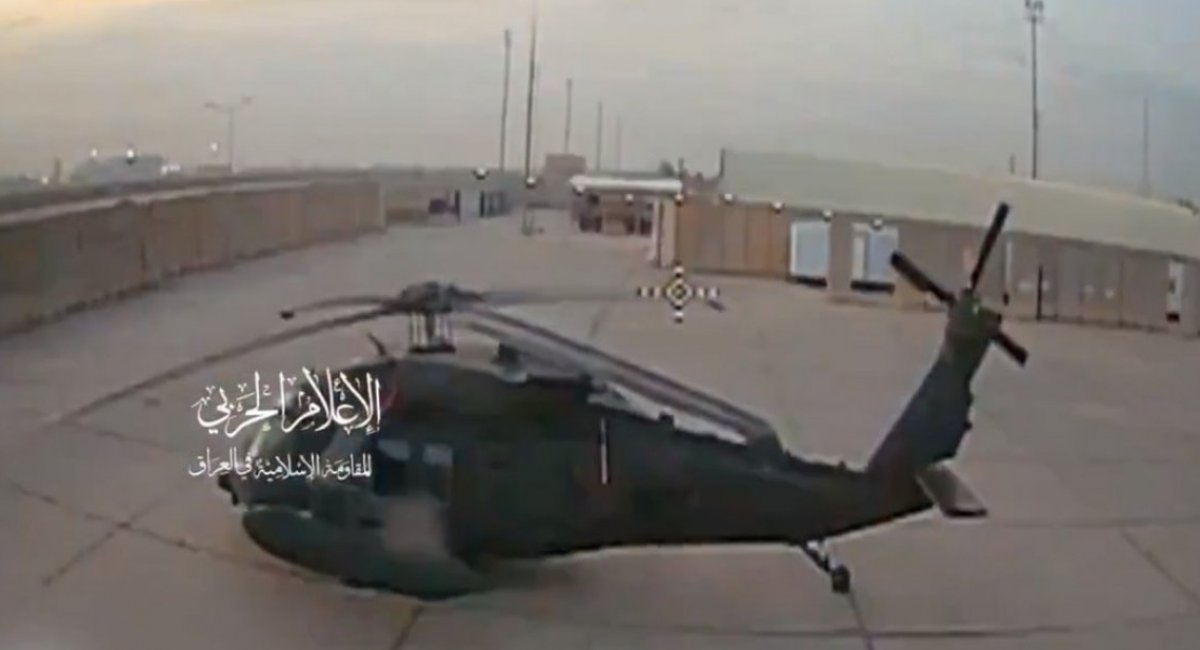
Iranian-aligned militias strike an American helicopter in Iraq using an armed FPV drone
Recent FPV activity in Iraq demonstrates that this is not merely a theoretical extrapolation from Ukraine. As reported by Small Wars Journal during the 2026 U.S.-Iran conflict, an FPV drone strike against U.S. Victory Base in Iraq exposed the vulnerability of fixed military infrastructure to low-cost, precision aerial attack. The drone reportedly loitered over the installation, surveyed structures, and selected a target without an obvious visible response. For Kurdish insurgent movements, the lesson is clear: FPV drones are not limited to striking vehicles or frontline positions. They can also threaten airbases, logistical hubs, fuel storage, munitions sites, and other fixed infrastructure that conventional forces depend on to sustain operations.
Conclusion
The war in Ukraine demonstrates that inexpensive drones have fundamentally reshaped the dynamics of asymmetric warfare. Improvised FPV drones allow small units to destroy armored vehicles and critical military assets using platforms assembled from commercially available components. In effect, irregular forces can now field a form of low-cost precision airpower previously available only to advanced state militaries.
The implications of this transformation are significant for Kurdish insurgent movements. Kurdish fighters already possess extensive experience in decentralized guerrilla warfare and have demonstrated the ability to sustain long-term insurgencies against stronger adversaries. Integrating drone reconnaissance and FPV strike capabilities into their operational framework could dramatically expand the tactical options available to Kurdish forces. At the same time, Kurdish experience operating under Turkish drone surveillance may provide an important advantage. Kurdish fighters have already adapted to the realities of operating under persistent aerial observation, a condition that increasingly defines modern battlefields.
If the Ukrainian battlefield represents the future of warfare, insurgent movements that successfully integrate low-cost drone capabilities into their operational models will gain significant advantages over adversaries relying solely on conventional military superiority. Kurdish insurgent movements, combining established guerrilla experience with emerging drone technologies, may be among the first insurgent movements positioned to exploit this transformation.


