





The Dangerous Delusion of the Knock-Out Blow | The Economist
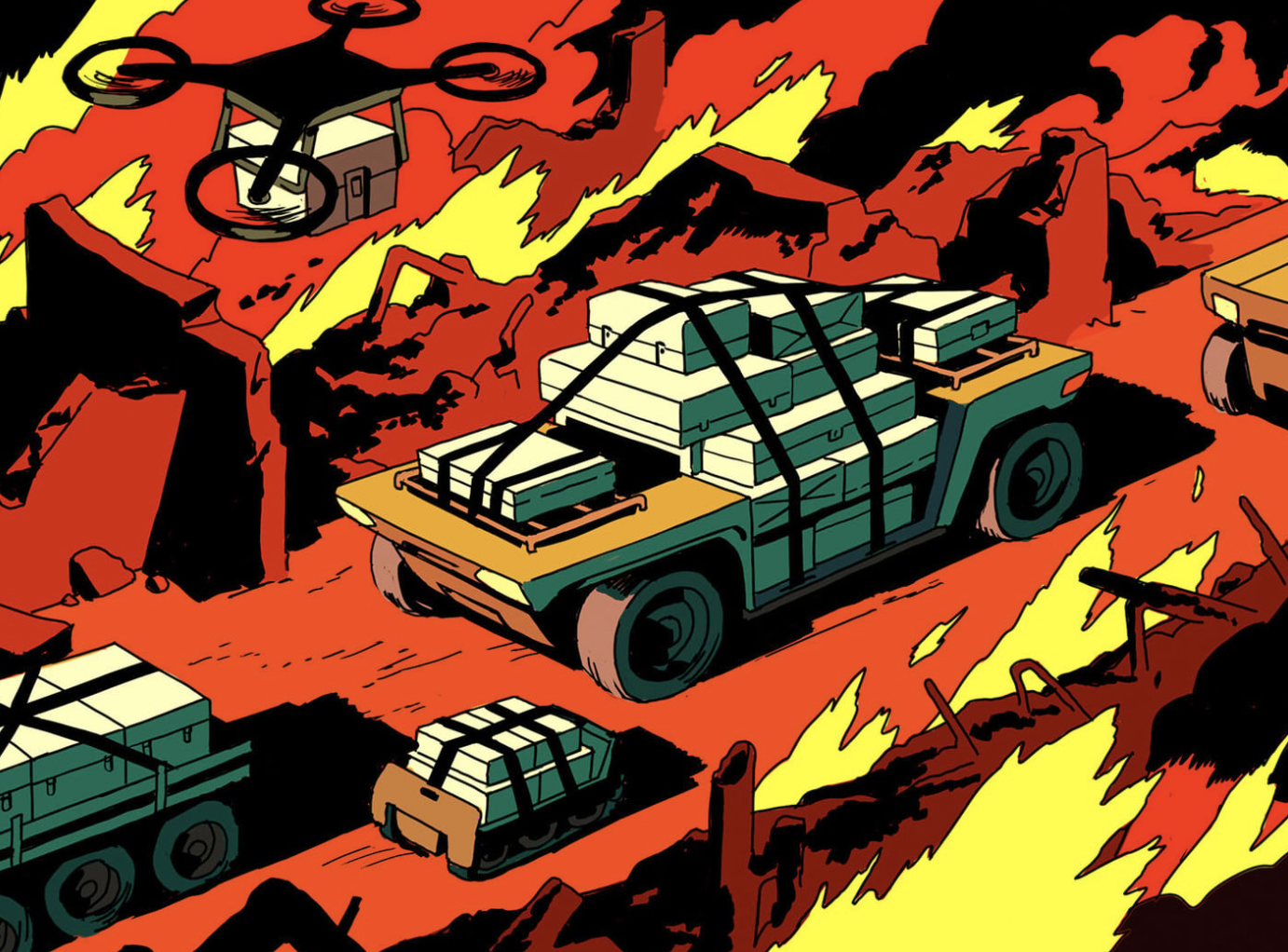

The Economist’s outgoing defense editor, Shashank Joshi, wrote a valedictory essay on the defining technological trends of modern warfare, based on the past eight years in his role. It is called:”Easier to Start, Harder to Win.”
Here are some themes.
Transparency
Transparency is the word that lingers with you after reading this piece. On the battlefield, that is. Think more sensors, better networks, and satellites. War, and the death that comes with it, seems more intimate than it ever was, he writes. The drone, of course, is its most visible avatar of battlefield transparency, but it’s also misleading. “To attribute to weapons the advantages that accrue to the systems which use them best has misled military minds in the past,” he writes. “It could do so again.”
Two Wars, One Lesson
Ukraine and Iran look like opposites. One is grinding attritional trench warfare; the other a showcase of fifth-generation air power striking at will. But both were started by great powers expecting easy victory. Both produced stalemates. Both demonstrate that canny defenders can absorb extraordinary punishment and persist. Iran still retains 70% of its pre-war cruise and ballistic missiles and 75% of its launchers after 13,000 American and Israeli strikes. Russia has absorbed losses the Economist estimates at 1.1 to 1.4 million killed or wounded, and has yet to break.
The Air Littoral Problem
Air superiority, long the decisive variable in Western military thinking, now buys less than it used to. Below 4,000 meters, the battlefield has effectively decoupled from what happens above it. Layered defenses challenge large, expensive aircraft in the low atmosphere—what some are calling the “air littoral,” analogous to the shallow coastal waters where big navies struggle against mines and small craft. The IDF had air dominance over Lebanon and still had to clear villages on foot, he points out.
The Procurement Gap
And then there’s the time delay in procurement. Even with all these case studies to learn from, armies are not buying what the battlefield demands. Retired two-star General Matt Van Wagenen, former deputy chief of staff for operations at NATO’s main military command, contends:
“I think we’re going down the pipeline of investing in yesterday’s technology… A 77-ton combat vehicle that’s burning 500 gallons of gas every 12 hours on a battlefield that is going to be largely transparent [is unwise]…. The formations of the future are going to be wildly unmanned.”
This points to the break neck pace of battlefield adaption in today’s landscape of war. Procurement in its traditional sense is no more; the new procurement has to be highly organic and decentralized.
Takeaways
Here’s what we’re left thinking.
- Targeting volume is not strategy. Vietnam’s body counts and now Iran’s strike tallies all reflect what the essay calls the Belloc syndrome—the belief that enough modern firepower, efficiently applied, produces decision. It doesn’t. “Once more—with more targets” is not a war-winning concept.
- The transparency revolution cuts both ways. Sensor networks that enable precision strikes also expose expensive platforms to cheap one-way weapons. The side that adapts its doctrine faster matters more than the side with the most expensive kit.
- Political leaders remain in thrall to the knock-out blow despite overwhelming contrary evidence. The gap between operational reality and strategic optimism is, the essay argues, the most dangerous variable in the current security environment.

