Burning Patriots, Borrowing Lessons: How The Iran War Is Costing Ukraine
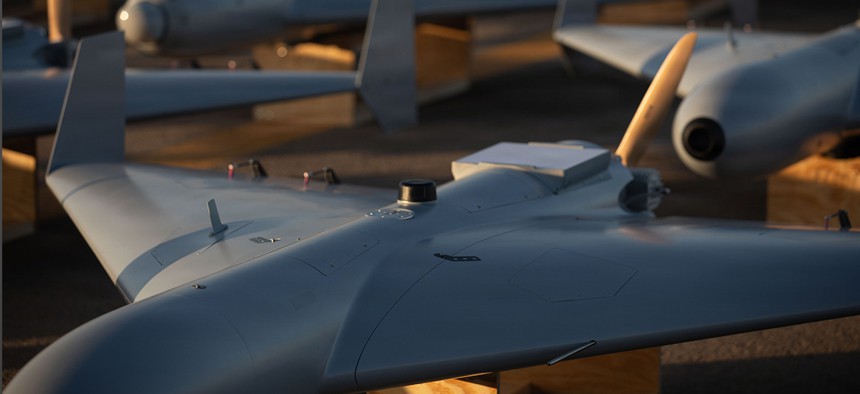

Two recent reports by Politico and The New York Times illuminate a strategic contradiction in U.S. air defense policy as its war in Iran continues. While American forces are rapidly consuming the very missile defenses Ukraine depends on, the Pentagon and its allies in the Gulf are simultaneously turning to Ukrainian battlefield experience to solve their drone defense problem.
The Challenge
Iran’s campaign illustrates the scale of the challenge. Since the war began, Tehran has launched more than 1,475 drones and over 260 ballistic missiles against Gulf targets. U.S. and allied forces have intercepted over 1,600 projectiles, largely using Patriot interceptors that cost roughly $3 million each. Cheap drones such as the Shahed, by contrast, cost around $50,000, allowing attackers to overwhelm defenses through volume. In the opening weeks of the conflict, U.S. and partner forces have already fired hundreds—possibly up to 1,000—Patriot missiles, straining stockpiles that were already stretched by the war in Ukraine.
What This Means for Kyiv
Politico’s Paul McLeary, Jack Detsch and Chris Lunday describe in “Ukraine’s US air defenses are at risk in Iran war” how that surge is now affecting Kyiv. Ukraine relies on the same Patriot systems to defend its cities from Russian ballistic missile strikes, yet production remains limited despite plans to expand manufacturing. European officials warn that increased U.S. demand in the Middle East could slow deliveries and weaken Ukraine’s air defense at a critical moment in the war.
At the same time, as The New York Times’ Michael Schwirtz points out in “To Fight Iran’s Drones, U.S. Taps Ukraine’s Hard-Earned Knowledge,” the Pentagon is looking to Ukraine’s hard-earned expertise in drone warfare for solutions. Ukrainian-developed systems such as Merops interceptor drones, which cost under $20,000 each, have reportedly destroyed a large share of Russian Shahed drones. The United States is now deploying thousands of these interceptors to the Middle East to counter Iranian drone attacks.
The Paradox
The result is a paradox of the American-Ukrainian strategic relationship. The U.S. is burning through the air defenses Ukraine needs while relying on Ukraine’s innovations to defend its own forces.
Related:
Read Crispin Burke’s piece from this past fall titled “Small Drones, Big Limits: A Smarter Drone Strategy” on how the U.S. Army can take lessons from Ukraine to build an effective drone strategy for its own future.