





How the Army Fights: Insights from the 1973 Arab-Israeli War


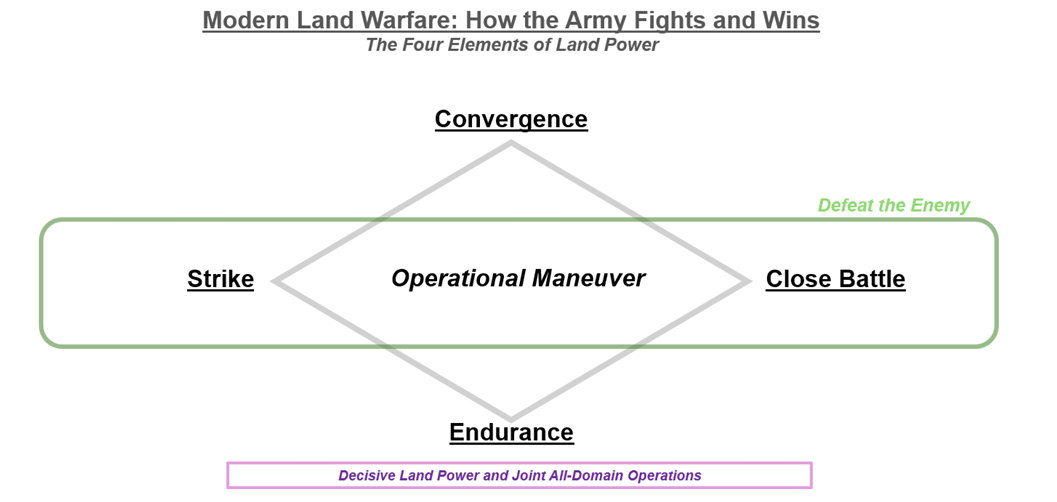
The 1973 Arab-Israeli War offers an enduring demonstration of how military forces innovate to overcome sophisticated defenses, restore operational maneuver, and translate battlefield victories into strategic advantage. Though technology and geo-politics have dramatically changed since then, the role of integrated air defenses, precision antitank weapons, armored formations, and gap-crossing actions in that conflict anticipated many of the challenges that now confront contemporary militaries. The United States Army’s new warfighting guidance, How the Army Fights, provides a framework for understanding these requirements through the application of four interdependent elements of landpower: convergence, strike, close battle, and endurance. As argued by General Christopher LaNeve in his October 2026 directive, it directs the institution to “change how it prepares for war” in order to “connect battlefield action to campaign outcomes.”
The chaotic destruction and sudden reversals of the 1973 Arab-Israeli War illustrate both the consequences of failing to apply these elements and how the careful design and employment of landpower can yield productive results. In the opening days of the seminal conflict, Egyptian and Syrian forces launched surprise offensives that inflicted devastating losses on an Israeli Defense Force that had become complacent after decades of military dominance. However, the IDF recovered from these setbacks by combining mobilization, reconstitution, and tactical adaptation to execute a bold counteroffensive that shattered the Egyptian Army’s missile defenses and isolated its field forces along the Suez Canal. While occurring in a different time, place, and context, these outcomes demonstrate how modern armies can negotiate attrition and restore offensive tempo even in the most difficult of circumstances.
Convergence: Synchronizing All-Domain Effects
How the Army Fights argues that convergence, as a much-debated concept, “creates and exploits positions of advantage through the deliberate synchronization of all-domain effects.” With theater armies and corps serving as the primary landpower integrators, it requires those echelons to integrate capabilities across land, air, maritime, space, cyberspace, and the electromagnetic spectrum to preserve friendly cohesion, disrupt enemy systems, and, when appropriate, enable operational maneuver. Although these modern capabilities did not exist in their present form in 1973, the evolving interplay between ground, air, and naval forces in that destructive conflict demonstrated the enduring requirement to synchronize multi-domain efforts in novel ways that allowed each of the IDF’s services to maximize capabilities and mitigate vulnerabilities.
Egypt’s initial offensive on October 6 proved the effectiveness of enabling combined arms sequencing with credible deception to neutralize an opponent’s seemingly indomitable advantages. Egyptian commanders synchronized massive artillery and bomber strikes with follow-on attacks by engineers, anti-armor infantry, and heavy armor to cross the Suez Canal and establish defensible bridgeheads. While Soviet-provided integrated air defenses (IAD) inflicted shocking losses on the Israeli Air Force’s (IAF) expected counter-attack, infantry with Saggar missiles and RPG-7s virtually destroyed the Israeli 252nd Armored Division as it frantically attempted to retake the canal. By denying the IDF the ability to converge air and ground effects while closely integrating their own gap-crossing scheme, the Egyptians achieved their primary operational objectives for the initial phase of the campaign.
The first days of the Yom Kipper War, where the Israeli Army attempted to recreate its aggressive offensives of the 1967 Six Day War, illustrated the unforgiving imperative for military forces to proactively adapt to the changing character of warfare. Throughout succession of largely uncoordinated counter-attacks on 6, 7 and 8 October, IDF armor charged Egyptian positions bristling with anti-air and anti-armor defenses along the east bank of the canal. This resulted in massive tank losses due to insufficient reconnaissance, infantry, artillery, and dedicated air support. With the IAF diverted to repel the Syrians on the Golan Hights, the Israeli failures in the Sinai demonstrated the importance of creating fatal sequences of asymmetric advantages across air, land, and maritime domains in ways that set conditions for aggressive offensive operations while avoiding unacceptable levels of combat attrition.
However, as the war progressed into its second week, the Israelis executed a rapid mobilization and reconstitution program to restore, and improve, its broken armored divisions while devising intricate methods to neutralize the Arab missile shields. When Egypt succumbed to political pressure to launch a massive, and unprotected, armored assault deeper into the Sinai after the defeat of the Syrian Army in the north, the IDF shattered the attack with integrated defensive fires and now stood ready to execute an ambitious crossing of the Suez Canal intended to create a favorable disposition for cease-fire and negotiation. The resulting counter-offensive saw IDF air, ground, and naval forces converge efforts to dis-integrate the Egyptian IADs, dominate the Mediterranean coast, execute a contested gap-crossing, project armored forces into Africa, and isolate the Egyptian Third Army in its battle positions along the east bank of the canal.
Strike: Disrupting Enemy Systems
The element of strike, according to How the Army Fights, represents an “interconnected capability spanning every tactical and operational echelon” that employs “lethal and nonlethal fires” to reduce enemy area denial capability. Rather than concentrating exclusively on destroying frontline forces, this kind of attack disrupts command networks, dis-integrate air defenses, degrades logistics functions, and interdicts supporting capabilities that are fundamental to combined arms execution. While the 1973 Arab-Israeli War featured numerous examples of successful strike operations at-depth by Arab and Jewish forces, the IDF’s solution to the problem of the Egyptian Army’s imposing missile shield proved most compelling. These operations transformed a narrow penetration across the canal into a broader offensive that undermined Egyptian military cohesion and collapsed their forward defensive systems.
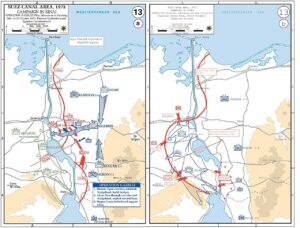
While long-range strike operations often play leading roles during initial shaping operations, the IDF, after suffering early setbacks, had to reconstruct its deep attack capability weeks into the conflict. With the IAF mostly stymied by the Egyptian SAMS, a single Israeli tank company from the 143rd Reserve Armored Division, after leading the initial canal crossing, executed a series of lighting raids against proximate enemy missile batteries to create “windows of opportunity” for Israeli aircraft to begin dis-integration of the IAD networks. This initial incursion, which catalyzed massive Egyptian air and artillery strikes against the bridging effort, soon blossomed into a larger joint offensive where three Israeli armored divisions crossed the canal to clear SAMS positions to the north and south while the IAF targeted vulnerable Arab armored counter-attacks and infantry strong-points along the primary axes of advance.
The renewed Israeli strike campaign, which benefited from a massive American resupply program called Operation Nickle Grass, invited a chaotic response in Cairo. After initially dismissing the IDF crossing as a distraction, the Egyptian general staff launched its entire air fleet to repel the Israeli sorties and strike vulnerable IDF columns crossing the canal. The resulting melee, which saw the Egyptians conduct 2,500 sorties across eighteen major air battles, resulted in the complete destruction of Egypt’s ability to contest the air domain and empowered Israeli fighter-bombers to interdict ground lines of communication that provided critical resupply to the heavily mechanized Egyptian field armies. Now worried about strikes against their capital, the Arabs abandoned their immobile SA-2s and SA-3s at the front and retracted their armored presidential guard and mobile SA-6s westward to ensure regime survival.
These outcomes can inform how the U.S. Army employs long-range strike to extend operational reach with more than just episodic results. Even as modern warfare features a dizzying advancement of drone, missile, space, and electronic warfare technologies that are dramatically increasing attack range, the lesson remains clear: strike operations are most impactful in land warfare when executed in support of robust ground formations that provide credible capacity to capture objectives, apply territorial control, and ensure favorable political outcomes. The Israeli experience in 1973, in which the IDF Southern Command employed multi-domain strike to enable its contested gap-crossing and follow-on scheme of maneuver, demonstrates that strike effectiveness should not be measured targets destroyed, but by the causal relation of those precision attacks to the willingness and capacity to apply durable landpower in contested spaces.
Close Battle: the Currency of Landpower
How the Army Fights describes the close battle element as the employment of combined arms formations to close with, defeat, and destroy enemy forces while seizing and holding critical terrain. Although multi-domain convergence and long-range strike allows echeloned commands to attack targets at extraordinary distances—as seen in the awesome missile and drone exchanges of the Russia-Ukraine War—credible ground force ability to destroy enemy combat power and physically control territory remains essential to achieving political objectives. The Israeli armored counteroffensive at the Suez demonstrated this requirement through the difficult process of establishing a bridgehead, defeating Egyptian strong points, and repelling counter-attacks to expand the penetration into operational depth. These actions illustrated the inescapable requirement for armies to move, fight, reconstitute, and persevere over time.
The Battle of the Chinese Farm, which exploded near the crossing site as one of the bloodiest clashes of the war from 15-17 October, exemplified the requirement for credible close battle capability. Following the decisive defeat of the renewed Egyptian offensive on 14 October, the Israeli 143rd Armored Division encountered the Egyptian 21st Armored and 16th Infantry Divisions entrenched along the route to the canal. Caught by surprise and lacking intelligence, the IDF soldiers launched a series of savage day and night assaults that featured hand-to-hand fighting and close-range tank fights. With the Israeli Southern Command desperately needing to pass through the bridging convoys, the 143rd Division advanced trench by trench to repel the stubborn defenders. The repeated armored assaults, which required paratrooper support, eventually killed or displaced the Egyptian defenders to secure the route for safe passage.
This engagement echoed a similar close battle instance that occurred on the Golan Heights in the opening hours of the war. When the Syrian Army launched its surprise offensive on 6 October with a massive artillery barrage and corps-sized ground assault, it nearly overran the severely outnumbered IDF soldiers who guarded the way into the Israeli heartland. Desperate to hold the line, the Israeli Army’s 7th Armored Brigade moved up to engage multiple Syrian armored divisions across an engagement area that became known as the “Valley of Tears.” While the brigade suffered heavily in the fighting, they destroyed more than 500 enemy armored vehicles while breaking the back of the massive Arab offensive. This costly defensive action purchased time and space for IDF reinforcements to mobilize, recapture the Golan Heights, launch an invasion of Syria proper, and finally defeat a series of Iraqi and Jordanian armored attacks.
The battles that raged at storied locations such as the Chinese Farm and the Valley of Tears crystalized the enduring reality that war remains, as argued by LaNeve, a “human contest of wills.” While long-range fires, air interdiction, and even maritime clashes in the Mediterranean Sea impacted the war’s outcome, the final arbiter of success and failure was decided by soldiers who fought to seize or defend terrain in ways that created new political realities on the ground. This requirement to negotiate attrition and adapt to unforeseen challenges reinforces the central proposition of close battle: the prosecution of land warfare requires combined arms formations that are prepared to advance through enemy fire, defeat entrenched enemy forces, and consolidate territorial gains. While multi-domain convergence and deep strike remain essential, the ability to fight for ground remains the true currency of large-scale armed conflict.
Endurance: Sustaining Combat Power
How the Army Fights defines the element of endurance as the ability to posture, protect, and project combat power across time and distance through resilient sustainment and force generation. This encompasses logistics, transportation, force protection, medical support, infrastructure development, and requirements to reconstitute entire formations during armed conflict. Unlike the other elements of landpower which more directly orient on defeating enemy forces, endurance preserves military capacity to fight and persevere throughout difficult and costly campaigns until objectives are achieved. The 1973 Arab-Israeli War, as conflict that far exceeded expected consumption rates and casualty numbers on both sides, demonstrated that operational success often depends more mobilization, reconstitution, and sustainment capacity than premier ability to execute exquisite joint strikes or innovative combined arms tactics.
The state of Israel, as a small Mediterranean nation surrounded by much larger and hostile Arab countries, entered the conflict with a small active duty military component and a proportionally large reserve force that depended upon advanced warning to ensure timely mobilization. When the Egyptians and Syrians moved faster than previously thought possible, the IDF struggled to respond and suffered from chaotic deployment of reserve divisions even as the active forces endured heavy losses. However, despite numerous initial setbacks, the hasty mobilization of reserve forces under experienced commanders allowed the desperate defenders to stabilize the Golan Heights, reinforce the Sinai front, and eventually regain operational initiative. This capacity to negotiate unforeseen attrition and regenerate forces proved essential in mitigating initial losses and rebuilding combat power for the eventual counter-offensives.
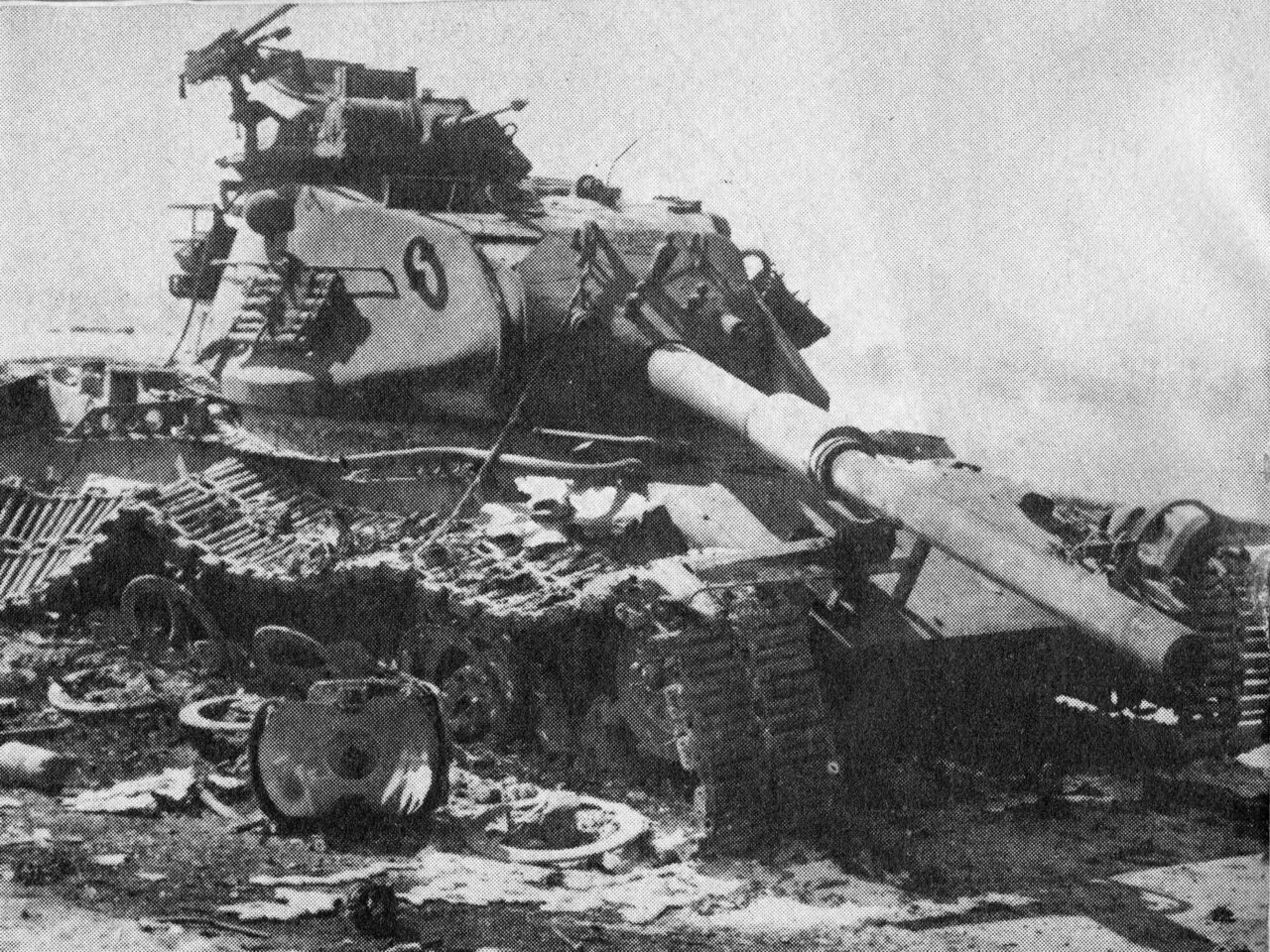
The IDF’s reconstitution of three broken armored divisions in the southern theater illustrated how combat losses can deeply impact campaign outcomes. With an armored corps-equivalent in the Sinai suffering approximately 45% losses in main battle tanks after just a few days of fighting, the IDF desperately established a new line of defense adjacent to the canal as it received a torrent of replacement soldiers and equipment. Forward commands repelled continued Egyptian assaults while simultaneously reforming bloodied tank crews, establishing hasty vehicle repair facilities, rebuilding formation cohesion at echelon, and devising new tactics to negotiate the Egyptian anti-armor threat. By 14 October, when the Arabs foolishly attacked beyond their missile shields, the Israelis had rebuilt their divisions with expanded combined arms capabilities and stood prepared to launch a major counter-offensive into Egyptian territory.
Operational endurance became critical for both sides as the war progressed into its third week and all sides attempted to avoid culmination. With both the United States and the Soviet Union dispatching massive resupply efforts to support their respective clients, the unforeseen levels of munitions consumption, armored vehicle destruction, and quantities of casualties shocked the entire world. For the IDF, the risky projection of three armored divisions across the canal created numerous challenges with ensuring throughput of fuel and munitions to sustain the breakout in Africa. For the Egyptians, inability to protect ground lines of communication in their rear areas created debilitating conditions for forward commands left bereft of supplies and replacements. This resulted in an inverse equation where the expansion of Israeli operational reach increasingly reduced the Egyptian Army’s ability to resupply, reconstitute, and sustain combat operations.
Insights for Modern Warfare
The 1973 Arab-Israeli War provides a compelling illustration for how modern armies can apply the elements of landpower to, as argued by LaNeve, “turn tactical success into campaign advantage.” However, despite the IDF’s outsized success in that conflict, the privileged role of operational maneuver in the Army’s new guidance deserves careful consideration. While this particular kind of offensive action can allow attacking forces to win quickly with fewer casualties, it remains but one avenue for achieving tactical objectives with conditional application in specific geographies. Further, as seen in the Israeli experience at the Sinai and the Golan, the ability to fight for contested ground, negotiate unexpected losses, and reconstitute formations will remain a pre-requisite for not only operational maneuver, but the entire spectrum of offensive, defensive and stability operations that armies must be prepared to execute.
These ideas will remain salient in the current environment where the proliferation of drone, missile, space, and electronic warfare technologies are challenging how expeditionary forces will gain access, defend lodgments, build sustainment, and execute offensive campaigns in strongly denied areas. While Egyptian and Syrian successes during the initial offensives of 1973 demonstrated how credible deception, tactical audacity, and combined arms synchronization can achieve limited objectives, the IDF’s painful recovery and dramatic counter-offensives revealed how the application of convergence, strike, close battle, and endurance can create new opportunities and yield positional advantage. These insights, which ultimately center on the timeless requirement for soldiers to seize, hold, and defend terrain, will prove fundamental for the U.S. Army as it projects landpower in the future wars of the 21st century.


