





Blue Helmets Under Fire: The Rising Asymmetric Threat to UN Peacekeeping
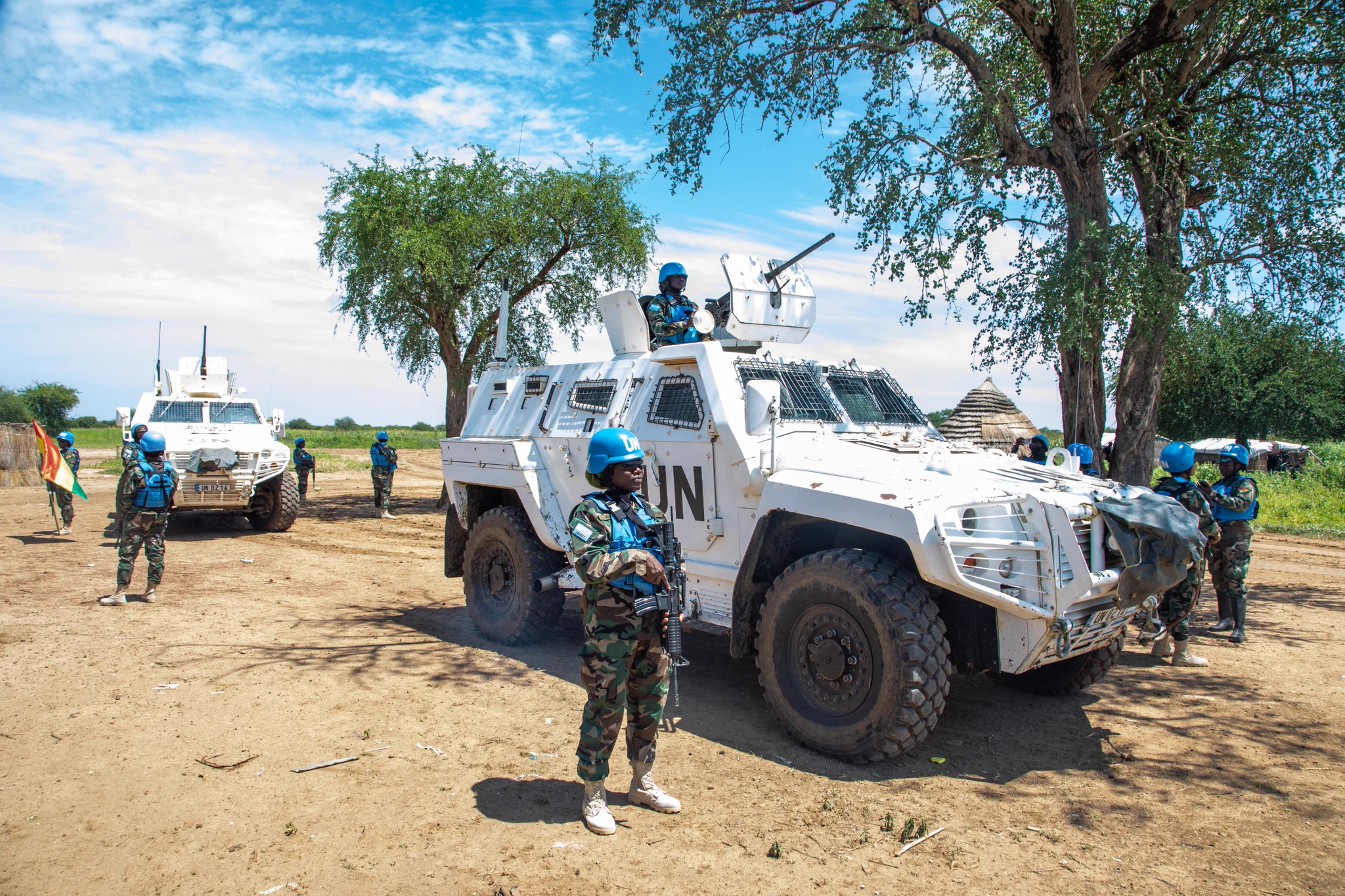

Abstract: United Nations (UN) peacekeeping forces face growing and largely unmet asymmetric threats. The four main drivers of this challenge concern non-state actors, emerging technologies, governance, and information warfare. These drivers carry effects ranging from immediate to long-term, threatening peacekeepers and degrading UN acceptance in host nations. Unless immediately addressed, UN peacekeepers will remain dangerously outpaced by the threats they are mandated to confront.
On December 13, 2025, a drone strike hit the logistic base for the United Nations Interim Security Force for Abyei (UNISFA) in Kadugli, Sudan, killing six Bangladeshi peacekeepers and wounding eight others. The attack was reportedly attributed to an armed separatist group. In the same month, on December 15, 2025, armed actors abducted and killed a national staff member serving with the United Nations Mission in South Sudan (UNMISS) from their vehicle while he was on duty. Most recently, on August 24, 2026, two Ethiopian peacekeepers from UNMISS were killed and seven other people injured in an ambush in South Sudan’s Jonglei State.
UN Peacekeeping has evolved from traditional cease fire monitoring into a multidimensional role designed to safeguard the implementation of comprehensive peace agreements.
These are not isolated tragedies. The frequency of these attacks point to the evolving security environment of the United Nations Peacekeeping Operations (UNPKO). UN Peacekeeping has evolved from traditional cease fire monitoring into a multidimensional role designed to safeguard the implementation of comprehensive peace agreements. Chapter VII of the Charter of the United Nations allows the use of proactive military force beyond basic self-defense for fulfilling mandated tasks. However, the changing global security environment exposes peacekeeping missions to asymmetric challenges amid reduced funding and personnel shortages. The spillover effects are not limited to increased physical casualties only; host nations are less likely to accept UNPKO and Troop Contributing Countries’ (TCC) are less likely to provide mandated peacekeepers. Immediate and concerted efforts are necessary to address the evolving dynamics of UNPKO.
What Makes a Threat Asymmetric
Asymmetric threats are a security challenge where one party employs unconventional tactics against a stronger opponent. This often involves non-state actors leveraging guerrilla warfare tactics to exploit vulnerabilities in a more powerful adversary’s defense, making it challenging for the stronger side to deal with them symmetrically. Asymmetric threats against UN peacekeeping missions involve non-state armed groups, extremists, and criminal networks using guerrilla tactics, improvised explosive devices (IEDs), drone attacks and digital disinformation against peacekeepers.
International Peace Institute’s 2018 review of the High-Level Independent Panel’s “Cruz Report” observed that most UN contingents remain equipped and trained for traditional peacekeeping despite the increasingly asymmetric threat environment. Since the closure of the UN peacekeeping mission in Mali on December 31, 2023, 25 peacekeepers from 14 different countries have lost their lives to malicious acts. Although the trend is not linear, it raises concern about evolving dynamics in mission areas.
A Trend Reversing Sharply Upward
The clearest evidence comes from the UN Staff Union Standing Committee’s annual tally of personnel killed in malicious attacks. The numbers tell a story of temporary relief followed by a sharp reversal:
- 2022: at least 32 UN personnel killed in malicious attacks (28 military, four police)
- 2023: at least 11 (seven military, four civilian) — a drop driven largely by the conclusion of the UN Multidimensional Integrated Stabilization Mission in Mali (MINUSMA), which had been the deadliest mission in UN peacekeeping history, with 175 fatalities from malicious acts
- 2024: at least five
- 2025: at least 21 — 12 peacekeeping personnel and nine civilians, more than four times the 2024 toll
The three deadliest missions in 2025 were UNISFA, United Nations Multidimensional Integrated Stabilization Mission in the Central African Republic (MINUSCA) and the United Nations Organization Stabilization Mission in the Democratic Republic of the Congo (MONUSCO). An epidemiological study of UN peacekeeping casualties from 1948 to 2021 revealed that almost 26% of all deaths were caused by malicious acts, with most of these deaths occurring in Lebanon, Sudan, and Democratic Republic of Congo.
Four Drivers of the Rising Threat
The rising asymmetric threat to UN peacekeepers is driven by four distinct but mutually reinforcing dynamics.
Proliferation and Fragmentation of Non- State Armed Groups
The shutdown or downsize of UNPKO regularly creates power vacuums that often lead to a dramatic increase in non-state armed groups and insurgent activities.
The most fundamental driver is the growing number of armed actors – insurgents, extremist organizations and criminal networks – in the mission areas. These groups are mostly decentralized and operate outside effective state control, having very little or no motivation to adhere to peacekeeping standards. They engage in fighting over geographical dominance and resources among themselves and make the already volatile conflict zones more unpredictable. The shutdown or downsize of UNPKO regularly creates power vacuums that often lead to a dramatic increase in non-state armed groups and insurgent activities. These small and fragmented groups pose threat to peacekeepers that are difficult to deter in a complex security environment.
Weaponization and Diffusion of Emerging Technologies
Drone warfare linked to the Sudan conflict has already caused casualties and forced UNISFA to abandon key positions in Sudan.
Technology is fundamentally altering the capabilities of the armed actors in conflict zones. Cheap commercial drones, IEDs, encrypted communication, and increasingly available surveillance tools offer relatively weaker groups effective strike capabilities. The UN’s own Strategy for the Digital Transformation of Peacekeeping identifies the hostile use of “sophisticated, remotely triggered improvised explosive devices” and armed unmanned aerial vehicles as a defining feature of the threat environment that peacekeeping must now defend against. Drone warfare linked to the Sudan conflict has already caused casualties and forced UNISFA to abandon key positions in Sudan. Peacekeeping missions need to adapt to address this rapidly evolving environment.
Weak Governance and Trans-Nationalization of Conflict
Many UN missions operate in areas where state authority is weak or contested. This creates security vacuums that non-state armed organizations often exploit. Various regional alliances like African Union (AU), European Union (EU), the Economic Community of West African States (ECOWAS), North Atlantic Treaty Organization (NATO) and others often intervene in conflict zones with diverse motives that can contradict the UN’s principles and mandates. As major powers vie for control over mineral resources, economic infrastructures, and geopolitical dominance, proxy forces and host nation non-cooperation are emerging as new challenges for UN peacekeeping forces.
Information Warfare and the Erosion of UN Legitimacy
The fourth driver is the weaponization of the information environment. Armed groups and other hostile actors increasingly use social media, encrypted platforms, and other channels to spread disinformation, propaganda, and hate speech aimed at UN personnel. 68% of peacekeepers surveyed by the United Nations Department of Peace Operations (DPO) in 2025 said that misinformation and disinformation had a moderate to severe effect on their efforts to implement peace and security work. This appears as a dynamic challenge in both the political and cognitive domain for UN missions.
The Imminent Effect on Peacekeeping Missions
These asymmetric challenges have multi-layered impacts on peacekeeping missions. The immediate effect is that they put UN troops and infrastructure at greater risks of attack. Gradually reducing force structures have already put strain on existing missions by stretching resources across their operational area. Thus, troops are more exposed to asymmetric threats. It shifts the mission focus away from peacekeeping to self-defense and constrains operational effectiveness.
Ultimately, the host nations lose hope on the UN’s activities and may limit their movement within the country. Mali is a textbook example of this cycle.
Peacekeeper casualties inhibit the TCCs from adopting proactive strategies to fulfil mandated tasks. Additionally, harm to peacekeepers exposes the vulnerability of the UN and peacekeeping troops to the public. This subsequently encourages regional proxies and armed actors to inflict more physical or psychological damage to peacekeepers. Ultimately, the host nations lose hope on the UN’s activities and may limit their movement within the country. Mali is a textbook example of this cycle.
A Call to Action
High risk missions like UNISFA, MINUSCA and MONUSCO require counter UAS systems and Intelligence, Surveillance, and Reconnaissance (ISR) capabilities immediately. These missions should distribute threat intelligence both laterally amongst themselves and vertically to their headquarters. The Security Council and the DPO should likewise review national caveat policy- the restrictions TCCs impose on their own forces, such as barring offensive patrols- as unlimited caveats now substantially enhance the likelihood of casualties they were supposed to reduce. These recommendations, however, come against the backdrop of a UN liquidity crisis that has already forced troop reduction and field camp closures. This outlines the fact that political will alone will not suffice without member states meeting their contributions. In the long run, the UN requires a force-generation strategy that closes the gap between the risks that missions encounter and the capabilities that they deploy. This effort needs UN doctrine, posture, training modalities, and equipment to evolve. As the threat landscape continues to evolve, peacekeepers must adapt with equal urgency to sustain operations in irregular threat environments.


Commenting is available to active SWJ members and staff.