





The System, Not the Centrifuges

A settlement that ends enrichment but preserves missiles, proxies, and maritime leverage will not end the conflict. It will reschedule it.
Abstract
Forty-seven years after Iranian students stormed the US Embassy in Tehran, the confrontation that began there has never ended. It has only changed shape. Hostages became roadside bombs. Roadside bombs became proxies. Proxies became drones, cyber intrusions into American water systems, and a nuclear program that moved within weeks of producing enough fissile material for a weapon.
Now, as mediators seek to restore a ceasefire and reopen the Strait of Hormuz, a narrow chokepoint carrying roughly one-quarter of the world’s seaborne oil trade, the United States faces a challenge that neither diplomacy nor military force can resolve alone: whether any settlement will dismantle Iran’s broader coercive system or merely pause the conflict while preserving the means to renew it.
This essay brings readers the voices of analysts Washington rarely hears in full, drawn from states enduring Iranian missile and drone attacks, maritime coercion, and the economic damage imposed on communities dependent on regional trade. They diverge over how Iran should be confronted, but converge on why its coercive system cannot be restored. Their perspectives illuminate the region’s layered strategic puzzle and lead to a stark warning and a practical test for any settlement: if Iran retains its missiles, militias, and maritime leverage, the war will not have ended. Such a settlement will only schedule the next one, and America’s partners will pay first, but not alone.
Iran’s Long War Against America
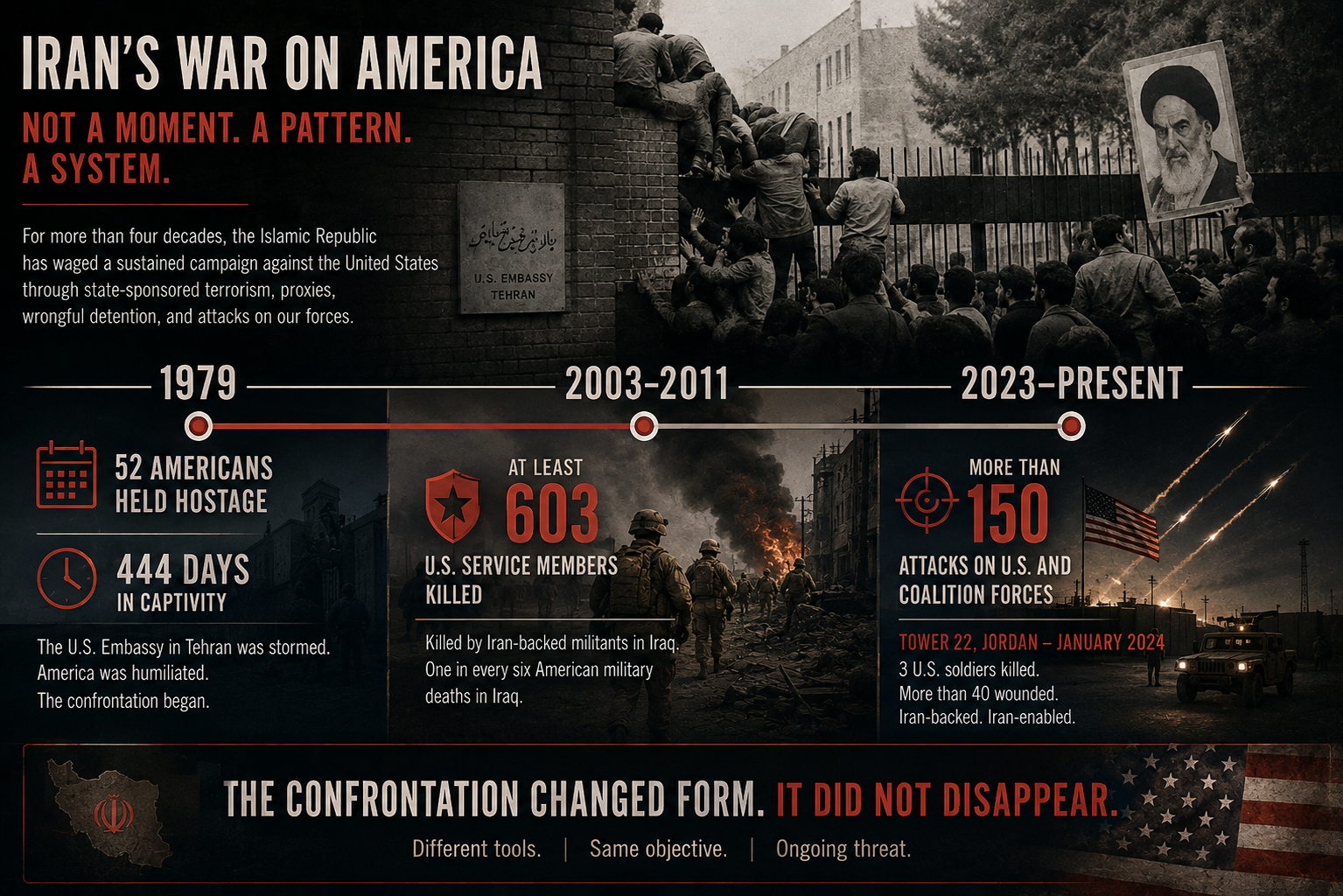
Figure 1: Timeline overview of Iranian-US relations.
The Islamic Republic inaugurated its long confrontation with the United States in 1979, when Iranian students seized the US Embassy in Tehran and held 52 American diplomats and citizens hostage for 444 days. Since then, Tehran has sustained that confrontation through state-sponsored terrorism, proxy warfare, and repeated attacks on American forces and interests across the Middle East.
During the Iraq War alone, Iran-backed militants killed at least 603 US service members between 2003 and 2011, representing approximately one in every six American military deaths in Iraq during that period. Iran has also used the wrongful detention of Americans as state policy while supporting armed groups seeking to expel US forces from the region.
Following the October 7, 2023, Hamas attack on Israel, Iran-backed groups launched more than 150 attacks against US forces and coalition facilities across the region. That campaign killed three US soldiers and wounded more than 40 at Tower 22 in Jordan in January 2024.
Two decades of sanctions and negotiation produced measurable success in one domain and strategic failure across the system. The 2015 JCPOA imposed verifiable limits on Iran’s nuclear program but left missiles, proxies, and maritime coercion outside its core bargain. Those instruments remained largely intact as Iran later neared the nuclear threshold. Pressure constrained one part of the system without integrating the others into a single enforceable settlement.
Why Washington Turned to Force
Washington’s decision rested on a narrower strategic calculation than the post-9/11 campaigns. Further delay could allow a nuclear-threshold state to combine advanced nuclear capabilities with ballistic missiles, regional armed networks, and leverage over critical waterways. Whether one accepts that judgment or not, the strategic test is no longer the number of targets destroyed but the political condition the campaign produces.
That judgment was not shared across the region. Gulf capitals had urged diplomacy before February 28. In an August 4 Al Jazeera Arabic roundtable, Ibrahim Fraihat argued that regional states opposed the war and that Oman believed an agreement was within reach before the strikes. His central distinction matters. Demands for a comprehensive settlement should not be mistaken for retrospective support for the war.
Military Force Must Serve Political Ends
In Clausewitzian terms, force must remain subordinate to a defined political purpose. As Isaiah Wilson recently argued in Small Wars Journal, deterrence, punishment, denial, coercive diplomacy, and regime change are not interchangeable objectives. Pursued without a clear hierarchy, they become an accumulating list of desired outcomes rather than a strategy. The Arab analyses examined here establish a clear test for the regional political condition any approach must produce. A verifiable settlement must close Iran’s nuclear weapons pathway, constrain its missile capabilities, and curtail the proxy and maritime networks through which it projects coercive power.
Why the United States Cannot Accept an Incomplete Settlement
Five months into the conflict, the United States cannot afford an incomplete settlement because its military, economic, and strategic interests are deeply embedded across the Middle East. American forces operate from bases throughout the region, while billions of dollars in trade, investment, energy partnerships, and critical maritime routes depend on regional stability. A prolonged disruption of the Strait of Hormuz would reverberate through global energy markets, shipping, manufacturing, and supply chains.
Nor would renewed escalation remain confined to the Gulf. Iran and its proxies remain capable of attacking US and allied interests across the Middle East, including American forces, Gulf partners, Israel, and international shipping through the Strait of Hormuz and Bab al-Mandab.
A settlement that leaves Iran’s capabilities intact would postpone rather than resolve the problem. It would leave the United States defending exposed partners, protecting strategic waterways, and managing recurring crises initiated through Iran’s regional network. The danger is not another isolated Middle Eastern conflict but a prolonged, multi-front confrontation in which a nuclear-armed Iran could threaten global security while American lives, economic interests, and strategic credibility remain at risk.
The June Framework Fails Its Own Test
On June 17, Washington and Tehran signed the 14-point Islamabad Memorandum of Understanding, committing to end hostilities, restore commercial passage through the Strait of Hormuz, and negotiate a final agreement within sixty days. The framework addressed the nuclear file, sanctions, and navigation, but it did not guarantee that Iran would refrain from striking Gulf civilian infrastructure, acknowledge GCC casualties, or give Gulf states a clear role in the arrangements governing their security. Ali Bakir’s assessment identifies those omissions as central vulnerabilities rather than peripheral regional concerns.
The framework did not hold. Fighting resumed on July 7, and the sixty-day window for negotiating a final agreement expired in mid-August without one. Iran and Oman subsequently made progress toward a new arrangement for navigation through the Strait of Hormuz, but the waterway remains at the center of unresolved disputes over supervision, fees, sanctions, the U.S. blockade, and Tehran’s authority over maritime traffic. As of August 21, Muscat and Tehran were still discussing conditions for restoring freedom of navigation, while Washington and Tehran remained apart on renewed negotiations. The result illustrates the problem the Arab analyses anticipated: a framework can stop or interrupt military operations without resolving the coercive system that produced the confrontation.
How Iran Wages Conflict
These writers describe an Iranian strategy designed to avoid direct confrontation with stronger adversaries while imposing costs on Arab states, civilian infrastructure, and international waterways. Khalid Al-Owijan argues that Tehran deliberately targets actors less capable of retaliation. An Al Jazeera analysis reaches a similar conclusion, attributing Iran’s preference for Gulf targets over US warships and comparable Israeli targets to calculations about the likelihood and severity of retaliation.
The resulting costs fall on civilian infrastructure and commercial shipping. Amal Abdullah Al-Hadabi argues that Tehran makes Gulf security hostage to its confrontation and negotiations with the United States. By threatening missiles, drones, infrastructure, and freedom of navigation, Iran creates pressure on Arab governments to restrain Washington. Even states that pursued neutrality, mediation, restored diplomatic relations, or de-escalation still faced missiles, drones, maritime obstruction, and infiltration attempts.
Abdullah Al-Madani identifies the Strait of Hormuz as an instrument of economic blackmail. Threats to shipping raise energy, transportation, insurance, and investment costs, allowing Iran to impose consequences far beyond the battlefield. Mohammed Al-Rumaihi warns that even limited concessions over navigation, fees, approved routes, traffic-control mechanisms, or the Omani corridor could transform coercive leverage into a claim of lawful authority.
Recent corridor negotiations have moved Al-Rumaihi’s warning from prediction to negotiating fact. In the August 4 Al Jazeera roundtable, Mahjoub Al-Zuwairi described proposals evolving from northern and southern lanes to separate entry and exit routes and then a central corridor, with possible European participation in mine clearance. The technical details are strategically consequential. Routes, supervision, fees, and demining are now bargaining terms, not merely navigation procedures. Former Iranian foreign minister Mohammad Javad Zarif has separately proposed reopening Hormuz alongside nuclear limits in exchange for sanctions relief, showing that he also treats maritime access as part of a broader political bargain.
The pattern is indirect but coherent. Iran disperses the costs of confrontation across weaker states and global markets while limiting its exposure to direct military retaliation. For the United States, any settlement focused only on the nuclear program would leave intact the methods through which Tehran generates pressure, divides partners, and threatens the global economy.

Figure 2: The integrated system through which Iran projects coercive power.
What Must Not Be Negotiated Away
These writers identify issues that any settlement must address if it is to reduce rather than defer the threat. Their concern is that negotiations focused narrowly on the nuclear program could leave intact the military, legal, and regional instruments through which Iran has pressured neighboring states.
Al-Hadabi argues that any agreement must address missiles, drones, freedom of navigation, and guarantees for Gulf sovereignty. Ali Obaid Al-Hameli insists that Iran remain accountable for attacks carried out by its military institutions, regardless of whether Tehran portrays those institutions as autonomous. Mohammed Abdullah Al-Ali calls for legal and political accountability, fair and comprehensive compensation, international guarantees against renewed attacks and interference, and the termination of support for armed proxies. His standard is not a declaration of restraint but a verifiable agreement that binds the institutions capable of violating it.
Al-Madani rejects the use of the Strait of Hormuz as a bargaining instrument. Al-Rumaihi warns that fees, special routes, traffic-control arrangements, or control over the Omani corridor could reward coercion by granting Iran recognized authority over international navigation.
Across the analyses, a common principle emerges. Arab sovereignty, maritime freedom, state responsibility, Gulf participation, and enforceable security guarantees cannot be treated as secondary issues. For Washington, negotiating them away would leave Iran with the means to rebuild pressure on the region even if the immediate fighting ends.
How the War Should End
Across the expanded source set, a broad convergence appears. Iran’s coercive system must not be restored. The writers and analysts divide sharply over how that outcome should be achieved.
At one end of the debate, Ahmed Al-Jarallah calls for sustained military pressure, an international coalition against Iranian coercion, and pressure on Russia and China to stop shielding Tehran. In a separate editorial, he advocates the removal of the clerical regime as the only way to prevent Iran from rebuilding the institutions that produced the regional threat.
Other writers reject an open-ended war while insisting that military action must produce a political result. Ibrahim Nawar warns that destroying or fragmenting the Iranian state without a credible postwar order could unleash uncontrolled armed actors and leave the region less secure. Abdullah Rashid Al-Mursal argues that force must remain subordinate to constitutional authorization, defined political objectives, a time limit, explicit conditions for terminating military operations, and a stable strategy that converts military power into a sustainable security arrangement.
The disagreement is not over whether the institutions that produced the conflict should survive. It is over whether they should be dismantled through regime change or constrained through an enforceable political settlement. For Washington, ending the war without either removing those institutions or imposing verifiable limits on their ability to rebuild would leave the conditions for another confrontation intact.

Figure 3: Areas of convergence and divergence across the expanded Arabic source set.
The State Behind the Militias
Several writers argue that the central problem is not simply Iran’s behavior but the nature of the Iranian state itself: a political system that combines the legitimacy and protections of sovereignty with the methods of an ideological armed movement. That contradiction lets Tehran claim the protections of state sovereignty while dispersing coercion through institutions and armed networks that blur responsibility and complicate retaliation.
Ali Obaid Al-Hameli argues that Iran’s foreign ministry apologizes and explains after military institutions attack. He treats the claim that Iranian military units act independently as either an admission that the state has lost control of its weapons or an attempt to evade responsibility. In either case, he concludes that Iran remains responsible for attacks launched from its territory. Ahmad Jasim Al-Saai extends this argument by questioning which Iranian institution neighboring states are expected to believe when diplomatic assurances repeatedly conflict with military conduct.
Khaled Al-Shuqran places this institutional problem within a broader regional contest. He argues that Arab governments are building institutions, trade corridors, energy networks, and strategic partnerships that reduce the space in which militias, smuggling, sectarian mobilization, and managed disorder can operate. Iran’s coercive model, in his view, is directed as much against that emerging regional order as against any individual state.
These writers portray Iran as a state whose military institutions, diplomatic organs, and proxy networks function as parts of a single coercive system. The challenge facing the region is therefore institutional rather than episodic, making any settlement that leaves that system intact inherently unstable.

Figure 4: The settlement test.
Conclusion
The Arab debate examined here has not produced one agreed mechanism. It has produced a demanding test for any settlement. Iran must not be permitted to restore the institutions, resources, capabilities, and regional networks that enabled it to export violence, dominate international waterways, and hold Arab security hostage.
Across the source set, success means international waters governed by law, stronger Gulf capacity to defend airspace, borders, waterways, and infrastructure, and Arab states able to invest in development without permanent exposure to Iranian coercion. The writers disagree over the route to that outcome. Their disagreement over means does not signal uncertainty about the danger.
Washington should hear the entire argument, including its cautions about open-ended war, state collapse, and dismantlement without institutional replacement. A ceasefire that restores the finances, legitimacy, and regional instruments of the same coercive system would leave Arab states carrying the costs of the next confrontation and the United States confronting the same threat under worse conditions.


