





New Main Battle Tanks: A Canadian View

Abstract
The essay argues against the assumption that the best new main battle tank (MBT) is the biggest, heaviest option with the largest gun. MBTs still matter, but they must always serve combined-arms warfare. Very heavy 70-ton tanks reduce flexibility, mobility, bridge access, tactical agility, and logistical sustainability. Conclusion: future MBT fleets should emphasize smaller, lighter, more agile 40–50-ton MBTs with advanced munitions, while retaining some heavy tanks for specialized roles.
Introduction
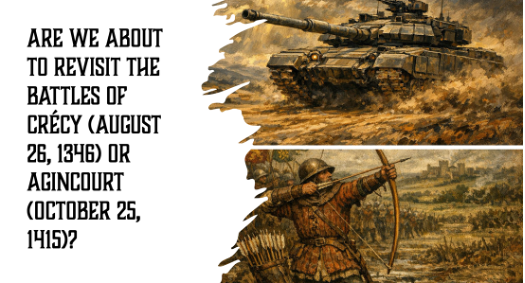
In Medieval Europe, the ascendancy and dominance of heavily armored knights took generations to reach its height and arguably even longer to be recognized as having been eclipsed by lighter, more mobile and more agile forces. Between 1096 and 1270 there were eight crusades to the Levant led by heavily armored knights, and although there were tactical successes, on balance the results were strategic losses. For more than a century, and well before the two famous battles of Crécy and Agincourt, European knights were harassed and diminished by Saracen bowmen. Still, knights in armor continued to be considered the “battle-winning” advantage.
When Canada repatriated its troops from Germany in 1993, its MBT fleet returned to Canada, but in a few short years, Canada had no viable MBT fleet. The current government has now awakened from its sleepwalk through history and decided to spend great gobs of money on rearming the Canadian Armed Forces (CAF). Along with new ships and new fighter aircraft, the CAF has decided to buy a new fleet of MBTs. Hallelujah! But which tank? The knee-jerk reaction is inevitably that the Canadian Army needs the newest behemoth with additional armor and the biggest gun possible (120-125 mm). But is this correct? Does Canada need such goliaths of the battlespace? Are these massive, modern MBTs what the Canadian Army really needs for modern mechanized warfare? For that matter, does any major army need these giant 70-ton vehicles?
Correcting MBT Size Fixation
The impetus for this discussion came a few weeks ago with the Canadian federal government publishing a request for information (RFI) so that it could analyze its options to begin drawing up plans for its future armored vehicle fleets. For those not familiar, the purpose of an RFI, in brief, is to assist in the shaping of policy objectives before the government issues a Request for Proposal (RFP) for industry to fulfill a government mandate. This RFI struck a chord because it speaks not only to what kind of armored vehicles the Canadian Army needs; it speaks to what all modern mechanized warfare will require and, in particular, what kind of future MBT fleets the armor community needs to consider.
Anyone who has spent the last half-century studying, training for, and thinking about mechanized warfare, whether or not they love MBTs that have 120 mm guns, cannot help but wonder whether the community has gone too far. Wouldn’t a lighter tank with a smaller caliber gun be a better option? Wouldn’t it make more sense, both tactically and economically, that the largest portion of all future MBT fleets for all armies comprises lighter and not heavier MBTs?
To some, this may sound like a step backward; it may even sound heretical, but to quote a slang Americanism: sacred cows make the best hamburgers. It has long been an article of faith among tank commanders that bigger is always better. Why would anyone want to go looking for a fight with less than what a prospective opponent is equipped with? Good question, so let’s parse it. Do MBTs really go looking for a fight? It might appear that they do, but that is but one of the many jobs that MBTs perform. In every practical application of armor, what the MBT does is integrate itself into a combined arms team so that, with other members of that fighting force, it can destroy any enemy — however it is comprised or arrayed for battle.
There seems to be a universally acknowledged fact that for MBTs to be effective combat team members, they need to be big and pack the largest possible main gun. But that’s not a fact. It’s an allegation. It only feels like a fact because it is repeated so often and by so many in the armor community.
So, if bigger isn’t necessarily better, then what is? To answer this fundamentally important question, we need to step back and reconsider what MBTs bring to the fight. All MBTs are predicated on three design parameters: protection (aka survivability), firepower, and mobility, the so-called “iron triangle”. This design triumvirate governs every tank ever built, and it is immutable. Striking an equilibrium among these design considerations is no simple task, and depending on the role, the country, the national culture, the military culture, and a panoply of other restraints and constraints, each MBT design evolves to become something slightly different. For instance, when one compares the US Abrams with the German Leopard, the former stressed crew survivability, while the latter stressed agility on the battlefield. Sporting variants of the same Rheinmetall 120 mm cannon with interchangeable ammunition, these MBTs were very similar — but not identical (tactical employment notwithstanding).
Further, MBTs must always fight as members of a combined armed force. Like horse cavalry charges of old, tank assaults without integrated fellow combat arms are a suicide mission. MBTs on their own have amazing striking power and shock action, but they are likewise highly vulnerable to enemy infantry and anti-tank forces. Therefore, new tanks need not only to balance the aforementioned three design parameters but also to be designed to operate within a combined arms force that includes infantry, engineers, artillery, combat aviation, and now — drones.
The armor community has for too long focused too narrowly on what it would like: big guns, lots of armor protection, and lots of horsepower. The “iron triangle” tells us that we cannot have all three simultaneously. But slowly, over time, the community has fallen into an intellectual trap of sorts. In scientific terms, what the armor community has created is a monoculture, and like all monocultures, it has potentially catastrophic flaws. The problem with all monocultures is that when one optimizes for a single variable, regardless of which one is chosen, there is a high risk that the monoculture becomes vulnerable when that variable stops being the right one to optimize for. In the case of MBTs, it would appear that variable has become size. Modern MBT fleets have inadvertently optimized for size. Armor leaders have convinced themselves that the bigger the tank, the better it is for the creation and employment of combat power. Not true, and dangerously so.
The Key is Combat Power
The key is in understanding combat power; the essence of tactical victory is combat power, and every tactical commander needs to keep this thought constantly at the forefront of their mind. Irrespective of how their national doctrine defines it or explains it, no single weapon in the battlespace creates combat power like an MBT. Irrespective of how many components, parts, elements, or building blocks one considers combat power to have, the key is knowing how to build it and then how to employ it, and only the MBT incorporates all of the necessary functions. It can block the enemy combat power, it can build its own combat power, and it can project that combat power — in all phases of war. And this returns us to the issue of size.
One of the MBT’s characteristics is flexibility. It is simultaneously an offensive weapon and a defensive weapon, but ironically, the bigger it gets, the less flexible it becomes. Concomitantly, it also becomes less tactically agile. The military load classification (MLC) of some of the proposed next-generation MBTs is far in excess of the vast majority of bridges commonly found in Europe or North America. This is a disaster in the making, both for training and for potential combat.
Another defining characteristic of the MBT is firepower. Unclassified open sources indicate that a 120 mm tank round can reach out well in excess of 5,000 meters. That is an astounding range — until you consider the tactical implications. The moment MBTs open fire, they give away their positions, and what they may gain by shooting at extended ranges, they more than give up by being pummeled by long-range heavy artillery, not to mention any number of the over 100 various anti-tank weapons available.
The last consideration is the determination of what use the devastating firepower that MBTs bring to the combined arms team. Do all MBTs need to be able to kill all other MBTs? This is not the case with all other weapon systems. Does armor doctrine still suffer from the memories of facing Wehrmacht panzers that the Allies could not defeat with first-round kills? We eventually defeated them with better tactics, so why now revert to insisting on bigger guns? What use is an MBT that kills another MBT at 5,000+ meters when the vast majority of tank engagements occur at 1,500 meters and closer?
As intimated, the tactical employment of MBTs will vary by situation, mission, and country, but properly used, the MBT must maintain its integration with other members of the combat team. Only in this way can combat power be built, sustained, projected, and protected. Depending on tanks that are unusually large, heavy, slow, and logistical sinkholes (a Class 70 combat vehicle can burn approximately 500 US gallons of gas every 12 hours) diminishes all of these abilities. That is not to say that there is no role for the envisaged Leopard III or Abrams 3 (or whatever they are to be called). But they must not be the primary MBT in the arsenal.
Conclusion
Historically, MBTs grew in size and firepower for good reasons. There were battlefield and combined arms deficiencies which needed to be overcome. Improved mechanics made them faster and more agile, so, for a long time, bigger was indeed better. That is no longer true. They have become unnecessarily large, and to a certain extent, these modern giants have become decoupled from the needs of the other combined arms. Any new MBT must be designed in concert with the needs, capabilities, and vulnerabilities of the other combined arms. Granted, the now 120, 125, and even 140 mm guns are astounding. Nonetheless, the ability to fire at distances that are not required 90% of the time while worrying less about how they will work in concert with infantry, artillery, and engineers is a serious drawback for these giant MBTs.
Each generation of warfare brings technical and technological innovation. The key for commanders is to understand how to incorporate change without abandoning principles. Victory remains dependent on offensive action, and that practically guarantees the need for MBTs for the foreseeable future. Tanks remain essential in combined arms warfare, and there is certainly a role for 70-ton MBTs in the future, but that role must be weighed against the use of smaller, lighter, and more agile MBTs. Whereas the balance used to be heavy vs light, the consideration should now be seen as a bell curve where the largest distribution in the curve belongs to 40- or 50-ton MBTs with proven 105 mm guns and advanced munitions. New tank fleets are expensive to buy, maintain, and train. Modern armies need to be careful not to equip themselves with unwarranted fleets of MBTs that will not serve them well in future battlespace.
Bigger may be better, but it is not a given and must not be treated as if it were.


