





Maneuvering to Obsolescence: The Death Ride of the Armor Branch
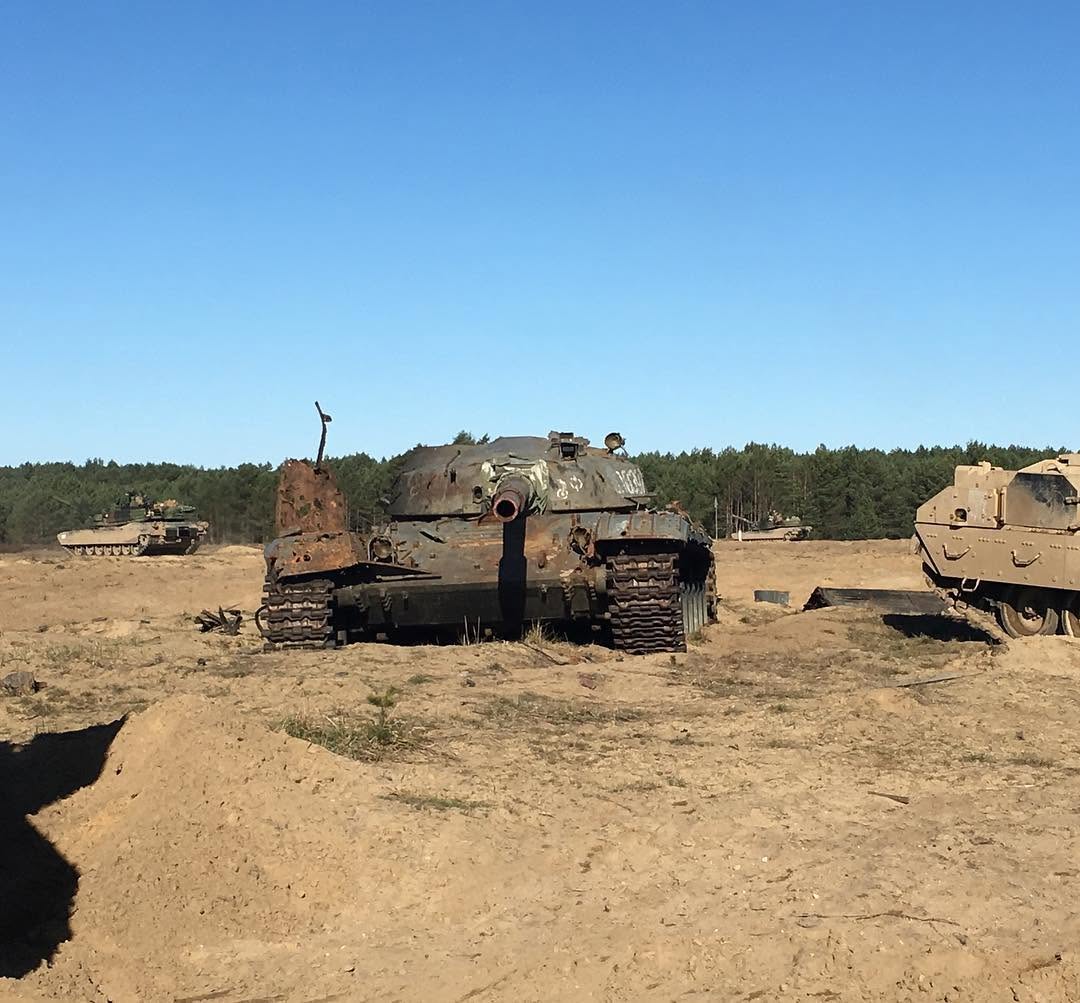

Like its horse cavalry antecedent, the U.S. Army’s Armor branch is on a death ride of its own making. The Armor branch, and its larger community of stakeholders, hold a recalcitrant commitment to their self-legitimizing narratives and institutional ideology. Those narratives and ideology are driving the Armor branch headlong into its demise. To be sure, Armor branch has maneuvered itself into a fixed position. The branch is besieged on all sides. Armor branch’s leaders are not capable of fighting and winning the institutional battles of position and attrition that the branch needs to maintain its relevance to the Army, the joint force, and combatant commands. Rather, during the past two decades, the branch and its broader community of stakeholders – which includes the branch’s retired personnel and other Armor backers – remain trapped in a reinforcing feedback loop that has facilitated Armor’s fall from the Army and joint force’s breadwinner, to a community which is more or less at odds with warfare’s prevailing conditions. If the situation is not addressed quickly and radically, Armor branch could be dead by 2035. Along with the branch, the Army and joint force’s ability to conduct mechanized land warfare will also terminate, leaving the United States with a military that possesses significantly less deterrent value and a catastrophic warfighting vulnerability.
The Armor community’s failures are not a single issue. Instead, they are a set of interrelated failures that have conspired to create a cascading series of systemic letdowns that have the branch on the brink of collapsing under the weight of its own contradictions. The failures reside in four critical areas:
- failing to advocate for (and win) issues pertaining to leadership and command positions
- failing to win force structure adaptations
- failing to craft effective narratives about the enduring role of the tank and cavalry in high-tech war
- failing to equally cultivate creative thinkers, as much as doers, within the community
These failures have resulted in the Army, the joint force, and the combatant commands generally disinterested in what the Armor community has to offer. Radical change and comprehensive reform are required to pull the Armor branch back from the brink of demise.
Like its horse cavalry antecedent, the U.S. Army’s Armor branch is on a death ride of its own making.
Assuming that there is still time to resurrect the Armor branch from facing the same fate as its predecessor, the horse cavalry, the Armor community should enact the following reforms. First, it must ditch its maneuver-centric fetish that is based on victories in 1991 and 2003 against a third-rate opponent, and instead embrace realistic, pragmatic approaches that reflect the realities of modern warfare. The Armor community needs a compelling narrative that speaks to defense priorities, not nostalgia and its own cultural impedance to an evolved reality.
Second, the Armor community must fight doggedly to take control of the air-ground littoral (AGL). Armor’s key contribution to the Army, the joint force, and combatant commands is its ability to move rapidly on the battlefield. Winning the contest for the AGL determines which side in a conflict can obtain operational and tactical mobility, and thus the ability to advance their state’s strategic objectives. A contested AGL, however, neuters mobility. Thus, absolute control of the AGL is a paramount key interest of the Armor branch in modern warfare. Yet, by ceding authority of the concepts and capabilities needed to govern the AGL to other populations within the Army and joint force, the Armor community cedes control of its self-interest to the whims of those populations.
Third, the Armor community should abandon the M1 Abrams as the centerpiece of modern armored warfare and embrace a smaller, lighter tank. The purpose is to better support the strategic and operational lift constraints across the joint force and the geographic considerations across the combatant commands. Likewise, a smaller, lighter tank more appropriately accounts for adaptations in threat and capabilities-based battlefield requirements than the M1 Abrams.
Fourth, the Armor community must develop compelling force structure arguments. These designs must extend beyond nostalgic reworkings of bygone formations, like armored cavalry regiments. Additionally, the force structure adjustments must not use language that plays on anchor bias and prejudices in the Army and the joint force.
Fifth, and finally, the Armor community must find a champion. Today, the Armor community lacks any real representation at the top of the Army, or in the joint force. Perhaps of equal importance, it lacks individuals with power and influence outside of the Army making a compelling argument regarding Armor’s continued relevance.
To avoid the ongoing slide toward irrelevance, and elimination from the Army’s rolls altogether, advocacy is needed. That is the purpose of this article – to sound the alarm, to get the community’s attention, and to inspire leaders to step forward and step up. But most importantly, to offset Armor’s growing irrelevance and potential sunset, leadership is required. The Armor community’s senior leaders, active and retired, must act – and act correctly – before it is too late.
Failing to Craft Effective Narratives
The Armor community fails to craft compelling narratives which justify its continued relevance to the Army, the joint force, and combatant commands. As such, it is gradually slipping into oblivion, as the loss of key billets and force structure indicates. Their loss is discussed in the next section.
Nonetheless, a key component of the narrative problem is that the Armor community approaches new information communications technology (ICT), weapons systems, and ideas for how to fight as additive to its entrenched maneuver bias. This contrasts with developing concepts, combat platforms, and employment considerations that inspire faith in how the Armor community can contribute to the Army and the joint force to overcome battlefield transparency, the AGL, precision drone targeting, and other impediments in modern war. The primary reason for the lack of compelling narratives is a fixed mindset regarding maneuver and the past.
Fixed Mindset – Maneuver
Writing in 1926, theorist J.F.C. Fuller, commented on dogmatic doctrinal thinking. Fuller writes that, “He who in war believes in the inviolability in anything is a fool heaping up disaster with both hands: this is a dictum of history.” Furthermore, he writes that:
A General who is under the spell of some such shibboleth as – the oblique-order, envelopment, penetration or the offensive à outrance ends up destroying his army. There is no difference. If there is a doctrine at all then it is common sense, that is, action adapted to circumstance.
The Armor community’s relentless commitment to maneuver falls in line with Fuller’s criticism of any blind belief in the supremacy or favoritism of one form of warfare over another.
Rather than asking if maneuver is – or should be – the answer to the challenges of combined arms and joint operations in a modern land warfare context, many contemporary Armor narratives focus instead on aligning technological and tactical innovations with a way to restore maneuver. This is especially true when the Armor community discusses how to link modern battlefield technology like drones, precision-strike, and battlefield transparency with observations from the Russia-Ukraine War.
If the situation is not addressed quickly and radically, Armor branch could be dead by 2035.
Yet, modern conflicts like the Russia-Ukraine War demonstrate that maneuver, like any form of warfare, is bound by conditions and requirements. Conditions are constraints and the environmental factors, threat profiles, and other variables that must be present for a specified type of warfare to be viable. Requirements are the things that a force needs to possess in order to conduct maneuver, only if the conditions are appropriate. Conditional logic, or an if-and-then is a useful model to explain this relationship. The If comprises the conditions, while the And is the requirements, and the Then is the consequence. Additionally, this if-and-then conditional logic can be further refined by highlighting what subsequently happens if the conditions or requirements change. One example, from a range of conditional logics to support maneuver, might include:
If the threat’s (Actor B) battlefield transparency is low and a corridor to move toward the objective exists, and Actor A (A) possesses sufficient reconnaissance, then A will conduct maneuver warfare until B’s capacity of transparency increases such that movement becomes significantly disrupted, or the movement corridor diminishes.
The problem with the Armor community’s belief structure and narratives however are that they entirely overlook conditional logic, instead relying on a slavish commitment to maneuver. For the Armor community, it is always about finding a way to fit maneuver language into the discourse even if maneuver is entirely unrealistic from any practical standpoint. Not only does that not help the Armor community demonstrate its relevance to the Army, the joint force, and combatant commands, but it also establishes a clear obstinacy to structurally evolve alongside empirical evidence that disproves their inflexible views about war and warfare. Furthermore, the community’s inability to think and speak beyond maneuver’s paralytic control emphasizes that they – like the staunch advocates of the horse cavalry in the face of structural changes in warfare in the wake of World War I – are unwilling to acknowledge the pertinent evidence about maneuver’s decreasing usefulness.
Fixed Mindset – The Past
The Armor community’s unwillingness to move on from the past prevents it from seeing the future. Three pieces of military history, and one Army doctrine, do much to illustrate the Armor community’s fixed mindset. The military history includes the 1973 Arab-Israeli War, the 1991 Gulf War, and the initial invasion of Iraq in 2003; and the doctrine is AirLand Battle.
The prevailing paradigm has failed the Armor community.
Those three wars are unhelpful because they are bias-reinforcement tools. Narratives of maneuver warfare are built into each of those wars. They are easy (although debatable) examples for those seeking to legitimize maneuver to point to as a place from which to return. The conditions that welcomed maneuver in each of those conflicts included relatively wide-open battlefields which were sparsely dotted with urban areas, mobile mechanized armies, far more permissive air and space domains, and a greater degree of control over high-end technological sophistication. The problem with each of those wars, however, is that the structural conditions and the requirements changed in the intervening decades.
Changes – Urbanization
Since 1973, the world’s population has increased from 3.9 billion to 8.3 billion – an increase of 112%. Simultaneously, urban areas have grown at a far greater rate, with a 200% increase in built-up urban land across the globe. This means that open space – a prerequisite for maneuver – is diminishing at an incredible rate. Likewise, with the world’s population expected to be 9.5 billion by 2040, and 83% of the world’s population living in cities and large towns at that time, the spatial condition required for maneuver will continue to retreat. In that retreat, positional warfare and attritional warfare will become imperatives of modern war. Lighter tanks will be required to operate in those areas. More – not less – ground-based reconnaissance will be required to work alongside space and cyber capabilities to build accurate pictures of the operational and tactical situation. Armor and cavalry formations will have to own the AGL – from the capabilities and an airspace standpoint – to protect themselves, ensure the land component’s ability to move, and to fight for the control of data and tempo on behalf of supported and supporting Army and joint forces. Forecasting for the future requires understanding that the Army, the joint force, and combatant commands require an armor and cavalry force that can contribute to those realities, and the Armor community needs to craft that compelling narrative or face extinction.
Changes – Mechanized Armies
In the Arab-Israeli War, the Gulf War, and the 2003 invasion of Iraq, mechanized formations with robust air-ground reconnaissance forces formed the backbone of each of the victorious armies. Those armies were the keystone of the victorious military force committed to the war. Other elements of armed service supported each of those armies. In modern war, however, that arrangement is fundamentally gone. Drones, cyber, and space-based capabilities have largely displaced air-ground reconnaissance forces. Under-protected mechanized formations, operating under pervasive aerial observation, which are linked to precision strike delivery systems, have made staging and the movement of ground combat forces on the battlefield almost suicidal. As a result, possessing the world’s most powerful or best tank is irrelevant.
What the Army, the joint force, and the combatant commands do need, however, is the most deployable and survivable tank. The Army, joint force, and combatant commands require a tank, and tank-based formations, that can deploy quickly and maintain operational and tactical mobility – not just in ideal situations and open terrain, but in compact urban areas, mountains, and densely vegetated zones. In addition, they also require combat systems and formations that can quickly conduct in-stride drainage basins and gap-crossings like those found throughout Eastern Europe and Southeast Asia. The M1 Abrams, the current Armored Brigade Combat Teams, and their associated doctrine, do not provide the Army, the joint force, and the combatant commands with that collection of capabilities. They provide an outdated, ponderous formation that is slow to deploy, a nightmare to maintain, and entirely under-protected against the threats coming into and out of the AGL. The Abrams and the Armored Brigade Combat Team (ABCT) are the Armor community’s biggest liabilities, and both have inadvertently become the totemic systems to which the community is surrendering itself. The Armor community needs to sacrifice its totems and develop a new, 21st century definition of the tank, mechanized formations, and a forward-looking concept for how those capabilities provide immediate support to Army and joint force operations anywhere on the globe.
To that end, the emergence of the Mobile Brigade Combat Team (MBCT) in 2025 is an indicator that the Armor community is not providing the Army, the joint force, and the combatant commands with the right capability. The MBCT reveals that the Army is interested in providing the joint force and combatant commands with a mounted, mobile capability, but one with a vastly greater vector quality than what the Armor community supplies. Furthermore, the MBCT demonstrates that the Army and the joint force are interested in a mounted force that can simultaneously:
- manipulate data and tempo
- proactively engage in AGL competition
- maintain forward momentum toward an objective
- extend tactical tempo and operational reach
Despite the demand signals, and upgrades via the M1-E3 Abrams, the Armor community refuses to budge from the M1-centric ABCT, only making small additive adaptations to the ABCT. Instead, it should conduct a holistic appraisal of what it should be, and what it needs to provide for the Army, the joint force, and the combatant commands, as a result of the battlefield’s structural changes. In the absence of this holistic evaluation and change effort, the Armor community is incrementally ceding its role – and force structure – as the centerpiece of the U.S. military’s mounted ground combat force to the more situationally-attuned Infantry community.
Passé Slogans & Obsolete Self-Identity
Three Cold War-era slogans, and their associated ideas, dog the Armor community. The first is equating Armor as the combat arm of decision. The selling point being that the Armor branch is the Army – and joint force’s – only element that possesses the combination of mobility, firepower, and survivability to close with and decisively defeat an enemy force.
The Armor community’s biggest liabilities are the M1 Abrams and the Armored Brigade Combat Team.
Though one data point, the Russo-Ukraine War provides that the structural changes in modern warfare have temporarily sidelined tanks and mechanized forces. That is not to say that the tank is dead, but that the role of the tank and mechanized formations has changed. Tanks and mechanized forces will not be able to attack, close with, and decisively win battles as long as battlefield transparency and the chaos of activity in the AGL persists. To regain the title as the Army’s combat arm of decision, the Armor community must unlock the solution to this operational and tactical problem – no other community will do it for them, they will only do it pursuant to their own self-interest. A key step to this solution is forgetting passé slogans that do not speak to the realities of joint warfare. In the interim, however, tanks and mechanized formations will be a second echelon force, not a spearhead, applied to exploit breaks in enemy observation and drone dominance – it will not be the lead elements utilized by any commander.
Likewise, beyond the classrooms and armor training areas at Fort Benning, this phrase does not resonate with reality, and it signals the community’s cognitive stagnation to the rest of the Army and the joint force. The Armor community must cashier this branding and adopt something that rings with a vision for itself on a drone swept battlefield in which unprotected movement is met with immediate, lethal consequence. With that in mind, the Armor community might be more appropriate, and better received by the joint force and combatant commands, by labeling itself the combat arm of exploitation.
Second, any variation of winning the first battle or winning the first fight must be eliminated from the Armor community’s identity. The phrase no longer has relevance to the employment of armor, whether cavalry formations or combined arms battalions. As noted previously, structural changes to modern war dictate that armor, even if in theater, will be used as a second echelon exploitation force, not a spearhead. The first battle of the next war will be fought by robotics and fought from stand-off. The U.S.-Iran War – today’s ‘next’ war – highlights this point. Drones, space and cyber capabilities, long-range precision strike, and airpower fought the first fight. To date, Armor played no part in the conflict. The likelihood of this dynamic changing if the Armor community finds itself involved in a war in Eastern Europe or Southeast Asia – especially if the community has not solved its transparency and AGL problems – is very unlikely.
Third, any form of fight outnumbered and win must be eliminated from the Armor community’s narrative. Fight outnumbered and win is Cold War ‘normal science’. It was a slogan to represent the mass problem that the Soviet Union and the Warsaw Pact presented to the U.S. and NATO. The Cold War is over. The Warsaw Pact is dead. AirLand Battle is long gone. Modern technology has caused the paradigm of warfare to shift, and thus Cold War ‘normal science’ is not germane to the Armor community’s problems with modern (and future) warfare.
The Armor community’s challenge is how to overcome dynamic environments (i.e., the combination of transparency, the AGL, and precision strike), attrition, and hard-to-defeat denial capabilities, just to be able to move on the battlefield. Yet, by speaking in the language of the Cold War, the Armor community presents a mindset that is ossified in the past and one that is struggling to address today’s complicated battlefield challenges.
The Armor community will be better served, however, by speaking of the hard attritional challenges of modern conflict. Additionally, they will be better served by messaging how the community provides the Army, the joint force, and the combatant commands with capabilities that can persevere against the rigors of attrition and exploit opportunities on a drone-infested battlefield. A more responsive slogan would help the Armor community demonstrate a forward-looking approach to the challenges of modern war. Fight through a contested AGL and exploit might be a good place to start the discussion.
Though not a Cold War-era slogan, but rather a product of the Russia-Ukraine War, any phrasing of restoring maneuver must also be scrubbed from the minds of the Armor community. Maneuver exists in a small window – the maneuver frame – and when two forces have closed the distance between one another, then only frontal fighting and small lateral movement persists. Once that occurs, the two forces must fight positionally and attritionally until:
- a breakthrough occurs
- an assailable flank is found or created
- one side is routed
- one of the combatants retreats
- one side is thoroughly destroyed
Modern scholars and analysts highlight that maneuver is not a better, nor a utopian way of warfare. Likewise, maneuver is not a form of warfare performed by qualitatively better armies. Nor is maneuver a mindset, a philosophy, or different than maneuver warfare. Maneuver is just a form of warfare that is dependent on battlefield conditions, force capabilities, and force capacity. Thus, talk of restoring maneuver illustrates one of two things. First, a fundamental misunderstanding of warfare. Or second, recalcitrance, an unwillingness to question a deeply indoctrinated maneuver-bias, and ignoring the empirical evidence that disavows most institutional narratives about maneuver. Neither option reflects favorably on the Armor community (nor the Army, as a whole).
Therefore, retaining a maneuver-centric identity does not help the Armor community’s image, but makes it look increasingly detached from modern warfare and living in the past, yet again. Stated another way, if the Armor community retains its maneuver fetish, remains committed to organizing itself around maneuver, and continues to identify as a maneuver force, it will be obsolete by 2035.
The M1 Abrams deserves mention here, because it is also a Cold War relic. From a branding standpoint, the name ‘Abrams’ no longer strikes fear in the hearts of America’s adversaries, nor inspires faith in the joint force and combatant commanders like it did in 1991 or 2003. For those not keeping score, a set of four events has eroded the Abrams’ elite status. First, during Operation Inherent Resolve (OIR), the Islamic State destroyed nearly every one of the 140 Abrams tanks provided to the Iraqi army. General Dynamics’ presence in Iraq was the only thing that enable those tanks to be continually rebuilt and thrown back into action. Second, several Abrams tanks ended up in the hands of Hezbollah and other Iranian proxy forces. One must also assume that Iranian intelligence officials exploited those tanks for intelligence purposes. Third, the Kurds destroyed two Iraqi army Abrams tanks during a brief battle for control of Iraqi Kurdistan in October 2017. Fourth, by June 2025, the Russian military had throttled nearly all of the 31 Abrams tanks provided by the U.S. to the Ukrainian army.
Those seeking to mitigate the impact of the destruction of these tanks can do so by asserting that the Iraqis and the Ukrainians possessed an inferior model of the Abrams tank, that their tactics were suspect, and that American tankers fight with a qualitative advantage over their Iraqi and Ukrainian tanker counterparts. All of that might be true (or not). Yet, what is equally true is that during OIR and in the Russia-Ukraine War, the Abrams tank has been routinely thrashed by non-state and state militaries, often operating in complicated terrain, using shoulder-fired anti-tank weapons and drones. Because of this, the Armor community would benefit from rebranding its tank, much like it must rebrand (and reimagine) its approach to combined arms and joint warfare.
Furthermore, the Armor community needs a true light tank, not just a lighter Abrams. The Abrams was a product of Cold War conditions. The Soviet Union and the Warsaw Pact were the threat. The preponderance of the Army’s armored force was stationed in West Germany. As a result, a heavier tank was both a requirement to address the Soviet armored threat, and not nearly as much of a deployment consideration because by virtue of being in West Germany, American armor was already on the battlefield. Contemporary strategic considerations, however, are not just European, and even if that were the case, American armor is no longer on the continent in any meaningful way. In addition, the contested AGL, battlefield transparency, and precision strike have made the movement of armor – whether strategic deployment, intra-theater movement, or tactical employment – very problematic.
To help address this concern, a new tank – with a dynamic brand name – is required. The five foci of tank design should be protection, mobility, firepower, data, and deception. The light tank should possess the proper mix of (1) protection from AGL threats and anti-tank guided missiles, and less emphasis on direct fire threats, (2) higher on-board ammunition capacity, but with a smaller caliber gun, (3) increased speed and range, (4) on-board data manipulation capability, and (5) visual and audio deception.
Likewise, as goes the tank, so should go the ABCT. The Armor community should discard the ABCT and cavalry squadrons, and also any naming conventions that use the terms armored, cavalry, reconnaissance, or strike. These phrases are encumbered by outsider bias and presumably only appeal to the Armor community itself. Five basic concepts should serve as the organizing principles for Armor community leaders constructing new armored and mechanized formations:
- status quo approaches keep the Armor community on the bench
- cosmopolitan design, appealing in both capabilities and branding – to the needs of the Army, joint force, and combatant commands
- not nostalgic nor self-serving in capabilities and branding
- self-reliant on AGL protection
- resistance to battlefield transparency
From an applied position, new armored and mechanized formations must be organized around four principles:
- being a second-echelon exploitation force
- being an operational and tactical level tempo disruptor
- being a data manipulator
- being the catalytic component that converts success into victory, transmutes pending failure into success, and creates opportunity and opens branch plans and sequels
Reconnaissance and security formations should follow the same five basic concepts as armored formations – cosmopolitan, attuned to contemporary strategic realities, self-reliant in the AGL, and resistant against battlefield transparency. However, five additional principles are also required:
- reciprocity is foundational; that is, you and your adversary are attempting to do the same things to each other
- reconnaissance forces operate to a) enhance one’s ability to make highly-informed decisions and b) fuel poorly informed decision-making for an adversary
- aerial reconnaissance is primary, and ground-based reconnaissance is secondary
- tempo manipulation creates operational and tactical opportunities
- data modulation produces operational and tactical confusion
The applied principles should be based on the ideas that:
- the threat’s first contact is misleading
- the threat’s first contact is to sense one’s disposition of force, capabilities, and preferred method of warfare
- the threat’s first contact is intended to trigger their adversary to betray their intentions and cause that opponent to initiate their primary plan ahead of schedule
- counter-reconnaissance is omni-directional and persistent
Taking these principles into consideration is the first step toward configuring the Armor community’s reconnaissance formations in a way more attuned to the changes in warfare than does slapping drone platoons into existing cavalry squadrons and calling it innovation.
Nonetheless, the prevailing paradigm has failed the Armor community. A sharp redesign in the community’s understanding of warfare (and its role therein), employment considerations, capabilities, and force structure is required to keep the community relevant to the Army, the joint force, and the combatant commands. Status quo talk of the Abrams tank, cavalry formations, being the combat arm of decision, and fighting and winning first battles are the Armor community’s shibboleths that Fuller warned against. If the Armor community remains committed to its institutional equilibrium, as it appears to be doing, it will be dead by 2035.
Failing to Advocate and Win Issues on Force Structure, Leadership, and Command Positions
The past 20-plus years have been a graveyard for Armor leadership and command positions across the Army. The most notable loss is the U.S. Army Armor School and Center at Fort Knox, Kentucky. More importantly, the community’s biggest defeat was losing the Major General-level position associated with command of the Armor School. Since the demise of the Armor School and Center in 2010, the Armor branch has collectively hemorrhaged formations, force structure, and command and leadership positions across the Army.
The mid- and junior-level Armor leaders are Armor’s future.
It is beyond the scope of this article to go into a line-by-line review of the Armor community’s decimation since the introduction of modularity in the early 2000s, nor the micro-changes in position coding between the origination of modular brigades and today, but a generalization is helpful. Modularity, and its Brigade Combat Teams (BCTs), resulted in battalion-level and brigade command positions in ABCTs being designated such that Armor or Infantry officers were eligible to command those formations. Thus, unlike in the past, the ABCT’s Combined Arms Battalions resulted in Armor officers no longer having dedicated positions of command at the Lieutenant Colonel rank.
In addition to ABCTs, the modular Infantry Brigade Combat Team (IBCT) and Stryker Brigade Combat Team (SBCT) each possessed a cavalry squadron of their own. Like the ABCT, those cavalry squadrons were open to both Armor and Infantry branch officers to command. While the later loss of the Armor School at Fort Knox was the biggest strategic disruption to the community, the modular brigade was the Armor community’s first cascade-triggering event toward branch irrelevance. The loss of the 2nd and 3rd Armored Cavalry Regiments as Armor branch formations signaled further organizational disintegration across the community. This is because most of the Armor-coded battalion-level commands transitioned to Infantry officers.
None of these criticisms are directed toward the Infantry community. Nor is the intention to stoke branch parochialism. Rather, the point is to emphasize and condemn a generation of Armor senior leaders in their failure to maintain influence in policy decisions impacting the community. The most damning of those failures includes being able to fight and win force structure debates, to retain positions of command in the Army, and to maintain legitimacy across the joint force.
Even more recent cuts to Armor force structure have further crippled the community. In 2024, Secretary of the Army Christine Wormuth eliminated cavalry squadrons in the IBCTs and SBCTs. In 2025, Secretary of Defense Pete Hegseth announced his intention to eliminate further armor units across the Army. The opportunity for command, professional development, further promotion, and advancement to the senior levels of the Army is rapidly closing, and with it, the Armor community’s livelihood.
While there are many contributing factors to the slow demise of the Armor community, the responsibility of these failures rests on the lap of the General Officers who have led the branch for the past two decades. Their inability to reinvent the branch, not to invest in people and ideas that challenged conventional wisdom, and to unimaginatively fall back on Cold War thinking about the challenges of 21st century warfare, is perhaps their greatest missteps.
Failing to Cultivate Creative Thinkers
The Armor community is flush with self-referential and self-laudatory writing in its professional journal and across the range of defense-oriented publications. Reinforcing Armor narratives, such as the primacy of maneuver, the Abrams just needing a few upgrades, about being the combat arm of decision, the ABCT being the most lethal formation in the Army, and other tropes, only hurts the community. Certainly, it pays to go with the house, to not rock the boat, and to follow the lead of the community’s senior leaders. But as systems theory cautions, when unregulated, reinforcing feedback loops are often dangerous. Reinforcing feedback loops, like those that dominate the discourse throughout the Armor community, are dangerous because when a particular belief becomes institutional and reinforces the conditions that produced it, the system becomes resistant to correction – even when external evidence suggests its wrong. The Armor community’s senior leadership has curated an environment of reinforcing feedback loops that have made it resistant to self-reflection and correction. The approach of the community’s senior leaders has not worked. If it had, the Armor community would not be on the precipice of being squeezed out of the Army altogether.
Likewise, much of the Armor community’s commentary on learning the lessons of the Russia-Ukraine War and other conflicts is additive, instead of exploratory. The discourse seeks to replicate what is being observed in those conflicts instead of evaluating whether those additions are proper, or if they are just setting the community up to fight the next war like today’s wars. To be sure, the discourse is rich with talk of adding drones and anti-drone technology to Armor and Cavalry formations and enhancing kill-chains, instead of thinking two to three innovation cycles into the future and evaluating whether that is the correct approach for prospective conflicts. This too follows the trend of reinforcing the prevailing wisdom of the community’s senior leaders. As recent policy indicates, an ABCT bolstered with drones is not appealing to an Army and a Defense Department looking at the wholesale redesign of combat systems, formations, and inter-service operability.
The Armor community must gain control of the air-ground littoral… because, in modern warfare, control of the AGL is the causal mechanism for any land force’s ability to move.
In the face of these failures to remain relevant and responsive to change, the Armor community’s senior leaders – active duty, retired, and those who do not fit into either of those categories – should advocate for exploration. Exploration includes developing and experimenting with new forms of organization, crafting new ways of aligning the battlefield, finding realistic forms and combinations of fighting regarding modern battlefield technology, and looking at warfare two to three innovation cycles into the future. But ‘just do maneuver better in an upgraded M1 Abrams’ is not the answer. The parties disinterested in exploratory analysis and correcting the negative impacts of the community’s reinforcing feedback loops would do well by relinquishing the debate because their continued participation in the discourse is doing irreputable damage to a severely flagging Armor community. With more of the same, the Armor community will cease to exist by 2035.
Conclusion
Significant work is required to pull the Armor community out of terminal decline. A series of recommendations to help are provided to conclude this article.
J.F.C. Fuller reminds the student and practitioner of warfare that the outstanding problem of war is how to move. The Armor community is sidelined today because it cannot move. Fuller comments that, “Mobility does not only mean power of movement, but protected movement from which offensive power can be developed.” Additionally, he asserts that, “The side which possesses superior mobility, is the side which is more likely to win.”
The Armor community must gain control of the AGL. This includes both the AGL’s capabilities, functions, and airspace. This is because, in modern warfare, control of the AGL is the causal mechanism for any land force’s ability to move. And an armored force that cannot move is operationally irrelevant. To be sure, control of the AGL will enable the Armor community to safeguard and protect its movement and its ability to find its offensive power anew. Furthermore, controlling the AGL will guarantee that the Armor community governs its own future and that it is not dependent on another branch or service to enable its mobility on the battlefield. The quest for control of the AGL is the contest that the Armor community’s senior leaders must fight and win. Any failure to win this fight will have catastrophic consequences for the community.
Additionally, the Army, the joint force, and combatant commands require an armored force:
- That is a light, rapidly deployable armored force, but still packs a punch significant to distinguish it from a bolstered motorized infantry force
- That possesses platforms which are scaled to fight in restrictive terrain, often through positional warfare
- That operates as a cohesive force which can move on the transparent battlefield without being detected
- Which if detected, protects itself from top-down attack by controlling the AGL in which it operates
- Which is resilient to the rigors of destruction-based warfare, as attrition is war’s natural state of being
- Which has low overhead in maintenance time and costs; extending operational and tactical reach
- That possesses higher capacity follow-on force (i.e., reserve) which can exploit success, plug holes and fill gaps to prevent failure, and to provide a deterrent property
Therefore, the Armor community should rebuild its ABCTs and reconnaissance forces into formations that:
- Are robust (i.e., possess redundant capability) to weather the rigors of the reality of attrition, not just in an engagement, but across battles and campaigns
- Are capable of proactively manipulating data presentation, intake, and flows
- Are capable of proactively manipulating tempo to either accelerate or decelerate the pace of operations based on the strategy, a plan, and a commander’s intentions
- Own the airspace above them and the resources to protect themselves in that airspace from enemy top-down attack capabilities
To close, the Armor community has been deadlined for almost a decade. The Armor community must find a real champion to fix that deadline before it is too late. A true champion should not be the most senior leader, nor the most popular, or the best-connected individual. Furthermore, a true champion should be someone with the correct wherewithal to see the community’s dire position, the fortitude to sacrifice the community’s sacred cows, and simultaneously drive exploratory change based on the realities of modern war. Lastly, a true champion must possess the humility to grow and advance the next generation of creative thinkers to keep the Armor community alive and prospering, regardless of where the champion is from, who they know, or from which ‘network’ they reside. That champion might not even be a leader per se, or even in uniform.
The mid- and junior-level Armor leaders are Armor’s future. They owe it to themselves, to the branch, and to the American people to push the community’s senior leadership for radical change and comprehensive reforms. Mid- and junior-level Armor leaders must seek accountability from Armor’s senior leaders. Additionally, those mid- and junior-level leaders must ask the community’s senior leaders three basic questions:
- What are they doing to ensure the branch’s survivability?
- What are they doing to provide the nation with a deterrent mechanized force with global reach?
- What are they doing to provide experts in mechanized land warfare?
The failure to address Armor’s dire status will result in the community experiencing its own horse cavalry moment and turning into just another sunsetted capability that exists only in history books.



When the armor branch had leaders in high positions, they advocated and did away with DIV LRS, Corps LRS, and, finally, IBCT Dismounted Reconnaissance Troops: all disastrous decisions and the antithesis of what is needed in current and future conflict.