





Four Rivers Six Ranges: An untold story of Tibetan resistance
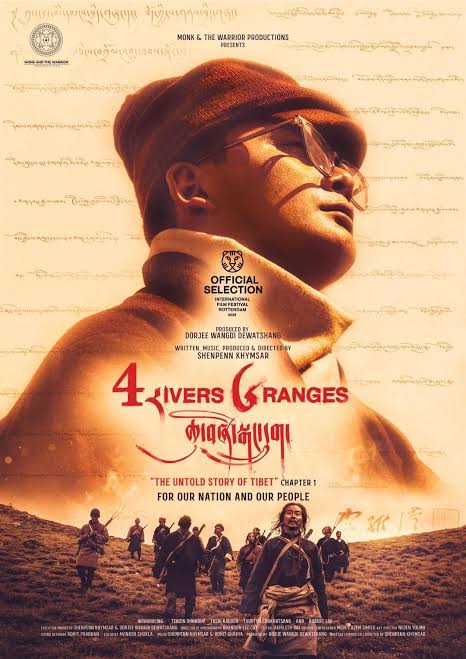

Four Rivers Six Ranges chronicles the untold story of Tibetan resistance, specifically the Chushi Gangdruk movement.
The new film Four Rivers Six Ranges (2025) by visionary Tibetan filmmaker Shenpenn Khymsar chronicles the Tibetan resistance through the lens of spiritual identity and territorial defense. The narrative centers on the struggle to preserve Tibetan culture and the safety of the Dalai Lama amidst external aggression from the Chinese Communist Party. It highlights the tension between Buddhist principles of peace and the necessity of warrior action to protect their homeland. The video perfectly captures the collective refusal to accept the imposition of foreign infrastructure and governance over sovereign Tibetan land.
Strategic Imposition of Infrastructure
The trailer features a direct rejection of foreign roofs built under Tibetan skies. This exhibits the People’s Republic of China’s way of occupation, which utilizes large scale infrastructure projects to consolidate control over contested territories. The physical landscape is altered to reflect the occupying power’s presence and to facilitate logistical dominance. This method serves to integrate the region into the central state’s economic and security architecture, effectively overwriting the indigenous geographic identity.
Erosion of Cultural and Spiritual Identity
The dialogue shown in the trailer expresses a profound fear of losing identity and the consequences of going against spiritual principles. This reflects the deeply psychological and social dimensions of the PRC way of occupation. Their strategy involves the systematic marginalization of local traditions and the elevation of state sanctioned narratives. By targeting the symbols of spiritual leadership and the core values of the population, the occupying force seeks to diminish the internal cohesion that fuels resistance.
The Human Realm as a Space for Resistance
The film describes the human realm as a space capable of both evil and hope. Under the PRC, the Tibetan population became the primary terrain of conflict. Control is maintained through a combination of administrative pressure and the exploitation of local social structures. The hope expressed in the trailer represents the persistent friction that occurs when top down occupation meets a deeply rooted sense of national and spiritual belonging.
“Join us for an intimate conversation with Shenpenn Khymsar, the visionary Tibetan filmmaker behind Four Rivers Six Ranges: The Untold Story of Tibet. In this exclusive interview, Khymsar delves into the inspiration, challenges, and historical truths that shaped his groundbreaking film. Four Rivers Six Ranges brings to light the courageous resistance of the Chushi Gangdruk movement against Chinese occupation in 1958—a story long suppressed and rarely portrayed on screen. Based on Dorjee Wangdi Dewatshang’s memoir Flight at the Cuckoo’s Behest, the film offers an indubitably powerful narrative of Tibetan resilience and identity. Phayul Khymsar, also a musician and activist, discusses his journey from exile to international acclaim, the film’s recent Best Soundtrack win at the 2025 Julien Dubuque International Film Festival, and the global impact of telling Tibet’s untold story.
Instagram:  / four_rivers_six_ranges_
- Read more: As India and China repair ties, a Tibet film tells the story of a forgotten resistance by ANIRUDDHA GHOSAL for AP News

