El Centro Annotated Subject Bibliography: Third Phase Cartels and Criminalized States
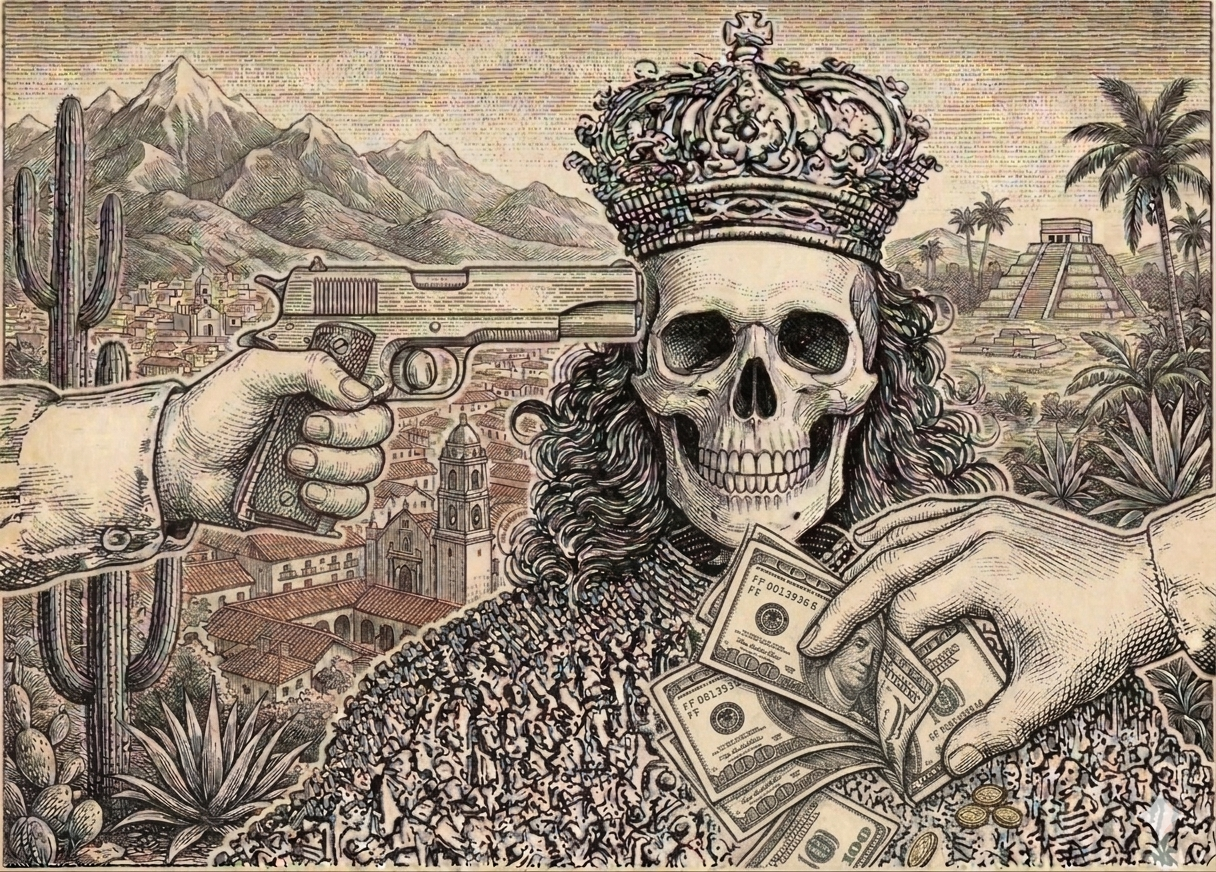

The topical focus of Third Phase Cartels and Criminalized States (state institutional co-option and criminalization) is primarily addressed from a Latin American perspective in this annotated bibliography, however, it is increasingly applicable when viewing the former-Soviet Union (and some of its old client states), the Middle East, Asia, and especially Africa. The subject matter is integral to many of the strategic perceptions and narratives that have been discussed in El Centro over the last fifteen years. The material is derived from an eclectic mix of national security and defense, criminology and sociology, transnational organized crime, state formation studies, and related disciplines.
The crux of the international security environment concerns expressed herein focus on the process identified by Charles Tilly in 1985 related to his influential work “Warmaking and Statemaking as Organized Crime.” In it, states initially develop and function fundamentally like mass protection rackets. Rulers use coercion to extract resources from populations to wage war and eliminate rivals, making state-building the largest historical form of organized crime and differentiated from mafia groups only by its claim to legitimacy—the latter earned over time by those wielding a monopoly on violence. While social contract theory aptly applies to later state development—such as the ascendancy of the liberal-democratic model—in its earliest forms, modern states arose plain and simply out of coercive processes.[2]
Some of this process can be seen with the Early Modern states of Europe. Initially, they were faced with the inability to field standing armies due to the structural dominance of the knight’s fee (thirty days of military service) and scutage (shield money, a monetary payment to avoid it). A parallel system of direct taxation incrementally developed, initially derived from plunder, fire money (an extortion payment to protect a community from robbery and arson), the Thirty-Years War contribution system developed by Wallenstein, and eventually direct taxation of local peoples (later citizenry) which became institutionalized by the state. A similar process took place in weaponry whereby entrepreneurial mercenary companies using early firearms and cannon formed the basis of the later institutionalized armies of the state. Perceptions of the initial organized criminality of the taxation system and fighting forces of Early Modern (dynastic) states pierce the mantle of legitimacy which later surrounds them. At their basis, states as warmaking entities must excel at force (military), bribery (economics), and fraud (ideology) to protect the people (citizenry). States historically survive because they are victors in war or have protection from brutish state patrons. Their early origins as mafia-like groups of killers who held no distinction between private wealth and public wealth and engaged in large scale protection rackets may be unsettling but accurate.
A similar and contemporary post-modern process has been and is now taking place in various regions of the globe. Vladimir Putin’s state security-, oligarch-, and mafia- backed regime in Russia is a case in point. Putin is, however, a refined dynastic prince whereas those in Latin America fall at present more into the ‘Gangster Warlord’ category highlighted by Ioan Grillo.[3] Other criminal state examples often cited are Myanmar, North Korea, Guinea-Bissau, and Transnistria, with numerous city and regional areas of ‘impunity’ found throughout the Global South. Wide swaths are found in Mexico, Colombia, Brazil, Venezuela, Ecuador, and other Western Hemispheric locations. This nouveau process of ‘crimemaking and (proto-) statemaking’ is impacted by a number of other trends and constructs. Those that have been identified include the twin-insurgencies impacting states (which are criminal and plutocratic/oligarchic based), the fragility of states related to increasing ferality, failure, and city capture by organized criminals, the hollowing out of states via the internally corrosive effects of unrelenting violence and corruption (¿Plata o Plomo?) directed against them, and the evolving nature of violent non-state actors who are gaining in sophistication and capacity to challenge sovereign states.[4]
The two main themes articulated in the works in hybrid bibliography focus on the Third Phase Cartels construct and the processes of state criminalization leading, if unchecked, to the emergence of new criminal states. The initial theme traces back to the 1998 work “Cartel Evolution: Potentials and Consequences” authored by Robert J. Bunker and John P. Sullivan. It articulates three cartel phases encompassing the Aggressive Competitor (Medellin) model, Subtle Co-Opter (Cali) model, and Criminal State Successor (Ciudad del Este /Netwarrior) model. These models can be viewed in Table 1. When first articulated almost thirty-years ago, the criminal state successor attributes of the Ciudad del Este model appeared largely theoretical—it is now far more evident. The initial construct was updated in “Cartel evolution revisited: Third phase cartel potentials and alternative futures in Mexico” in 2010 and later layered with other constructs in “Integrating feral cities and third phase cartels/third generation gangs research: the rise of criminal (narco) city networks and BlackFor” in 2011. It has since been utilized in various El Centro anthology and related projects such as Studies in Gangs and Cartels in 2014, The Rise of the Narcostate (Mafia States) in 2018, and Third Generation Gangs and Transnational Cartels in 2025 by these same authors.[5]
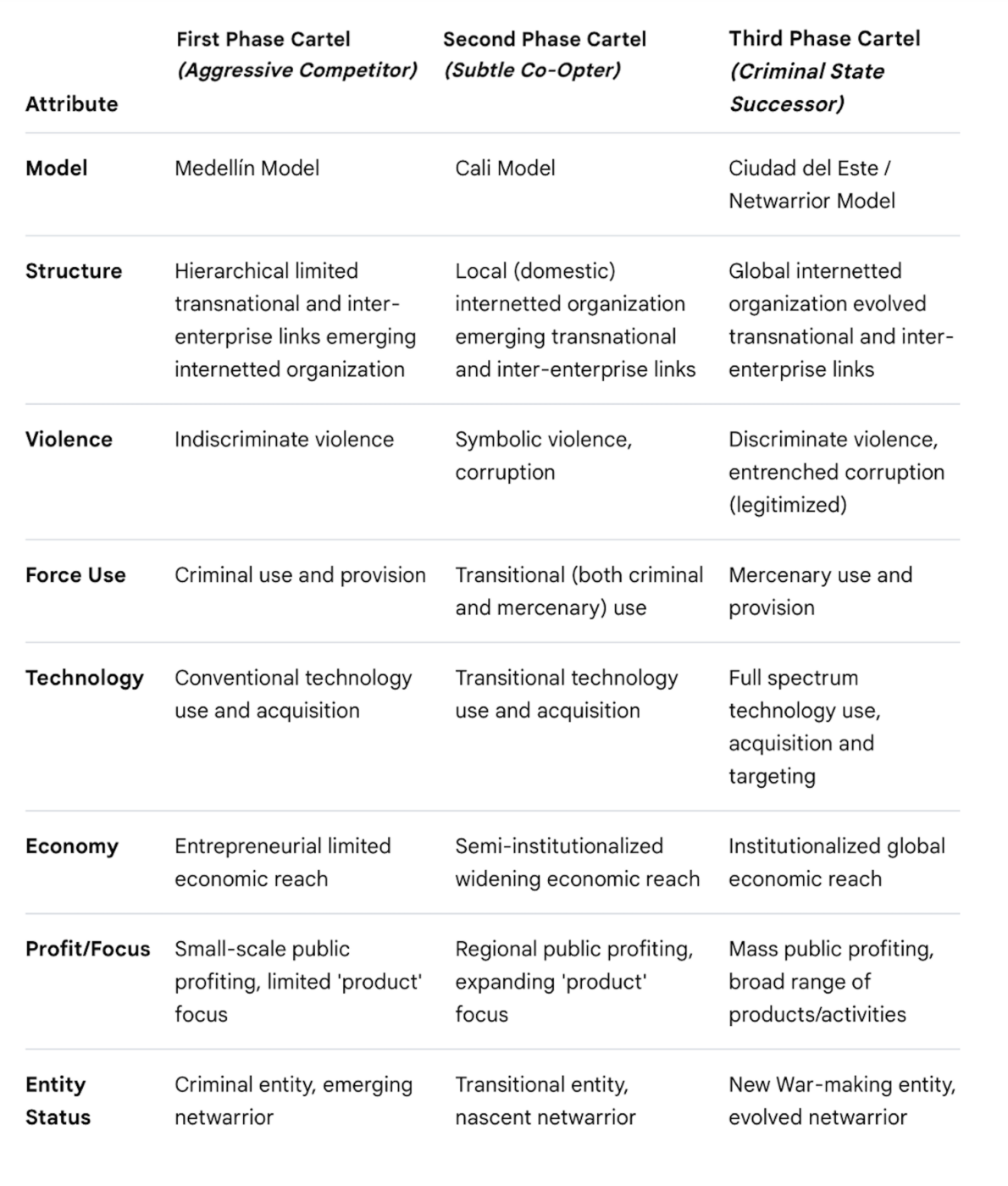
Table 1. Three Phases of Cartel Evolution. Source: Robert J. Bunker and John P. Sullivan, “Cartel Evolution: Potentials and Consequences.” Transnational Organized Crime. Vol. 4, No. 2, Summer 1998: p. 59; Updated Rendering.
The second theme pertains to state criminalization and the rise of criminal states. A rich body of literature exists on this subject. This includes pioneering publications by Louise I. Shelley, “Transnational Organized Crime: An Imminent Threat to the Nation-State?” (1995), Vadim Volkov, Violent Entrepreneurs: The Use of Force in the Making of Russian Capitalism (2002), Jean-Francois Bayart, Stephen Ellis, and Beatrice Hibou,The Criminalization of the State in Africa (2009), Moisés Naím, “Mafia States: Organized Crime Takes Office” (2012), and the many writings of Douglas Farah stemming from his field research activities in Latin America (2010s). Newer contributions to the literature also are provided including case studies focused on Russia; David Satter, The Less You Know, the Better You Sleep: Russia’s Road to Terror and Dictatorship under Yeltsin and Putin (2016); Kosovo and South Ossetia (Georgia), Danilo Mandić, Gangsters and Other Statesmen: Mafias, Separatists, and Torn States in a Globalized World (2021); and South Africa, Kyle Cowan, Mafia Land: Inside South Africa’s Darkest Cartels (2025).
The importance of this subject matter related to the continued prosperity and integrity of the liberal-democratic state form—especially in Latin America with its plethora of evolving networked cartel and gang threats—can be viewed in Table 2. Liberal-democratic states are presently involved in a strategic global competition against both authoritarian and criminalized (and fully criminal) state forms. The competing state form archetypes and their dominant attributes are presented within this table. As we move forward, the expectation is that liberal-democracies and authoritarian states will increasingly come into conflict—for the US and her allies this means with CRINK (China, Russia, Iran, and North Korea). Criminalized and criminal states will greatly influence this strategic competition, quite likely in support of these and other authoritarian states. At the same time, they represent a second strategic competition taking place with the liberal-democracies—especially in Latin America—as well as possibly coming into direct conflict with some authoritarian states.
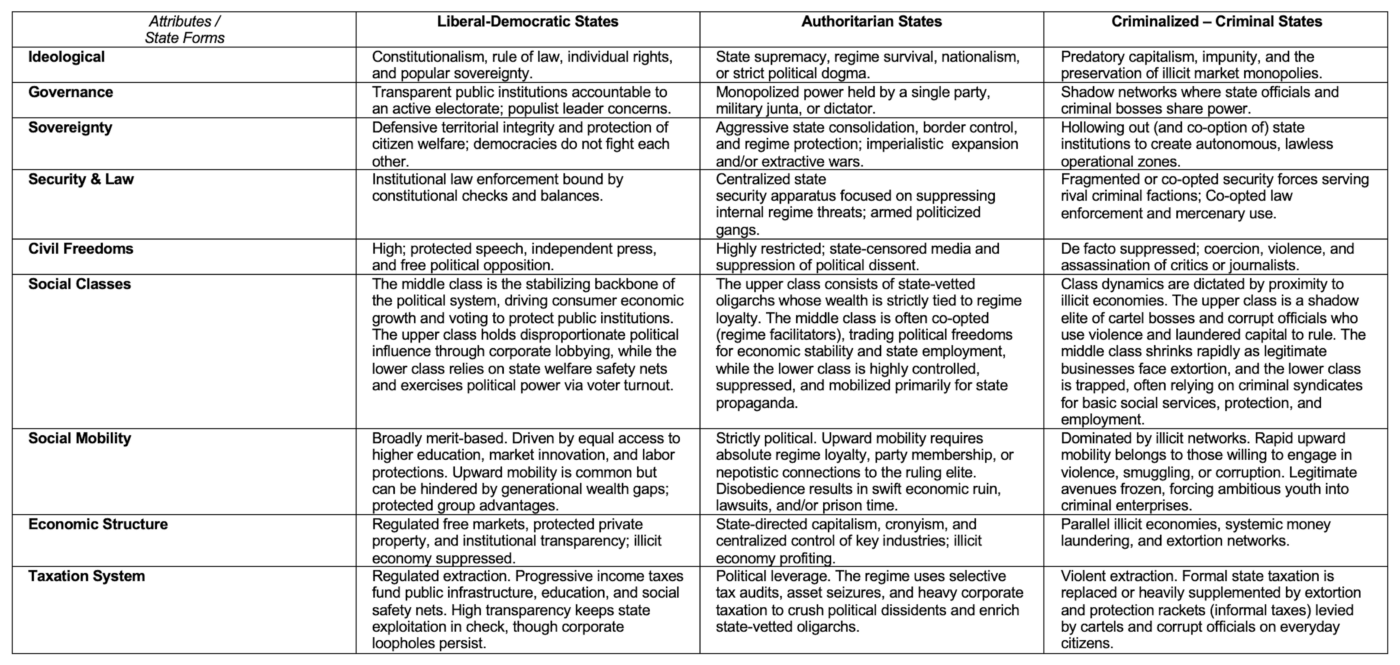 Table 2. Liberal-Democratic, Authoritarian, and Criminalized – Criminal State Archetypes. Source: The Authors and Gemini 3 AI.
Where this strategic global competition will become increasingly complex is that these archetypical state forms are not pure. A number of variant state forms have been and are developing. For instance, partial liberal-democratic co-option by organized crime results in ‘narco-democracy’ emergence, the fusion of an authoritarian regime with high levels of criminality results in ‘mafia state’ emergence, and the undermining of democratic institutions by unchecked populist (authoritarian) leaning heads of state may result in ‘illiberal democracy’ emergence. State form archetypes and hybrids can also shift and morph, as in the case of Mexico. Mexico was once an authoritarian state under decades of Institutional Revolutionary Party (PRI) rule until this ended in 2000. It now exists within the liberal-democratic state form, however, varying levels of criminal co-option (as well as earlier state co-option of criminal organizations) of the state exist given its still weak political capacity. Hence, high levels of authoritarianism and criminality still plague it with each successive presidential administration battling these demons and/or selectively embracing them.
The following curated works offer perspectives, insights, and core documents related to the Third Phase Cartels construct and the processes of state criminalization and the emergence of criminal states. It also provides information related to some of the hybrid state forms developing when rampant levels of criminality penetrate liberal-democracies and authoritarian states (or are proving impossible to purge from those states already plagued by them):
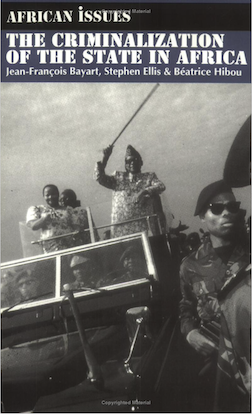
Jean-Francois Bayart, Stephen Ellis, and Beatrice Hibou (Stephen Ellis, Trans.), The Criminalization of the State in Africa. African Issues Series. Bloomington: Indiana University Press, 2009: pp. 1–192, https://www.amazon.com/dp/0253212863?lv=shuf&channelId=500&plpRedirect=mhFallback:
Abstract: The authors argue that public institutions in various African nations have transformed into vehicles for organized crime. The text highlights widespread fraud, resource plunder, and links between local officials and global criminal networks. It distinguishes this modern criminalization from older forms of traditional political (kleptocratic) corruption. Finally, it suggests that structural economic reforms sometimes unintentionally strengthened these illicit networks. A ‘Felonious State’ (deeper structural shift) and ‘Ruses of Political and Economic Intelligence’ (elite strategies) approach is utilized with an emphasis on the South African experience.
Thomas J. Boerman, Isabel Aguilar Umaña, and Richard A. Jones, “Absent, Repressive, and Criminalized States Forced Internal Displacement and Irregular Migration in El Salvador, Honduras, and Guatemala.” Latin American Perspectives. Vol. 52, no. 2, March 2025: pp. 63–86, https://journals.sagepub.com/doi/10.1177/0094582X231206814:
Abstract: Focusing on the broader issue of migration, Boerman examines through qualitative data, interviews, and literature how direct and structural violence employed by criminalized states and illicit actors has resulted in a humanitarian crisis across the Americas. Citizens from low/low-middle income sectors in El Salvador, Honduras, and Guatemala, who arguably face state neglect and state absence, have been subject to criminal groups and the corrupt state actors working with them. Through clandestine agreements, political actors and gangs collaborate to achieve various objectives while amassing political, economic, and social power.

Robert J. Bunker, Five-Dimensional (Cyber) Warfighting: Can the Army After Next be Defeated Through Complex Concepts and Technologies? Carlisle: US Army War College, Strategic Studies Institute, 1998: pp. 1–48, https://press.armywarcollege.edu/monographs/171:
Abstract: In response to the theme presented at the US Army War College’s Ninth Annual Strategy Conference—“Challenging the United States Symmetrically and Asymmetrically: Can America Be Defeated?”—the author of the monograph presents a scenario in which a future enemy, “BlackFor,” employs a five-dimensional approach to warfare to defeat the Army After Next asymmetrically. With relation to the subject matter, BlackFor could emerge from an illicit group, such as a cartel, by leveraging its ‘unique organizational strengths, criminally derived ethics and ability to engage in five-dimensional warfighting’. The author reviews the implications of BlackFor as a new warmaking entity, its characteristics, and its use of advanced technologies and CONOPs.
Robert J. Bunker and John P. Sullivan, “Cartel Evolution: Potentials and Consequences.” Transnational Organized Crime. Vol. 4, no. 2, Summer 1998: pp. 55–71, https://www.academia.edu/3173100/Cartel_Evolution_Potentials_and_Consequences:
Abstract: The foundational construct details how the information revolution and globalization enable criminal networks to challenge traditional state hierarchies. The authors outline a three-phase evolutionary framework, tracking drug trafficking organizations from violent competitors to sophisticated entities that co-opt government institutions. The work warns of a “third-phase cartel” (based on the Ciudad del Este / Netwarrior model) acting as a criminal state successor that replaces legitimate governance. Ultimately, by linking this evolutionary process to Third Generation Gangs, the framework serves as a conceptual foundation for later understanding the theoretical underpinnings of contemporary Criminal Insurgencies later developed by Dr. Sullivan in 2008.
Robert J. Bunker, Ed., Criminal-States and Criminal-Soldiers. London: Routledge, 2008: pp. 1–368, https://www.amazon.ca/Criminal-States-Criminal-Soldiers-Robert-J-Bunker/dp/0415462061:
Abstract: El Centro Senior Fellow, Robert Bunker—as the book editor—along with a “who’s-who” of contributing authors delve into the subject of “criminal challengers to the nation-state form,” as the US and its allies have been engaged internationally with by violent non-state actors that pose social, political, and security threats. Criminal challengers discussed in detail include Al-Qaeda, Hizballah, Mara Salvatrucha (MS-13), and other criminal armed groups. The contributors detail the birth of illicit groups, their success, and the legal and theoretical aspects of criminalized states. Chapter 3 provides a definitional assessment of criminal states and an afterward section focuses on law enforcement responses to the emergence of criminal states and their fielding of criminal soldiers.
Robert J. Bunker and John P. Sullivan , “Cartel evolution revisited: Third phase cartel potentials and alternative futures in Mexico.” Small Wars & Insurgencies. Vol. 21, no. 1, March 2010: pp. 30–54, https://www.academia.edu/1113411/Cartel_evolution_revisited_third_phase_cartel_potentials_and_alternative_futures_in_Mexico:
Abstract: The authors build on the cartel phases that were identified in the 1998 work ‘‘Cartel Evolution: Potentials and Consequences and go into detail about the three established typologies, the threats they pose, and their contemporary examples. Additional topics discussed include a focus on the ‘Ciudad del Este’ model, transnational gangs, ‘maras’ (criminal street gangs), and the developing relationships between third-generation gangs and cartels. Sullivan and Bunker conclude their article by hypothesizing possible ‘alternative futures’ as the Mexican cartels continue to challenge state legitimacy and sovereignty: the violent continuation of criminal (narco) insurgencies, a liberal-democratic state victory, narco-democracy emergence, or the rise of a criminal-state successor.
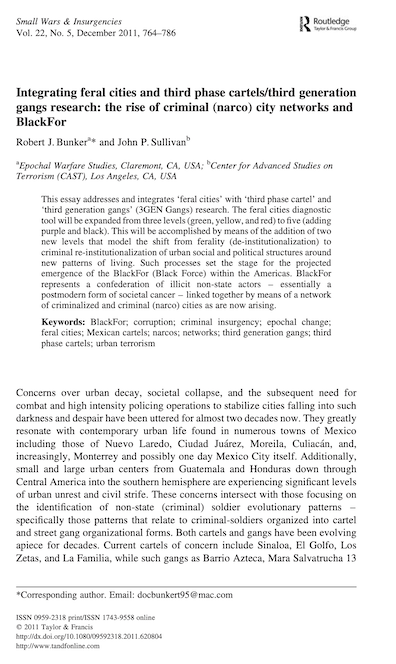
Robert J. Bunker and John P. Sullivan, “Integrating feral cities and third phase cartels/ third generation gangs research: the rise of criminal (narco) city networks and BlackFor.” Small Wars & Insurgencies. Vol. 22, no. 5, December 2011: pp. 764–786, https://www.academia.edu/1130745/Integrating_feral_cities_and_third_phase_cartels_third_generation_gangs_research_the_rise_of_criminal_narco_city_networks_and_BlackFor?sm=a&rhid=41858579344:
Abstract: El Centro Associate Editors, Dr. Bunker and Dr. Sullivan detail and amalgamate the constructs of Feral Cities, Third Generation Gangs, and Third Phase Cartels to provide context on the rise of BlackFor—a projected networked war-making entity that will emerge comprised of illicit non-state actors. By cross-indexing the constructs of interest, the authors argue that ‘black level’ cities may arise in the future which feature illicit economies that sustain other criminally run cities. Criminal enclaves and networked criminal enterprises (such as cartels) may join together to compete economically, gain ideological influence, and take feral city resources, paving the way for BlackFor political and military successes.

Marguerite Cawley, “Are Northern Triangle Countries ‘Narco-States’?” InSight Crime. 20 August 2013: pp 1–5, https://insightcrime.org/news/analysis/northern-triangle-countries-dangerously-close-to-becoming-narco-states/:
Abstract: This analysis builds upon key points featured in a paper from Douglas Farah (included in this subject bibliography), proposing that Northern Triangle countries may evolve from weak states into criminal states. Cawley’s analysis recognizes the controversy of defining ‘failed’ and ‘weak’ states before focusing on the fact that transitional criminal organizations have accumulated so much power that states “are losing the ability to tackle their security problems in ways that strengthen the rule of law or the democratic process.” Additional topics covered include regional private security firms, state corruption, and the failure of states to provide basic security and justice to their citizenry due to corruption.
Julio A. Cirino, Silvana L. Elizondo, and Geoffrey Wawro, “Chapter One: Latin America’s Lawless Areas and Failed States” in Paul D. Taylor, Ed., Latin American Security Challenges: A Collaborative Inquiry from North and South. Newport: Naval War College, 2004: pp. 7–48, https://www.academia.edu/71090765/Latin_American_Security_Challenges_A_Collaborative_Inquiry_from_North_and_South:
Abstract: This early and comprehensive joint project from the US Naval War College’s Strategic Research Department, the Argentine Navy’s Center for Strategic Studies, and the Center for Hemispheric Studies Alexis de Tocqueville dives deep into lawless areas (áreas sin ley), regions lacking state control where illicit actors have settled, along with the activities they are engaging in. Analyzing Paraguay, Brazil, Argentina, Colombia, and Suriname, this chapter provides case studies describing ‘accomplice states,’ weak states, and failed states. Transnational illicit actors and their links to criminal activity (e.g., funding terrorists, drug trafficking, etc.) are examined, as state actors are recognized to be complicit or involved via corruption.
James Cockayne, Hidden Power: The Strategic Logic of Organized Crime. New York: Oxford University Press, 2017: pp. 1–467, https://www.amazon.com/dp/B06XSX8RN4?lv=shuf&channelId=500&plpRedirect=mhFallback&asin=B06XSX8RN4&revisionId=a6a0a632&format=3&depth=1:
Abstract: The author, an international lawyer working for the UN, discusses how criminal syndicates and legitimate states compete and collaborate within a shared market for governance. The book argues that organized crime groups do not just seek profit, but strategically pursue informal governmental power without taking on the formal responsibilities of official rule. He draws on mafia memoirs and unpublished government documents to highlight forgotten political-criminal joint ventures across New York, Sicily, and the Caribbean. He also shows how mafias have actively shaped major historical events, including World War II, the Bay of Pigs fiasco, and the Cuban Missile Crisis. The author provides a theoretical framework to understand how these hidden power dynamics continue to fuel modern global crises and “mafia states.”
Kyle Cowan, Mafia Land: Inside South Africa’s Darkest Cartels. Capetown: Penguin Random House South Africa, 2025: pp. 1–218, https://www.amazon.com/dp/B0FNPJ13VL?lv=shuf&channelId=500&plpRedirect=mhFallback:
Abstract: The investigative exposé is written by a multi-award-winning journalist which chronicles the infiltration of organized crime syndicates into the South African state. The book transcends older perspectives on the notion of a covert criminal underworld existing and instead shows how it has now blatantly structurally embedded itself within municipalities, state-owned enterprises, the ruling African National Congress (ANC), and even law enforcement bodies. Twelve cartels are discussed in the work including the tobacco, taxi, construction, water tanker, and hospital mafias. Governmental procurement and tenders have now become rigged spectacles where the criminal syndicates in coordination with crooked politicians and officials siphon off monies that should be spent on the provision of public goods.
Douglas Farah, “Terrorist-Criminal Pipelines and Criminalized States: Emerging Alliances. Prism. Vol. 2, no. 3, June 2011: pp.15–32, https://ciaotest.cc.columbia.edu/journals/prism%20/v2i3/f_0024140_19687.pdf:
Abstract: Dr. Douglas Farah, an El Centro Fellow, argues that transnational criminal organizations, terrorist groups, and corrupt government officials are merging into highly adaptable hybrid networks that share logistical pipelines. These new alliances frequently collaborate to move illicit drugs, weapons, and human cargo across borders by sharing secure routes and financial loopholes. The author focuses heavily on the growing operational ties between South American drug cartels like the Revolutionary Armed Forces of Colombia (FARC) and Middle Eastern terrorist groups like Hizballah. This convergence effectively turns vulnerable nations into “criminalized states,” where co-opted government institutions actively protect and profit from illicit syndicates rather than upholding the law.
Douglas Farah, Transnational Organized Crime, Terrorism, and Criminalized States in Latin America: An Emerging Tier-One National Security Priority. Carlisle: US Army War College, Strategic Studies Institute, August 2012: pp. 1–96, https://press.armywarcollege.edu/monographs/552/:
Abstract: This well researched and for its time cutting-edge monograph—which draws upon the author’s extensive field research activities—highlights how illicit entities operate under the protection of criminalized states, blending traditional crime with state governance. The complex web of Latin America actors and their intricate relationships with regional and international groups is analyzed along with the anti-American stance being promoted that that threats Southern Hemispheric stability. This convergence of sovereign states and criminal entities also produce heightened risks, ranging from increased drug trafficking to the potential movement of weapons of mass destruction. Ultimately, the report concludes that addressing this threat requires a comprehensive, whole-of-government approach to counter these hybrid actors.
 Douglas Farah, “Central America’s Northern Triangle: A Time of Turmoil and Transition.” Washington, DC: IBI Consultants, LLC. 2013: pp. 1–46, https://www.ibiconsultants.net/_upload/mediaandpublications/document/turmoil-and-transition-2.pdf:
Abstract: This well-articulated study presents strong research on the rise of transnational criminal organizations (TCOs) within the Northern Triangle of Central America. Farah examines drivers of lack of governance by the state and its impact on trends, the increasing access to social networks, resources, political protection, and law enforcement entities that TOCs now possess. It also provides an overview of the effective tactics (e.g., diversifying revenue streams, money laundering to increase market shares, and co-option/corruption) employed by TOCs. Other subjects covered include the relationships between debilitated Northern Triangle states and TOCs, previous regional and US strategies to combat TOCs, and the stages and processes that have led to this present situation.
Douglas Farah, “Chapter 8: Convergence in Criminalized States: The New Paradigm” in Hilary Matfess and Michael Miklaucic, Eds., Beyond Convergence: World Without Order, Center for Complex Operations. Washington, DC: Center for Complex Operations, Institute for National Strategic Studies, National Defense University: October 2016: pp. 179–191, https:///content/pkg/GOVPUB-D5-PURL-gpo76875/pdf/GOVPUB-D5-PURL-gpo76875.pdf:
Abstract: Douglas Farah’s chapter found in the anthology describes how members of the ALBA (Bolivarian Alliance for the Peoples of Our America) bloc “use TOC groups and terrorist proxies as instruments of statecraft.” Groups such as FARC (Revolutionary Armed Forces of Colombia), ELN (National Liberation Army), and Hezbollah have actively engaged in alliances with ALBA members for ideological (anti-imperialism and anti-neoliberalism), illicit financial, and strategic purposes. Farah discusses the basis and strength of these relationships, their mutual interests, and examines Petróleos de Venezuela (PDVSA). The work details how states and criminal (and terrorist) interests converge, resulting in the emergence of criminalized states in Latin America.
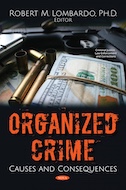
Douglas Farah and Caitlyn Yates, “Chapter 12: Transnational Organized Crime in the Western Hemisphere: The Transformational Role of Criminalized States and the MS-13 Gang” in Robert M. Lombardo, Ed., Organized Crime: Causes and Consequences. Hauppauge: Nova Science Publishers, Inc, 2019: pp. 223–242, https://ebookcentral-proquest-com.ezproxy1.lib.asu.edu/lib/asulib-ebooks/reader.action?pq-origsite=primo&c=UERG&ppg=235&docID=5878328:
Abstract: Through a mixed-methods approach, Farah and Yates use two case studies (the Bolivarian Alliance and MS-13) to assert that the illicit activities of organized crime groups in the Western Hemisphere are evolving in such a manner that the US and other regional actors are challenged in their development of effective counter-strategies. Criminalized states across Latin America have arisen despite pink tide aspirations, as states have employed transitional criminal organizations (TCOs) as a means of statecraft to accomplish various policies and ends. Moreover, MS-13’s geographical expansions, increasing profit margins, and growing political action highlight the gang’s aspirations to become a TOC with transnational power-seeking behaviors.
Vanda Felbab-Brown, “Commentary: Conceptualizing Crime as Competition in State-Making and Designing an Effective Response.” Brookings. 21 May 2010: pp. 1–10, https://www.brookings.edu/articles/conceptualizing-crime-as-competition-in-state-making-and-designing-an-effective-response/:
Abstract: This commentary from El Centro Fellow Dr. Vanda Felbab-Brown frames criminal entities as competitors in state-making (aligned with Charles Tilly’s construct) that exploit state structural capacity weaknesses to gain local legitimacy. She argues that these groups often provide essential economic support to local populations, making them powerful actors in areas where legal governance fails due to the lack of provision of ‘social goods.’ Consequently, the commentary suggests that purely punitive state initiatives directed against criminal groups and heavy-handed law enforcement often backfire by alienating local citizenry. An effective strategy requires population-centric policies that emphasize building legal economic alternatives and improving state service delivery. Ultimately, Felbab-Brown contends that combating organized crime necessitates addressing the underlying socioeconomic drivers rather than relying solely on suppression.
Inés Fynn, Verónica Pérez-Bentancur, and Lucía Tiscornia, “Varieties of Criminal Governance in Latin American Democracies.” The Lasa Magazine Forum. 2025: pp. 1–6, https://forum.lasaweb.org/articles/56-3/varieties-of-criminal-governance-in-latin-american-democracies/:
Abstract: This short article examines how criminal organizations threaten democracy by filling the void left by local political parties that failed to meet citizen needs, taking advantage of deep social fragmentation and structural inequalities to expand their economic influence. Through social involvement (i.e., coercion and service provision), strategic violence and control, and the domination of illicit markets, criminal organizations have established and built criminal governance. The latter part of the article also discusses the capacities of political parties, potential constraints on criminal organizations, and security policies.
Patrick Illmer, “State co-optation as habitus: Guatemala’s elite-driven pathway to a criminal state.” Globalizations. Vol. 21, no. 8, 17 July 2024: pp. 1556–1573, https://doi.org/10.1080/14747731.2024.2378587:
Abstract: Examining Guatemala, Dr. Patrick Illmer—whose research focuses on understanding authoritarian tendencies in Central American state trajectories—proposes alternative theories to comprehend elite formations and their relation to state futures. Illicit groups such as cartels have embedded themselves within various elite political, economic, and judicial circles to co-opt and criminalized the state. Illicit finances, gained via drug trafficking and money laundering, and being used by senior governmental officials highlight what Ilmer argues to be “a broader resurgence of authoritarian tendencies in the region.” El Centro readers seeking a comprehensive resource on Guatemala’s historical political corruption will find this article insightful.
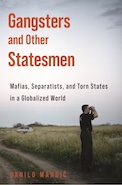
Danilo Mandić, Gangsters and Other Statesmen: Mafias, Separatists, and Torn States in a Globalized World. Princeton: Princeton University Press, 2021: pp. 1–232, https://press.princeton.edu/books/hardcover/9780691187877/gangsters-and-other-statesmen?srsltid=AfmBOopjIWDBfWSYOODGbXaEaG_OJWIMLbiSVw6KItVysjMniTgGrg7w:
Abstract: This work by a Harvard sociologist examines how transnational organized crime influences the success or failure of separatist movements. Based on extensive fieldwork including interviews with mobsters and policymakers along smuggling routes, the book focuses on contested areas like Kosovo and South Ossetia. Dr. Mandić challenges the notion that mafias are merely apolitical, arguing they actively manipulate border politics in fragmented regions. By combining ethnographic research and archival data, the study shows that criminal networks are key determinants of state capacity and ethnic conflict. Covering regions such as Eastern Europe and West Africa, the work analyzes how criminal dynamics impact state-making. Ultimately, the book positions mafias at the center of territorial consolidation and disputes.
Max G. Manwaring, A Contemporary Challenge to State Sovereignty: Gangs and Other Illicit Transnational Criminal Organizations in Central America, El Salvador, Mexico, Jamaica, and Brazil. Carlisle Barracks: US Army War College, Strategic Studies Institute, December 2007: pp. 1–67, https://www.files.ethz.ch/isn/47273/150108_TCOs_CentralAmerica.pdf:
Abstract: This monograph by Dr. Max Manwaring further develops ideas originally presented in Street Gangs: The New Urban Insurgency (2005) to provide a comprehensive case for why gangs and transnational criminal organizations (TCOs) pose an international threat to stability, sovereignty, and global security in Central America. As illicit non-state actors seek economic objectives, they acquire “…commercial market share and revenues, as well as secure bases for controlling people, territory, and governments.” They simultaneously challenge the state(s) they reside in and increasingly seize political power. Ultimately, sophisticated contemporary street gangs have mutated into a new form of urban insurgency (derived from the Third Generation Gangs construct) and create ‘free states’ of impunity.
 Sofía Martínez, “Life Under Gang Rule in El Salvador.” International Crisis Group. 26 November 2018: pp. 1–15, https://www.crisisgroup.org/cmt/latin-america-caribbean/el-salvador/life-under-gang-rule-el-salvador:
Abstract: Maras (gangs) across El Salvador have posed a significant security threat across the state, previously resulting in murder rates as high as ‘103 per 100,000 inhabitants in 2015.’ This commentary details how select maras, such as MS-13, have established “red zones”, areas that they often control through violence in conjunction with actions such as tax collection, property seizure, and extortion. Maras proclaim that they are protecting civilians in red zones (areas that are arguably forsaken), while also extending their power, as members and sympathizers infiltrate public positions which include “teachers, lawyers, local government officials and even police officers.”
Luz Estella Nagle, “Criminal Gangs in Latin America: The Next Great Threat to Regional Security and Stability.” Texas Hispanic Journal of Law & Policy. Vol. 14, no. 7, 2008: pp. 7–28, https://papers.ssrn.com/sol3/papers.cfm?abstract_id=1804427:
Abstract: Luz Nagle, an El Centro Fellow, highlights how transnational criminal gangs, specifically MS-13 and Barrio Ocho (18th Street), have evolved into a paramount threat to political stability and regional security across Latin America. Her work examines the expansion of mareros (gangs) across the Americas and the historical and ongoing factors that have contributed to their violent success. Issues related to previous US immigration criminal-justice policies, mano dura (iron fist) policies, and corrupt state officials are covered. Furthermore, mareros recruitment and tactics, their relation to other illicit actors (i.e., other transnational terrorists), and the infiltration of local law enforcement agencies are discussed.
Moisés Naím, “Mafia States: Organized Crime Takes Office.” Foreign Affairs. Vol. 91, no. 3, May/June 2012: pp. 100–111, https://www.jstor.org/stable/23217970:
Abstract: Dr. Naím, who holds a PhD in political economy, argues that globalization has enabled a dangerous fusion between transnational organized crime and national governments. A mafia state is said to emerge when high-ranking leaders become active participants in, or chiefs of, illicit enterprises. He highlights nations like Russia, Venezuela, and Montenegro, where state interests and resource allocations are directly tied to criminal profits. These regimes integrate illicit operations into state entities, such as intelligence services and central banks, to shield illegal industries for mutual profiting purposes. This convergence blurs the line between state and non-state actors, transforming crime into a critical national security threat. Also see his earlier work How Smugglers, Traffickers and Copycats Are Hijacking the Global Economy (2005).
Organized Crime Dispatch (GI-TOC), “Fentanyl and Third Gen Gangs Latin America.” YouTube 13 March 2024: Audio 1:09:24, https://www.youtube.com/watch?v=OgOLJuNjqoE:
Abstract: This YouTube video features a knowledgeable panel discussing the illicit flows conducted by poly-crime organizations from regions like China and Mexico that operate transnationally. Dr. Sullivan is a panelist and details how criminal armed groups challenge state sovereignty and how nation-states use organized crime as a ‘strategic lever for influencing other nations.’ Fentanyl is noted to be the current issue at the root of state corruption and the erosion of state legitimacy, which cannot be solved simply through US militarization. Other topics discussed by panelists include an additional typology that extends beyond the Third Generation Gangs construct to encompass ‘sophisticated networks of actors/systems’ and the vast environmental repercussions for regions where criminal organizations operate and produce synthetic drugs.
Jonathan D. Rosen, Bruce Bagley, and Jorge Chabat, Eds., The Criminalization of States: The Relationship between States and Organized Crime. Lanham: Lexington Books, 2019: pp. 1–390, https://www.amazon.com/dp/1498593003?lv=shuf&channelId=500&plpRedirect=mhFallback&asin=149859302X&revisionId=&format=4&depth=1:
Abstract: The edited work, contributed to by recognized transnational organized crime experts, expands existing theoretical frameworks regarding state capture, institutional corruption, and the hybridization of political structures. Geographically, the text focuses heavily on the Americas, tracing evolving criminal landscapes from Central America southward. Detailed case studies examine various national and subnational crises, including drug trafficking dynamics in Mexico, systemic violence in Guatemala, violence and crime in El Salvador, organized crime in Venezuela, FARC activities in Colombia, and organized criminal activities in Brazil and Argentina. The contributing scholars analyze the intricate mechanics of subversion across regional systems, questioning whether sovereign governments or criminal syndicates ultimately retain control.
Dawn L. Rothe, Victoria E. Collins, and Calli M. Cain, Eds., Handbook on State Criminality. Cheltenham: Edward Elgar Publishing, August 2026: 1–336, https://www.e-elgar.com/shop/usd/handbook-on-state-criminality-9781035320271.html?srsltid=AfmBOooHKGH_K-eYtPDtYFKI2Rk4IAqs-HdgyrZ0Gpa7t6UBBwCAX3qL:
Abstract: This new critical criminology-focused edited work delves into how state crime is embedded in “capitalism, neoliberal logics, patriarchalism, empire and global governance.” It represents a bit of an outlier for the subject bibliography given its state-perpetrated structural harm critiques of neo-liberalism vis-à-vis the far more serious transgressions inherent to authoritarian and criminalized states. However, its highlighting of the critical intersections of private capital, corporations, and state interests and the framing of criminality as central to the operations of capitalism, neoliberalism, and patriarchy provides insights into the rise of predatory regimes, state co-option by criminals, and what can be considered hybrid state forms such as narco and illiberal democracy perpetuation and / or development. The work also covers issues such as environmental degradation, human trafficking, colonialism, and immigration enforcement.
David Satter, The Less You Know, the Better You Sleep: Russia’s Road to Terror and Dictatorship under Yeltsin and Putin. New Haven: Yale University Press, 2016: pp. 1–240, https://www.amazon.com/Less-You-Know-Better-Sleep/dp/0300230729/ref=tmm_pap_swatch_0:
Abstract: The author, an American journalist expelled from Russia in 2013, argues that Russia’s transition from post-Soviet democracy to autocracy was driven by a criminal elite using state-sponsored violence. He also contends that that the 1999 Russian apartment bombings were orchestrated by the Federal Security Service(FSB; successor to the KGB) to justify the Second Chechen War and solidify Vladimir Putin’s rise to power. Through the systematic looting of national resources and the engineering of a climate of fear, Satter claims a criminal dictatorship was established. Boris Yeltsin is viewed as presiding over the initial criminalization of Russia and choosing Putin as his successor. Also see Sutter’s other books such as Darkness at Dawn: The Rise of the Russian Criminal State (2003). The work further contextualizes the later rise of the Wagner Group as a component of criminalized Russian state mercenary use and provision as articulated in Third Phase Cartel and Third Generation Gang constructs.
 Louise I. Shelley, “Transnational Organized Crime: An Imminent Threat to the Nation-State?” Journal of International Affairs. Vol. 48, no. 2, 1995: pp. 463–489, https://www.jstor.org/stable/24357599:
Abstract: Dr. Louise Shelley, a celebrated transnational organized crime scholar and pioneer, argues in this early work that transnational organized crime has escalated from a localized issue into a direct threat to the sovereignty and stability of the nation-state. Modern criminal networks exploit globalization, technology, and open borders to operate fluidly across jurisdictions while outpacing traditional state controls. These organizations undermine governance by infiltrating state institutions and fostering deep-rooted corruption, particularly in weak capacity or transitioning states. Immense financial power from illicit activities allows these groups to compromise national economies and distort legitimate global markets. Shelley concludes that without coordinated, proactive international policies, these networks will systematically erode the foundational sovereign authority of the nation-state.
Benjamin T. Smith, “The Three Stages of Cartel Evolution: How Mexican mobs took over the government’s protection rackets.” CrashOut by Ioan Grillo. 26 February 2024: pp. 1–14, https://www.crashoutmedia.com/p/cartels-as-protection-rackets:
Abstract: Protection rackets in Mexico have existed for decades, with a majority originally being authoritarian state-run. In this interview, Smith details the case of Guillermo González Calderoni (the former head of Mexico’s federal judicial police) who sought asylum in the US, before offering insight into Mexico’s entrenched police corruption during a 2000 Public Broadcasting Service (PBS) interview. Calderoni’s testimony portrays how state-linked protection rackets supported the Institutional Revolutionary Party (PRI) which “protected some traffickers from prosecution in return for bribes” when they went after parties owing debts and not complying with payment demands. Smith also describes the evolution of the cartels as they eventually took over these rackets and cut the state out of this illicit extractive process.
John P. Sullivan and Robert J. Bunker, Eds., Covid-19, Gangs, and Conflict: A Small Wars Journal El Centro Reader. Bloomington: Xlibris, 2020: pp. 1–200, https://www.amazon.com/dp/1664124349?lv=shuf&channelId=500&plpRedirect=mhFallback:
Abstract: The Coronavirus pandemic fueled conflict and fostering extremism while concurrently empowering gangs, cartels, and mafias in their quest for power and profit. In COVID-19, Gangs, and Conflict, Editors John P. Sullivan and Robert J. Bunker bring together a curated collection of both new and previously published material to explore the trends and potentials of the global pandemic emergency. Topics include an exploration of proto-statemaking by criminal groups, the interaction of pandemics and conflict, as well as a comparison of gangs, criminal cartels, and mafias exploiting the crisis and exerting criminal governance in Brazil, El Salvador, Mexico, Colombia, and South Africa. Implications for national security, biosecurity, slums, transnational organized crime, and threats and opportunities in the contested pandemic space are assessed.
John P. Sullivan and Nathan P. Jones, “Hybrid Threats: Cartel and Gang Links to Illicit Global Networks.” International Journal on Criminology. Vol. 11, no. 2, Summer/Fall 2024; pp. 13-38, https://www.criminologyjournal.org/uploads/1/3/6/5/136597491/hybrid_threats.pdf:
Abstract: Senior El Centro Associates Dr. John P. Sullivan and Dr. Nathan P. Jones elaborate on the regional and international relationships among various criminal enterprises and state actors as they interact for political and / or economic purposes within the context of “deviant globalization.” They utilize case studies and Social Network Analysis (SNA) to map illicit networks across Mexico, Central America, Brazil, and Venezuela. A key focus is placed on the “state transformation” of Venezuela, specifically detailing how government officials utilize the “Cartel of the Suns” (Cártel de los Soles) in collaboration with guerrilla groups. The article concludes that these hybrid networks act as security threat multipliers, facilitating illicit flows like the international fentanyl trade and aiding in the political survival of rogue regimes.
Charles Tilly, “Warmaking and Statemaking as Organized Crime” in Peter B. Evans, Dietrich Rueschemeyer, and Theda Skocpol, Eds., Bringing the State Back In. Cambridge University Press; 1985: pp.169-187, https://warwick.ac.uk/fac/arts/history/students/modules/hi299/topics/statesarmsarmies/0_tilly_85_5xr.pdf:
Abstract: Originally published in the mid-1980’s, Charles Tilly argues in this influential work that statemaking and warmaking are historical representations of organized crime, notably via large scale protection rackets. Specifically, he posits that the modern European state-building process operates as government’s extract resources from populations under the guise of providing protection. He famously states that “war made the state, and the state made the war,” showing how military competition forced rulers to build permanent administrative structures. Rulers eliminated rivals inside their territories and secured capital to fight external enemies. This extraction and coercion cycle inadvertently produced bureaucratic institutions that eventually served civilian populations. Ultimately, national states evolved from dynastic states as a byproduct of violent power struggles rather than from a deliberate social contract.
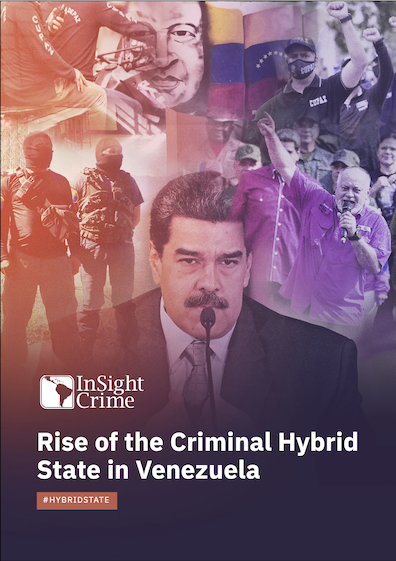
Venezuela Investigative Unit, Chris Dalby, Peter Appleby, Liza Schmidt, and Juan Diego Posada, Eds., “Rise of the Criminal Hybrid State in Venezuela.” InSight Crime. July 2023: pp. 1–41, https://insightcrime.org/investigations/rise-criminal-hybrid-state-venezuela/:
Abstract: This report provides readers with insights into how various criminal groups became embedded in political and economic activities under Hugo Chavez’s leadership. Under his successor, Nicolás Maduro, state elements further contributed to the “hybrid-state” as criminal groups and corrupt actors tactically collaborated via ceded state functions affecting areas ranging from ‘public services, prison transfers, legal goods, and state-controlled resources.’ Other topics within the report examine criminal governance via black market control, tolerated crimes, and an assessment of hybrid armed groups within the region (some previously being loyalists to Maduro and others opposing).
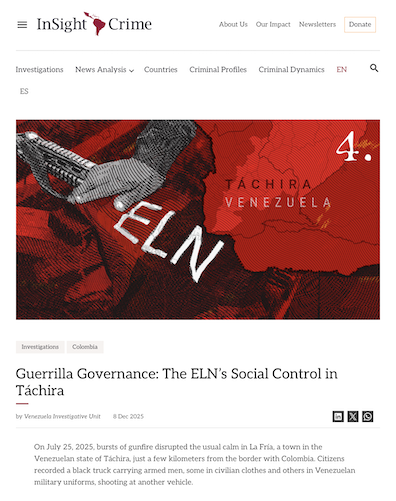
Venezuela Investigative Unit, “Guerrilla Governance: The ELN’s Social Control in Táchira.” InSight Crime. 8 December 2025: pp. 1–9, https://insightcrime.org/investigations/guerrilla-governance-eln-social-control-tachira/:
Abstract: The Colombian narco-guerrilla group Ejército de Liberación Nacional (ELN) has obtained impunity in Táchira, Venezuela, following years of acquiescence and partnership with local officials. InSight Crime’sVenezuela Investigative Unit details how the ELN has secured sections of Venezuela and Colombia’s northern border, gained social control, regulated binational informal economies (i.e., smuggling and drug trafficking), and purchased political capital with illicit funds. State backing of the ELN has led the guerrilla group to exercise authority, with an arguably criminal state emerging in Táchira and in other narco-guerrilla strongholds.
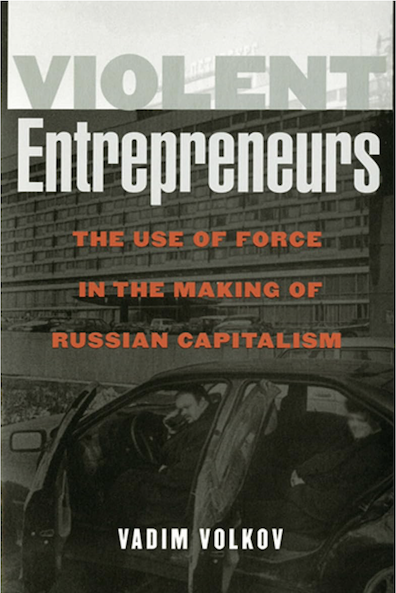
Vadim Volkov, Violent Entrepreneurs: The Use of Force in the Making of Russian Capitalism. Ithaca: Cornell University Press, 2002: pp. 1–224, https://www.amazon.com/dp/0801487781?lv=shuf&channelId=500&plpRedirect=mhFallback:
Abstract: The author, a sociologist, examines the functional role of organized violence in establishing Russia’s market economy during the 1990s. The study analyzes the intense competition among “violence-managing agencies”— criminal groups, private security services, private protection companies, and informal protective agencies associated with the state —that emerged following the Soviet collapse. These entities served as commercial actors, transforming physical coercion into a saleable asset for contract enforcement and property protection. Based on extensive fieldwork and interviews, the book outlines how a decentralized protection market emerged. Ultimately, Volkov illustrates the transition of this violent market into a more formal, state-regulated system. The author conducted numerous interviews with members of criminal groups, heads of protection companies, law enforcement employees, and businesspeople. He bases his findings on journalistic and anecdotal evidence as well as on his own personal observation.
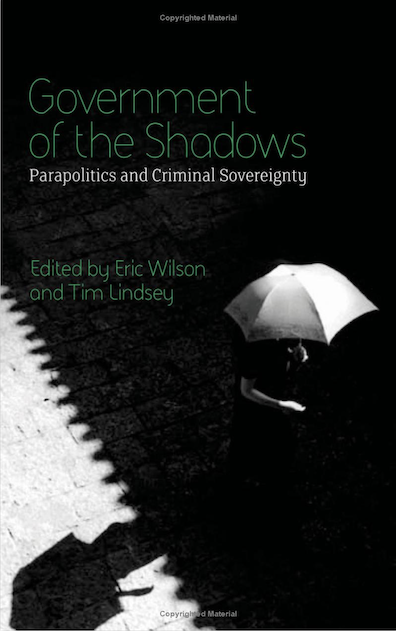
Eric Wilson and Tim Lindsey, Eds., Government of the Shadows: Parapolitics and Criminal Sovereignty. London: Pluto Press, 2009: pp. 1–336, https://www.amazon.com/dp/0745326234?lv=shuf&channelId=500&plpRedirect=mhFallback:
Abstract: This edited work provides a comprehensive academic analysis of clandestine governance and systemic covert political activity. Contributors include Rensselaer W. Lee III, William Reno, and Mark Findlay. The book explores how extra-governmental operations and transnational organized crime linked to the advancement of state and corporate power. By examining diverse global case studies, including the Italian Mafia and Iraq’s reconstruction, the collection demonstrates that these shadowy networks are central to the modern global political economy. It utilizes the concept of “parapolitics” to challenge conventional international relations theories that view the state exclusively through the lens of transparent legitimacy.
Endnotes
[1] The image is inspired by the robbery of the sovereign by criminals and plutocrats image found in Nils Gilman, “The Twin Insurgency.” The National Interest. 15 January 2014, https://www.the-american-interest.com/2014/06/15/the-twin-insurgency/. In this rendition set in a fictional—possibly future—Mexico, the sovereign has been killed off, and a criminalized successor state is stripping all value from its corpse.
[2] Even William I, a direct Norman descendant of the Viking raider Rollo, was initially ‘the Bastard’ and only later ‘the Conqueror’ through force of arms against England in 1066. Further, the House of Hohenzollern were considered illegitimate rulers of the Margraviate of Brandenburg for well over a century when they foreclosed on a debt owed to them by the new Holy Roman Emperor Sigismund in 1415. This represented the equivalent of ‘Late Medieval loansharking’ and a subsequent move against the local nobility such as the Quitzows with siege cannon for ‘militarized eviction’ purposes.
[3] Ioan Grillo, Gangster Warlords: Drug Dollars, Killing Fields, and the New Politics of Latin America. New York: Bloomsbury Press, 2016.
[4] See for instance Nils Gilman, “The Twin Insurgency.” The National Interest. 15 January 2014, https://www.the-american-interest.com/2014/06/15/the-twin-insurgency/, Robert J. Bunker and Elizabeth Farlinger, “El Centro Annotated Subject Bibliography: Feral and Criminal (Gang & Narco) Cities.” Small Wars Journal. 12 December 2025, https://smallwarsjournal.com/2025/12/12/el-centro-annotated-subject-bibliography-feral-and-criminal-gang-narco-cities/, and Anabel Hernández (Ian Bruce, Trans.), Narcoland: The Mexican Drug Lords and Their Godfathers. New York: Verso, 2013.
[5] Refer to the Small Wars Journal Books section for these and other works on this subject: https://smallwarsjournal.com/category/books/. Pertaining to the initial book mentioned see Robert J. Bunker and John P. Sullivan, Studies in Gangs and Cartels. London: Routledge, 2014.