





Strategic Attack on Iran: Airpower’s Promises, Limits, and Lessons | Just Security
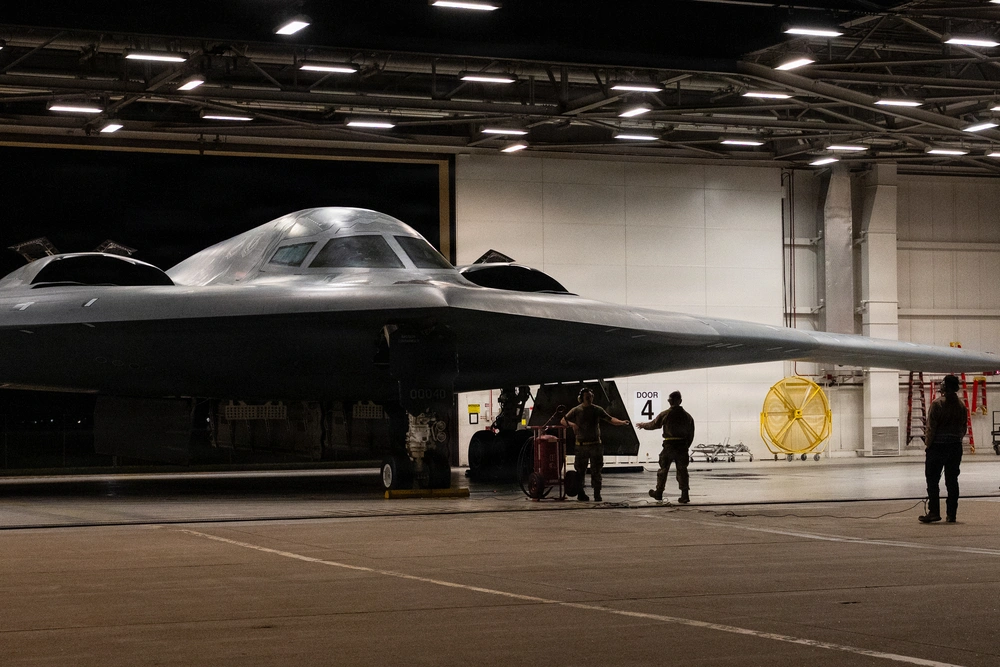

Writing for Just Security, Law Professor Michael Schmitt analyzes the capabilities and limitations of airpower as demonstrated in Operation Epic Fury in “Strategic Attack on Iran: Airpower’s Promises, Limits, and Lessons.” Using US military doctrine as a foundation, Schmitt finds that airpower alone is often insufficient to produce victory in conflict but has immense utility as a shaping or enabling activity when contextualized within a wider approach.
Airpower alone is unlikely to yield strategic victory, but it can produce strategic effect, most notably by weakening the enemy’s military capacity.
With regards to Epic Fury, Schmitt argues that while US strikes have caused immense damage, they have failed to produce any intended strategic effects. Schmitt argues that the powerful and precise strikes in the opening phases of the war failed to coerce Iran as its decentralized leadership structure quickly adapted to the death of Khamenei.
The coercer can only promise more of what it has already done, which is precisely what the adversary has shown it can survive.
The US ceded its ability to meaningfully escalate as Iran demonstrated its ability to endure US airpower and keep Hormuz closed. Iran’s ability to credibility threaten ships coming through the straits has little to do with the kind of military power that airpower is most effective against.
Defeating the Iranian strategy with airpower will be difficult, though, because it depends less on Iran’s military capacity than on simply maintaining a credible threat to shipping. In other words, it is the fact of the Iranian threat as much as its scale that is deterring passage.
Schmitt goes on to argue that airpower is still useful when applied within context identified by US Air Force doctrine. He argues that the US failed to capitalize upon the tempo and scale of its initial strikes, leaving Iran a window to reconstitute and adapt. He also argues that the US has shifted to a strategy more focused on the “cumulative attrition of Iranian capabilities” rather than one focused on denying’s Iran’s overall strategy. Furthermore, Schmitt reaffirms that legal constraints should be an input in the targeting process rather than a secondary consideration. Far from being a damper on the tempo of the targeting cycle, failure to comply with the law of armed conflict often creates more operational challenges than could be solved with one strike.
Further air strikes may still constrain Iranian options, degrade its capacity to sustain operations, and create bargaining leverage. However, their strategic value will diminish unless they are tied to a credible plan to translate military effects into political results.
Schmitt both applies and extends the foundational analysis of Robert Pape in his 1996 book Bombing to Win. The Small Wars Journal has numerous publications that discuss the failures of Operation Epic Fury as understood through the limitations of airpower without a broader strategy. Joe Funderburke argues that the US has consistently failed to develop a meaningful strategy by failing to target Iran’s broader strategy of using proxy groups across the region in the opening phases of the war, failing to consolidate significant operational success with an interagency theory of victory, and pursuing an MOU that merely defers rather than decisively concludes the conflict. Most recently, Funderburke argues that the US has misapplied ends, ways, and means in the conflict; “a political objective that has shifted repeatedly, a sequencing choice that spent coercive leverage before extracting verified compliance, and instruments of national power that performed well in isolation but were never integrated toward a common end.”
In separate articles, Tahir Azad and Ghufrane Daymi reinforce Schmitt’s arguments by demonstrating how Iran’s continued survival represents a failure of US and Israeli strategy. Both argue that Iran’s ability to endure attrition will likely outlast domestic US political will to continue the war, just as in Vietnam and Afghanistan. Departing slightly from Schmitt’s argument, Lance Gordon argues that the combined effect of US strikes has produced a limited outcome that indefinitely constrains Iran’s ability to project nuclear, proxy, or conventional military power. Though not a decisive blow as perhaps intended, Gordon connects this strategy to US strategy in Iraq after the 1991 Persian Gulf War: containment without regime change.
Like Schmitt, most critical discourse surrounding Operation Epic Fury agrees that the conflict has seen resounding tactical success but has failed to achieve significant strategic objectives. The question now centers on how the current US strategy might be modified or how long it will take to achieve these objectives.

