





Rethinking Counter-UAS: What JIATF 401’s Guide Does Well
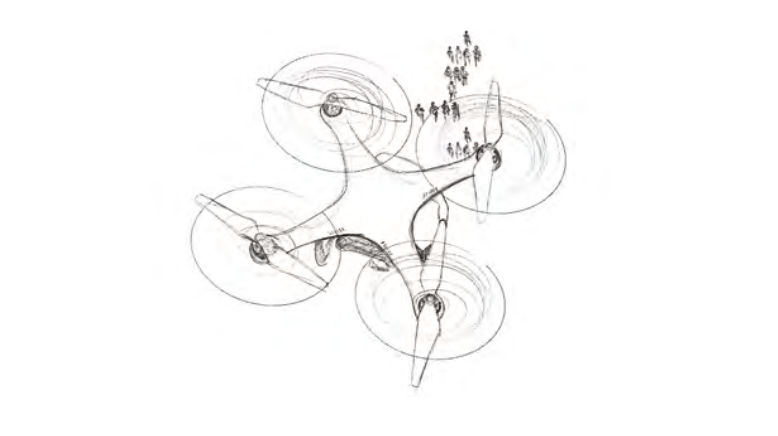

The Joint Interagency Task Force 401’s new primer, Small Drones, Big Problems, arrives at a moment when the counter-UAS conversation has moved from theoretical to lived experience. JIATF 401 has produced a plain-language mental model for thinking about the drone problem, applicable equally to a battalion S2, a Air Force security forces airman, and a sheriff’s deputy.
The report’s organizing logic rests on two frameworks.
The Four Ps and The Five Ds
The “Four Ps” (person, platform, process, payload) give readers a repeatable way to disaggregate any drone threat into its component parts rather than fixating on the aircraft itself.
The “Five Ds” (detect, deny, disrupt, defeat, and discipline) reorient the reader away from the reflexive assumption that countering drones means shooting them down.
The document’s central argument is that kinetic defeat is the last and least preferred option in the sequence, not the first. Denial and disruption—making yourself an uninteresting target, degrading the operator’s confidence, buying time—do more work than most defenders assume, and they’re available to actors without access to jammers or interceptor systems.
Terrain
Chapter Five’s treatment of “terrain” as three overlapping problem sets—physical, electromagnetic spectrum, and network—explains why counter-drone systems that work beautifully on a range often fail in the field: sensor placement, RF propagation, and network latency are rarely modeled together, and defenders pay for that gap in seconds they don’t have.
AI
Chapter Six’s treatment of AI is refreshingly unglamorous, framing machine learning, automation, and bounded autonomy as tools that reduce cognitive overload rather than replace judgment.
Where is this report useful?
- As an onboarding document for units or agencies standing up counter-drone responsibilities for the first time
- As a common-vocabulary bridge between military, interagency, and law enforcement stakeholders, and
- As a checklist for red-teaming your own vulnerabilities before investing in expensive detection or effector systems.
It is not a substitute for doctrine, technical specifications, or legal authorities review. But as an orientation document, it does what it sets out to do: replace vague anxiety about drones with a structured, actionable way of thinking about the problem.
Here’s the full document: “Small Drones, Big Problems A First Principles Approach to Countering-UAS.“

