





Citizen Sensors: Crowd-Sourcing sUAS Intelligence Using Smartphone Apps – A New Tool for Special Operations


Abstract
Smartphone apps like Ukraine’s ePPO, which citizens use to report UAS activity, can fill gaps in traditional air defenses. Use of these apps can also be extended to non-state actors such as cartels, who increasingly use UAS to control populations and territory, or beyond the air domain in resistance operations against repressive regimes. In these contexts, smartphone apps are a valuable tool that can be provided by Special Operations Forces (SOF) to civilian populations and guerrilla forces in order to better “arm” to take action, as well as to acquire data for kinetic and non-kinetic SOF responses. However, to be effective in these wider contexts, design and deployment of apps must address considerations including technical collection capability, legal status of citizen reporters, verification and reliability of data, and segmentation and security.
Introduction
As drones dominate the battlefield, gaps in traditional air detection and defense have been revealed. Ukraine’s ЭППО (“ePPO”) smartphone app delivers an additional sensing layer. Citizens use the app to report incoming air attacks, such as UAS, and the data is used both to warn populations and as an input to targeting by the Ukrainian military.
The ePPO app complements technical sensors like radar, which cannot ensure continuous and uninterrupted detection – particularly during mass attacks – using low-level air assets like UAS. In these contexts, ePPO delivers advantages: It is distributed, difficult to disable with a single strike, and remains functional even where other air defenses are saturated or less effective (such as in terrain radar shadows, built-up areas, or forests).
Although crowd-sourced sensing data apps have delivered valuable effects in strengthening air defenses on the battlefield, their use has yet to be extended to wider potential applications – including offensive operations.
The value of smartphone apps like ePPO extends beyond state-to-state military action. They can also be an effective tool against non-state actors involved in sub-threshold conflict, such as cartels who increasingly use UAS to control populations and territory, or beyond the air domain in resistance operations against repressive regimes.
For SOF, providing civilian populations with a smartphone “observer app” like ePPO provides an additional tool to acquire data for kinetic and non-kinetic responses. It also has additional potential benefits: providing an app could help establish trust between SOF operations and communities by enabling citizens to take an active role in their own protection, or providing early warning of attacks or surveillance assets. This way, an app can undermine the dominance – or perceived dominance – of state and non-state adversaries.
While a crowdsourced observer app has the potential to deliver advantages, its design and deployment must take into consideration factors such as technical collection capability, the legal status of citizen reporters, verification of identities and reliability of data, and segmentation and security.
Citizens as Sensors
Citizens as “sensors” are not new. During the Battle of Britain in World War II, the civilian volunteers of the Royal Observer Corps reported the size and height of enemy aircraft formations flying over the United Kingdom. The data was used for air defense and to provide early warning of air raids. Similar civilian organizations operated in the United States during World War II and the Cold War.
Smartphone apps have also been used in conflict. In Syria from 2017 to 2018, the Sentry system used reports from volunteer observers using a smartphone app, acoustic data, and open-source media to identify warplanes in flight. The data was used to estimate the location of air strikes and provided citizens with 5-10 minutes’ advance warnings, which were disseminated through social media, TV, radio, and other channels.
Ukraine and the ePPO App
In Ukraine, Russian attacks often deliberately target civilians and civilian infrastructure using drones. Traditional sensors like radar are not always effective: Shaheds’ low altitude flight path and small size present a smaller detection signature, challenging many air defense systems currently in use. Conversely, other characteristics of the Shahed can enhance detection and interception: They have a slow cruising speed and distinctive engine sound, which can be identified from the ground.
Building on these considerations, in 2022, Ukrainian tech company Tekhnari developed a crowdsourcing observer app to capture “first alerts” of air attacks. The result was ePPO.
ePPO enables Ukrainians to mark detections – by sight or sound – of air assets, including aircraft, missiles, and drones. As of December 2025, more than 4 million reports had been made via the app.
ePPO reports are aggregated and processed in real-time to estimate direction and speed. Some of the data is restricted to military access only for use in tracking and targeting, and as a dataset for improved air domain awareness beyond specific strikes. The data is also used for citizen protection: Using the predicted flightpath, app users receive a warning 10 minutes before overflight.
Users authenticate and verify their identity using Ukraine’s government eServices app, Diia (Дія). As of 2026, ePPO has more than 850,000 verified users in Diia.
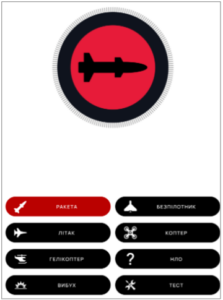
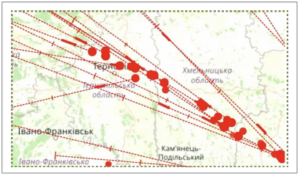
User interface (source: ePPO website) and map using ePPO-sourced data during a Russian attack on July 26, 2023 (source: Holding Back the Sky, Snake Island Institute, 2025)
Beyond the Battlefield: SOF Operations
The use of smartphone apps to crowdsource air threat data has applications beyond state-to-state military action: They can also be used in sub-threshold conflict, for example, against cartels, or beyond the air domain in resistance operations.
Cartels are irregular warfare actors who influence state behavior, erode governance, and control populations and territory. UAS are an increasingly significant weapon in their arsenal. Cartels use UAS against law enforcement, rival criminal groups, and local populations for operations including:
- Attacks, primarily delivering explosive payloads such as grenades or munitions, are air-dropped by small commercial drones
- “Remote violence” such as assassinations at a distance
- Surveillance and reconnaissance, including monitoring territory
- Area denial and forced displacement with the objectives of removing resistance to control territory, “carpet bombing” rival locations to make them unusable by civilians
| Cellphone Subscriptions per 100 People
Interpretation example: in Mexico, each person has on average 1.16 cellphone subscriptions (more than one per person)
Source: Author analysis of World Bank cellphone subscription data (2024). The country list is sourced from the Drug Enforcement Agency (DEA) National Drug Threat Assessment 2025, as being where cartels are established or have their key narcotics production locations. |
UAS enable control with more limited physical presence and offer operational efficiencies due to reduced labor requirements: By using UAS, cartels require fewer sicarios (hitmen and fighters) or halcones (lookouts). The unpredictability of UAS attacks demands constant vigilance and, combined with the kinetic and non-kinetic effects outlined above, results in psychological intimidation.
Similar to the Shaheds used against Ukraine, cartel drones are difficult to detect and neutralize due to their low radar and heat signatures, as well as their ability to fly at low altitudes. Smartphone observer apps provide a potential solution.
Cellphone adoption is high in countries where cartels are established and/or have key narcotics production locations, as shown in the table. Although this data refers to cellphones rather than specifically smartphones, high adoption is a preliminary indicator that smartphone apps are viable.
More broadly than UAS observations, a crowd-sourced app could assist guerrillas and communities in resistance operations. An app could provide a secure and low-visibility method to report the location of repressive regime government forces, roadblocks, or conscription squads.
In the operational contexts of UAS data collection and resistance operations, SOF operators could provide the observer app as part of their engagement with communities and resistance groups. Use of the app would deliver advantages to these partners. Using similar functionality to ePPO, the app could alert populations to incoming cartel UAS, providing time to evade or hide, and enabling more effective interception. This would weaken cartel influence and increase their operational costs. For resistance operations, alerts from the app could minimize capture of resistance fighters, undermine the effectiveness of crackdowns, and provide data for kinetic action like sabotage of government weapons stores.
The data from the app could also be used by SOF to enable more targeted kinetic responses, minimize detection by adversary surveillance UAS, and as a dataset of wider intelligence value.
However, adoption and use of observer smartphone apps by citizens requires that they trust that the app will protect their identities and secure the data they provide, particularly when there are risks of violence or retaliation by criminal organizations, corrupt officials, or repressive regimes. To encourage adoption and protect observers, as well as to be effective in countering threats, an app must address technical, legal, and operational considerations.
Design and Deployment Considerations
Technical Detection
The app must be configured to enable capture of the relevant data points for the operational context. Where possible, automated data collection enhances reliability and minimizes the time required to submit a report. For example, ePPO uses built-in geolocation data from the smartphone, rather than requiring the observer to manually enter location details.
The detection methods must also be adapted to the likely types of threat. For example, ePPO observer reports can be prompted by acoustic signatures, which are valuable for Shahed-type drones but may be less distinctive for other types of UAS or air assets.
Adaptation is also required where the app is to be used for resistance operations in order to ensure that different data points can reliably be recorded, such as government troop numbers, vehicles, or weapons.
Legal Status of App Users
When citizen-reported data is used for targeting by military forces, or for offensive action, the legal status of the citizens must be assessed. For example, reports from civilian users of the ePPO app are used by the Ukrainian military. In some circumstances, this may result in civilians being considered to be “directly participating in hostilities” and, therefore, targetable by Russian forces. For a Ukrainian citizen under attack by Russian drones, the distinction between being a “valid” or “unlawful” target may seem theoretical rather than have real-life meaning. However, other situations present more nuance and require analysis.
If non-state actors such as cartels are considered “armed combatant” parties to a non-international armed conflict, further assessment is required on the international humanitarian law status of civilians using observer apps against the cartel. Additionally, where apps are used more directly for offensive action, such as resistance operations, the legal status of observers moves closer to directly participating combatants rather than passive observers. Design and deployment of apps should include an assessment of the status of observers under international humanitarian law, taking into consideration the planned use of the app.
Verification of Observer Identities
Observer identity verification increases accountability and, therefore, reliability of reported data. In contrast, anonymous reporting creates the potential for deliberate misinformation. In the UAS intelligence context, deception using false reports (“data poisoning”) could result in misallocation of high-cost interceptors against low-cost threats, or use of scarce countermeasures against non-existent attacks. In the context of resistance operations, false reports could misrepresent the location of government forces, resulting in guerrillas moving towards rather than away from harm. In both contexts, trust in the app would be undermined, and use would likely decline.
The ePPO app uses the Ukrainian government’s e-Services app, Diia, to verify the identity of users, although the app reports only include the location and the air asset being observed. Government-provided verification may be suitable in some operational contexts, typically state-to-state conflicts; however, it is not always appropriate.
If the observer app is being used as part of resistance against a repressive regime, an official government authentication service could not be used. Similarly, where communities are concerned about corruption of government officials – such as in cartel-controlled locations – they would be reluctant to use an app where their identities and reports could be revealed by a corrupt official accessing app or authentication data.
In these situations, two alternative solutions could be used. First, third-party identity verification could be required, similar to how banks’ onboarding may direct new customers to a third-party identification and verification service. The app could record that the user was verified without directly holding their personal information.
Second, the app could permit unverified users to make reports, then use analytics to identify outliers indicating errors or misinformation. While this would be less optimal and subject to more significant error rates, it might be sufficient for operations that require lower reliability or where the observer app data can be validated by other methods (such as a report on cartel vehicle movements that could be corroborated by imagery). It may also be necessary to accept non-verified reports where the individuals who are best-positioned to make them are unable to use government or third-party verification services; for example, if they are undocumented.
Data Reliability
Analysis of app-sourced data must include algorithms to detect and resolve inaccuracies, which may be the result of deliberate deception, human errors, or flaws in data processing or analytics. Inaccuracies are more likely if reports rely on human-input data (rather than automated collection), where reports are accepted without identity verification, and where there are fewer observers or reports (more observations increase accuracy by reducing the impact of any single error and improving identification of outliers).
Outliers and errors could be identified using analytics and AI, similar to how financial institutions analyze activity to identify unusual patterns that may indicate money laundering or fraud, or how maritime intelligence uses analytics to identify ships moving faster than the vessel type can achieve, which indicates deceptive shipping. Similar analytics can be applied to observer app intelligence.
Analytics should also be used to identify and prevent misuse of the app. For example, if observers are misidentifying and reporting SOF operators as adversaries, this data should be filtered and excluded from the dataset, in the same way as deconfliction is applied to operations more broadly. This may also prompt improvement in tactics for the SOF operators and/or further training for observers.
Segmentation and Security
Where the observer app is used across multiple SOF operations, appropriate segmentation must be provided to achieve security and encourage adoption by observers. For example, at least two “roles” are required: Observers can report and receive warnings, whereas military can access flightpaths and other data to use for targeting.
Security measures also need to be implemented to ensure the use of smartphone apps does not make observers vulnerable to attack through adversary access to geolocation data.
Regulatory requirements may also apply to some data, so to minimize limitations, ideally, the app would use only data that is not subject to regulatory restrictions.
Conclusion
In asymmetric conflict and irregular warfare, traditional defenses are no longer effective against emerging threats. Citizens can provide an additional sensing layer, contributing to intelligence collection and resistance.
In some operational contexts, an observer app provided by SOF could be more trusted by communities than alternatives. With appropriate design, it would provide greater security and data accuracy compared with informal methods of sharing intelligence, such as social media or texts. In areas where trust in government is low – for example, under repressive regimes or where there are risks that government officials are corrupted by cartels – an app provided by SOF would also provide autonomy and neutrality from local influences.
By providing smartphone apps to enable citizen participation in their own defense, SOF can support communities to take action against state or non-state threats, as well as acquire intelligence to use in kinetic and non-kinetic responses.
The views expressed in this essay do not represent those of the United Kingdom Government.


