





Unrestricted Warfare: How Adversarial Information Operations Exploit Liberal Democracies
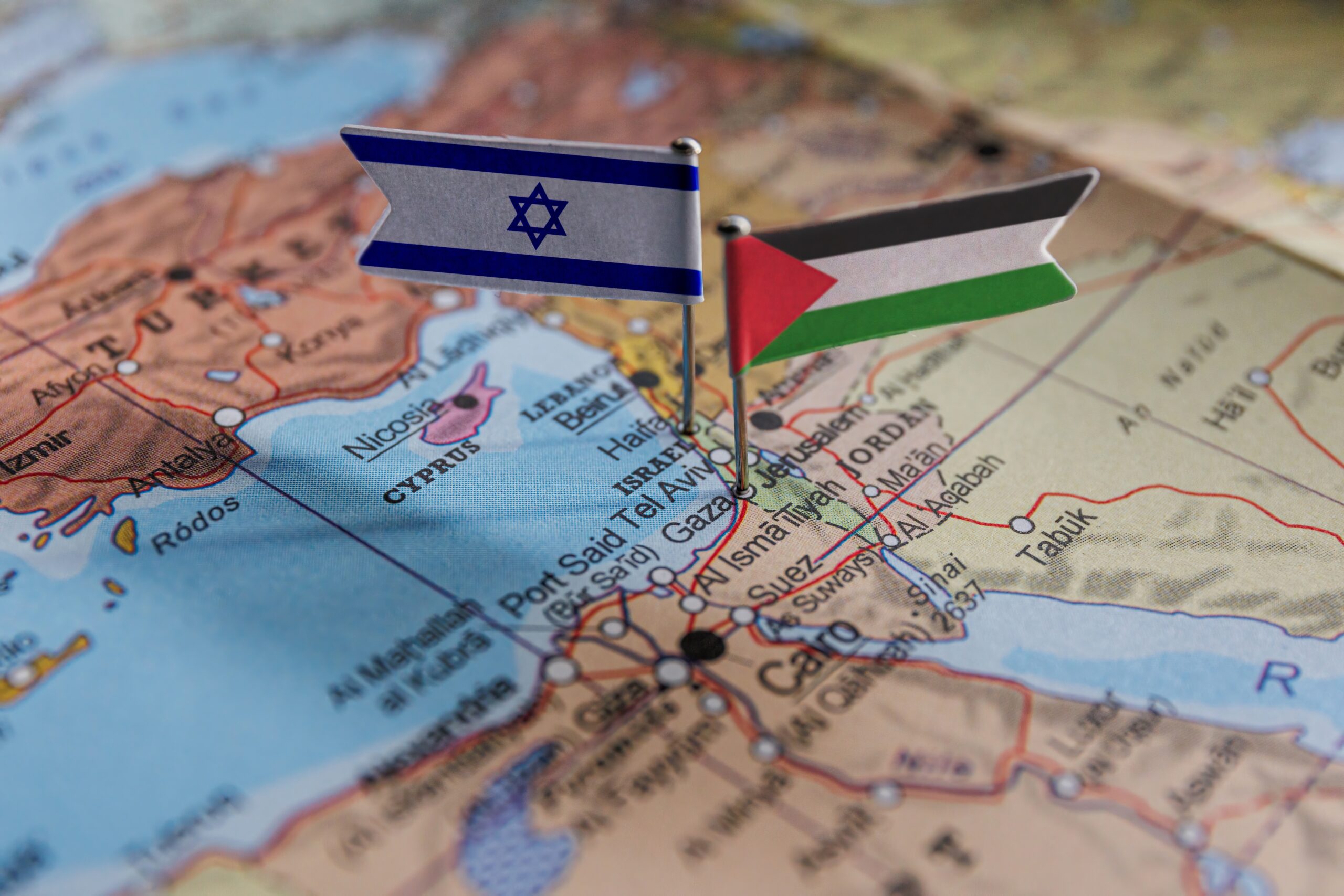

In the months following October 7th, Hamas released a series of hostage videos to Israel’s open press. Emaciated, desperate, and terrorized captives spoke directly to the camera—pleading with Israel to end the war, calling on the public to march and pressure the government into unconditional ceasefire terms, no matter how detrimental they were to Israel’s military objectives. Israeli broadcasters, operating as a free press would, aired the footage into the living rooms of the very society it was designed to break. Hamas did not need to storm a newsroom. It needed only to trust that a liberal democracy’s free press would do the rest.
This dynamic is not unique to Israel. It has become the defining logic of irregular warfare against liberal democracies. Non-liberal actors, from Iran and Russia to Hamas and Hezbollah, have converged on the same strategic insight: liberal states’ foundational commitment to free expression is a load-bearing vulnerability, and the information environment is the decisive theater. They no longer need to win militarily. They need only to erode the domestic political will that sustains military operations. The response from democratic governments has been halting and contradictory. To act against these threats—to restrict, regulate, or censor—is to risk betraying the very values the state claims to defend. To do nothing is to cede the information environment to actors who operate without equivalent restraint. Liberal democracies are caught in a catch-22 of their own making. This paper argues that the paralysis rests on a misunderstanding of what free speech actually requires, and that a targeted, judicially supervised legal framework is both defensible on liberal grounds and strategically necessary.
Why the Marketplace Fails
The philosophical objection to any regulation of speech rests on the marketplace of ideas: the claim, given constitutional expression in Justice Holmes’s dissent in Abrams v. United States (1919), that truth, given open competition, will prevail. Two observations dispose of it in the context of adversarial information operations.
The first is practical. Brandolini’s Law holds that the effort required to refute a piece of disinformation is an order of magnitude greater than the effort required to produce it. A fabricated casualty statistic disseminates across platforms in seconds; refuting it requires expertise, evidence, and content that is structurally less emotionally immediate than the original claim, for the truth is often far more nuanced. In a high-volume, short-attention-span information environment, the marketplace systematically advantages the producer of disinformation over the producer of correction. A lie travels halfway around the world before the truth puts on its shoes.
The second objection cuts to the structural assumptions the marketplace requires. A functioning marketplace of ideas presupposes actors who, however sharply they disagree, share a common framework for deliberation and recognizably compatible ends. American conservatives and liberals disagree on how to address crime, but both want safer communities with fewer criminals. That shared telos makes deliberation meaningful, and the dialectic produces outcomes neither side could reach alone. Hamas’s foundational objective, being the destruction of Israel as a state and a people, is categorically outside that framework. There is no deliberative exchange possible with an actor whose participation in the information environment is not an attempt to persuade but an attempt to operationalize. Extending the full protections of liberal free expression to such an actor is far from pluralism; it is a category error dressed up as a principle. The marketplace of ideas was designed for contestants playing by the same rules. It fails spectacularly when one contestant is trying to burn down the arena.
The Israel-Hamas War
The Israel-Hamas war makes this mechanism visible with unusual clarity. Two episodes, different in origin and method, demonstrate the same structural logic.
The first is the hostage video campaign. As Noga Halevi has documented at the Washington Institute for Near East Policy, Hamas’s hostage-taking was never primarily transactional. The videos followed a deliberate pattern: scripted performances extracted from captives under coercive control, released at politically sensitive moments, calibrated to fracture Israeli public unity and generate domestic pressure for strategically catastrophic concessions.
The perversity of the mechanism is easy to overlook. A hostage appears on camera. She is alive. She is speaking. She is imploring Israel to stop the war. What the viewer does not see is the gun. What the viewer does not hear is the coercion that preceded the filming. At the same time, Israeli broadcasters—including Kan 11, the national public broadcaster—aired the footage repeatedly, with inadequate contextualization. The decision was legally unimpeachable. The result was predictable and, from Hamas’s perspective, calibrated: mass street protests demanding a ceasefire, sustained political pressure on the government to accept untenable terms, and a progressive erosion of public consensus around continued military operations. Gil Merom argued in “How Democracies Lose Small Wars” that liberal states lose irregular conflicts not on the battlefield but in the domestic public sphere, as adversaries exploit moral constraints and public sentiment to degrade political will. The mechanism played out with textbook precision.
The second episode illustrates what happens when that mechanism escapes the domestic sphere entirely and enters the architecture of international law. In August 2025, +972 Magazine published an investigation claiming that 83% of Palestinians killed in Gaza were civilians. The claim rested on a classified Israeli military intelligence database tracking named, pre-identified Hamas and Palestinian Islamic Jihad operatives—fighters specifically catalogued by Israeli intelligence and confirmed as killed by name. With the Gaza Health Ministry reporting approximately 53,000 total deaths and the database identifying 8,900 named operatives, +972 assigned every remaining death to the civilian category, producing the 83% figure.
The methodological flaw is not subtle. The database tracked only pre-catalogued operatives. It explicitly excluded fighters killed but unidentifiable by name, members of armed factions outside Hamas and PIJ, and political leaders of designated terrorist organizations. Treating the partial dataset as exhaustive and assigning every unaccounted death to the civilian category is not a methodological oversight. What it represents, instead, is a willful omission designed to produce a figure capable of doing maximum damage to Israel’s international standing.
The downstream effect was considerable. Within 72 hours of publication, an estimated 6.6 billion social media impressions had been accumulated, carried by the credibility chain of liberal media institutions that had no mechanism for distinguishing a fraudulent factual claim from legitimate investigative reporting. But the figure’s most consequential journey was into formal international proceedings. On September 16, 2025, the UN Human Rights Council’s Independent Commission of Inquiry formally cited the 83% statistic in its genocide determination against Israel, incorporating it as evidence of the civilian death rate into a 72-page legal finding. That same Commission report recommended that member states “cease the transfer of arms and other equipment” to Israel—the first formal UN body to recommend a global arms embargo on those grounds. On October 8, 2025, Spain’s Congress of Deputies ratified a total arms embargo on Israel. The legal scaffolding for that vote ran directly through the Commission report.
+972 operates inside Israel under full legal protection. That protection is the point. The liberal framework that permitted the publication cannot distinguish between journalism and the strategic deployment of a methodologically dishonest statistic in wartime. A figure derived from a deliberately truncated dataset, carrying the credibility markers of investigative journalism, traveled in seven weeks from a media outlet to a UN genocide determination to a binding vote in a foreign parliament. The liberal framework had no mechanism to intercept it at any stage.
A Legal Framework
The question is not whether liberal democracies can act, but whether they will do so on principled terms. Two mechanisms are available, and neither requires building from scratch.
The first extends national security law to recognize adversarial information operations as a distinct category of hostile activity: the coordinated deployment of demonstrably false content, involving a foreign or non-liberal actor, with specific intent to undermine democratic decision-making or military effectiveness. The legal foundation for such an extension already exists across liberal democracies. In the United States, Near v. Minnesota (1931) carved out an explicit national security exception to press freedom; the material support statute (18 U.S.C. § 2339B) already prohibits providing resources—including certain speech acts construed as coordination—to designated foreign terrorist organizations. In Europe, Germany’s Volksverhetzung statute and France’s 2014 Anti-Terrorism Law have operated on this principle for decades without producing censorial dystopias. The channels exist. The principle exists. What is needed is an extension and clarification of existing frameworks to recognize adversarial information operations as a form of hostile activity equivalent in strategic intent—if not physical form—to the acts these statutes already cover.
That definition must be narrow: it excludes criticism of government policy, dissenting journalism, and the publication of inconvenient truths. Its scope is limited to coordinated deception in the service of an adversarial strategic agenda. Adjudication must rest with specialized judicial panels rather than the executive branch. Herein is the distinction that separates defensive liberalism from the illiberal censorship practiced in Ankara and Budapest. Court-supervised restriction, with a high evidentiary burden and adversarial process, is what liberal democracies have always used to manage the tension between security and freedom.
The second mechanism addresses the gap that national security law cannot fill: domestic media actors who, through willful indifference to methodological integrity, produce and amplify content serving an adversarial operation. The +972 case falls precisely here. The model is defamation law—a civil rather than criminal framework, where the burden of proof rests on the claimant, the remedy is damages rather than imprisonment, and the judge rather than the government makes the determination. A media outlet that publishes demonstrably false factual claims, reckless of basic methodological scrutiny, should face civil liability when that content serves an adversarial information operation in wartime. The framework turns on a distinction that is analytically clean even where individual cases are contested: a journalist who argues that Israel’s military campaign is immoral is expressing a view; a journalist who publishes a statistic derived from a methodology they know to be fraudulent is making a false factual claim. Opinion, analysis, and political commentary—no matter how incendiary—remain entirely untouched. The existence of hard cases at the margin does not argue for the absence of any framework. Every area of civil liability produces contested cases. The relevant question is whether a well-designed framework with robust procedural safeguards is preferable to the current situation, in which liberal democracies have no legal recourse whatsoever.
Conclusion
Israel has been the test case, but the same logic applies wherever liberal democracies face adversaries sophisticated enough to use their freedoms against them, which is to say, increasingly everywhere. The choice is not between censorship and freedom. Liberal democracies are already living with censorship—ad hoc, opaque, exercised through informal executive pressure on technology platforms, answerable to no institutional check. The real choice is between that and something transparent, court-supervised, and narrowly targeted at actors deliberately dismantling the preconditions for free deliberation. An information environment in which a methodologically fraudulent statistic travels from a media outlet to a UN genocide determination to a foreign parliament’s arms embargo vote in seven weeks is not a functioning marketplace of ideas. It is a strategic liability. Liberal democracies that treat it as anything less have not understood the war being waged against them.


