Against the Wind: Positional Survival and Grand Strategy for the Rest of the World

The National Defense University’s reading lists in grand strategy are thick with B.H. Liddell Hart, George Kennan, and Barry Posen, and they provide the most useful frameworks in the defense profession. They force you to connect means to ends, prioritize when everything feels urgent, and think past the current crisis. Yet after years spent inside the defense establishment, a review of Mohammed Soliman’s recent work on American grand strategy in West Asia triggered a realization: nothing from the noted authors addresses the subject from any perspective other than that of a great power. Not once. The entire canon of grand strategy begins from the position of a state with global reach, overwhelming military capacity, and the luxury of choosing whether and where to engage. Posen and Ross’s four alternatives (neo-isolationism, selective engagement, cooperative security, primacy) are options available only to a state with enough weight to select its level of involvement. Mearsheimer and Walt’s offshore balancing is an argument about how much power to use and where, not about what to do when you do not have any.
That leaves most of the world without a usable framework for their most basic strategic issue: survival.
The entire canon of grand strategy begins from the position of a state with global reach, overwhelming military capacity, and the luxury of choosing whether and where to engage.
The image from American Beauty (1999) captures the condition. A plastic bag floats in the wind, carried wherever the air currents take it. The world’s small countries suffer the winds of the global powers, without the weight to keep them from tossing about as the currents change. A country in that condition may not realize that grand strategy applies there too. The canon starts and ends with great power leaders, and everyone else is left to devise on their own.
The Plastic Bag Condition
The “plastic bag condition” describes the state of operating without a coherent theory of survival. The term captures a condition, not a destiny. A state can fall into it. Many have climbed out. The smaller the state, the less margin for error.
Great powers are not immune. Russia has a grand strategic vision but its means no longer match its ends. The war in Ukraine exposed that Moscow is increasingly propped up by size and nuclear arsenal alone. A state coasting on inherited weight while its economy shrinks and its partnerships thin out is not executing grand strategy. Similarly, Brazil has the weight to anchor South America but its foreign policy swings wildly with each administration. No strategic through-line survives a change in government. Both states exhibit this condition at scale.
For smaller states, consequences arrive faster. Lebanon, for example, had genuine assets but never decided what it was trying to protect. Hezbollah grew into a state-within-a-state that made Lebanon permanently available for Iranian power projection and Israeli military operations. Likewise, Libya’s regime collapse created a vacuum where armed factions backed by different external patrons competed for control. After the U.S. withdrawal, the government of Iraq became subject to whichever internal faction aligned with the predominant external power on a given day.
The difference is not size, wealth, or military power. It is the presence or absence of a deliberate theory of survival.
Compare these states to Singapore, which has maintained sovereignty and strategic independence for six decades in a neighborhood of much larger states. With a population of under three million, Qatar hosts Al Udeid, the largest U.S. base in the Middle East, acts as a mediator between the United States and Iran, and owns enough global real estate and media to make itself impossible to ignore. Oman has positioned itself as the Gulf’s honest broker, a role that made it too useful to threaten.
The difference is not size, wealth, or military power. It is the presence or absence of a deliberate theory of survival. The plastic bag condition is a failure of strategic choice, often because states are never presented with this choice. Such choices can be reversed, however.
What the Tradition Gives Small States
The intellectual foundations for a small-state grand strategy already exist in the canon, though its authors never intended them for this purpose.
Liddell Hart defined grand strategy as the coordination of all resources of a nation toward a political object, looking beyond war to the subsequent peace. That definition is more useful to a small state than Liddell Hart probably realized. It means that a good grand strategy coordinates all state resources, not just military. Geography, diplomatic position, economic niche, and cultural ties all count as instruments. Grand strategy demands economy of force, never committing to an engagement you cannot win. For a great power this is simple wisdom. For a smaller state, it is the cost of existence. This method privileges the indirect approach: a state that positions itself to impose costs or offer value that might be lost through armed conflict can survive where direct confrontation might be fatal.
Posen extends the logic. His formulation of strategy is a theory of how a state provides for its security. This way of thinking strips away great-power assumptions and exposes the core function of grand strategy: survival under actual conditions. His later work treats resource constraint as a starting condition of serious strategy. This applies more so to states that operate with a fraction of the resources of a great power.
However, neither Liddell Hart nor Posen imagines a state without enough weight to choose its level of engagement. Such states need a framework built from the same intellectual base but designed for states with little control over their security environments. Silove establishes a foundational point: nothing in any definition precludes application to smaller states. A small but growing body of scholarship from Anders Wivel, Hanna Samir Kassab, Jean-Marc Briffa, and Brommesson et al. applies grand strategy to smaller states. However, their work is almost entirely European in focus: Sweden, Denmark, the Nordics, and the Baltics. These states have functioning institutions, internal coherence, and NATO membership. The literature has little to say for states that wrestle with internal actors and external great-power pressure simultaneously. This article seeks to fill that gap.
Positional Survival
In brief, a small state escapes the plastic bag condition when it makes itself harder to break from the inside than to ignore from the outside, without breaking its own people in the process.
Grand strategy for a small state is the deliberate alignment of all national resources toward preserving sovereignty and freedom of action. It begins with internal cohesion achieved by sustaining popular legitimacy through governance responsive to the population’s needs even under conditions of internal armed threat. Simultaneously, states conduct disciplined operations against non-state armed actors that degrade their capacity without alienating the population. Externally, the state deliberately selects which great-power dynamics to exploit, which to avoid, and where to make itself too costly or too useful to be consumed.
In brief, a small state escapes the plastic bag condition when it makes itself harder to break from the inside than to ignore from the outside, without breaking its own people in the process. That is positional survival.
Every clause in this definition is load-bearing. Without “internal cohesion” you get Syria, fractured into competing armed factions with no entity capable of governing. Without “popular legitimacy” you get Myanmar after 2021, where the population needed protection from the military. Without “disciplined selection” of external relationships you get 1960s South Vietnam, so dependent on a single patron that it ceased to exist less than two years after that patron’s withdrawal. Without “too costly or too useful to be consumed” you get states that survive only through the absence of anyone’s attention, a condition that holds only until someone’s attention arrives.
The Internal Front
The strategic dilemma is not whether the state can eliminate internal threats, it is whether the state can keep internal armed actors from becoming independent strategic players with their own external patrons.
Most small states that fail are not conquered. They hemorrhage sovereignty internally until there is nothing left to hedge their position externally. Internal armed actors do not just consume state resources. They create leverage for great powers. Iran built an entire regional strategy on cultivating proxies rooted in local politics. The host states could not eliminate these proxies without Iranian cooperation, and Iran would not cooperate without strategic concessions.
The strategic dilemma is not whether the state can eliminate internal threats, it is whether the state can keep internal armed actors from becoming independent strategic players with their own external patrons. Once an armed actor controls territory or negotiates independently with foreign governments, the state’s strategy is dead.
Staying below that threshold requires targeted security operations against leadership, logistics, and revenue streams, not mass sweeps that treat entire communities as suspect. Colombia’s shift from broad military campaigns to targeted strikes against Fuerzas Armadas Revolucionarias de Colombia (FARC) leadership, combined with financial disruption of coca processing networks, accomplished more than a decade of territorial sweeps. It also eroded far less legitimacy. The Medellin model under Mayor Sergio Fajardo showed the other half: investing in libraries, transit, and education in the most violent neighborhoods while police operations continued. Violence dropped not because gangs were militarily defeated but because their recruitment base dried up.
Security operations and governance presence are insufficient without including the communities most affected by the armed threat into the political process, however. When the state shows up only as soldiers and police, the message to the population is clear: you are a threat. When it shows up as services, representation, and economic investment, the message changes: you are a citizen. That distinction determines whether the population cooperates with the state or with the armed actors. In an internal conflict, population cooperation is the terrain. You do not hold ground; you hold legitimacy.
States must confront authoritarian temptations directly. Bukele’s mass incarceration in El Salvador appears to have reduced gang violence and is wildly popular. But if the state’s resilience depends entirely on one leader maintaining emergency powers, the state has not achieved positional survival. It has traded one form of fragility for another.
The External Front
Three external postures recur among small states that have sustained sovereignty. The first is the node: becoming so embedded in global systems that removal carries unacceptable cost. Singapore with trade and finance, Qatar with diplomacy and basing, the UAE with logistics and AI infrastructure. These states cannot resist great-power coercion militarily but can impose costs on great powers by providing indispensable functions.
The second is the hedge: maintaining relationships with multiple competing powers without fully committing to any. Vietnam keeps defense ties with the United States, preserves a relationship with China, and buys Russian weapons. Kazakhstan hedges between Russia and China while maintaining Western energy partnerships. No single patron can dictate terms because the client always has alternatives.
The third is the shelter: binding to a security framework larger than any single patron, a concept Wivel identifies as one of the oldest small-state strategies. The Baltic states embedded themselves in NATO, the EU, and Nordic cooperation frameworks. Their defense became a collective obligation, distinct from bilateral dependency.
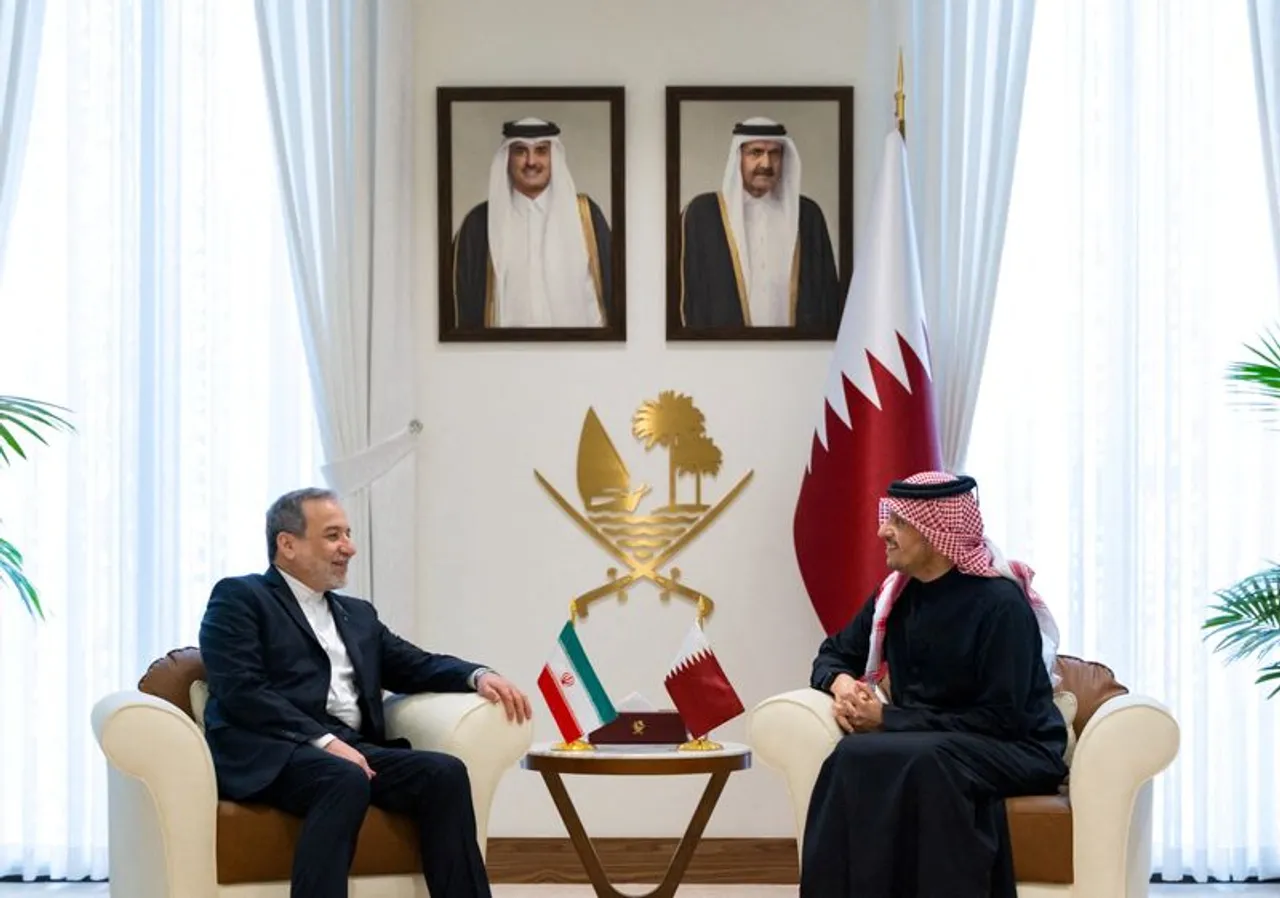
The 2026 US/Iran war demonstrates this in real time. Qatar and Oman built options. States that hosted U.S. military bases without building independent diplomatic positions now absorb the consequences of decisions they did not make, with no fallback. That is the difference between positional survival and dependency.
The Test
Six questions determine whether a state has a strategy or operates in the plastic bag condition:
- What is the one thing the state cannot survive losing? Core interest identification requires painful specificity. For Jordan, regime survival. For Singapore, economic relevance. For the Baltic states, territorial integrity.
- Does the state control enough of its own territory, economy, and instruments of violence to implement a strategy? If not, what is the minimum action required to get there.
- Which internal actors could grow into independent strategic players with their own external patrons? The state that does not ask this question discovers the answer when it is too late.
- What instruments beyond military force give the state leverage disproportionate to its size? For small states in this condition, non-military instruments are usually decisive.
- Which great-power relationships does the state need, what is it willing to pay, and what is the walk-away point? Every relationship that lacks a walk-away point is a dependency.
- If the state’s primary patron’s priorities shift tomorrow, what is the fallback? A state that cannot answer this has outsourced its survival to another state’s strategic will.
The first three are sequencing prerequisites. Internal coherence comes first. External positioning comes after.
Why Democracy Matters
A state that breaks its own people has destroyed the only strategic resource that can save it.
Legitimacy is the one strategic resource that cannot be imported, seized, or purchased from a great-power patron. Democratic institutions function as early-warning systems for internal threats and as release valves for political pressure. Where political grievances have no legitimate outlet, armed alternatives fill the space. Counterinsurgency literature treats legitimacy as a center of gravity; Francis Fukuyama’s work addresses it as a determinant of state survival. Neither connects legitimacy to a state managing internal armed threats and external great-power pressures simultaneously.
The test for any security restriction is specific: does a state restrict freedoms because the operational threat requires it, or because restriction is easier than governance? A state that breaks its own people has destroyed the only strategic resource that can save it.
Strategy Is a Choice
The plastic bag condition results from the absence of strategic choice and can be reversed. The intellectual tools exist: Liddell Hart’s economy of force and indirect approach, Posen’s trade-off discipline, and Wivel and Briffa’s emerging work on small-state postures. These tools work for any state willing to answer hard questions honestly.
A small state’s grand strategy succeeds when it makes itself harder to break from the inside than to leave alone from the outside without breaking its people in the process. The wind does not stop. The question is whether you have achieved a survivable position or if you are still in the wind.