





Political Violence in Democracies Just Makes Things Worse

Abstract
The use of political violence in democratic countries is illegitimate, unnecessary, and oftentimes disastrous for society. With peaceful civic options at the disposal of the people, the decision to engage in militant revolutionary violence for political ends is utterly contemptible. Worse, whenever dissidents or activists resort to political violence in a democracy, it has an incendiary effect on the contemporary political climate and often exacerbates whatever issues the country had already been struggling to address.
Throughout the last 250 years, the popular use of violence to achieve political ends has increased exponentially. This began with the American Revolutionary War, as regular colonists took up arms against the repressive regime of the British Empire. The French Revolution followed, as starving peasants rose up against a corrupt monarchy. Greece, Haiti, and the Spanish colonial empire declared independence in short order, fighting to free themselves from their imperial masters.
This pattern of righteous revolution was abruptly halted with the American Civil War in 1861. The decision to take up arms against a sovereign authority was no longer about freedom or independence; it became a tool to refuse to accept the results of the democratic process, giving in to naked greed and sadistic racism. From the latter half of the 19th century to the present day, the popular use of political violence has lost increasing measures of legitimacy as a tool of liberation and has become the coward’s main weapon of choice.
In 1914, Archduke Franz Ferdinand of Austria and his wife were shot dead in Sarajevo by Gavrilo Princip, a Bosnian nationalist striving for a unified Yugoslavia free from Austro-Hungarian occupation. In 1917, Russia suffered two massive waves of revolutionary violence spurred by Communist ideology, fueled by wartime paranoia and political discontent. The resulting rise of the Union of Soviet Socialist Republics spawned one of the most horrific regimes in human history.
After the Great War, Mussolini organized his Black Shirts into a gang of thugs and brutes intent on bullying and beating, or worse, anyone who opposed their movement, leading to the establishment of fascist Italy. Throughout the 1920s until 1933, the National Socialist Workers Party, or the Nazi Party, battled moderates and communists who had to be silenced for its goals to achieve fruition.
The Cold War did nothing to diminish the specter of political violence; if anything, it only exacerbated its ubiquity. The emergence of innumerable communist and nationalist revolutionary and terrorist groups in the last century is unprecedented, including the Red Army Faction, Provisional Irish Republican Army, Ulster Volunteer Force, and Japanese Red Army. These groups routinely employed terror tactics to sow fear in support of their political objectives.
All of the above postbellum examples took place in democracies where the use of violence was completely optional. These organizations had a myriad of other tools at their disposal, but resorted to violence because they failed to understand the futility of militant activities. Throughout history, those who employ political violence either achieve victory only to collapse soon thereafter or completely fail to influence the status quo except to their personal and/or political demise. Thus, political violence has never succeeded in democracies, and those who employ it are cowards too weak to create change the hard way, using the tools of democracy to influence the will of the people.
There are several ways for people to enact change that do not involve violence. Some are passive, meaning that not much effort is needed to influence political affairs. Voting, first and foremost, is the most vital method of political action. As a Constitutional right (at least in the United States and other constitutional republics), citizens are guaranteed a participatory role in the electoral process at the local, state, and federal levels. Second, donations of funds and other resources play a key part in the political process. While not as cheap as voting, using your wallet in support of political goals has an arguably greater impact than votes alone. Citizens can choose how much money they want to provide to whichever organization(s) whose political objectives align with theirs, which in turn multiplies the political force of their funds. Most importantly, both of these measures depend on the people becoming informed citizens by keeping apprised of current events and political discourse. This enables them to make the best decision possible with their votes and financial contributions, maximizing the power that they can passively project into the political arena.
There are also several active measures that can be employed to influence political affairs. In countries where the right to free speech is guaranteed, voicing one’s educated, informed opinion is a quick, easy, and free way to influence others’ perspectives. Fundraising is also a key active tool of political involvement, as the movements one supports require vast sums of money to produce and disseminate their messaging. Again, as a free citizen, people may choose whichever organization, candidate, party, or cause they wish to raise funds for, giving them free rein over their political will.
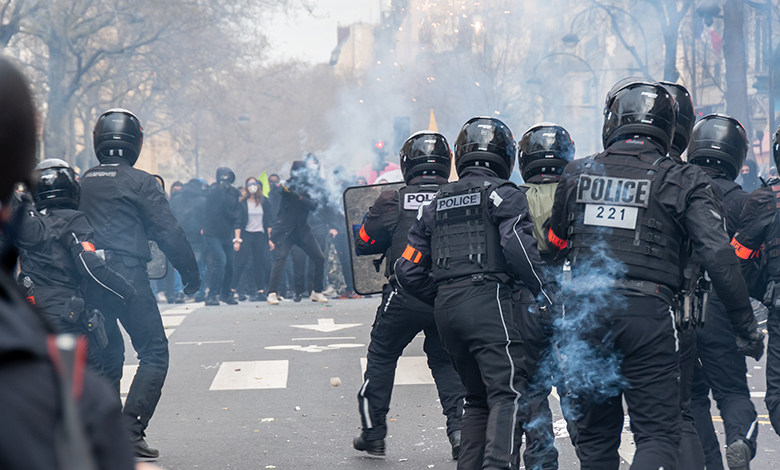
In countries that protect the right to assembly, protests are one of the most impactful weapons of nonviolent political activity. Onlookers understand that protests and marches are manned and organized by volunteers without any incentives beyond their desire to see change enacted. Protesters take time away from their families, jobs, and personal lives to step outside and join a throng of like-minded fellow citizens in the streets. These sacrifices are not made lightly, giving further credibility to the force of their causes.
It is important that such protests remain peaceful and lawful, however. The infamous riots in Los Angeles in 1992 and in Minneapolis in 2020 did more damage to the civil rights movement than they brought awareness to the issues of racial profiling and police brutality by allowing their inciting incidents to be overshadowed by widespread and unjustified violence and destruction, even if the motivations behind the riots were plausibly understandable.
By contrast, the 2014 Euromaidan protests in Ukraine emphatically demonstrated the will of the Ukrainian people to stand against Russia’s designs for their country. When President Viktor Yanukovych refused to sign the Ukraine-EU Association Agreement, preferring to deepen Ukraine’s ties to Russia, the people of Ukraine took immediate action to defy their government’s intransigence. Half a million residents of Kyiv took to the streets to protest the corruption of the Yanukovych regime, insisting on political change and a radical shift towards Ukraine-EU cooperation. The movement eventually forced Yanukovych to resign, and panicked Putin into invading Crimea and the Donbas region.
The use of violence, including terrorism, assassination, and organized gangs, to achieve political objectives is the mark of a coward. Only someone too weak to try to alter the status quo from within the system views the taking of innocent life as a necessity for change. More importantly, when people resort to terrorism or revolutionary warfare in the modern era, the status quo inevitably becomes far, far worse than it possibly could have been before crossing that line.
Ireland has often been a troublesome possession of Great Britain. After the Anglo-Irish Treaty of 1921, Northern Ireland has remained a hotly contested territory. For decades, the Irish Republican Army (IRA) and its political wing, Sinn Féin, waged a war of liberation against the British. After the IRA split into the Provisional IRA in 1969, there followed a massive wave of violence in both Northern Ireland and Great Britain. The Provisionals used improvised explosives to kill thousands of soldiers and civilians. The authorities and militias in Northern Ireland likewise retaliated, with thousands more killed as a result. Bombs scarred children for life, and stray bullets would make orphans in an afternoon. But when the PIRA began to limit its activities to defensive measures against Protestant attacks, the situation grew much easier for Sinn Féin to manage politically. Once the Royal Ulster Constabulary was reformed by Sir John Hermon into a largely unbiased police force rather than a sectarian hit squad, peace was finally possible. In 1997, the PIRA declared a ceasefire, and the Good Friday Agreement of 1998 finalized the end of the Troubles. But only once people could trust in the system (after the system first became a partisan political weapon) and the anti-government forces stopped offensive actions, could peace and prosperity begin.
After Hitler and his thugs in the Schutzstaffel and Sturmabteilung began beating and murdering their political opponents, he was eventually appointed Chancellor of the Weimar Republic, and soon became Führer of the Third Reich. That status only lasted a decade, as Germany found itself invaded from two massive fronts as its cities and industry were bombed down to bedrock by American and British air raids. Mussolini likewise had his Black Shirts use gang violence to put enough pressure on King Victor Emmanuel III to make the fascist leader Italy’s prime minister, which led to the decimation of Italy. Only the Marshall Plan spared Italy and West Germany from the crushing economic downturn they had endured after their respective wars of aggression turned against them.
When Spain became a republic in 1932, General Francisco Franco was approached to launch a military coup d’etat against the Republican government in 1936. After three years of bloody civil war, Franco emerged victorious as dictator-for-life. Because of his nationalist, undemocratic reign, Spain was excluded from the Marshall Plan, forcing the country to begin its post-Civil War recovery on its own until Franco’s death in 1975. Despite historically being one of Western Europe’s most powerful states, Spain was only admitted to NATO in 1982 and the European Economic Community (later the European Union) in 1986. Over fifty years since Franco’s death, Spain has yet to recover from the economic and political fallout of the civil war he started.
The Russian Revolution was far worse than anything that Spain endured. In 1905, Tsar Nicholas II established the State Duma, Russia’s first elected parliament, as a sop to revolutionaries that cropped up following the country’s disastrous performance in the Russo-Japanese War. By all accounts, Nicholas was far from a capable or wise monarch, but the Constitution of 1906 established the Russian Empire as a constitutional monarchy. However, Russia’s atrocious casualties, devastating economic downturn, and political fragility during the Great War incited a massive wave of political violence across Russia. The February Revolution overthrew the Tsar and established a provisional government, only to be overthrown again by the Bolsheviks under Lenin. The October Revolution was a master class in state-organized terror.
The resulting Soviet Union was perhaps one of the worst countries in history, as it enslaved itself to the cult of Communist political theory and willingly bent over to receive such maniacal villains as Joseph Stalin and Lavrentiy Beria. The USSR caused untold suffering for vast swathes of Eastern Europe and Central Asia, including several campaigns of targeted ethnic cleansing of Ukraine, East Germany, Poland, Afghanistan, Kazakhstan, and the Cossacks. As a result of the Communist Party’s centralized control over all aspects of Soviet life, the USSR was perpetually ill-equipped to meet its own needs in good times and utterly devastated in bad times. The Second World War cost the Soviet Union 26 million of its own people, a catastrophic loss of life that Russia likely will never recover from. Today, Russia stands on the precipice of the demographic point of no return and will eventually collapse as a direct consequence. The worst part is that all this resulted from a band of Marxists taking up arms against the Tsar over a century ago. That is quite a generational price to pay for resorting to political violence.
Throughout history, when ordinary people resort to beating, maiming, bombing, and murdering their fellow countrymen over political issues, it always, always leads to more heartbreak and suffering than the political issues themselves could have achieved. The same is true today. Assassins and would-be killers like Tyler Robinson, Luigi Mangione, and Thomas Matthew Crooks have turned an already hostile political environment into a desperate fight for survival. But the worst thing about their deplorable actions is that they do not solve anything and often add fuel to an already smoldering fire. But it’s easier to pull a trigger than to volunteer for your local political party, so cowards and malcontents will exacerbate a fragile political climate because they think it’s too hard to impact the political sphere through the proper channels.
The issues that America faces today are both gargantuan and legion. Their resolution will not be easy or fast. Some may never be solved at all. But that is no excuse to sink to the level of villains and murderers. Democracy works because the people want it to work, and the people control democracy. But when people take it upon themselves to commit murder in the name of political ideas, that is when societies have historically gone from bad to worse.


