





ChatGPT as a Bomb-Making Manual
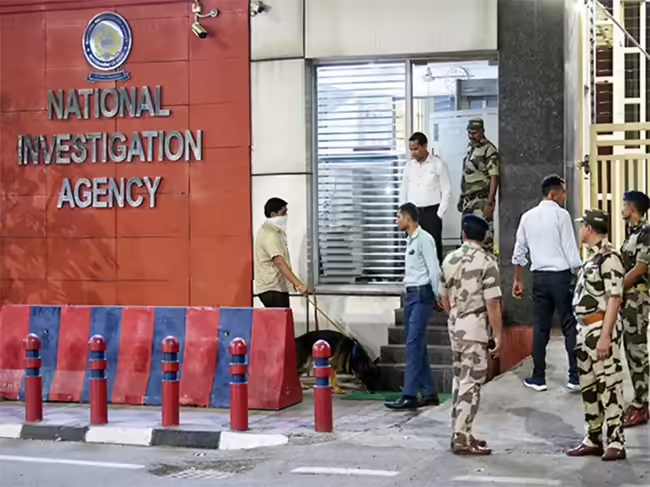

India’s National Investigation Agency has filed a 7,500-page chargesheet in the November 2024 Red Fort car blast that killed 11 people, per an Economic Times report. The catch: A key accused used ChatGPT to research rocket IED construction, querying the platform for explosive mixture ratios and fabrication methods.
The Gist
The accused, Jasir Bilal Wani, served as the “in-house engineer” for Ansar Ghazwat-ul-Hind, an Al-Qaida offshoot in the Indian Subcontinent. The National Investigation Agency (NIA) describes his approach as “almost laboratory-grade.” He tested rocket IEDs in forests in Anantnag district, procured trigger components through a consumer e-commerce platform using cash-on-delivery to avoid a financial trail, and later demonstrated functional IED fabrication before NIA bomb disposal experts in a controlled simulation. The primary explosive was TATP, synthesized after iterative experimentation.
The Cell
The cell had a notable composition. It was composed of radicalized medical professionals, including the driver of the explosive-laden vehicle. One co-accused provided Jasir with two drones with instructions to extend their range and payload capacity for attacks on security installations.
What to Take Away
The AI angle is the detail that travels. Jihadist forums have discussed AI-assisted weapons research for years. This chargesheet documents an operational case where it actually happened: i.e., a cell member querying a commercial large-language model for IED engineering guidance as part of a plot that killed eleven people.
The case is a concrete data point for every ongoing policy debate about AI model safeguards and the gap between what platforms permit in theory and what users attempt in practice.

