





Quantum Power Parity: The Next Front in U.S.–China Strategic Competition

Abstract
Quantum technologies are changing the strategic advantage from one system’s operational dominance to mutual denial: the ability to degrade an enemy’s advantage without creating a permanent, measurable equilibrium. This article contributes to the discussion of quantum power parity, showing that computing, communications, and sensing create mutually vulnerable conditions and that policy priorities that require escalation are best served by U.S. leadership.
Introduction
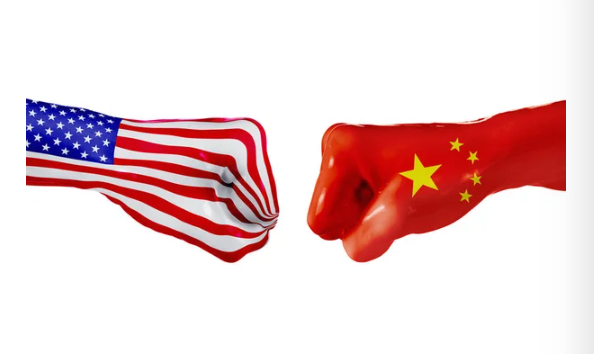
Quantum power parity is a strategic situation in which rival great powers, in this case the United States and China, have amassed quantum capabilities to the point that neither side can grant the other a decisive technological edge without either attaining a lasting advantage. In contrast to nuclear parity, which is kept at bay by transparent warhead counts, mutually assured destruction doctrine, and formal arms-control treaties like the Strategic Arms Limitation Talks (SALT) and the New START treaty, quantum parity is opaque and hidden by design, capabilities are a dual purpose, proliferate in civilian and commercial markets, and are not readily verifiable. This structural deviation has immediate implications for crisis stability. When decision-makers cannot predictably evaluate the quantum posture of an adversary, it is reasonable to expect that the tight decision-making timelines and information asymmetries eroded by quantum sensing and computing would amplify the risk of miscalculation, preemptive action, and the attenuation of the gravity with which nuclear parity was historically maintained. The thesis of this article, thus, is that quantum power parity is a less stabilizing equilibrium than nuclear power parity, and that the comprehension of this gap is indispensable to the adoption of sound policy.
Over the next decade, it will not be an individual “breakthrough” machine that causes the most significant strategic consequences of quantum science, but rather the amassing of capabilities in sensing, communications, and at least some classes of computation that amount to mutual denial. This state, quantum power parity, implies that each of the major powers will have specific tools to undermine the leverage of the others, and mutual renunciation is the natural consequence of the distributed form of quantum capabilities. Due to the coexistence of sensing, computing, and communications technologies among various actors, there is no monopoly among states that can create denial capacity. Both actors acquire means to undermine the advantages of one another: quantum sensors can reveal hidden forces, quantum computing poses a threat to encrypted communications, and quantum key distribution can provide selective protection. Distributed development implies the absence of a centralized control point at which either can stop the other from achieving the tools of denial, making them equally vulnerable rather than one-sided (such as revealing hidden forces or breaking the secrecy of cryptography), even though neither may achieve a long-term decisive advantage. The notion can help explain why military and diplomatic actions have ceased to be used to achieve uncontested technical superiority, and why investment decisions have focused not only on expanding the range of offensive capabilities but also on strengthening bases.
My Definition of Quantum Power Parity
Quantum power parity refers to a strategic balance that is determined by three conditions. These conditions are, namely, Mutual denial, opacity, and decision compression. In this context, the interplay of sensing, communication, and computing capabilities reduces the time required to make strategic decisions while simultaneously increasing the time required to address uncertainty. When all three conditions are addressed simultaneously, they create a holistic definition of the concept:
- Contending actors possess a mix of quantum capabilities and technologies that prevent either from gaining a decisive advantage.
- Such technology is diverse, dual-use, and is often very difficult to catalog in sufficient detail or substantiate its verification in the public domain.
- The sensing, communications, and computing interactions required to utilize the platforms shrink the window for strategic decision-making and increase uncertainty, without resulting in arms-length parity that is easy to “count out” in arms.
Unlike nuclear parity, which is measured in terms of warheads and delivery systems, it has formal arms control measures. Nuclear parity is based on the premise of countable, attributable, and treaty-limited assets, which enable either party to adjust to escalation with a level of confidence. Quantum parity, in contrast, has none of these stabilizing properties: it has no analogue of a nuclear warhead count, no quantum-specific arms control regime, no agreed attribution regime when a quantum capability is employed against cryptographic or sensing infrastructure. The consequence is an artificially more destabilizing form of parity, which is structurally more challenging- comparable to pre-treaty nuclear competition- but with capabilities which are more difficult to observe, more difficult to enumerate, and more difficult to deter. This intensifies quantum parity because it proliferates through commercial research, academic networks, and civilian platforms, making it difficult to monitor, attribute, and build confidence.
Mechanisms: Computing, Sensing, Communications
Quantum Computing
Quantum algorithms change the cost of some problems, most notoriously in factoring and some classes of optimization, but the divide between our present position and the point at which we can expect to have a cryptanalytically significant quantum computer is very significant. The implications of the security policy are easy to grasp; it should be prepared now. The adoption of post-quantum cryptography to harden legacy systems, that is, replacing lattice-based or hash-based cryptography, directly undermines any computing advantage one party has. As both parties harden their systems, the cryptanalytic power that a quantum computer relevant to cryptography would bring to bear is weakened, reducing the possibility that one side of the parity has a unilateral information advantage that could otherwise destabilize it. This dynamic has a part in two analytically relevant ways in mutual vulnerability. First, the slower-migrating side still has an asymmetric vulnerability, which, in turn, is a store-now, decrypt-later, creating an asymmetric window of vulnerability that provides an incentive to either accelerate migration or to attack still-unprotected systems. Second, the understanding of both actors that this window has time constraints creates competition regardless of the existence of a decisive quantum computer-in-the-field, i.e., the perception of competence can be as strategically consequential as its actual existence. In quantum parity, then, cryptographic vulnerability is a shared condition (both sides are exposed) and a differentiating one (the rate of migration generates fundamental but temporary asymmetries), so is a structural source of the instability which quantum parity will generate relative to its nuclear predecessor, as well as inventorying hyped archival data, are practical hedges in the meantime of research. The peer-reviewed studies and technical reviews explain the power and the limitations of the currently available quantum machines.
Quantum Sensing
Quantum gravimetry, atomic interferometry, and other sensor technologies promise orders-of-magnitude improvements in the sensitivity of gravity and magnetic anomaly measurements. Field demonstrations and systems have been designed and represent a shift in technology from laboratory proof-of-principle to more deployable instruments capable of mapping minor gravitational anomalies in airborne or spaceborne missions. In maritime terms, those capacities can make underwater sanctuaries harder to find and alter the risk of deterrence for submarine possessions. The field demonstrations and practical engineering studies exist in the literature to make these claims very real. Strategically, quantum sensing does not simply create information; it compresses uncertainty.
In contrast to classical reconnaissance, which is ambiguous and delayed, quantum sensors will deliver near-real-time, high-fidelity sensing of hitherto undetectable signatures. This compressed uncertainty not only has a dual impact on crisis stability but also decreases the fog of war around the sensing actor; it also generates a new type of strategic vulnerability for the sensed actor, which can no longer rely on denial and deception as effective deterrence mechanisms. The outcome is an imbalanced weakening of the informational basis on which stable deterrence demands- uncertainty on the part of both sides as to the other side’s second-strike capacity decreases, reducing the perceived cost of the first move and increasing the heat in the interactions in a crisis.
Quantum Communications
Entanglement distribution and a satellite Quantum Key Distribution (QKD) experiment demonstrate new architectures for long-distance key distribution. Laboratory experiments and incidence ground facilities, such as a complete evaluation of the Micius program by numerous experts, validate the feasibility to size for specific configurations, coupled with records of discussions over the constraints that are still to be addressed (limitations over finite key with loss in atmosphere and over assumptions trusted nodes). In summary, quantum communications will not transform the architecture of secure connections, but they will not immediately replace the current global infrastructure. The strategic issue of whether QKD stabilizes or destabilizes the US-China relationship needs a straightforward answer: in the short run, QKD selectively stabilizes the actor that initially implements it, but in the long run, it systematically destabilizes the overall bilateral relationship. To the deploying state, QKD resists quantum cryptanalysis of command-and-control communications and makes first-strike temptation more appealing. Nonetheless, asymmetric QKD implementation, in which one side ensures secure communication that the other cannot intercept, further enhances opacity and information asymmetry. The non-QKD side experiences greater uncertainty about the adversary’s intentions and resolve, which is historically associated with more aggressive crisis actions. Moreover, since the infrastructure of QKD (satellites, fiber networks, ground stations) is tangible and traceable, deployment denotes its ability in a manner that provokes competitive reactions. The net strategic evaluation is that QKD has a stabilizing impact on the actor that implements it, but a destabilizing impact at the systemic level by quickening the parity contest and worsening the mutual coyness, which renders crisis management more difficult.
The Effect of Parity in the Development of a Crisis
This paper contends that quantum power parity is structurally less stabilizing than nuclear parity. Nuclear parity helped balance the competition between great powers through the logic of mutually assured destruction: the second-strike ability of both sides was survivable, verifiable enough to prevent first strikes, and constrained by arms-control treaties. Quantum parity does not satisfy any of the three. The capabilities are not testable, there is no second-strike logic equivalent to mutual restraint, and the fact that quantum effects are opaque implies that no side can be sure that a perceived weakening of its systems is a hostile act rather than a technical failure. These structural failures occur via three crisis-relevant processes as outlined below.
There are three related effects of the crisis relevant to its stability. First, eroding information asymmetries undermines the traditional restraint: when an actor suspects that his opponent has access to channels once considered private or can discern forces hidden from him, the incentive to act increases. Second, better perception and accelerated decision cycles will condense decision-making time; states are likely to have high-stakes decisions to make before the political process can intervene. Third, the existence of capability opacity compromises measured escalation: due to the ambiguous nature of the effects of a quantum capability, the adversaries will experience ambiguity in terms of the threshold, which will slacken calibrated reactions and enhance the occurrence of errors. These dynamics require crisis mechanisms of compensation, both for speed and opacity.
Comparison Between the United States and China
United States: Resilience of An Ecosystem
The strength of the United States lies in a distributed innovation ecosystem comprising national laboratories, universities, startups, and large corporations, as well as in specific federal programs that promote both basic science and applied transition. The model supports a variety of methods (trapped ions, neutral atoms, photonic systems) and promotes simultaneous defensive efforts, e.g., transitioning to post-quantum cryptography. Technical papers and engineering roadmaps in the peer-reviewed literature emphasize the wisdom of a portfolio strategy: it can minimize strategic harm if one hardware strategy gets stuck.
China: Centralization of Projects and Civil-Military Combinations
China combines long-range state planning with massive, mega-projects, and planned civil-military integration. Both flows between civilian research and defense applications improved through institutional mechanisms, and the creation of measurable capability and strategic ambiguity are the results of public scientific production and space demonstrations. Such a gray area may increase competitors’ sense of urgency, even when technical development is gradual. Both the limitations of extrapolating laboratory results to broad operational capacity and the demonstrable achievements of Chinese experiments are supported by peer-reviewed reviews and technical reports.
The combination of the U.S. and Chinese quantum ecosystems reveals a list of asymmetric structural vulnerabilities that are convergent in impact but asymmetric in nature. The distributed, commercially escaped model of the United States implies that the most sensitive quantum research is located in a loose academic and commercial ecosystem that is hard to fully defend against the threats of espionage or technology loss a structural openness vulnerability. The model of civil-military fusion in China, in addition to the ability to quickly deploy forces, introduces a structural vulnerability in terms of transparency: since there is no boundary between the civilian and military use of quantum forces, Chinese quantum activities are very legible as a threat to rivals, whether with the intention to harm them or not, which contributes to a security spiral. Both models also share a similar weakness in verification: one side has no plausible way to convey to the other the honest extent of its quantum programs, minimizing threat inflation. This bilateral asymmetry in which the structural advantages of each side are also the structural weaknesses of the same side implies that quantum parity will be a less stable equilibrium than nuclear parity, and that the governance structures issue is all the more pressing.
Policy Recommendations
The four recommendations below are a direct outcome of the theoretical argument made above. Since quantum parity is less stabilizing than nuclear parity, both are cryptographically vulnerable to each other (condition one), have capability opacity (condition two), and compress decisions (condition three). Effective policy needs to counter each of these structural influences. Post-quantum cryptography migration is aimed at condition one- sealing the window of mutual vulnerability. The third condition of counter-sensing investment targets is to reestablish sufficient operational concealment to decelerate decision compression. Condition two, the minimization of the obscurity that contributes to the inflation of threats, is directly handled by allied technical transparency. Portfolio diversification can enhance overall resilience to all three conditions by reducing reliance on a single strategic point. Each suggestion must be rated, in fact, not only by its merits in isolation but also by the degree to which it eliminates the particular instability mechanism of which it is the remedy.
Accelerate Migration to Post-Quantum Cryptography
Expedite critical infrastructure implementations, implement operationally necessary standards, and roadmaps for migrating critical infrastructure at high risk of “store-now, decrypt-once threat”. Accelerate migration to post-quantum cryptography: Prioritize critical infrastructure implementations and impact archival data at risk of “store-now, decrypt-later threats” .
Invest in Counter-Sensing and Operational Resilience
Provide support to engineering programs to ensure that quantum sensor vulnerabilities are translated into a red-team institutionalized force posture and operational concepts (masking, deception, mobility, dispersion) against reasonable sensor deployments .
Pool Allied Technical Transparency
Develop limited, technical confidence-building measures among allies; reciprocal demonstrations; interoperable standards for QKD testing; and joint exercises, focused not on battling the worst-case assumptions but on reducing them and ensuring legitimate science is not suppressed.
Sustain a Diversified Innovation Portfolio
Maintain balanced funding across hardware platforms and strive to keep streamlined processes for civilian innovations used for defense, without methods or volumes that impede academic openness (to the extent practical). Target workforce pipelines and supply-chain resiliencies.
Conclusion
This article makes three obvious conclusions. First, quantum power parity is a more strategically significant phenomenon than nuclear parity in its own right: it is less verifiable, less constrained by the arms-control norms, and more likely to create crisis instability by compressing uncertainty and accelerating decisions than by employing the more traditional logic of mutual assured destruction. Second, this condition of parity is converging between the United States and China, not due to the success of one or the other in reaching a breakthrough, but rather due to distributed development in sensing, communications, and computing, which provides the capabilities of mutual denial even in the absence of a breakthrough by either nation. Third, the policy response should be tuned to the particular instability mechanisms that quantum parity introduces, a policy task which is managing the cryptographic migration timelines, investing in operational resilience to quantum sensing, creating allied transparency measures, and maintaining diversity of innovation portfolio, and not defaulting to a generic win the race framing which misunderstands the strategic task.
Quantum power parity does reformulate the competition: Stating the challenge is not how to keep China from “winning” one technological development race; however, it is the formation of such a competitive developmental space where neither side achieves a lasting decisive advantage, and the United States institutions have continued to preserve maneuver room, deterrence improvement, and crisis stability. These needs combine near-term steps (post-quantum migration, counter-sensing) with longer-term investments in the scientific community, mutual coordination, and normal expectations to reduce the likelihood of unplanned escalation. The policy aim is not to stop another state from struggling forward, let alone passing on the inevitability of that fact to a United States mixed technological leadership; it is to make a sustainable, longer-valued coexistence with technological leadership, a brave new world of rational crisis management.


