Drone Dominance in Contact: sUAS Challenges and Adaptations at the Brigade Level
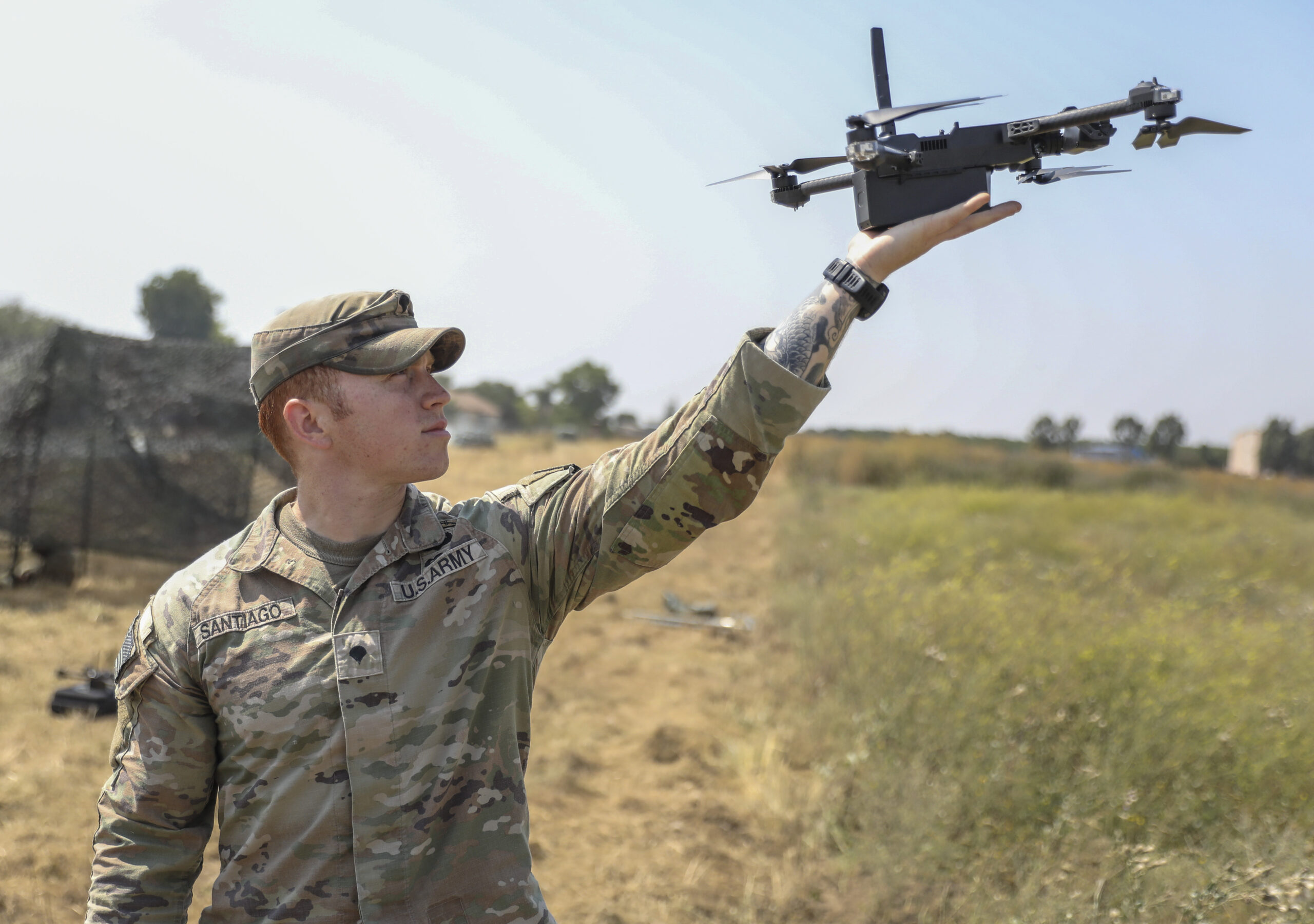

In accordance with the Secretary of War’s drone dominance policy, 2nd Brigade Combat Team (2BCT), 10th Mountain Division, is aggressively pursuing Small Unmanned Aircraft Systems (sUAS) employment within both collective and pre-deployment training. To account for the loss of organic reconnaissance capabilities as a result of the recent deactivation of cavalry squadrons and Military Intelligence companies across the Army, 2BCT stood up a Multifunctional Reconnaissance Company (MFRC) to provide 2BCT with modernized organic reconnaissance capabilities. As the only subordinate unit with trained UAS operators and maintainers, the MFRC incubated the brigade’s sUAS program before training sUAS operators in light infantry units across the brigade.
Throughout this process, 2BCT identified multiple obstacles that hinder the Army’s ability to rapidly integrate sUAS at scale. The focus of this field report is to articulate the challenges that cannot be solved at the brigade level. 2BCT identified four key obstacles and proposed solutions to the challenge of achieving drone dominance:
- Formalizing sUAS supply chains and maintenance processes to keep non-Program of Record systems airworthy; ensuring airframes can keep pace with operational demands in both garrison and deployed environments.
- Distributing the capability to rapidly train and certify new operators at the company and battalion level by normalizing sUAS program requirements.
- Streamlining the sUAS maintenance process by allocating Base Operations and Maintenance (O&M) funding to build and sustain a surplus of repair parts (known in the U.S. Army as “bench stock”).
- Dedicating airspace to sUAS training to enable consistent opportunities to operate without additional resourcing and planning requirements.
While this field report outlines potential ways around these obstacles, it is important to also stress the importance of organizational agility across the spectrum of doctrine, organization, training, material, leadership, education, personnel, facilities, and policy (DOTMLPF-P). Incremental gains at the unit level make no impact unless policy quickly moves to reinforce success. In addition to highlighting challenges and recommended solutions, this essay provides Tactics, Techniques, and Procedures (TTP) learned over the past year of training with SUAS.
Beans, Bullets, Bandages, Batteries: Supply Chains in Large Scale Combat Operations (LSCO)
As the sheer volume of sUAS platform variants continues to increase via unit commercial off the shelf (COTS) purchases, the number of individual components required to maintain them compounds exponentially. Currently, each component has an individual supply chain with no required surplus of repair parts in the Army supply system. Without a Program of Record, there is no means to obligate or enforce drone manufacturers to maintain a surplus of repair parts at scale. Without larger production runs, there is no economy of scale to reduce the unit price and increase production capacity above small batches of supply. While this may be tenable during periods of relative peace, this production capacity would need to be rapidly scaled up in the event of a LSCO. Until the Department of War (DoW) scales production, the US military will face significant parts scarcity at a critical period of necessity.
Currently, 2BCT maintains all sUAS systems by purchasing repair parts using Government Purchase Cards (GPC), Division Acquisitions Review Boards (DARB), or Corps Acquisitions Review Boards (CARB). While GPCs provide some flexibility for known requirements, they severely limit a unit’s ability to build a bench stock of components because of the overall cost per repair component and spending limits. DARBs and CARBs require extensive justification and review before they even reach the approving General Officer; a DARB that requests parts and services to repair a handful of sUAS and build a small bench stock can easily take months.
Despite proactive analysis on the estimated rate of component failure as a byproduct of the number of sorties a drone flies, GPCs prove inadequate as a primary method of sourcing repair parts. During the 90 days between the brigade’s collective training in May 2025 and the brigade’s Joint Readiness Training Center (JRTC) Rotation in August 2025, the MFRC only managed to acquire funding for services and parts to repair three of its six Vesper UAS systems (only one of the three kinds of drones operated by the MFRC). These meager repairs drained all available GPC funds and left all other sUAS systems at a diminished operational readiness rate.
The lack of repair parts rendered nearly 85% of the MFRC Vesper sUAS systems non-mission capable. This situation resulted in the MFRC being unable to observe areas of interest, identify enemy high payoff targets, or exploit emissions detected by Electronic Warfare (EW) systems with sUAS observation. In short, the lack of a responsive mechanism to acquire sUAS repair parts, coupled with civilian industry’s limited production capacity, directly degraded the unit’s ability to positively affect operations with sUAS.
Recommendations
Until sUAS maintenance becomes integrated with standard DoW maintenance systems, the Army must do two things. First, they must establish a separate line of accounting for drone components down to the brigade-level, which must include a portal (e.g. Global Combat Support System-Army or GCSS-A) to source approved components from a prime distributor. Second, the Army should authorize bench stock(s) of sUAS components. This option must include a contract to maintain and refresh these bench stocks quarterly.
Acknowledging that the DoW is in a period of sUAS experimentation, it may seem premature to establish robust sUAS supply chains and therefore prudent to wait until sUAS technology evolves. However, this period of experimentation is the perfect time to modify sUAS component acquisition expectations. The ghost of Donald Rumsfeld cautions that “We go to war with the Army we have, not the Army we want”. The US military cannot rely upon the extensive timelines associated with GPCs or DARB/CARBs to source repair components in a way that fails to meet even garrison training requirements, let alone the readiness and employment requirements of LSCO.
Given the complexity and number of distinct supply chains, the DoW should standardize UAS components. To this effect, the Defense Innovation Unit has already established the Blue List, a list of sUAS approved for use in the DoW. Mass production of Blue List components would improve magazine depth without requiring a Program of Record, reducing the period of scarcity at the onset of a conflict. This measure would also enable the forward staging of pre-positioned stockpiles of components to further increase supply chain responsiveness until production rates can adequately meet demand.
An easy first step is to standardize the battery terminals and charging ports used on civilian sUAS, enabling a larger pool of battery types from various manufacturers to meet specific mission requirements. There is precedent for the integration of military requirements into civilian production standards to better prepare the nation for mobilization. For example, the NATO draft Standardization Agreement (STANAG) 4179 rifle magazine created a single standard for small arms magazines and ammunition. As a result, civilian and military small-arms manufacturers both within and outside of NATO adopted the STANAG in their designs, including civilian sporting rifles. The same principle applies today: drone manufacturers can be incentivized to standardize their components with the possibility of future government contracts.
The Army can meet the DoW’s intent for future procurement and agility by integrating scalable stockage objectives with National Stock Number (NSN) assignment and Blue List approval. Many vendors are not able to keep up with the increased demand for parts. Providing a clear pathway to NSN assignment incentivizes manufacturers to invest in increased production capacity earlier. In the event a manufacturer fails to meet gateways on the pathway to NSN assignment, the Army maintains the right to terminate the assignment entirely.
Improve Before Flight: Streamlining sUAS Maintenance
Brigade-level sUAS maintenance cannot currently maintain sufficient airworthy platforms, let alone when expanded in line with the DoW’s intent. To address this, the Army should consider allocating Base Operations and Maintenance (O&M) funding. This would align sUAS programs with existing UAS Aviation (e.g., Grey Eagle) maintenance practices. As the primary source of funding for routine expenses required to keep existing military equipment functioning, base O&M funding for unit sUAS programs would allow units the freedom to conduct maintenance, repairs, and component replacement in a timely manner. It is distinct from procurement funds used to purchase new equipment or construction funds used to build new facilities but still allocated through the standard DoW budgeting process. For sUAS, base O&M could cover the cost of repair parts, contract repairs or support, salaries for Field Support Representatives, or consumable items like lubricants. Within O&M funding, there are a few options to better sustain unit sUAS programs:
- Bench stock (Recommended): Establishing authorized sUAS component (using the DIU Blue List) bench stocks at the brigade level – essentially creating a localized supply of repair parts – is the most sustainable solution. This requires a significant upfront investment of base O&M funds to procure the initial stock and ongoing base O&M funding to refill consumed stock quarterly. This option also requires policy changes to authorize the bench stocks. While requiring a larger initial investment of base O&M funds, it offers the most sustainable and doctrinally sound approach, building predictable readiness and an organic buffer against supply chain disruptions.
- Contracted Support: Blanket sustainment contracts with vendors to provide sUAS parts and repairs. This model is funded primarily through base O&M, potentially supplemented by Army sustainment contracts. It shifts the stockage burden to industry but creates a dependency that could impact readiness if vendors fail to deliver.
- GPC Exception to Policy: Allowing units to use Government Purchase Cards (GPCs) with expanded purchasing authority to build limited local parts stocks. This is the fastest to implement, funded through Base O&M at the unit level. However, it is a short-term and far less efficient solution. It drives up costs, leaves sUAS repairs out of the Army’s supply system, and significantly limits the scope of bench stock.
Rise of the Drone Sergeant: Company and Battalion Level sUAS Programs
Given the emphasis on integrating sUAS at all levels, the Army must place a corresponding emphasis on the personnel operating these systems. Currently, “sUAS operator” is an ad hoc company-level additional duty. As the sole source of Instructor Operators (IO) within the brigade, training and certification is currently centralized under the UAS platoon in the MFRC. This model is unsustainable; the three authorized IOs in the UAS platoon do not have the time or resources to properly train the 150+ sUAS operators required to meet the DoW intent of at least 1 sUAS operator per squad. The Army is bridging this gap by authorizing graduates of the sUAS Master Trainer Course at Fort Benning, Georgia to train and certify sUAS Master Trainers locally. If this course is held at the company and battalion levels, subordinate units can run organic training and currency flights without brigade centralization.
Similarly, the Army should develop soldier maintenance skills across echelons, nested within a tiered framework that ensures both responsiveness at the point of need and integration into the Army’s sustainment enterprise. sUAS maintenance is sufficiently simple if operators and trainers are armed with the appropriate parts, manuals, equipment, and software; there is no need for a dedicated maintenance technician in a battalion’s Forward Support Company (FSC).
The below additional duties at echelon would, if codified, create a sustainable sUAS training and model within a brigade and maximize available training time for operators to increase proficiency:
- Brigade Aviation Element (BAE): Responsible for overall administration of sUAS program within a brigade. Coordinates between battalions for consolidated training (e.g., Network Integration/Fielding (NET/NEF) or Semi-Annual Proficiency and Readiness Training (S-APART)). Responsible for acquisition of new systems and maintenance oversight of existing systems. Serves as central point for guidance to battalion-level Master Trainers for sUAS program administration and execution, chairs bi-weekly sync with battalion Master Trainers to ensure nesting of efforts across a brigade. Concerning maintenance, the BAE – in conjunction with the Brigade Support Battalion – should establish lines of accounting specific to SUAS sustainment, validate stockage objectives, and integrate SUAS reporting into Global Combat Support System (GCSS) Army or its equivalent. They serve the enforcement arm for quarterly bench stock refresh cycles, manage contracted support when required, and ensure compliance with DoW Drone Dominance standards. In conjunction with the Brigade S4, the BAE must advocate for NSN assignment pathways and component standardization to ensure long-term enterprise viability.
- Battalion sUAS Master Trainer: Like a battalion’s Master Driver, serves as certification authority for 42+ sUAS operators and associated currency flights. Supervises 5x company Master Trainers within a battalion. Maintains records submitted by company Master Trainers. Serves as the Initial Qualification Training (IQT) authority for training operators on new equipment. Consolidates daily status reports for company sUAS to inform maintenance status to BAE. Advises the battalion commander on sUAS employment and airspace considerations. Bears U2 Additional Skill Identifier (ASI) upon graduation from sUAS Master Trainer course at Fort Benning, Georgia. Certifies and conducts Quality Assurance/Quality Control on sUAS maintenance, namely bench stock. Coordinates with BAE or industry to conduct higher-level repairs. Briefs at the battalion maintenance meetings.
- Company sUAS Master Trainer (Drone Sergeant): License Inspector/License Examiner (or LI/LE) equivalent. Serves as primary trainers, executes monthly currency flights, and supports S-APART testing requirements for 13 SUAS operators. Advises a company commander on sUAS employment and training, provides daily status report for sUAS maintenance to battalion sUAS Master Trainer. Military Occupational Specialty (or MOS) agnostic. Once trained, resolves all maintenance issues that do not require manufacturer input. Manages bench stocks of high-use components. Conduct intermediate repairs such as soldering and Electronic Speed Controller (ESC) replacements and validate system airworthiness through functional test flights.
- Operators (1 per squad, per DoW Policy): Proficient in the operation and maintenance of all assigned sUAS. Conduct pre- and post-flight checks, perform simple part exchanges (batteries, propellors, antennas), execute firmware updates, and records sortie data. Proficient in lithium polymer battery safety to mitigate fire and hazardous material risks, both in operational use and in compliance with unit mobility requirements (e.g., movement by commercial aircraft or boat).
There is currently no codified external motivation for soldiers to learn to master sUAS, despite the emphasis and investment across the Army. Assignment of an Additional Skill Identifier (ASI) for sUAS Master Trainer (U2) is a step in the right direction; however, this needs to be treated as a selective and performance-driven additional duty, similar to the U7 ASI held by UAS IOs. Promotion boards should look for sUAS competency in the promotion of non-commissioned officers. For junior non-commissioned officers, promotion points should be awarded in excess of the course hour allocation for earning their U2 identifier to further incentivize integration of sUAS at the squad level. sUAS operator currency status should be displayed on the Soldier Talent Profile (STP) in a manner consistent with individual weapons qualifications. Recommend that signature authority for Basic Aviation Badge be delegated to first colonel in chain of command (with the written endorsement of the Aviation Center of Excellence) to provide a visible, tangible acknowledgement of soldiers who have gained and maintained sUAS mastery.
At the division level, sUAS competitions can yield further incentives for operators to hone their craft. This can both drive tactical employment TTPs as well as competence in high performance sUAS platforms. When winners are publicly acknowledged by senior leaders and tied to awards, the word spreads quickly and provides an easy entry without increasing training or resourcing requirements.
Opening the Skies: Easy Access Airspace
Given the requirement to decentralize training to meet the ambitious goal of integrating sUAS at squad level, the biggest obstacle to training is the lack of readily available airspace. The non-commissioned officer corps has a long history of ad hoc (or “hip pocket”) training, exercising initiative to train in-between scheduled training events. This hip pocket training is impossible for sUAS without permissive airspace and dedicated resourcing.
Having a dedicated Restricted Operating Zone (ROZ) within each installation’s local training area (training areas within the cantonment area requiring little or no prior coordination to use) would greatly enhance company Master Trainers and operator training opportunities to conduct both currency flights and hip pocket training. While this would require an amendment to airspace policy over cantonment areas, this would provide massive benefit to operators by enabling far greater flight hours per month.
In October 2025, the 10th Mountain Division authorized sUAS operations within the local training area at Fort Drum, New York, given 48 hours prior coordination with ATC and in unit motor pools without any prior coordination. This policy directly enabled the smooth facilitation of 2BCT’s local sUAS Master Trainer course by eliminating the need for reserving training areas, coordinating transportation, and resourcing food/water (all while hoping for permissive weather). Hip pocket flight training can now occur with next to zero notice instead of the five weeks previously required.
Tactics, Techniques, and Procedures Developed During Training
There are numerous applications for the myriad of sUAS platforms available at the small-unit level. With the widespread proliferation of Soldier Borne Sensor (SBS) drones like the Black Hornet, most small unit leaders have a degree of familiarity with short-range reconnaissance. However, platforms like Teal 2, Vesper, Seeker, Hera, or Neros Archer – all Blue List SUAS – offer far greater capabilities for squad-level leaders. 2BCT UAS Operators developed the following TTPs over the past 12 months of training:
Reconnaissance
- At the company level, short-range reconnaissance sUAS platforms like the Teal 2 and Vesper are best used to supplant traditional dismounted reconnaissance, like the “leader’s recon.” At the platoon level, sUAS operators can offset their launch site from the platoon objective rally point and conduct reconnaissance within the typical 200-400m range, even in relatively restricted terrain. It is worth noting that FPV-style sUAS make extremely poor reconnaissance drones; they lack adequate cameras, GPS capabilities, and battery life, make too much noise while flying, and aren’t designed to remain fixed in one location.
- The MFRC’s scout platoon utilized Vesper drones to efficiently clear reconnaissance objectives in as fast as 30 minutes, whereas dismounted clearance would have taken hours. This asset proved decisive for exploiting emissions detected by Electronic Warfare (EW) systems, confirming firing points of enemy artillery, and counter-fire battle damage assessments. A capable short-range reconnaissance platform in the hands of a deep reconnaissance element vastly increased the volume and accuracy of calls for fire. Though these drones are easily shot down or lost, it is vastly preferable to a direct fire engagement.
- UAS operators utilized reconnaissance drones like the Teal 2 to observe call for fire missions both with and without laser grid identification. The MFRC’s UAS operators made call for fire missions with nearly 1000m of standoff from the target using the Hera.
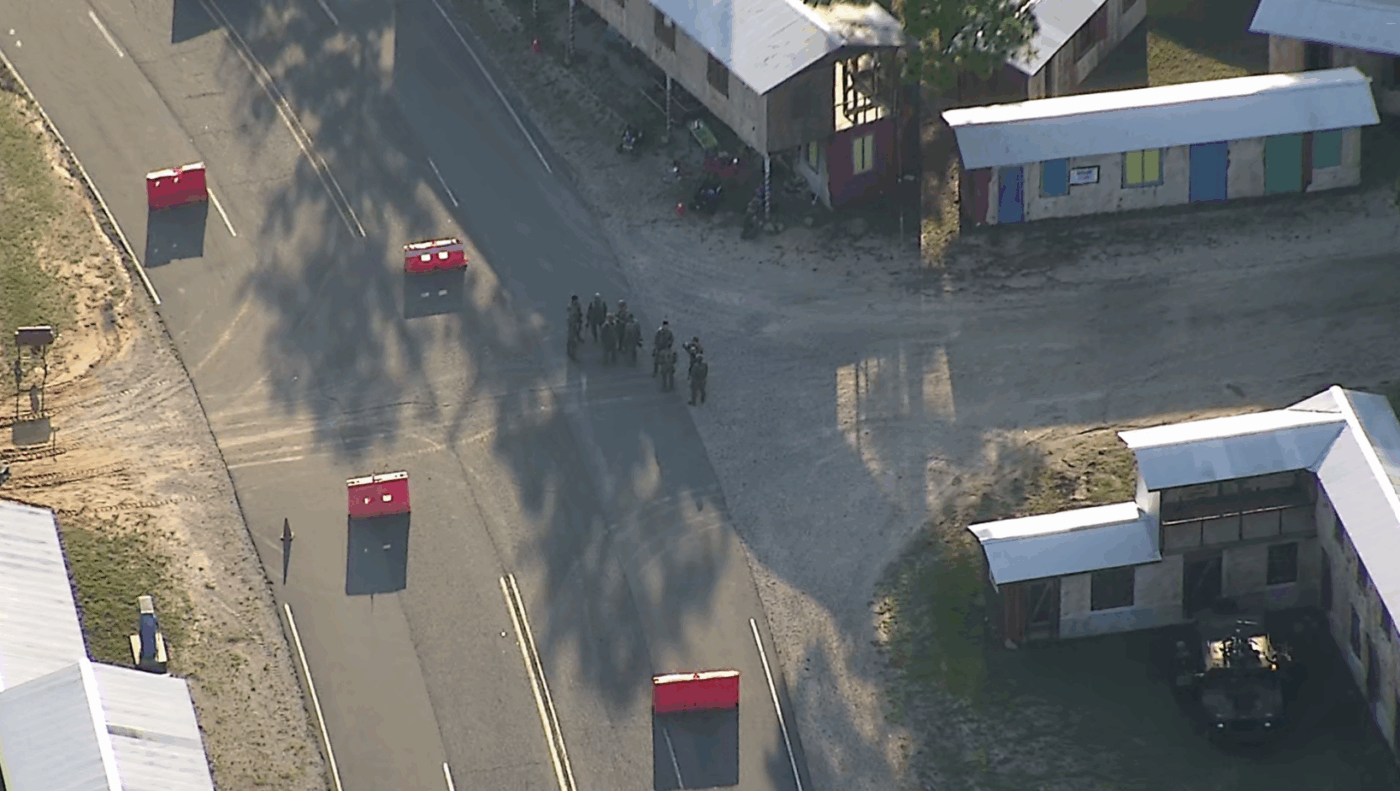
Reconnaissance footage of the Opposing Force (or OPFOR) captured by a Hera during operations at the JRTC. At 1000 feet above ground level, the drone easily avoided visual and auditory detection.
- With some technical acumen, most sUAS currently in circulation can be connected to Android/Windows Tactical Awareness Kit (ATAK/WINTAK) to relay live drone feed to commanders. 2BCT’s UAS operators successfully connected a Vesper drone feed to an ATAK phone mounted to the commander’s personal equipment. This offers a far more flexible alternative to the One Stations Remote Video Terminal (OSRVT) platform previously utilized in brigade command posts.
Attack
- FPV attack drones can be integrated with support by fire positions to employ fast-moving and accurate munitions on hard targets with small or inaccessible vulnerabilities (i.e., the rear of an armored vehicle). Systems like the Neros Archer or Seeker are best employed as expendable one-way attack drones due to their speed, maneuverability, and ability to carry a payload.
- 2BCT’s UAS operators affixed a munitions dropper to the Hera drone and used inert objects to simulate mortar rounds and other dropped munitions. Such munitions are highly effective against stationary defending forces who fail to build adequate overhead cover.
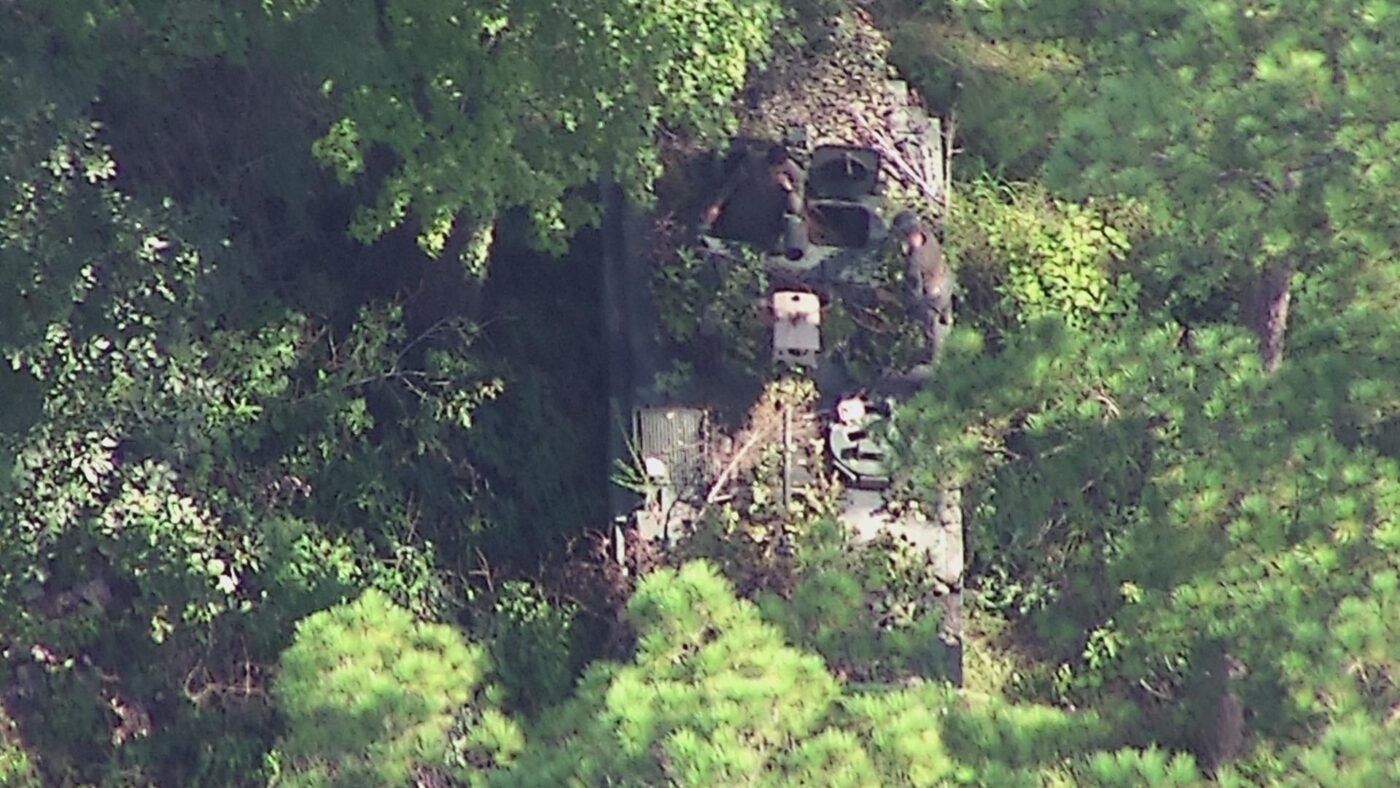
Avoiding detection by sUAS requires enemy forces to maintain constant situational awareness and replenish individual camouflage. Using dropped munitions (simulated with pinecones), 2BCT sUAS operators destroyed numerous armored vehicles while flying over 700 feet above the ground.
Special Purpose
- Using a speaker system mounted to a Hera drone, 2BCT’s UAS operators broadcasted audio files provided by an attached Psychological Operations (PSYOP) team. In a similar vein, operators flew FPV drones up and down a road, harassing a defending enemy force during a friendly attack. The mere sight or sound of a fast-moving drone is enough to momentarily disrupt any dismounted force in unrestricted terrain and force them to halt movement and seek cover.
- Using a Hera drone, 2BCT’s sUAS operators successfully resupplied the MFRC’s scout platoon with water while they were operating in territory held by the opposing force, dropping the resupply away from the scout’s location to avoid revealing their position. Such multipurpose platforms like the Hera can effectively confuse enemy forces; depending on their configuration, they may not be able to determine if it is being used for reconnaissance, resupply, or attack.
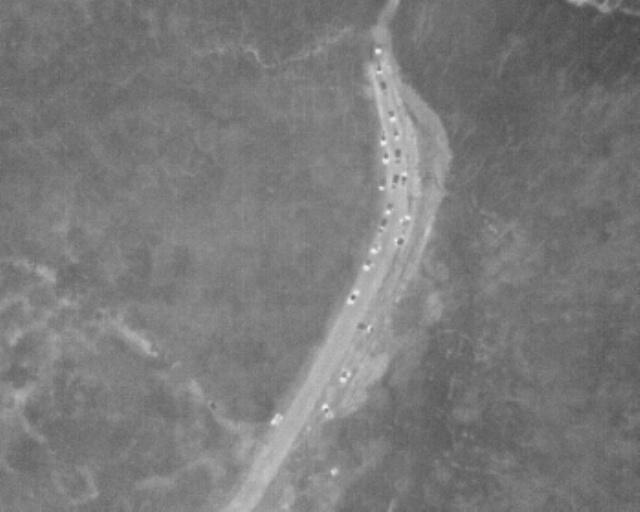
A large, stationary convoy of enemy vehicles captured by a nighttime camera.
Training TTPs
- Some FPV platforms can be difficult to land without causing damage to the aircraft. This is not a design flaw; these drones are best used in one-way attacks. Despite recent changes to policy making certain drones easier to account for if lost or destroyed, FPV operators still need to preserve their systems to continue training. The best way to mitigate the damage of landing a drone is to identify soft landing ground and train operators on throttling up just before contact with the ground. A healthy bench stock of propellors and other vulnerable components also ensures continued flight.
- During initial training, it is highly likely that operators will lose connection with the drone causing crashes in unknown locations. This is especially true for FPV operators under goggles. 2BCT streamlined the recovery process by marking the launch site with a brightly colored panel typically used for ground-to-air signaling. 2BCT also affixed glowsticks to the drones during periods of darkness and flew them with GPS tags as a final control measure.
- During field operations, 2BCT’s UAS platoon sustained its fleet of larger batteries using a small 200 watt generator running off the same fuel as its vehicles. For batteries under 1000-watt hours (e.g., Vesper, Teal, or Seeker), an inverter attached to a High Mobility Multipurpose Wheeled Vehicle (or HMMWV) provides an efficient and effective way to keep drones in continuous operation.
Conclusion
Across the U.S. military, sUAS has a long way to go before it can be fully integrated into training and real-world missions. By allocating the appropriate funding, streamlining supply, integrating maintenance systems, and de-centralizing training requirements, the Army can give small-unit leaders the tools they need to fully develop sUAS in their formations. The DoW Drone Dominance Policy provides an excellent framework, but there needs to be implementation across the Army before sUAS can be as ubiquitous as it needs to be. There should be no more debate as to whether tactical units should integrate sUAS into their scheme of maneuver – the question is how.
Disclaimer: the opinions and assertions expressed herein are those of the authors and do not reflect the official policy or position of the Department of War or the Department of the Army.
Check out all Small Wars Journal’s great articles on drones.
- Crispin Burke, “Small Drones, Big Limits: A Smarter Drone Strategy,” September 22, 2025.
- Amos Fox, “Drones Are Game-Changing, But They Are Not the Answer to the Inherent Challenges of Land War,” August 6, 2025.
- Bill Murray, “Beyond the Hype: Why Drones Cannot Replace Artillery,” May 5, 2025.
- David Kirichenko, “Affordable Drones and Civilian Supply Chains are Transforming Warfare,” November 26, 2024.