Importing Warfare: The Rise of Cartel Drone Operations
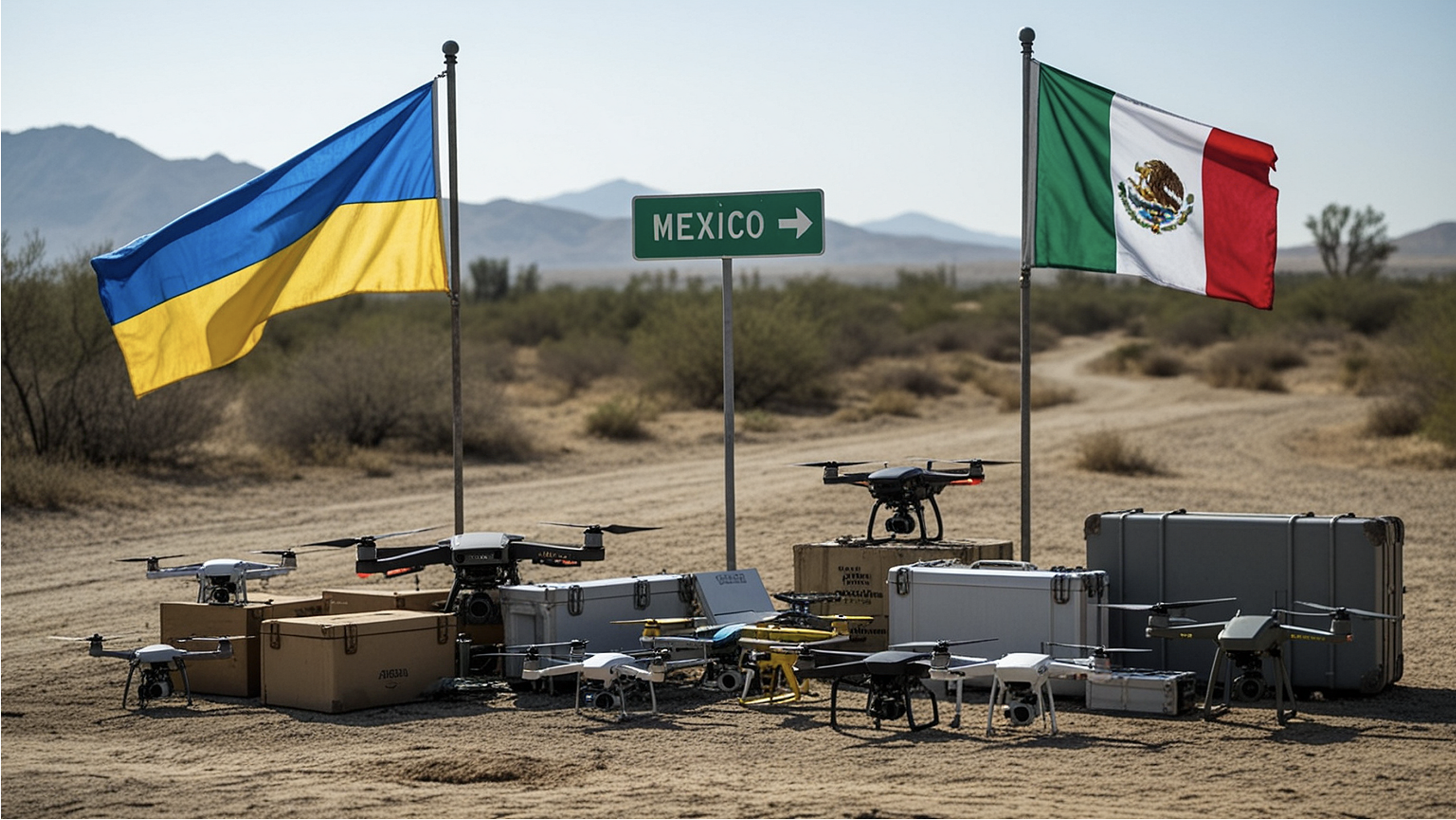

In 1995, while planning the eventual sarin gas attack on the Tokyo subway, Aum Shinrikyo contemplated using unmanned copters to disburse the chemical agent. Following some failed experiments, Aum Shinrikyo leadership discarded the idea feeling it was probably beyond the group’s operational capabilities. The threat of non-state actors using drones received limited attention until 2014 when the Islamic State (IS) used drones for intelligence gathering, providing propaganda material, and supporting operations. Within two years of its first use, IS established a drone unit and introduced rudimentary weaponized drone operations including dropping grenades on enemy targets. As non-state actors accelerated drone usage, the Pentagon’s Special Operations and Lesser Intensity Conflict office (SOLIC) predicted in 2017 that in five years a non-state actor would have the capability to fly a drone across the Atlantic. In 2018, IS demonstrated enhanced operational expertise by launching a swarming attack on the Russian Hmeimim air base in Syria.
Notwithstanding nearly a 30-year history, the deployment of small, tactical unmanned aerial systems (UAS) on the battlefield were considered expensive, infrastructure-intensive, and unlikely to feature prominently in future conflicts. Not until the Russian invasion of Ukraine and the subsequent ubiquitous use of drones did the conversation change. Ukraine’s innovative use of commercial off-the-shelf (COTS) drones has provided significant tactical advantages in asymmetrical warfare, drawing global attention. Furthermore, the speed of adaptation has elevated the discussion about drone warfare usage and the concern related to tactical and operational knowledge transfer to prominence.
The symbiotic relationship between technology and warfare has persisted throughout history. Wars have spurred technological innovation, while emerging technologies have been rapidly adapted for military purposes. This cycle grants tactical and strategic advantages to those who adopt them quickly and adapt them effectively. Conflicts also facilitate knowledge transfer of innovations not only between combatants but to other state and non-state actors. Battlefield developments are rapidly observed, shared, and adapted by others seeking tactical, operational, and asymmetrical advantages. This process is accelerated by open-source reporting across media and social platforms, the reach of mercenary networks, and the firsthand experience of participants. Knowledge transfer and dissemination rely on access to information and the ability to exchange it effectively. Dissemination spreads knowledge quickly, but knowledge transfer shows adoption and utilization. These processes have implications for proliferation, targeting, and adaptation of weapons. This opinion piece explores knowledge transfer and dissemination within the context of the Mexican drug cartels’ adoption of drone technology and tactics which present a “clear and present danger” to the southern border of our American homeland.
Cartels and Drones
Mexican drug cartels were among the first to recognize and adopt drone tactics. Cartels employed drones as early as 2010, to smuggle narcotics across borders. Their quick adoption of emerging technology reflects a willingness to experiment and deviate from conventional norms. In 2017, there was a notable escalation of these tactics when the Mexican Federal Police discovered a cartel drone equipped with an improvised explosive device (IED) in a stolen vehicle. By 2019, their usage evolved towards intelligence, surveillance, and reconnaissance (ISR) missions, reflecting an ongoing adaptation to technological capabilities. Although weaponized drone attacks emanating from cartels remained sporadic, with only isolated reports of drones capable of delivering explosive payloads, the landscape shifted markedly. By 2024, reports of Mexican and Colombian cartel members training with the Ukrainian International Legion on first-person-view (FPV) kamikaze drones emerged.
The active and rapid knowledge transfer is facilitated by individuals, easily accessible digital repositories and now, artificial intelligence. The adoption of new resources as well as tactics, techniques and procedures (TTPs) are changing the counter-cartel dynamics. Cartels are observing Ukraine’s success with small drones and applying similar approaches in their confrontations with law enforcement and the military. As previous noted, cartels are even seeking on-the-ground training, having dispatched members to Ukraine to learn and bring their knowledge back to Mexico. A Mexican national known by the call sign “Aguila-7” and suspected of having ties to the Zetas, entered Ukraine in March 2024 using false Salvadoran documentation and completed drone training in Lviv. Additional channels of knowledge dissemination may include mercenary groups and private military companies, such as the Wagner Group. Reports indicate Wagner’s interest in expanding influence in Latin America, including establishing presence in Mexico City and Colombia. In a notable case, a former Wagner mercenary, Timur Praliev, was apprehended by US Border Patrol while attempting to cross into the United States, with a drone in his possession. This points to a sophisticated and calculated adoption of these new TTPs.
These external influences—combined with initial Jalisco New Generation Cartel (CJNG) early adaptor weaponized drone utilization—are rapidly transforming cartel operations. By 2023, explosive drone attacks became commonplace, with over 260 incidents reported in Mexico, approaching near-daily occurrences in affected areas. In 2024, Mexico’s Defense Secretary, Gen. Luis Cresencio Sandoval, confirmed that the Mexican army suffered casualties from bomb-dropping drones, marking a stark departure from pre-2020 norms, when such tactics were virtually unknown against military forces. In only a few short years, the cartels evolved their own tactics and adopted this new technology efficiently.
The utilization of lethal drone technology is the new norm among Mexican cartels, and their targets are unique compared to other non-state actors. Whereas the Islamic State typically target military resources and the Houthis critical infrastructure, over 60% of cartel drone attacks have directly targeted civilian populations. In March 2024, the La Familia cartel targeted civilians using a coordinated drone attack campaign. Over the 72-hour period, forty drone-deployed explosives were reported. This attack was incredibly effective and had a major psychological impact in the region illustrating tactical effectiveness. Larger cartels have now started attacking military targets, which at times requires more sophisticated drone technology to thwart the jamming and defensive technologies available to the Mexican Army. The results are a technological race, creating new threat vectors for the Mexican Army to address.
Over the past five years, the transformation in cartel TTPs underscores the speed of knowledge diffusion emanating from the Ukrainian conflict and other sources. Open-source media, digital repositories, training from entities like Wagner-affiliated groups, artificial intelligence, and firsthand experience gained by cartel-linked individuals have accelerated the proliferation of drone capabilities among non-state actors. This is a dynamic environment, and the evolution of cartel drone use is already underway. Larger cartels are modifying COTS drones and showing more sophisticated tactics and use cases. The use of FPV for one-way attacks has been trending upwards as they offer more precision and are customizable to a specific task. The growing sophistication reflected in cartels independently purchasing and modifying drones for a specific use case is palpable. Improved release mechanisms and enhanced propellers have been documented. Parasitic devices also are being mounted to drones which allow for customized and greater payloads. Further, the integration of artificial intelligence is enabling better flight controls. Artificial intelligence quickly flattens the learning curve for new drone pilots and increases the probability of success for a mission. 3D printing technology allows for local modifications and adaptions of COTS drones quickly and without a logistical footprint, making it very difficult to attribute and defend against attacks. Low earth orbiting satellites (LEO) are another concern. LEO allows for the remote operation of drones enhancing the cartels’ global reach and the hiring of experienced pilots who are not geographically co-located. There is a substantial pool of available remote pilots who gained operational experience in Ukraine and elsewhere. These remote pilots can access drone controls over the internet and carry out missions while minimizing the risk of interdiction by Mexican authorities. Furthermore, remote operations inhibit the ability to predict attacks, thus increasing the safety of cartel members and their capabilities while making disruption difficult for law enforcement and military organizations. As the cartels continue to evolve, there will be an increased sophistication of their TTPs. In the future, it will not be surprising to see more paramilitary cartels adopting the use of fiber optics and other measures to better thwart military and law enforcement jammers.
The Ukraine conflict has served as a catalyst for the global dissemination and transfer of drone warfare knowledge. Non-state actors engaged in asymmetrical conflicts, have eagerly exploited the knowledge through deliberate channels of transfer, from voluntary infiltration for training to recruitment of battle-hardened pilots. Commercial small drones that are now battle-proven and adaptable, represent an ideal, accessible tool for such groups, enabling them to mimic and in some cases challenge state forces. The cartels in Mexico are the perfect case study in the adoption and utilization of emerging technology by a non-state actor.