





Why Britain Is Giving Ukraine Blueprints, Not Just Weapons
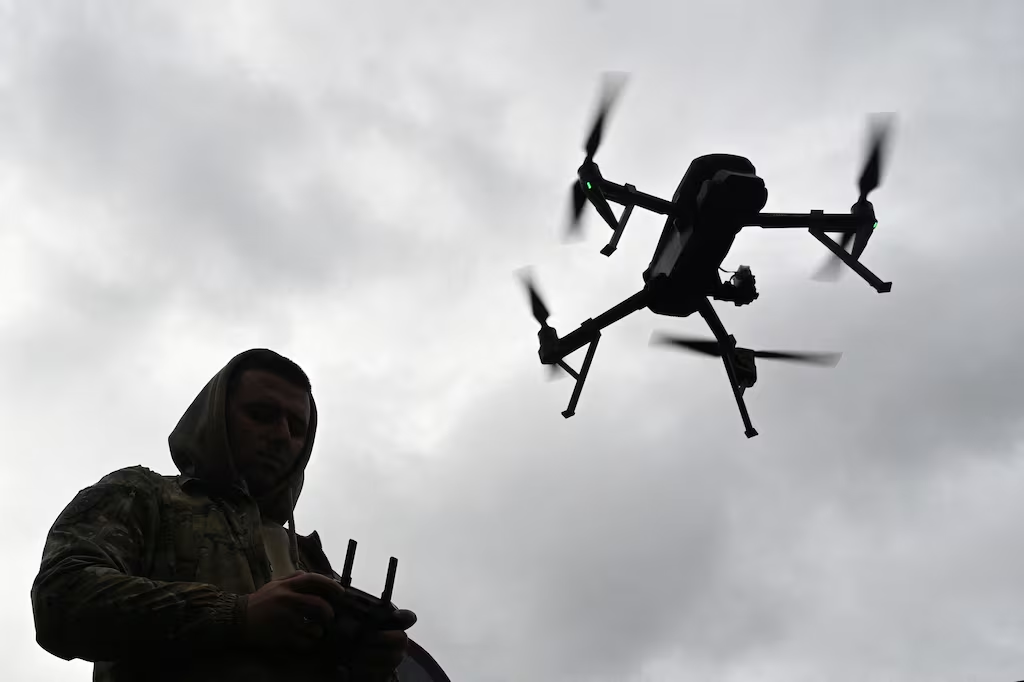

The UK’s decision to let Ukraine mass-produce Stone Cloak, a British-designed radar jammer for long-range strike drones, marks a shift in the structure of allied support to Kyiv. London is effectively sharing the underlying design, writes Defense One’s Patrick Tucker in “How the U.K. is helping Ukraine hit Russian targets.” It’s not just handing over weapons. London declined to take this step with the Storm Shadow missile, whose technology stayed firmly in British and European hands even after thousands of units reached Ukrainian forces.
What changed
Storm Shadow took six years to develop and deploy. It relied on a multinational supply chain across the UK, France, and Italy, and cost roughly $2 million per missile. Any technology transfer of this scale is bureaucratically difficult. Stone Cloak, by comparison, is being handed over as intellectual property, allowing Ukraine to scale production on its own timeline rather than depending on periodic shipments.
Tucker stresses the two way street that this decision highlights. Ukraine’s battlefield adaptation cycle is a capability that exceeds what conventional NATO procurement can match, making direct technology-sharing more valuable to allies than continued donations of finished hardware.
Retired U.S. Air Force officer Jeffrey Fischer said:
“One critical but often overlooked lesson from the Ukraine war is the extremely rapid adaptation cycle Ukraine is able to implement. In some cases, battlefield lessons are implemented in less than 10 days to new systems. In my seven combat deployments, NOTHING has ever come close to that.”
The result?
Britain contributes research infrastructure and controlled testing environments, while Ukraine contributes speed, combat data, and manufacturing capacity that its Western allies can’t match.

