





The Strait That Could Break the Pacific: The Interconnected Crisis No One Is Naming

“Indo-Pacific” is a term the US Army no longer uses. The term is now US Pacific Command (PACOM). There have been snarky comments in the civilian and military sectors about the change, but from the memos circulating, it is just semantics. Semantics, though, are not the reasons for the problems in the PACOM region and the surrounding global straits’ growing concerns. The PACOM region is under economic attack, and systematically it is highlighting other target areas and illuminating supply chain concerns and pressures that will cascade into geopolitical economic security concerns.
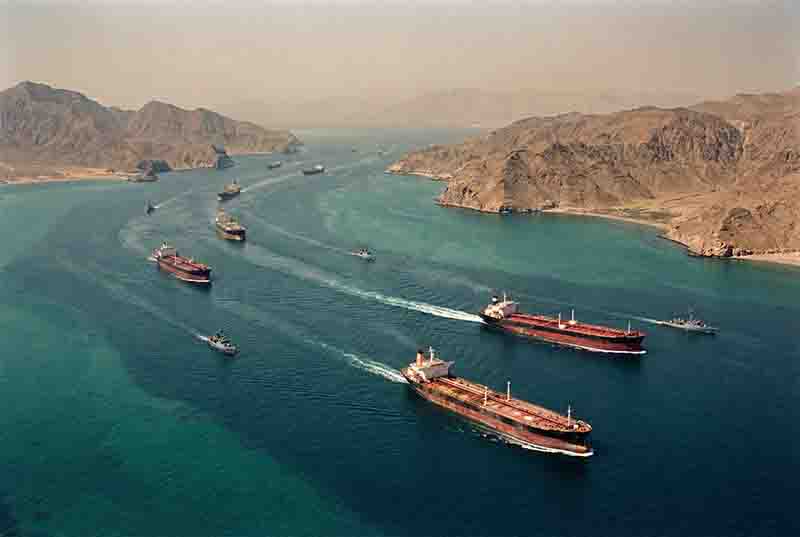
While news headlines and international attention are focused on the closures in the Strait of Hormuz, the bigger concern to our global economy should be the interconnected web of supply chains that affect the United States and the PACOM region. These chokepoints extend far beyond energy, including major regional transport networks that include Asian highways stemming from the Islamic Republic of Iran and which have feeder corridors affecting rail links in Europe. There have been record-breaking increases in the price of goods for manufacturers and farmers. The countries connected through the “Gulf Cooperation Council, such as Japan, the Philippines, Maldives, and Pacific Island economies, are outsourcing their countries’ crude oil by more than 50%.”That external dependence must be factored into any calculation in a supply chain taxonomy. If a country’s economy is in jeopardy, then political leaders will be held accountable for the lack of growth within the country.
There are conjectures and observations taking place, but no set correlation that what is happening in the Strait of Hormuz is affecting the economy of the United States, the global economy, or the economy in the PACOM region. The numbers, percentages, and lack of commodities tell a different story. Mark Cancian of the Center for Security and International Studies (CSIS) disputed a piece published in Breaking Defense Daily on Aug. 5, arguing “that the Navy may believe it did enough to open the Strait, but it does not get to decide. That decision rests in the hands of the shipping industry—owners, insurers, and crews. If they decide that passage is too risky—as they have—then traffic doesn’t flow, and the global economy is at risk. The industry has voted by its actions that US efforts are inadequate.”
Cancian’s argues that it is the “Navy’s single service job to keep the seaways open” and that it is listed in the Navy’s’ mission statement. The ultimate concern is that the Strait of Hormuz problem set isn’t a military operation. It is a supply chain and trade operation. The President of the United States has not declared any military diplomacy, so it is not the US Navy’s job, as Cancian is alluding to. The US Navy’s job is not to ensure that the global economy has a secure supply chain or secure free trade routes.
Ships and boats in the Strait of Hormuz remain stranded and are being denied passage. In order to have passage through the Strait, Cancian states in the same article that a country must have permission from Iran. Cancian also mentions that this has not officially been confirmed by a country or any news outlet. The alleged deals with Iran allowing these countries safe passage are only recorded as word of mouth, yet Cancian’s account states that only 10% of them have been allowed to transit under that deal, and there are 500 merchant ships stranded. The number of ships stranded is the true indicator that the economy and the supply chain flow will continue to decline if a change does not occur. International Maritime Organization (IMO) Secretary-General Arsenio Dominguez expressed deep concern for the 6,000 seafarers still trapped on the 500 ships in the Persian Gulf, according to an article in UN News earlier in August 2026.
The IMO chief insisted in the article that without the seafarers, 90% of goods transported by ships will not be able to reach their final destinations. Dominguez then went one step further, stating that all of us are going to be impacted. The proverbial “us” is huge in this statement. The numbers tell a different story as to what the correlation is between what is happening in the Straits and what is happening in the global economy. If goods cannot pass through the Strait, it will impact global trade and start to reduce the efficacy of supply chains and economic prosperity, and affect multiple other commodities (food, energy, etc.).
The Economic and Social Commission for Asia and the Pacific argues that about “one-fifth of global oil and liquefied natural gas (LNG) supply passes through the Strait of Hormuz, with almost all of the total, close to 90 percent of crude oil destined for Asia.” The author states that “this isn’t just an energy story, but that this alone shows how interconnected economies are today, in which disruption in one region ripples across trade, transport, manufacturing, and even food security across the region.” This energy source directly impacts the PACOM region. It passes through the Strait of Hormuz, but its destination is Asia. How many other commodities are the same? The commodities start in the Strait of Hormuz, but in the end are destined for Asia. This is the connection.
The Strait of Hormuz closures highlight economic vulnerabilities, but it is only being highlighted because it is directly affecting commodity supply today. What about other areas of interest and vulnerable populations that have been exploited economically because of the Strait of Hormuz trade route incursions? The enemy could easily begin – or has begun – to exploit these areas of vulnerability and could use those chokepoint blocks in other straits, amplifying geopolitical risks for tomorrow. Take the Red Sea and Suez Canal Disruption in 2023—10-14 days were added to shipment passage, and tariff adjustments had to be made. What if that disruption happened tomorrow at the same time as the Strait of Hormuz is happening? The commodities being stranded are already affecting the PACOM region. What if the Taiwan Strait were impacted?
The impact of an attack on the Taiwan Strait was wargamed by CSIS. The game commenced in January of 2023 and included China, Taiwan, and the United States. The game included the PACOM arena and how there was an impact on the Taiwan Straits. In one part of the invasion study, the team wargamed multiple scenarios that landed four potential outcomes. There was a base scenario for the fight with the People’s Liberation Army (PLA), Taiwanese, and US fighting, and then three others that were labeled as pessimistic, optimistic, and a final titled Taiwan stood alone. The final iterations of the scenarios associated with Taiwan standing alone showcased the fight enduring the longest of the scenarios, 71 days.
Wargaming has different purposes in illuminating data. CSIS, in totality, illuminated a protracted war in some recent examples of littoral wargames in the region, and then the team was able to explore military exploits. What this wargame, in short, does not include is the sentiments of the will of the people. Thomas Strategy Consulting (TSC) developed and showcased wargames that depict a contested United States. The AI-integrated redteam database built by that company (TSC) in a consortium – Game of War Global – has made multiple games for the Strait of Hormuz, the Taiwan Strait, and others at gamesofwar.io. Ultimately, the willingness to fight gets a vote, and that, in short, is the economic deterrence that the Chinese government will use to its advantage when it strikes Taiwan. What do the Taiwanese think about threats and aggressive attacks in their homeland?
To further discuss the will of the people in Asian countries, an abstract from the Journal of Asian and African Studies discusses social discord. The author Wen-Chin Wu states, [SIC] “I find that perceived unfair income distribution erodes respondents’ willingness to fight via the dampening of their national pride in terms of Taiwan.” Unfair income distribution threatens national security and ultimately a willingness to deter any aggression. The author states that perceived distributive unfairness in wealth is used as a proxy of economic inequality. Huang, Xian, and Cai Zuo investigate economic inequality and further define it by three mechanisms through which distributive unfairness dampens regime support: changes of political value orientation, redistribution demand, and social trust. These three mechanisms directly tie back into ways that the enemy can exploit countries’ vulnerability and incite discord. These three mechanisms can be applied to the Strait of Hormuz just as they are being studied in East Asia.
In looking at the Strait of Hormuz and the Taiwan Strait, it is important to note that there are ways in which future trade and supply issues in other straits can be mitigated. The global economy is suffering because of the delay in the supplies being delivered. Abandoned ships with goods spoiling on them is ineffective for a world that is already suffering from other wars and inflation of goods. Below are a few recommendations for change.
Recommendation 1: Better alignment with the Association of Southeast Asian Nations (ASEAN) and form a security agreement for the straits to enhance protection.
There have been several attempts by China and Russia in the Arctic regions to justify excessive transit of straits as required. They have claimed that the waters are “internal waters” and, as such, have been able to publicly dismantle any legal ramifications that countries or territories would want to impose on their defiance. Both China and Russia have disguised their explorations as “scientific research” and have used the United Nations Conventions on the Law of the Sea (UNCLOS) 234 as a means. UNCLOS 234 is a general clause that China and Russia are both using as a means to have navigational freedoms in the seas. This is currently happening in Arctic regions, but this is something that cannot become a norm in straits. If China and Russia continue to monitor what Iran is doing in the Strait of Hormuz, they could decide to create a baseline to begin sabotaging other straits and extend the terms of internal waters. ASEAN nations need to form a security agreement now with the information that has been collected in the Arctic, and create an alliance to protect their seaways.
Recommendation 2: A second recommendation would be that the United States ratify UNCLOS.
The ratification of UNCLOS would give the United States a way and a means to legally be involved in the actions in the seaways. Currently, UNCLOS is being applied to continental shelves in the Arctic region. This is one part of the UNCLOS treaty. The treaty includes navigation, straits, maritime boundaries, etc., and covers international waters. The United States would have legal standing in any disputes that concern trade, navigation, and other problems at sea. The US could challenge unlawful closures and have stronger legal protection for commercial shipping. The security of the seas is important, and this would be another pillar of national security.
Recommendation 3: US and allied nations begin a campaign exploiting gray zone activities that affect various straits.
Iran, Russia, and China have been exploiting the United States in a space that is being called “the gray zone”. There are no legal definitions of the gray zone, but scholars have defined it as the levels below kinetic actions. The economic impact of the non-aggressive activities aimed at disrupting supply chains is attributed to the decline of the global economy. A recent intelligence conference discussed economic statecraft and noted that the adversary was able to operate in the gray zone because there were no penalties for countries that performed cyberattacks or stopped exports of goods (critical minerals). There are no deterrence factors for Iran, Russia, or China to protect and promote freedom of navigation. They want to control the seaways and exploit all information and surveillance that they can without being detected. They want to make all other countries, including the United States, weak and obsolete. The US and allied nations need to exploit, deter and use political will to legitimately expose Iran, China, and Russia when they perform activities that do not preserve open sea principles and follow good governance.
Because of the vulnerabilities that the Strait of Hormuz continues to expose currently, there are multiple factors that an enemy can exploit. Some have been mentioned here, and other decisions can be made militarily. Even if the Strait of Hormuz opens and it is free of any nefarious activity, there are other straits, routes, corridors, and chokepoints that an enemy has been watching and waiting to exploit. From past Red Sea exploitations to potential attacks in the Taiwan Straits that are being wargamed by think tanks, no routes are safe anymore. Whether it be by direct exploitation through extortion of goods or money, or by cyberattack through the manipulation of funds or trade routes, there will be future mishaps or gray zone activities conducted. The Strait of Hormuz served as an archetype to give anyone watching information on how to build more plans and better methods to exploit economic safety and how to disrupt supply chain distribution. There is an even better model in the Arctic.
This is just the beginning.


Commenting is available to active SWJ members and staff.