





Honoring My Dad’s Service Through Small Wars Journal


Editor’s Note: This essay is part of Small Wars Journal’s Veterans Day 2026 Showcase, a special series recognizing veterans’ service and the work of charities, nonprofits, and civic organizations supporting veterans, military families, and their communities. Published during Veterans Day week, the showcase highlights how service continues beyond the uniform and marks the second anniversary of SWJ’s relaunch. Publication of the essay does not constitute an endorsement of the featured organization… except in this case, it probably does.
Abstract
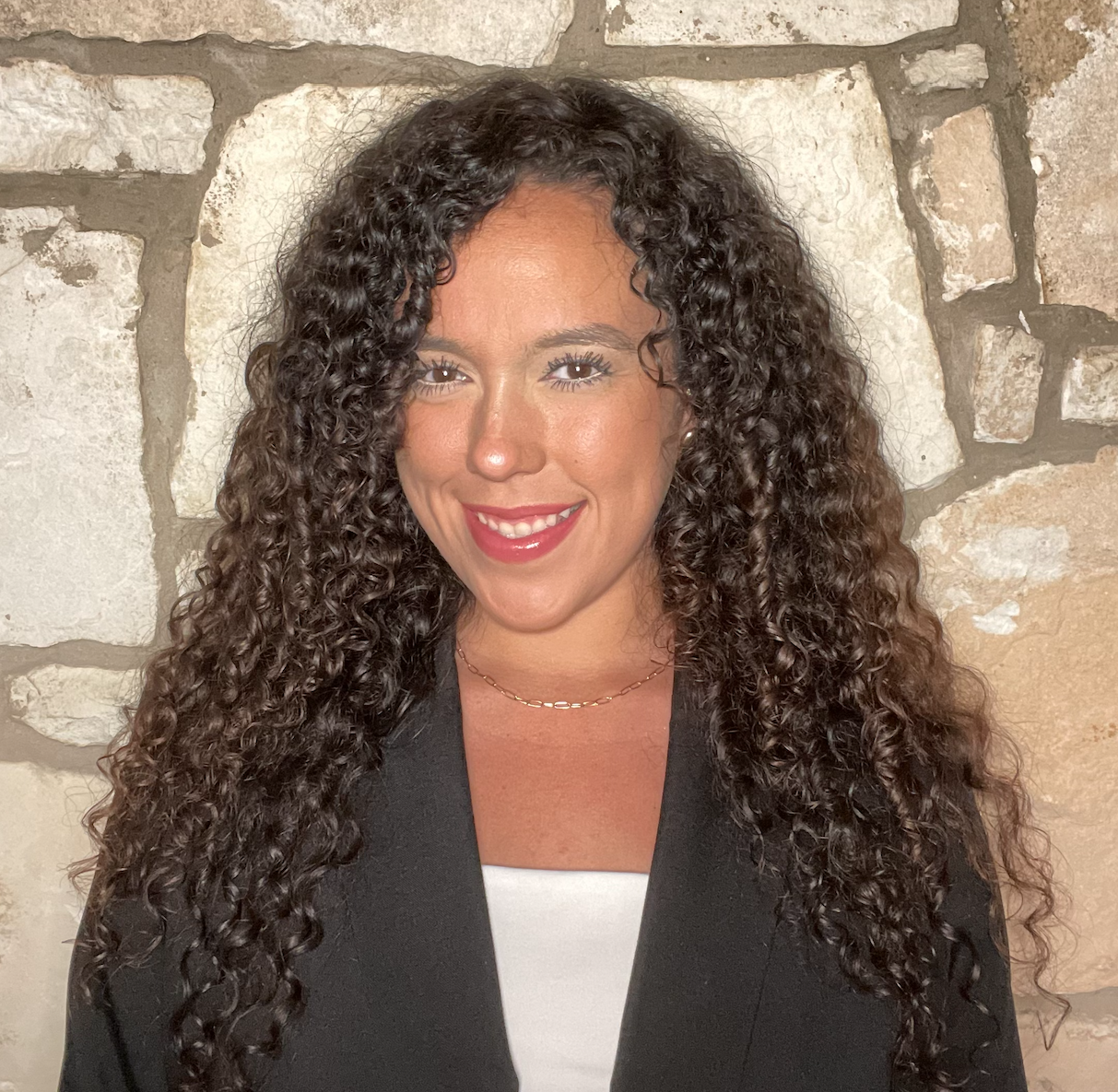
A veteran’s daughter (our own Director of Communications, Jocelyn Garcia) reflects on how her father’s service shaped her path from medical humanities to irregular warfare and Small Wars Journal. Through mentorship, scholarship, and nonprofit service, she honors his legacy while preserving veterans’ knowledge and helping others contribute to the national security community.
Learning to Make Sense of the World
Long before I studied irregular warfare at Arizona State University (ASU) and joined the team at Small Wars Journal (SWJ), I was learning how people adapt to circumstances they cannot control.
Adaptation is part of life. Children learn it early because so much of their world is decided for them. They notice who is present, what changes the mood of a room, which routines hold, and what happens after someone makes a decision. Long before they have words for everything they observe, they begin finding patterns in it; understanding those patterns can become one way of making sense of the world.
I grew up as the youngest child in a military family, where my dad’s experiences as a veteran shaped our family life. Some of the challenges he faced followed him beyond his military service, shaping him and, through him, affecting the people who love him. In this environment, curiosity became part of how I navigated what I could observe and was still learning to understand. Questions followed naturally. Why did people respond to circumstances as they did? How could an experience carried by one person reach into the lives of others? How did families learn to adapt together?
What I encountered in the classroom helped me recognize patterns I had already begun noticing in everyday life. Science taught me that a change in one part of a system could affect the rest, while history showed me how decisions made in a single moment could continue to shape people’s lives long after that moment had passed. Through both disciplines, interconnectedness became something I could study and examine with increasing precision.
That way of thinking became ingrained in me. I kept looking for connections between people, events, and consequences, and asking what those connections could help me understand. Education gave me language for things I had noticed long before I knew what to call them. I learned to think about adaptation, human behavior, trust, and the systems that shape lives. The questions I carried became more focused, but the subject that held my attention remained the same. I wanted to understand the human condition.
Humans at the Center
My interest in the human condition found expression through medical humanities and a premedical path at Baylor University. Questions of disease, suffering, recovery, and care compelled me toward the biological dimensions of health and the lives in which those experiences unfold. In a clinical setting, every person brings relationships, beliefs, culture, fears, values, histories, and interpretations that shape how illness is understood and experienced. Medical humanities gave me a way to examine that complexity while keeping the person living through it at the center of my inquiry.
The relationship between an event and the human context into which it enters held my attention. Disease occurs within a body, but its presence can reorganize the rhythms of a household, influence relationships and decisions, and shape how people understand what comes next. Communication shapes that process. The meaning is context-dependent. A physician’s words are received within a personal history, just as public health guidance reaches communities with their own histories of trust and distrust. This perspective allowed me to study illness without separating the biology from the person living through it.
My path into national security brought these questions to the study of power, influence, legitimacy, institutions, and security. Trust and uncertainty remained central, as evaluating security threats required human perception and interpretation, and credibility developed through relationships with institutions and sources of authority. The consequences of policy became tangible in the lives of the populations subject to it. Decisions made at the highest levels could shape behavior, relationships, perceptions, and everyday experience.
War and conflict gave these relationships particularly serious consequences. Doctrine, strategy, and policy depend on people to interpret them, make decisions, and act. The consequences of those decisions can reach people through lived experience, sometimes extending through relationships, communities, and families long after an immediate event has passed. Conflict can remain present through memory, behavior, relationships, and what people carry home with them.
Medicine has drawn my attention to people and the systems that influence their lives. The study of security has given those questions relevance within conflict and human behavior. What has remained constant is my desire to understand how human beings experience, interpret, and adapt to the conditions surrounding them.
Learning to See the System
My study of irregular warfare at Arizona State University gave analytical structure to a way of thinking that had developed across much of my life. Conflict placed human behavior within systems shaped by adaptation, history, institutions, information, culture, technology, and power. Narratives took on meaning within their context, information encountered existing trust or distrust, and institutional decisions changed the circumstances in which people acted. Irregular warfare gave me a framework for tracing those interactions and their consequences, including how one decision could change the conditions surrounding the next.
My study of biological threats brought many of my interests into the same problem set. Questions of disease and medicine quickly opened into communication, trust, legitimacy, preparedness, policy, national bioposture, and biodeterrence. Within a biological crisis, decisions must be made amid uncertainty, institutions must communicate risk, and populations must decide how to interpret and respond to the information available to them. Here, subjects I had encountered across medicine and national security converged around a problem that was biological, institutional, informational, and deeply human.
Finding Small Wars Journal
Small Wars Journal gave these interests a place to meet within an intellectual community. When the Future Security Initiative released the call for applications to join the inaugural team, its mission, “Discourse at the Speed of Relevance,” immediately caught my attention. Small wars also held a personal connection for me. My dad served as a Recon Marine, part of a community with a long history of operating in the environments associated with small wars and irregular warfare. As I explored the journal, I found another avenue for understanding the environments and missions associated with his service. The journal already had two decades of work on war, strategy, irregular warfare, and problems confronting practitioners and scholars. When the opportunity arose to apply for the journal’s inaugural cohort of graduate fellows, I wanted to understand the community I was asking to join and its history.
Before submitting my application, I dove into the archive. Within it, I found the people who had built the journal and the debates that had shaped it across two decades. Much of that record had been written while the conflicts under discussion were still underway. People were working through difficult problems in real time, often without knowing how events would turn out.
Small Wars Journal launched in 2005 and grew from Dave Dilegge’s earlier work on the MOUT (Military Operations in Urban Terrain) Homepage and Urban Operations Journal. Those efforts helped create an open-source community where service members and practitioners could exchange knowledge about problems they were confronting in the field. Dave called this community “the urban warfare mafia,” and it eventually evolved into Small Wars Journal. He later recalled sharing an office with then-Marine Major Bill Nagle while serving as a project officer for the Marine Corps-Joint Forces Command’s Joint Urban Warrior program. Their conversations frequently returned to the language used to describe the conflicts that occupied their attention. Terms such as MOUT and urban operations emphasized tactical problems like clearing buildings and fighting through the “last 300 yards,” yet Dave and Bill were asking political-military questions about why forces were operating in cities and villages in the first place. Their discussions led them toward small wars and irregular warfare, guided by the Marine Corps’ Small Wars Manual. In February, they launched Small Wars Journal and gave the growing community a home.
COL (Ret.) David Maxwell, one of SWJ’s earliest contributors and a member of its board, describes Dilegge’s vision as a “modern virtual town square.” During the Global War on Terrorism, that town square connected service members and practitioners carrying knowledge from ongoing operations with scholars, researchers, and others trying to understand the conflicts as they unfolded. Lessons from the field could enter professional discourse while they were still fresh, allowing others to question them, build on them, or bring their own perspectives into the discussion. What service members learned did not have to disappear when an operation ended. The community became part of how knowledge developed through service entered the broader intellectual record.
Candor was part of the culture Dave Dilegge and Bill Nagle cultivated. They were willing to call a spade a spade, address the elephants (or gorillas) in the room, and give serious disagreement a forum for expression; sometimes that expression even came as a Tuesday Tune. Authors could challenge prevailing ideas, and practitioners could put lessons from the field into the public record for others to question. Readers, too, were part of that exchange, bringing their own knowledge and observations to the argument. Disagreement had a home at the journal. People were eager to have their questions worked through openly, honestly, and rigorously.
I never had the opportunity to meet Dave Dilegge. I came to know him through what he left behind in the archive. His humor and passion for the work are palpable; his respect for service members and their families permeates each page in Small Wars Journal. The community he built alongside Bill Nagle is evident in each thoughtful entry. Spend enough time digging through the archives, and you can still take a virtual seat with Dave, surrounded by scholarship, field experience, disagreement, and people genuinely trying to understand the problems before them.
At Small Wars Journal, publication could become the beginning of a wider professional discussion. Authors, practitioners, and readers could continue testing ideas in the comment section after an article appeared. COL (Ret.) Maxwell recalls the counterinsurgency discussions with LTC (Ret.) John Nagl and COL (Ret.) Gian Gentile as one example. Their arguments developed through articles and comment exchanges before culminating in an in-person debate at the National War College, hosted by COL Maxwell. Their exchange demonstrated how Small Wars Journal could carry professional military debate from publication and public discourse into the institutions where military ideas were taught and examined.
Small Wars Journal itself was part of what Dave Dilegge called the emerging “new media” environment. Blogs, online forums, independent websites, and digital communities were changing how military professionals could exchange knowledge. Dave recognized that something significant was happening and asked whether these networks were influencing doctrine, concept development, training, education, and lessons learned. Small Wars Journal occupied a place within that developing ecosystem where writing, research, operational knowledge, and debate could move directly among service members, scholars, journalists, and practitioners. People could examine events, identify patterns, trace consequences, and bring their perspectives into conversation with one another, even as conflicts remained underway. The legacy media took notice of the movement, with Rolling Stone Magazine naming Small Wars Journal to its 2009 “Hot List”.
As I moved through the archive, the culture of Small Wars Journal felt familiar. People questioned one another, returned to old arguments when new evidence emerged, and remained willing to reconsider what they thought they knew. I recognized in that approach something I had valued throughout my life.
Carrying the Journal Forward
After the passing of Dave Dilegge in 2020, Small Wars Journal remained with people who had helped build and sustain it alongside him. Bill Nagle, Dan Kelly, and COL Maxwell continued working on the board as they considered the journal’s future without its founder. That question eventually led the Small Wars Journal to Arizona State University in 2024. COL (Ret.) Ken Gleiman, Ph.D. and the Future Security Initiative helped lead the transfer and relaunch.
About a week after the relaunch at Arizona State University on Veterans Day 2024, I joined Small Wars Journal as part of its inaugural cohort of graduate fellows. I entered with an awareness of the journal’s twenty years of history and the people who had invested themselves in building it. Time in the archive had made that legacy personal to me before I ever joined the team. I was entering the journal at a point when its history and future were meeting, with an opportunity to contribute to what came next.
The culture I had encountered in the archive remained present in the Small Wars Journal community I joined. Some of the people themselves provided that continuity, with COL Maxwell serving as Editor-at-Large. Dr. Robert J. Bunker and Dr. John Sullivan had been part of SWJ’s original “urban warfare mafia,” and two decades later, I encountered them as active leaders. Their Small Wars Journal-El Centro work on gangs, cartels, criminal insurgency, and Latin America also brought another part of my own background into the conversation. Growing up in Texas familiarized me with the influence of transnational criminal organizations (TCOs) in the United States. Illegal border crossings, smuggling routes, tunnels in plain sight, and cartel & TCO activity belonged to the security environment of the region where I lived. At Small Wars Journal, I could place that familiar environment within a much wider body of scholarship and practitioner experience.
That same pattern extended across the journal. People brought perspectives shaped by research, military service, and professional practice. Conversations followed the problems wherever they led, often crossing disciplinary boundaries along the way. A discussion about drones could begin with proliferation and criminal organizations before moving into governance, technology, or human decision-making. Cognitive warfare drew from psychology and neuroscience while raising questions about culture, information, and institutional trust. Biological security brought me into familiar territory, connecting medicine with preparedness, policy, national bioposture, and biodeterrence.
Small Wars Journal turned my habit of mind into a practical skill at a professional publication. Each article required me to understand where an argument fits within a wider conversation and who might benefit from encountering it. I was now using the connections I spent years learning to follow.
Although I entered Small Wars Journal as a graduate fellow, the team soon entrusted me with directing communications. I was now helping represent the journal whose history I had spent time studying, while communicating ideas from authors whose careers in national security often spanned decades. Their trust meant the world to me, and I responded by giving my all. I came to understand the phrase Dave Dilegge once used to describe the work. It was, and remains, “a labor of love.”
The role demands immersion. Each day, I work through new articles alongside our authors’ previous work, the archive, and developments across the security community. I need to understand an author’s argument on its own terms before I can represent it responsibly. One article can send me into a subject I have never studied formally, introduce me to an unfamiliar body of scholarship, or lead me toward people whose work I might never otherwise have encountered. My education continues through the work itself.
That education also began carrying me outside the journal. My work through Small Wars Journal inspired me to apply to the Irregular Warfare Center (IWC)’s Colloquium, where I was invited to present my research. The colloquium gave me an opportunity to test those ideas with scholars and practitioners across the field and incorporate their feedback into the research that followed. I appreciated the time the IWC team invested in us and the seriousness with which they engaged our work. Their willingness to share their expertise reinforced for me the tremendous value of experienced practitioners and scholars investing in the development of people entering the field. Months later, I described the colloquium as a point where my education in medical humanities and irregular warfare converged.
The frameworks I was learning also proved useful in government research and in other areas of my education. Through work with Dr. Gleiman, I had the opportunity to apply irregular warfare concepts and frameworks in research examining China and the implications of occupation for Taiwan. I also began supporting operations at Inter Populum: The Journal of Irregular Warfare and Special Operations, where I could contribute to another community dedicated to advancing scholarship and practitioner discourse on irregular warfare.
Our readers are busy people. Their time already belongs to careers, families, research, military service, and everything else competing for their attention. If someone gives even a few minutes to Small Wars Journal, I want those minutes to be of value. Even when a reader never opens the full article, the social media post should teach them something worth thinking about after they move on.
Analytics give me a way to see how people respond to the work and where we are finding our audience. In August 2026, we reached a milestone of more than one million views across our platforms in a single month; the following month, we reached 10 million views across platforms. Each view represented a time when a person encountered something we published. Each engagement made it more likely that our work would reach others. Maybe they stopped for a few seconds or read all the way through. Perhaps they read the article, questioned its argument, or shared it with someone else. Either way, we had a chance to present an idea to them.
Our standard requires distillation with fidelity to the author’s work. A social media post may offer only a few sentences to introduce an argument. I must decide what the reader needs to know, what to leave out, and how to represent the author’s point without flattening it. I ask myself, “Why did the author care to write this, and why should someone else care?” The post should answer those questions while giving the reader a reason to spend more time with the full piece and Small Wars Journal as a whole.
The People Behind the Journal
COL David Maxwell has an extraordinary appetite for knowledge and a genuine desire to share what he finds. His daily news and commentary draw on decades of military and security expertise, and the thoughtful quotations he includes invite readers to reflect on leadership, history, war, and human behavior. That generosity extends directly to people. I have watched him give his time to students like me, colleagues, and members of our community with genuine enthusiasm. His commitment to giving others a voice, including through his work for Korean people, reflects the care and responsibility he brings to using his platform in service of others. His relationships helped bring Small Wars Journal and Arizona State University together. In a very real sense, COL Maxwell is the reason I found my way here.
That appetite for continued inquiry is part of the culture COL Maxwell and Dr. Gleiman now cultivate as leaders of Small Wars Journal. Expertise and curiosity reinforce one another within that culture. People exchange sources, challenge one another’s thinking, and return to problems when new evidence or developments give them reason to reconsider. Dr. Gleiman reinforces that culture by giving people room to exercise judgment and pursue ideas seriously, while remaining available when guidance is requested or needed. COL Maxwell and Dr. Gleiman are lifelong learners and experts whose pursuit of knowledge and wisdom reflects a continued commitment to inquiry and curiosity.
Most of the service that sustains Small Wars Journal happens quietly. Students and volunteers give their time to manuscripts written by people they may never meet, fitting editorial work around classes, military obligations, careers, and families. Before an article reaches the reader, it has often passed through at least two sets of hands. Those editors question arguments, check evidence, and work to ensure the author’s intent survives the process. LTC (Ret.) Amos Fox, Ph.D guides and mentors new editors through that responsibility. He teaches editors to respect the author and the work they have entrusted to us while ruthlessly questioning claims where appropriate and checking the facts behind them. He serves as a guardian of the journal’s quality by helping each new editor understand that rigor and respect must go hand in hand.
This is the Small Wars Journal I have come to know and love. People give their time and knowledge because they believe the work is worth doing. Others made room for me within that community and entrusted me with meaningful responsibility. I carry the torch they passed to me with honor and strive to help make that same sense of belonging possible for others.
What a Nonprofit Can Make Possible
The value created by a nonprofit often begins with the connections it makes possible. Publication is only part of what happens at Small Wars Journal. Authors meet editors, students work with experienced practitioners, and readers sometimes become contributors themselves. People find mentors, research partners, professional connections, and opportunities through work that may have begun with a single article or social media post. Small Wars Journal gives those connections somewhere to begin.
I entered Small Wars Journal as a student with years of questions behind me and plenty left to learn. Small Wars Journal put me alongside people with decades of scholarship, military service, and national security experience. The work gave me opportunities to learn from people whose insight expanded my understanding of security and helped me grow within the field. I am grateful for what the opportunity meant for my own development; yet I immediately began thinking about what my mentors had invested in me, and how I could provide this opportunity to others. But the growth of such mentorship does not occur in a financial vacuum. The sustained generosity of donors will be instrumental in realizing such goals.
Financial support enables nonprofits like Small Wars Journal to sustain the environment in which these relationships can develop. It creates room for students to take on meaningful responsibility, authors to receive careful attention, and members of the community to invest time in one another. The value of that support can continue through the relationships, knowledge, and opportunities that grow from the work. Those personal investments can stay with people and influence what they choose to do for someone else later in life.
For veterans, committing insight to the intellectual record gives hard-earned knowledge and wisdom a continuing life. Lessons developed through years of military service can remain available to students, practitioners, policymakers, and future generations. Publication ensures that knowledge developed through service remains available to communities and future generations.
The investment others made in my development now shapes how I lead our communications team and engage with people throughout the Small Wars Journal community. I know what it can mean when someone recognizes your potential, trusts you with consequential work, and gives you room to grow through responsibility. I try my best to do the same for others, whether I am encouraging someone on our team, inviting an author to develop an idea, bringing a student to ASU, or connecting a researcher with a person who may help them. Sometimes it is as simple as helping someone realize that their voice belongs in the conversation.
A Different Path to Service
Military service extends into families and the years that follow it. I first understood that through my dad and the experiences he brought into our family life.
This Veterans Day marks two years since Small Wars Journal relaunched at Arizona State University, bringing my dad’s service and the work I now do into the same moment of reflection.
For years, I imagined that my own service to others would take place through medicine. When that path detoured, the purpose that had drawn me toward it remained. Global security gave me another way to pursue that purpose, and Small Wars Journal gave me a place to put it into practice. My path had changed, but the reason I had chosen it remained.
What began in childhood as an effort to make sense of the world became a way of engaging with it. I learned to follow questions even when I did not know where they would lead and to recognize when one subject opened into another. I remain guided by that curiosity wherever my work takes me, pursuing worthwhile questions and learning from people who can expand my understanding. For me, that pursuit requires attention, intention, inquiry, and a willingness to challenge my own ways of thinking; it requires an open mind that creates room to understand an idea on its own terms and an open heart that keeps the human being who carries that idea within view. Curiosity and intellectual humility help us listen with the intention to understand, even when serious disagreement remains.
Small Wars Journal has given me a place to serve, alongside people I respect. That service is deeply personal. My dad’s experiences taught me early on that military service reaches into the lives of the families who experience its effects alongside the person who serves. I remain grateful for the freedoms he helped protect and conscious of what his commitment asked of him and our family. His influence remains present today in our relationship, the questions I pursue, the people I try to understand, and the care I bring to work whose consequences ultimately concern human lives. In finding my own path to the service of others, I have also found another way to honor his.
Thank you, Small Wars Journal.
Happy Veterans Day, Dad, and Happy Veterans Day to all.


Commenting is available to active SWJ members and staff.