





Selling F-35s to Saudi Arabia and Turkey is a Historic Opportunity

Abstract:
The State Department just approved an F-35 sale to Saudi Arabia, leaving Congress 30 days to object. My piece argues that this is the right moment to secure conditional deals: the administration should push for Saudi and Turkish accession to the Abraham Accords, support for Ukraine, and protection of international shipping. With competitors to the F-35 on the horizon, this is the best opportunity for the US to receive favorable terms. The article addresses the major objections that have delayed these sales before, namely ties to Russia/China and threats to Israel.
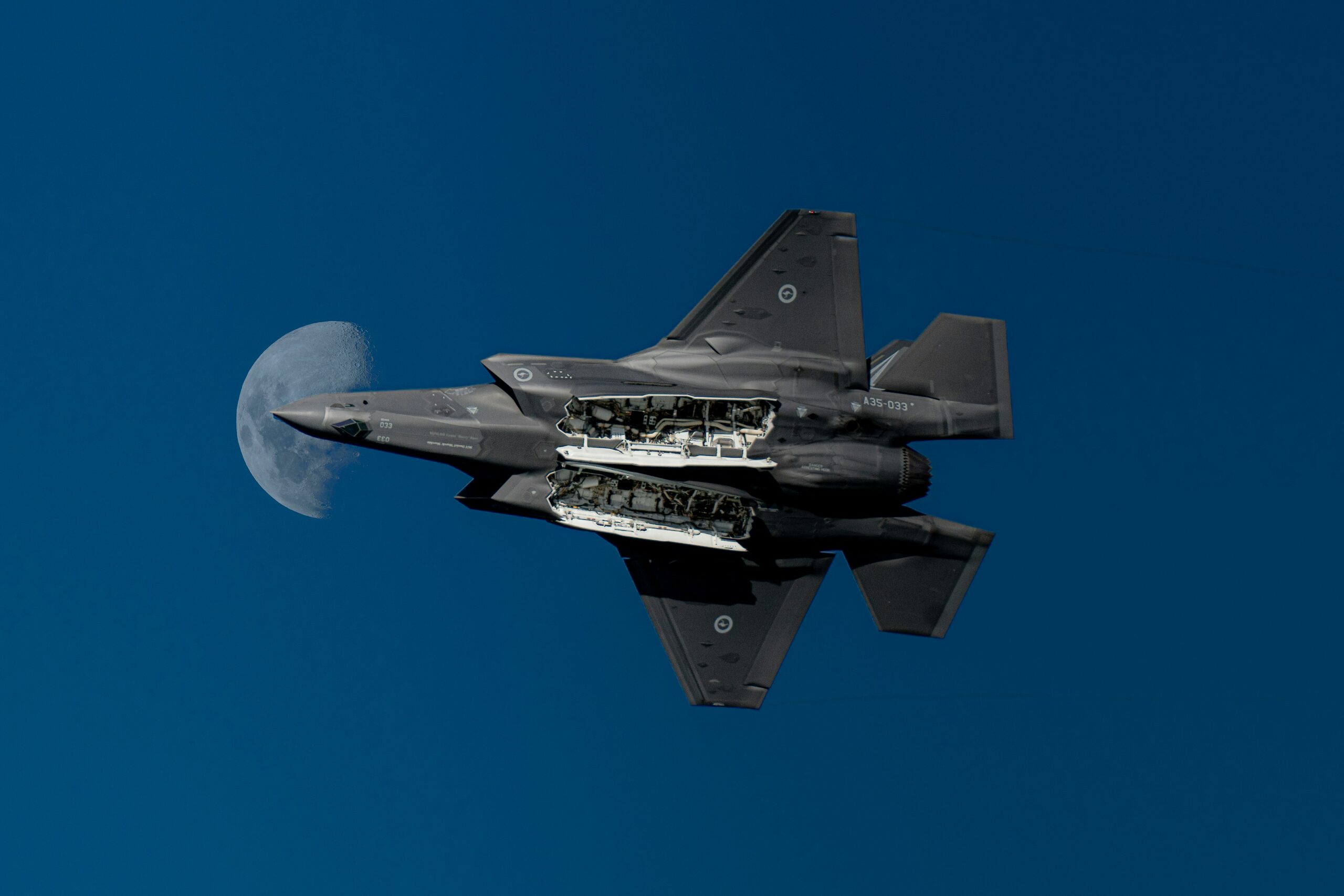
The Trump Administration has approved Saudi Arabia’s purchase of F-35 stealth fighters, and Turkey hopes to follow. Three factors stress the urgency of these deals, which Congress is yet to finalize. First, Riyadh and Ankara are uniquely positioned to help the president with several ongoing foreign policy challenges. Second, delays could allow these countries to consider upcoming aircraft from other nations. Third, there are solutions for issues that prevented these deals before, including concerns over ties to China and Russia, and preserving Israel’s military posture.
Potential Concessions
The Saudis and Turks have considerably more to offer Washington than they could under previous administrations.
Arguably the most significant compensation for F-35s would be joining the Abraham Accords, which would solidify Israel’s normalization with the most influential Sunni Muslim leaders. Beyond strengthening Israeli security, this would mark a monumental milestone in the “peacemaker” legacy that Trump hopes to leave behind.
In a similar vein, the administration has repeatedly attempted to reach a deal to end the Ukraine War. While his praise for both Putin and Zelenskyy is inconsistent, Trump notably voiced sympathy for Kyiv facing an onslaught of Russian ballistic missiles, which tempted him to allow Ukrainian-built Patriot interceptors. Turkey has a chance to address an issue that the president, despite remaining frustrated, likely won’t solve himself.
Ukraine urgently needs anti-ballistic missile defense, but the US has a critical shortage, and Trump seemingly believes that antagonizing Moscow interferes with negotiations. If Ankara gives Ukraine its Russian-made interceptors, which it already needs to remove for an F-35 sale, it will provide relief that Washington hopes to see but won’t deliver.
Turkey could earn more goodwill by accepting Trump’s offers for American energy instead of buying from Russia. This could include the construction of nuclear reactors, which the president is also pursuing with Riyadh.
Lastly, the administration would welcome greater use of the Turkish and Saudi militaries to protect commercial shipping. The return of pirates in Somalia and the Houthis in Yemen both threaten ships passing through the Suez Canal. Simultaneously, Iranian attacks in response to the ongoing war have heavily reduced traffic from the Strait of Hormuz.
Incentives to Act
So far, political consequences have kept the Saudis and Turks from cooperating. Both countries want to avoid perceived alignment with Israel and, secondarily, the UAE. They also lack the political capital for costly military operations with no discernable end. Additionally, these nations would prefer not to fully sever their ties with China and Russia, who offer flexibility as alternatives to the US. Motivating Riyadh and Ankara to overlook these concerns will require a concession from Washington.
For decades, trading weapons has largely defined the US’ relationships with these countries. Beyond their direct role in war, international arms deals are political tools. Here, equipment matters more as a bargaining chip. This gives two options for negotiating: selling equipment as a carrot, or withholding it as a stick.
The Biden administration tried the stick by freezing Saudi Arabia’s weapons in 2021, seeking to improve humanitarian conditions in Yemen. Outraged, Riyadh responded by cutting oil production to raise gas prices, signing a multi-billion dollar arms deal with Russia, and continuing to bomb and blockade Yemen at the same intensity for another full year. This leaves the carrot, which has also been tested: the Saudis made it legal for women to drive in the year following an arms sale that was, at the time, the largest in history.
Turkey has followed the same trend. After the US refused to sell Patriot air defense, Turkey paid billions for Russian alternatives. Selling Ankara $23 billion worth of F-16s compelled Turkey to stop blocking Sweden from entering NATO.
This pattern demonstrates that when Washington sells, the Saudis and Turks cooperate; when it withholds, they shop elsewhere to the West’s detriment. Because no one sells true substitutes for F-35s, the US has more leverage, but this won’t last forever. Competitors to the F-35 are underway from South Korea and Turkey, two of the fastest rising arms exporters.
With Saudi Arabia’s stated interest in both of these aircraft, the Saudi and Turkish need for F-35s is temporary. Riyadh and Ankara will eventually get stealth fighters, either on the US’ terms or someone else’s.
Trump can make a deal that achieves his goals, or wait until someone else takes advantage of the Saudi and Turkish demand. In doing so, Trump must account for why these deals have garnered controversy in the first place:
Data Security
F-35 sales are most often blocked by the risk of technical information reaching the wrong hands. This is why many viewed Saudi Arabia’s ties with China as a nonstarter. However, the Saudis have been careful to keep their engagement with Beijing from burning bridges.
For example, Riyadh allowed the CIA to oversee a purchase of Chinese missiles, and Saudi Arabia’s trade with China typically follows the US turning down preferred deals. Also, cutting off Riyadh has not prevented Beijing from stealing information about the F-35, including physical samples of secret materials. Any outstanding data security risks make the arms sale a stronger bargaining chip by signaling greater trust in the Saudis.
Turkey’s situation is similar. Erdoğan has undermined Moscow in Ukraine, Syria, Libya, and Sudan, but infamously turned to Putin after failed attempts to buy Western missiles. The Kremlin might extract data about nearby aircraft from Turkey’s Russian-made S-400 air defenses. This risk drove Congress to legally block F-35 deliveries until Ankara removed the missiles.
With difficulty, Turkey is looking for a buyer. If it sells S-400s to a country Russia opposes, Ankara loses the natural gas and partially-built nuclear reactor that Moscow provides. If it sells to a country the US opposes, Ankara alienates the partner it’s aiming to please. Few Western-friendly countries are eager to purchase Russian equipment.
So far, proposed deals in the Gulf have stalled, as have efforts to return the missiles to Russia, and Turkey’s new alliance with Pakistan rules out selling to India. Ankara might destroy its S-400s if a deal isn’t salvaged, but the most reliable signal of trustworthiness would be giving them to Ukraine against Putin’s demands. Russia would make this sting for Turkey, but Western compensation can mitigate this: Trump wants to sell American energy, and the pronounced vulnerability of Ukrainian skies would attract European funding for the missiles.
Israeli Security
The other objection is Israel’s security, which skeptics argue these deals would threaten. These concerns overlook how the US is approaching the end of its monopoly on trusted, exportable stealth fighters.
While these deals seemingly violate the policy to maintain Israel’s Qualitative Military Edge (QME), the US can prolong Jerusalem’s advantage by also selling the upcoming F-47. Barring F-35 sales will only briefly preserve the Israeli QME, so the chance for concessions should be seized.
If those concessions include the Abraham Accords, selling F-35s would improve Israel’s security. Further, the Turkish-Saudi alliance will likely restrain Turkish-Israeli escalation: if Ankara abandons diplomacy, it either drags Riyadh toward an unwanted war or fractures the alliance.
Act Quickly
The US has considerable misalignment with Saudi Arabia and Turkey on human rights and strategic interests, which explains years of reluctance to sell F-35s. However, both countries have already shown that holding back weapons can push them toward alternative sellers, and continued delays carry other risks. These stealth fighters will soon have serious competition, which will curb what the US can demand in exchange.
The US must secure these deals quickly. Beyond the nonnegotiable removal of Turkey’s S-400s, the President should push for more than cash: both buyers should accept strategically preferred policies, such as joining the Abraham Accords, supporting Ukraine, buying American energy, and protecting international shipping.
A true dealmaker-in-chief would not let this opportunity go to waste.


Commenting is available to active SWJ members and staff.