





From Port-au-Prince to the periphery: The ruralization of Haitian gang violence

Haiti’s armed gangs are extending their operations into rural and mountainous areas, thereby creating a security problem shaped by mobility, terrain, weak state presence, and criminal governance. The Global Initiative Against Transnational Organized Crime examines this expansion through Artibonite, a major agricultural region, and Kenscoff, a mountainous commune overlooking Port-au-Prince. In Artibonite, groups including Gran Grif and Kokorat San Ras have seized key roads and agricultural areas while conducting coordinated attacks that block escape routes and impede security forces. In Kenscoff, armed cells use ravines, high ground, dispersed formations, roadblocks, kidnapping, raids, and drone reconnaissance to operate around fixed police positions. These methods allow gangs to exert influence without maintaining permanent control over every community they target.
From Port-au-Prince to the periphery: The ruralization of Haitian gang violence describes a rural operating model built around rapid movement between sanctuary areas and targets, harassment, looting, cattle theft, sexual violence, kidnapping, and repeated incursions. Hostages provide gangs with ransom opportunities and coercive leverage while requiring fewer resources than holding fixed positions. Public threats against captives can also constrain security-force responses and reinforce perceptions that the state cannot protect affected communities. The result is a form of criminal power in which freedom of movement, access to communities, and the ability to return after security operations can shape local governance and civilian behavior.
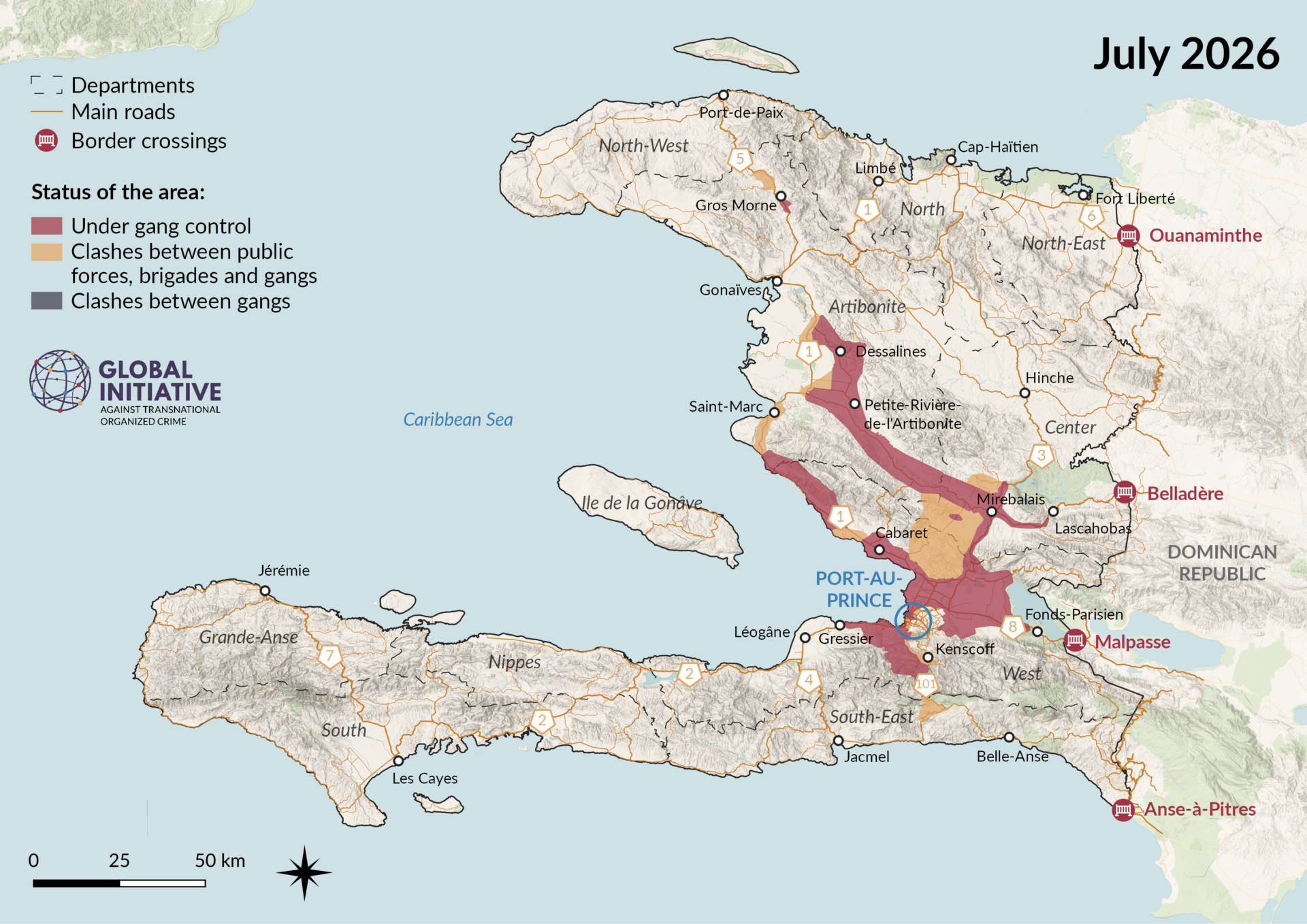
This article raises questions about how gang control is assessed and how forces are designed for the operating environment. Haitian police remain constrained by manpower, equipment, training, and limited capacity for sustained operations across rural and mountainous terrain; reinforcing one area can leave another exposed to highly mobile armed groups. The authors call for an integrated response combining rural security capabilities with farmer protection, economic and social recovery, disarmament, demobilization and reintegration, and reconciliation efforts addressing local land and intercommunal disputes. Haiti’s conflict landscape increasingly requires attention to where gangs can move, strike, intimidate, extract resources, and establish influence across the country.

