“How we power the next war still baffles me” | Atlantic Council Energy & Defense Summit
10.16.2026 at 07:11pm
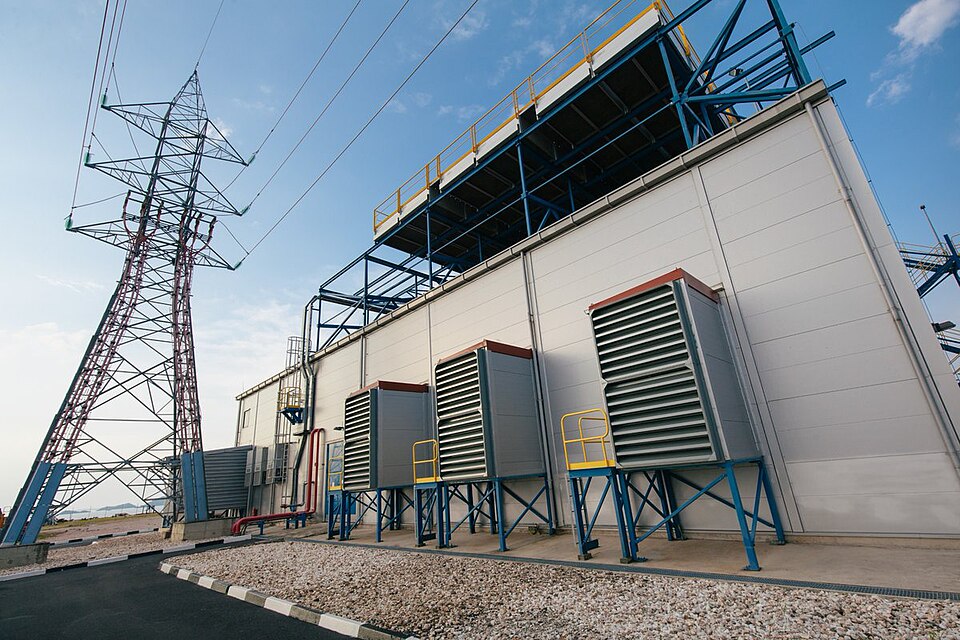
Courtesy of Wikimedia Commons.

The Atlantic Council’s Global Energy Center’s Energy & Defense Program convened private sector players, government representatives, and military leaders for the 2026 Energy & Defense Summit on Wednesday, October 14th. The afternoon of panel discussions covered the future of energy resilience within the NATO alliance, repowering the defense industrial base, securing the energy resilience of critical military installations, and powering the future of warfare.
The biggest takeaways:
- Warfare is becoming more mobile and dispersed: how we power this evolution is a work in progress.
- Bases are targets: making them energy resilient is critical for forward posture.
- Civilian grids are weak points: we need diversity, decentralization, and redundancy.
In this discourse, we’ve filled out our hastily scribbled notes.
Warfare is becoming more mobile and dispersed: how we power this evolution is a work in progress.
The main point: We can have the most fancy tools for powering precision mass, but without the tools and doctrine to power them we have nothing
- First, emphasis on field-enabled recharge capability is misplaced. Debra Cagan, Senior Advisor at the Atlantic Council’s Eurasia Center and former Deputy Assistant Secretary of Defense for Coalition, Peacekeeping, Humanitarian, and Disaster Relief, pointed out how drones that can be recharged in five minutes are excellent weapons, but they can only run for so long. We still need to find ways to procure more power to make them stay up for two or three days in order to outlast the enemy.
- We’re moving past the era of the battery pack and out of the static battle space. Now we’re “going mobile.”
- Second, commanders need to command energy. As the electrician in an office building can go to the control room and track the building’s energy use in real-time, military commanders need to know their loads and how to move energy around.
- This point went further: Cagan described the need to control energy in a single kill chain. In the modern, dispersed battlespace, you need a lot of energy at short notice that you can carry with you. It’s like ammunition.
- But the image of commanding energy is not finalized yet. Energy is easy in buildings, harder at the installations, and a lot harder in combat.
- Take this quote from Cagan: “How we can power the next war still baffles me.”
Bases are targets: how we make them energy resilient is critical for our forward posture.
- According to former Assistant Secretary of the Navy for energy, installations, and environment Meredtih Berger, the U.S. military has a disproportionate reliance on the domestic civilian grid relative to most European militaries.
- Speakers described this as an opportunity for DoW to invest in host nation infrastructure. How this works in practice is up in the air.
- Testing installations often and improving resilience based on what we learn is critical. Law requires 50 blackstart exercises per year, but none happen overseas. That needs to change.
- The DoD resilience standard is fourteen days of off-grid survival. But the point hammered home several times was: relying on diesel generators to get to two weeks (and not longer) is not ok.
- Former Deputy Assistant Secretary of Defense for Environment & Energy Resilience Richard Kidd highlighted the “zero base” solar battery system developed under his tenure, which freed up operating resupply capability by more than 2 times. His point: when you have more efficient energy on base, you don’t need to send as many fuel convoys to your rescue.
- A tension arose in the room between the continuing emphasis on the military’s go-to, diesel– currently twice as expensive as normal for U.S. buyers– and renewables.
Civilian grids are weak points: we need diversity, decentralization, and redundancy.
- Our grids are anachronistic. In their vulnerability to physical and cyber attack they enable our opponents to get at our rear and debilitate our energy systems.
- There is an opportunity here to apply– not just learn from– the lessons of Ukraine’s energy resilience in the form of an energy resilience “command and control,” of sorts.
- For example, layering microgrids into our grid systems enables sections of grid to keep functioning even if an attack tacks out one node. This is where decentralization comes in.
- We also need more energy sources that can be dispersed. An overreliance on fossil fuels makes petroleum depots high-value targets; similarly, an overreliance on one renewable source raises the likely level of damage of an attack on the more centralized grid structure that is required to support it. Dispersed sources of different types of energy reduces this risk. Cagan pointed out that the U.S. needs to shed its hubris and learn from its allies, who are much further ahead in modernizing their grids and power sources.
- Christian Brown, VP of Vice President of Marketing Federal Services at Summit Ridge Energy, detailed one way that our grid is vulnerable right now. Grid substations, even in our neighborhoods, are critical nodes with next to no protection.