





The Renewable Shield: European Energy Lessons from the Iran War
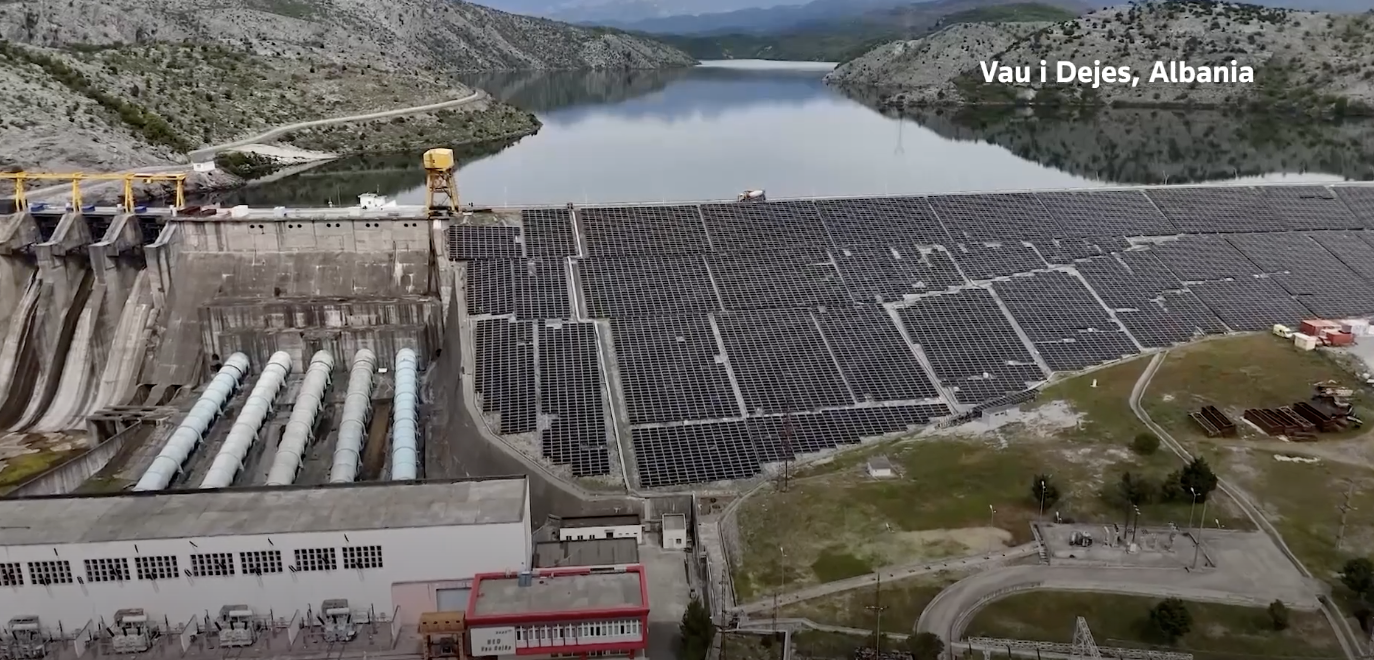

An April 27th Reuters report titled “Renewables in vogue as Iran war drives up Europe power prices” highlights a pattern that’s unfolding across developed economies. States with expansive renewable and nuclear power foundations are managing to protect their citizens from wholesale power increases as a result of the Iran War’s impact on the global natural gas market. Those without are not.
This divide is playing out across Europe. Take Germany and Italy, which are highly dependent on imported gas. Since February 28th, their wholesale electricity benchmarks have increased by 15% and 20%, respectively. In Spain, where renewables makes 60% of total generation, prices have declined. Albania experienced lower-than-average year-on-year prices in March, thanks to its hydro generation “shield.” Countries with mature coal systems, like Poland and Serbia, have also fared better.
Overall, the report’s authors conclude, countries with gas dependent systems have experienced higher price volatility. Fixing this is not as simple as buying a few more renewables, however. European countries that have invested considerably in solar without replacing traditional fuels and adding storage capacity– Germany included– are still dealing with the so-called “duck curve,” the price spikes and dips associated with the changes in solar scarcity and abundance throughout the day.
European leaders are considering serious measures to cushion the negative impacts of this price volatility, including significant tax cuts. But analysts warn of the downstream economic effects this could wreak. The lesson these countries will take away, argues Kpler’s Alessandro Armenia, is that more of everything is the solution to energy security:
“The goal for most of these countries like Italy and Germany is to build a huge stack (of renewables and long-term storage) that offsets gas. It’s going to be a big challenge.”
The Iran War’s impact on Europe’s energy picture will reach into the bloc’s highest decision-making arenas. But this strategic question has real-world economic impacts. Real people are suffering, and will continue to suffer, the consequences of a under-diversified energy economy that is susceptible to conflict in the Middle East. Take this Cypriot’s story:
“When the Iran war erupted, fuel costs for Marios Georgiou, a machine operator at a printing works in Limassol, soared as much as 20%, forcing him to quit one of his jobs and find alternative work closer to home. Electricity bills already cost him 200 euros a month.
‘I’ve got two jobs and I can barely break even. Everything is just going up,’ the father of two said.”
Read the original Reuters article by Forrest Crellin, Fatos Bytyci and Edward Mcallister here.

