





Special Forces in China’s Nuclear and Missile Operations

Abstract
Little is known about the role special forces have in managing nuclear operations, especially in foreign countries. The article examines the People’s Liberation Army Rocket Force’s special operations units, their organizational structure, and missions. Studying special forces in China’s nuclear and missile operations helps intelligence professionals and policymakers develop a clearer picture of China’s missile survivability and options to hold at risk its missile forces.
Introduction
From Soviet suitcase nuclear devices to U.S. Army Special Forces “Green Light teams” during the Cold War, the role of special operations in nuclear strategy has a long and underappreciated history. Even fewer pieces have examined how U.S. adversaries plan to employ special forces in nuclear operations. However, studying how the People’s Liberation Army Rocket Force (PLARF) employs special operations reveals Party priorities, China’s approach to nuclear survivability, and windows into China’s warhead management practices. The last insight is especially important, since it can indicate readiness, alert status, and timelines from when the Central Military Commission—the Chinese Communist Party’s supreme military command—authorizes nuclear use to the placement of warheads on delivery vehicles.
Little is known about the PLARF’s special forces from the outside. Most of the following assessments are necessarily tentative. Yet, enough media reporting, journal articles, and social media posts from China exist for analysts to cobble together a picture–albeit incomplete–of how the PLARF integrates special forces in its nuclear operations. Unlike worries over nuclear infiltration during the Cold War, the threats posed by PLARF’s special forces are less dramatic. Although this may evolve in the future, PLARF special forces primarily focus on counter-infiltration, guarding warheads, and “blue-teaming” (an opposing force in the PLA is generally referred to as blue team or blue force).
PLARF Special Operations Forces Organization and Missions
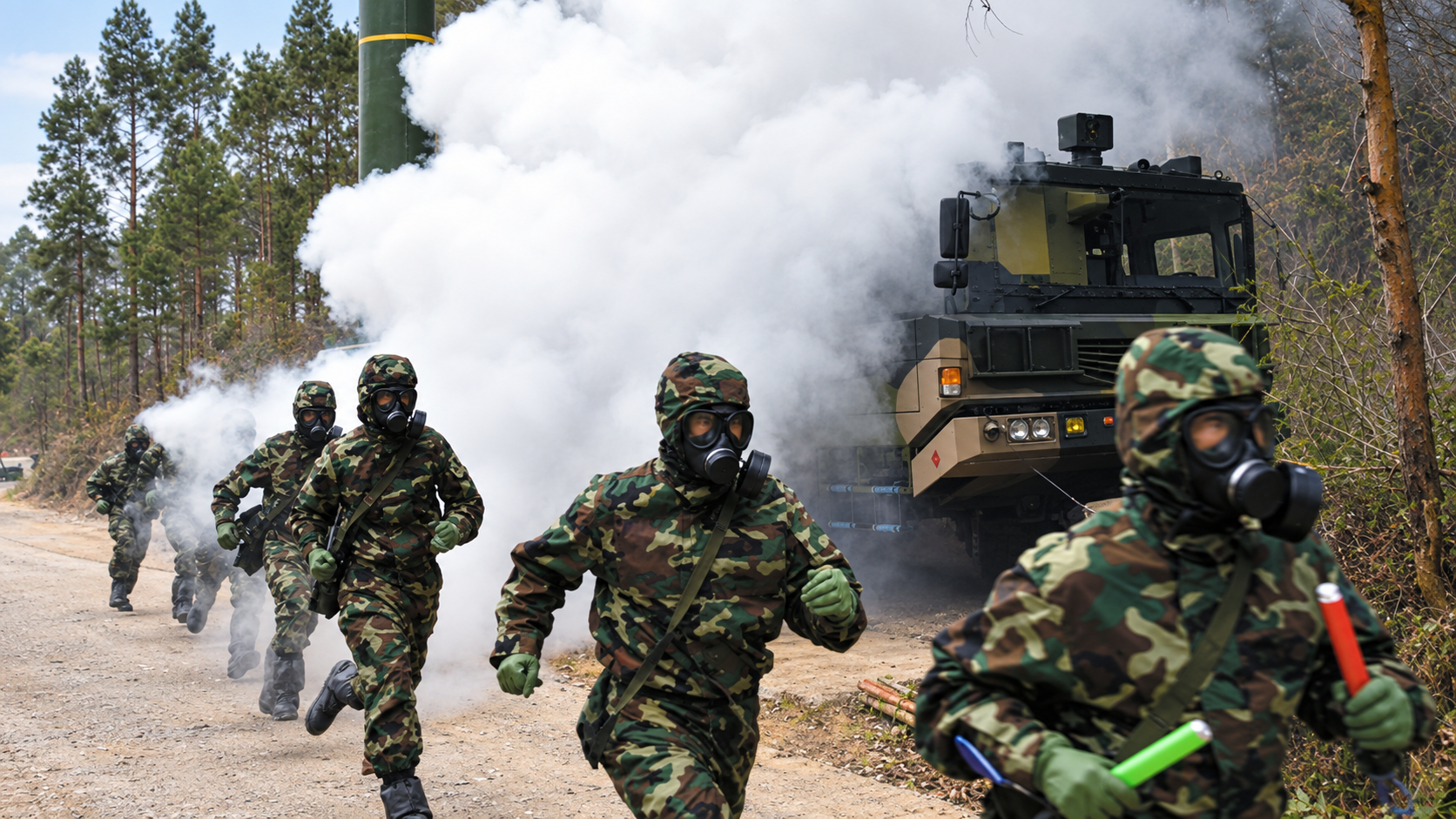
PLARF special forces are generally oriented toward stress testing the survivability and operations of China’s missile brigades, countering infiltration and sabotage from adversaries, and protecting warheads and missile sites. In the words of one PLARF brigade commander, one of the main reasons for training and maintaining special operations forces (SOF) units in the PLARF is to rectify “certain shortcomings in defensive operations” and “have sufficient credible self-defense capabilities to prevent enemy infiltration.” Another article from the PLA Daily—the mouthpiece of the Chinese military—posits that one of the missions of the “Sharp Knife” unit is for missile launch support and countering enemy special operations attacks.
More broadly, the 2012 China Strategic Missile Force Encyclopedia states that the Second Artillery Forces, the predecessor to the Rocket Force, need to be prepared for precision-guided attacks, special forces raids, and to conduct repairs and recover in the aftermath of an attack. Indeed, the 2004 Science of Second Artillery Campaigns, an operational manual used to train PLA officers, has several passages dedicated to threats of sabotage from enemy special operations and ways to defend against them. Although the PLA’s operational concepts, survivability, and technology have come a long way in 22 years, more recent exercises still suggest an emphasis on the use of special forces for counter-infiltration missions and the protection of launch sites and warheads.
Within the PLARF, several special forces units are assigned to different bases and serve different missions. There are at least seven special operations units in some capacity within the PLARF with different yet overlapping missions. Each unit is normally subordinated to a corps-level base that corresponds with a particular geographic area within China, often hosting delivery vehicles or nuclear warheads. There is no unified special operations command in China, and different services and levels of command may have dedicated special forces units. Consequently, the PLARF’s special forces vary in size. Drawing upon Ma Xiu’s research from the China Aerospace Studies Institute and Chinese media reporting, the following table captures known PLARF SOF units, their key characteristics, and command structure.
Table 1: Known PLARF SOF Units
| PLARF Special Operations Forces Unit Name | Chinese Name | Key Characteristics | Known Location | Immediate Parent Unit |
|---|---|---|---|---|
| Special Operations Security Training Team | 特种警卫集训队 (Tèzhǒng jǐngwèi jíxùn duì) | Approximately 200 personnel focused on anti-reconnaissance, anti-infiltration, and anti-raiding missions | Base 61 | Directly subordinate to Base 61 |
| Sharp Knife Special Operations Team | 利刃特战队 (Lìrèn tè zhànduì) | 38-man unit referred to as “missile guardians” and potentially dedicated to counter-SOF and missile launch support | One in Base 64; one in Base 67 | Security Battalion (Base 67) |
| Knife’s Edge Special Operations Team | 刀锋特战队 (Dāofēng tè zhànduì) | Base 67 headquarters site security | Base 67 | Security and Service Battalion |
| Blue Team SOF Unit | Unknown | Opposing force unit with a special operations capability focused on technical reconnaissance, electronic warfare, and sabotage to help the PLARF find weaknesses | Base 69 | Blue Team Unit in the 3rd Test and Training District |
| Special Operations Squadron | 特战中对 (Tè zhàn zhōng duì) | Opposing force unit at the company level in a remote mountain environment with reconnaissance and surveillance, frequency jamming, SOF, and electronic countermeasure capabilities to help the PLARF find weaknesses | Base 69 | Blue Team Opposing Force Regiment in the 2nd Test and Training District |
| Special Operations Reconnaissance Team | 特种侦察队 (Tèzhǒng zhēnchá duì) | Damage assessment and target reconnaissance | Staff Department Operations Support Group | Reconnaissance Regiment |
Base 67 is where the PLARF stockpiles its warheads. Within Base 67 is the “Knife’s Edge” Special Operations Team, a 38-man unit primarily focused on site security. The Knife’s Edge is part of the Security and Service Battalion, which itself is subordinated to Base 67 Operations Support Regiment. This team is responsible for physical security around Base 67’s headquarters. Established around 2004, the Sharp Knife Special Operations Team is subordinate to Base 67’s Security Battalion. It primarily focuses on protecting PLA Unit 96038, a unit responsible for warhead management and transportation of warhead stockpiles. Exercises in 2014 suggest that the Sharp Knife team contains snipers and has a role in escorting mobile missiles. Ma Xiu additionally notes that the Sharp Knife personnel are reportedly referred to as “missile guardians” within Base 64, consisting of intermediate-range and intercontinental ballistic missiles. Still, Ma Xiu points out that it’s unknown whether Sharp Knife teams are unique to specific units or if every single PLARF base possesses such a unit. The Sharp Knife team’s command level in Base 64 is also unclear.
Located in Anhui province, Base 61 is a command unit that carries several missile brigades, consisting of short-range and medium-range ballistic missiles. Base 61 directly maintains a Special Operations Security Training Team, consisting of approximately 200 personnel for counter-reconnaissance, counter-infiltration, and counter-raiding missions. A 2024 social media post from China Youth Daily showcased approximately 100 trainees for this team, though it is unclear from this post alone how often this team takes in recruits or how many of these trainees become part of the Special Security Training Team. The post further notes that this team guards a “national treasure,” which is often a euphemism for warheads or important delivery vehicles.
Within Beijing, the PLARF Headquarters comprises four major components: the staff, political work, logistics, and equipment departments. The PLARF Staff Department Operations Support Group has a reconnaissance regiment in charge of battlefield reconnaissance and intelligence support and a subordinate Special Operations Reconnaissance Team for target reconnaissance and damage assessment. The reconnaissance regiment is based in Beijing with two secondary garrisons in Qinghai and Fujian. The location of the Special Operations Reconnaissance Team is unknown.
Stress Testing Missile Survivability
The PLARF special operations community has an important role in red-blue exercises and stress testing missile survivability, especially during transit. These exercises pit missile brigades as the red side against a dedicated blue force. In fact, this emphasis on red-blue exercises comes from the top down. China’s 2013 defense white paper, for instance, directs the former Second Artillery Force to conduct red-blue exercises for reconnaissance and counter-reconnaissance, jamming and anti-jamming, and strengthening protection against nuclear, biological, and chemical threats. David C. Logan highlights that the PLARF established the creation of a Blue Army Teaching and Research Section, championed by Colonel Diao Guangming, to develop more difficult and complex training exercises.
Within Base 69’s 3rd Test Training District is a PLARF blue force unit and a subordinate special operations unit. Little is known about its special operations capability, though the blue force unit does host PLARF units for exercises and training in plateau operations near the Gobi Desert region. Established in early 2018 as an experimental unit, Base 69’s 2nd Test and Training District also maintains a blue force regiment and a subordinate special operations squadron or company led by Zheng Yihang (some analysts refer to this unit as a squadron while other sources describe Zheng Yihang as a special operations company commander). A PLA Daily article traces the force from a 2004 tactical-confrontation team, through a Blue Force assembled from multiple units in 2012, to formal establishment in 2018, casting it as the missile force’s “first opponent.”
From special operations raids to jamming, these exercises involve a variety of capabilities and are focused on preventing red team PLARF missile brigades from “arriving on time, launching on time, or launching accurately” to reveal potential weaknesses. The special operations element infiltrates and reconnoiters launch positions, command posts, and encampments, then raids launchers, transporter-erector-launchers on the move, convoys, and key personnel, often in severe cold, at night, or on the plateau. According to one account from Xinhua News, a PLARF special forces commander stressed non-contact play where “being discovered means failure.” Another PLA Daily article describes several blue force personnel conducting multi-means air reconnaissance while special troops raid from the ground, with blown bridges, ambushed launch vehicles, and jamming that leaves a battalion an “information island.” Red side missile brigades often will respond with camouflage, dispersal, light discipline against satellite passes, counter-reconnaissance, anti-infiltration, and rapid relocation and launch under harassment. After being discovered, red team missile brigades often must search for and apprehend blue force personnel to avoid failure in the exercise. The characteristics of these exercises underscore the PLA’s emphasis and heightened threat perceptions around the survivability of missile brigades.
Conclusion and Policy Implications
Although the role of special forces in managing nuclear operations is often underappreciated in the literature coming out of Western policy research institutions, the PLA invests significant resources in yearly exercises that test the survivability of missile brigades. Whether founded or unfounded, these exercises could also indicate that the PLARF and senior leadership see a variety of exquisite and unconventional ways in which the United States or other adversaries seek to disrupt the operation of China’s nuclear and conventional missile brigades. As U.S.-China military competition and nuclear competition intensify, the PLARF’s emphasis on protecting missile brigades from a variety of novel threats is unlikely to wane. Though their purview could evolve, the role of special forces in China’s nuclear strategy likely reflect a concern over protecting warheads and delivery vehicles rather than infiltrating an enemy’s forces.
While the PLARF’s special forces generally stress-test the survivability of missile launch platforms, there are still many unknowns about the size, location, and number of PLARF SOF units. Future research should also examine in greater detail the organizational structure and command level of these units, the extent of sympathetic bureaucratic support within the PLA, and how they integrate with other components of the PLA. Do PLARF SOF have their own redundant reconnaissance systems, or are they primarily relying on intelligence from other services or organizations to inform their planning? For U.S. policymakers seeking damage limitation or left-of-launch options, researchers can attempt to track their specific routes, gaps in protecting delivery vehicles and warheads, and vulnerabilities in command and control.
Ideally, policy entrepreneurs or military planners should find ways to disrupt PLARF mobile missile launcher operations and induce greater spending on internal security forces within the PLARF. This might involve credible and visible investment in long-range reconnaissance, special operations reach, and left-of-launch capabilities to reinforce existing fears over missile survivability and induce countermeasures to rectify perceived gaps. The PLARF has already shown that it takes the raids on its missile brigades seriously; in such a measure-countermeasure competition, every guard battalion, Blue Force detachment, and counter-reconnaissance drill draws money, personnel, and training time away from investing in increased offensive strike capabilities for a Taiwan campaign. Still, this course of action should be pursued only if the defensive burden on China exceeds the offensive investment by the United States, and forecasts of likely PLA countermeasures should be used to verify the soundness of the policy option.


Commenting is available to active SWJ members and staff.