





Information Recon: Crowdsourced Sensor Networks

Introduction
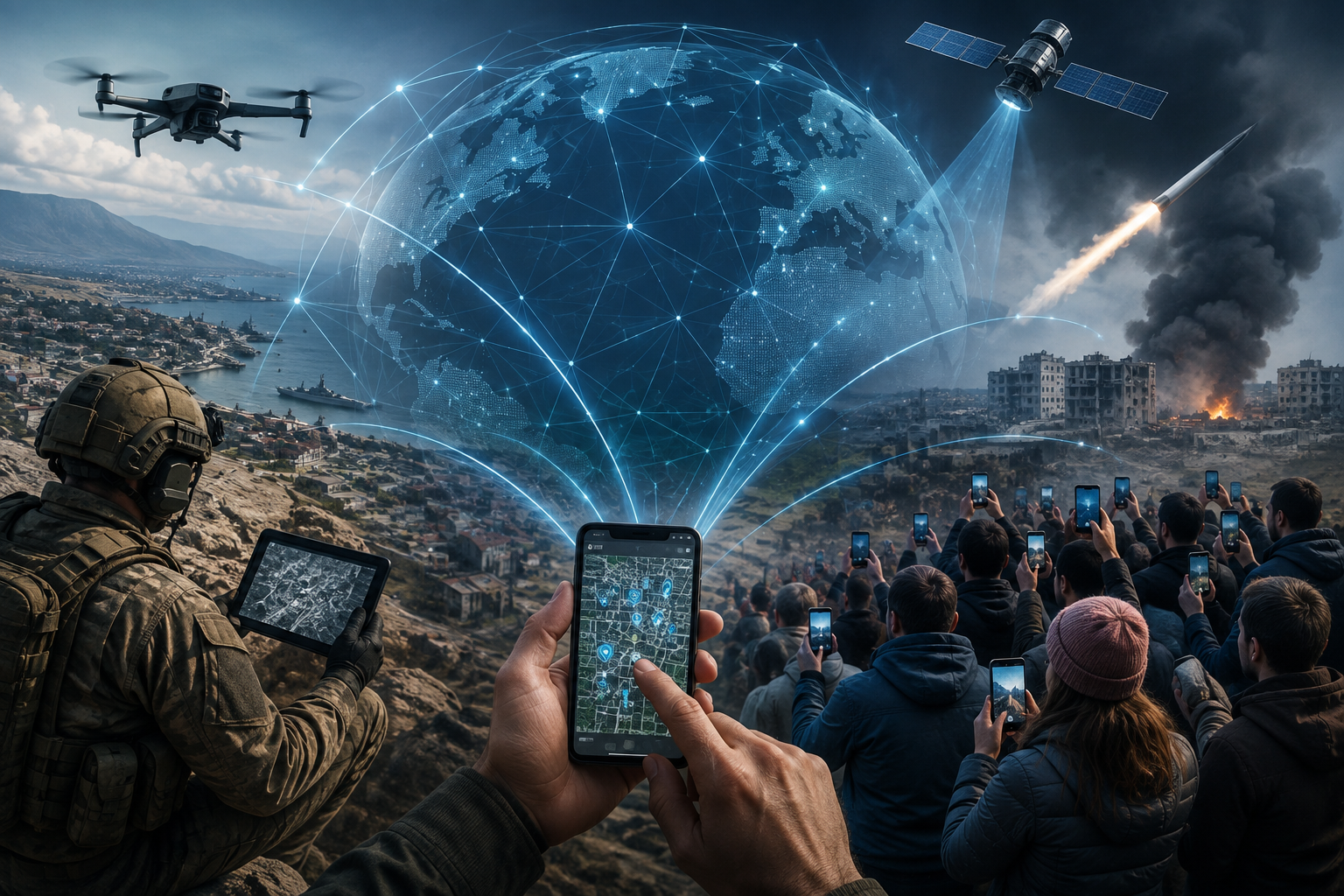
This article was originally published with the Information Professionals Association’s blog in June 2026. It is the first in a series of articles on how populations can be decisive enablers for military activities when viewed through the lens of the Information warfighting function. Regardless of the specific geographic area of operations, somewhere within the broader area of interest is a population segment- a target audience- willing to engage. Civilian populations have long contributed to military awareness, but digital connectivity, commercial sensors, and automated data processing now make it possible to collaborate with them as persistent, distributed sensor networks at unprecedented scale. The joint force must develop platforms, expertise, and safeguards to maximize this potential or risk conceding a decisive information advantage to adversaries.
Information Recon: Crowdsourced Sensor Networks
Conflicts since the World Wars (World War I, World War II) have increasingly demonstrated that civilian populations are capable and willing to function as a massive, distributed sensor network. Technology has significantly increased latent capacity, with populations increasingly willing and able to contribute both inside the area of operations and outside it. Further, as data is increasingly available real-time the value of it to decision-making, targeting, and situational awareness has also increased. This is not a novel concept, but digital connectivity and commercial sensors have led to an evolution in this long-standing practice. Marine Information Forces, enabled by the service, should maintain a capability to leverage this as a scalable advantage in any clime or place.
Historical Precedence
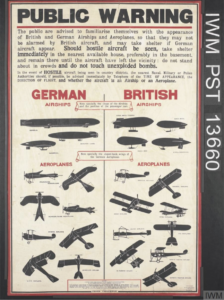
History demonstrates the utility of both isolated contributors and large networks. In the Pacific Theater during WW2, Coast watchers provided critical information that shaped decisive outcomes across the Pacific Islands during the Solomon Campaign, Battle of Guadalcanal, and the New Guinea Campaign with just 100 individuals across 2500 miles of islands. These were primarily untrained, isolated small groups of civilians and locals operating behind enemy lines providing information on Japanese naval, air, and ground forces. Going even further back in time during WW1, after initial bombing raids in 1914, the British asked citizens to report sightings of German airships with specific information via telephone (Figure 1). Fast forward to 2010 where Marines relied on the Ushahidi application and Crisis Mapping community to inform where to deliver aid in Haiti and in 2011 North Atlantic Treaty Organization (NATO) was doing something similar to identify Libyan Military locations. There will always be patriots unable to serve directly seeking to contribute to their nation’s defense and/or communities’ safety. History is on our side in developing a means to ensure their contributions are structured to maximize their safety and effectiveness when doing so.
Our failure to decisively scale population-based sensing has ceded advantage to our adversaries who consistently use similar approaches against the US and its allies. The global war on terror saw Iraqi insurgents and the Taliban employing massive disaggregated early warning networks with hundreds of thousands of informants covering nearly every city block in their respective areas of influence. Armed with only cell phones, internet access, and social media accounts, the decentralized reporting networks were highly effective in providing indications and warning (I&W) and real-time tracking of coalition military activities. These tactics were not new or unique to the Middle East, with similar large networks used by insurgents and criminal organizations across the globe with actors ranging from the Cali Cartel to the Viet Cong. Fast forward to today where the US faces an Iranian Revolutionary Guard that publicly calls on residents to report US troop locations and supposedly commercial Chinese companies like Mizarvision publishing AI-enhanced, targeting-quality imagery of the disposition of US forces in near real time.
What Right Looks Like
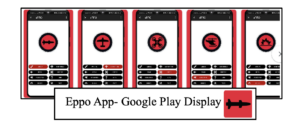
What distinguishes the current era is scale, speed, and integration. The War in Ukraine represents the most comprehensive implementation of this concept. The Ukrainian population can contribute directly to their own protection by reporting enemy positions to a Telegram Chatbot, Evorog, or by reporting incoming aircraft/drones/missiles with the Eppo Application. Further the humanitarian crisis mapping community and open-source investigators like Bellingcat reveal ways to engage remote contributors. Those outside the battlespace can contribute by analyzing open-source data and commercial imagery available from companies like Maxar and Capella. Those within the battlespace report information on the ground.
While Ukraine demonstrates it day to day, numerous historical instances further reinforce that engaged audiences serving as sensors generate a scale that cannot be matched by traditional intelligence disciplines. These important disciplines are significantly resource constrained by platform availability and analyst processing capacity. Even when enabled by multi-million-dollar budgets and hundreds of personnel, it does not compare with the multi-millions of cell phones and social media users persistently distributed across a given area of interest. This scale directly translates into speed and resilience. In Ukraine, population-based reporting allows for near real-time identification of enemy activity at a volume that is exceptionally challenging to disrupt.
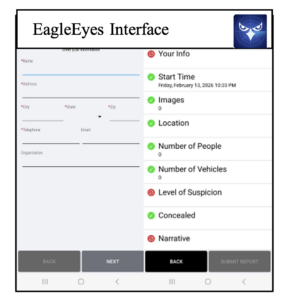
The Eppo application contributes to real-time air defense using an intuitive user interface and simple steps for rapid reporting- specifically a single button sends the initial report. This has enabled mass adoption (hundreds of thousands of users) with automatic geolocation supplementing radar and other sensors to improve tracking on hard to detect threats like low-flying drones and cruise missiles. Its integration with Diia, Ukraine’s e-government app that includes digital identification, provides an automated and robust authentication layer ensuring reports are tied to verified users. US military attempts at similar protection applications like EagleEyes stand out for their lack of all these features. As an g, it takes a minimum of 17 clicks to submit a report in EagleEyes versus one click in Eppo.
The EVorog Telegram Chatbot accelerates reporting using an interactive and guided interface to improve data quality, reporting timeliness, and the ability to follow-up. It is used at scale to report on enemy activity, document war crimes, assess battle damage, and more.
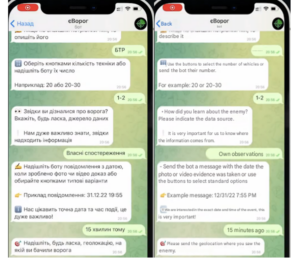
EVorog Chabot- YouTube: Ministry of Digital Transformation of Ukraine
Through a natural experience users do not need to submit a full report but are walked step by step through simple conversation and are prompted for additional information where it is valuable. Reports can enter the system within seconds of submission and are updated incrementally. This eliminates the common challenge where relevance is lost while a report is completed in full. Further portions of the data capture are automated using standard data such as phone geolocation. This chatbot is also linked to Diia for verification. On the backend natural language processing automates significant portions of the analytical requirements for the Ukrainian Military.
Stepping away from Ukraine, the Humanitarian Crisis Mapping community have demonstrated for over a decade how remote sensing and analysis can be crowdsourced using tools like OpenStreet Maps and Tomnod with applications as diverse as earthquakes in Haiti, typhoons in the Philippines, the Syrian and Libyan civil wars. Bellingcat has even used the same open-source tactics to track shadow fleet vessels from overhead. Examples dating back to 2011 demonstrate the significant impact this can have with small numbers of volunteers analyzing thousands of images flagging locations of interest for additional expert review. Audiences are interested in contributing regardless of their geographic location and the Crisis Mapping community established ways for that to happen at scale.
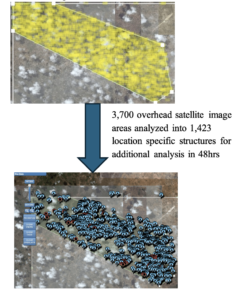
Source: IRevolutions Blog
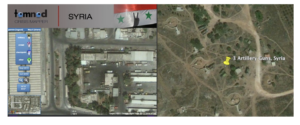
Source: Fast Company. Standby Task Force 2011 Experiment
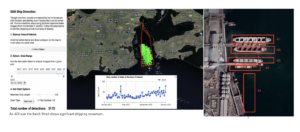
Source: Bellingcat Ship Detection Tool
But the Law of War! Can we even do this?
Ukraine’s scale of success has led to significant legal analysis from the International Committee of the Red Cross (ICRC), West Point’s Lieber Institute, and others. the conclusion: Yes, this is permissible. Further, the Department of War has for years already done similar, but to less effect, with the Department of War Rewards Program (figure 2) and several professional military journals among NATO allies such as Sweden and Poland come to a similar conclusion. The legal discussion on this topic is focused on the principle of distinction and what constitutes a civilian giving up their protections under the Geneva Convention through direct participation in hostilities. Before exploring this further it is important to point out no US adversary is applying much distinction. In fact, many often openly target civilians such as terrorist organizations like the Islamic Revolutionary Guard Corps, Russian war crimes in Ukraine, and horrific acts of violence by insurgents in the Middle East. Working to scale the population as a sensor is therefore a risk decision belonging to commanders rather than a discussion worthy of significant legal debate, civilians will continue to be targets of US enemies despite the Geneva Convention.
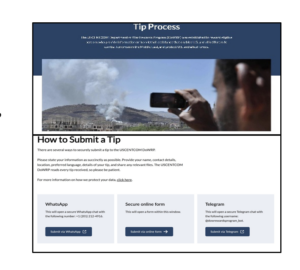
The hyperlinked references contain significant additional legal analysis that goes beyond the scope of this paper. Below is a summary of considerations for defining permissible activities of potential participants and establishing appropriate safeguards.
- Civilian reporting of information on belligerents in a conflict is clearly permissible within the Law of Armed Conflict. It is further lawful for individuals to forfeit their civilian protections and directly participate in hostilities.
- Direct participation in hostilities (DPH). This may or may not fall into the context of “Providing or relaying information of immediate use in combat operations” (DoW Law of War Handbook). Most likely it does not qualify as direct participation in hostilities from a US Law of War handbook perspective, given the handbook provided examples go on to identify direct use cases like forward observers for indirect fire and guides for active military operations. Allied countries may see this differently depending on how their Law of War Manual’s adopt ICRC interpretative guidance. However, regardless of DPH determination, the activity of leveraging populations as a sensor remains permissible within the Law of Armed Conflict (LOAC) even if individuals participating may momentarily cede their LOAC protections. As identified above, this may not even be relevant for risk. Naturally occurring voluntary participation and the lack of adversaries applying distinction, as seen across the last 50 years of conflict, means the risk exists regardless of friendly military action.
- The Time Factor for DPH. Populations engaged in reporting on the adversary do not forfeit all their LOAC protections in perpetuity. In a different context, many Global War On Terror veterans can attest to frustrations with rules of engagement related to spotters and those emplacing Improvised Explosive Devices. Despite the lack of consensus on the duration for how long a civilian using a reporting application may forfeit their protections- the range of options merely informs risk decisions and likely do not dramatically change the probability or severity contributing to risk.
- LOAC Disclaimers- Situationally Dependent. The framework we provide Marines should leave the objective purpose of the application to the discretion of commanders. Michael Schmitt highlights a key consideration regarding the purpose of a reporting application and implications for DPH. If the purpose is to warn civilians, participants clearly retain their civilian protections; if the purpose is to impede the adversary, participants may temporarily forfeit LOAC protections. Dan Maurer identifies State’s have no legal obligation to warn of the loss of LOAC protections but does point to a potential ethical consideration on citizens making informed choices. Despite the obvious operational downsides of such a warning, if the warning is solely based on international law it may serve as a source of misinformation. This is the case in Ukraine where no distinction is applied by the Russian side and thus participating populations are not de facto impacting their risk of being targeted.
USMC Adoption
This concept is how Influence Marines contribute to Information Reconnaissance. Advanced military sensors will remain in high-demand low-density exacerbating Intelligence, Surveillance, Reconnaissance (ISR) coverage gaps that naturally occur in the significant terrain features, weather, and geographic dispersion of INDOPACOM, SOUTHCOM, and Europe’s High North. Crowdsourced information enhanced by existing AI-enabled processing can cue more advanced sensors, fill ISR gaps at low cost, accelerate decision-making and targeting cycles across domains. Although this tool is highly relevant at the tactical and operational level Marines must avoid overly focusing on the close fight, such as how this may feed an O5/O6 battalion/regiments’ decision cycle. This is a tool and at times it may be the most timely and accurate information source driving a division’s close fight but at other times it may have little relevance to current operations but significant impact on shaping the deep fight and protecting the rear area. While it is not a silver bullet solving all problems it is a highly adaptable tool occupying the level of war where the tactical and operational intersect. It can be a hammer, a driver or a wrench but not every problem set or information gap will be nail, screw, or bolt of the right size.
To achieve the scale necessary this needs to be a core-competency of Influence Marines in the general-purpose force. Information Marines within each Marine Expeditionary Force (MEF) and MEF Information Group (MIG) can be the core crowd-sourced information integrators if provided the tools, framework, and resources to do so. Like ground reconnaissance, Information Marines can manage the key aspects of handing off formatted reports to intelligence professionals, the fires/targeting enterprise, or solely to contribute to general situational awareness. The heavy lift is not the analysis which can be heavily automated but developing front-end platforms that engage audiences, ensuring backend data-flows are timely and accurate, and adapting this system across problem sets. The Marine Corps made a key investment with Maven Smart Systems, which can play a key part in this ecosystem but the remainder requires skills we have not cultivated among the Joint Force.
The Marines that execute crowd-sourced information reconnaissance require a working understanding of front-end application development, data science, and server-side development (back-end data flows) to be able to implement an effective platform and adapt it. This requires time and investment in people but is relatively cheap with significant expertise among the Gig Economy or freely available knowledge in places like GitHub. MEF Information Groups could be the premier home for such a capability if mandated to do so and resourced appropriately- but to date lack such investment. There is significant literature to learn from as the distinction between wartime sensing and traditional domestic programs is narrow. Neighborhood watch programs, public appeals for information during criminal investigations, and disaster damage reporting systems all rely on the same fundamental principles: Citizens contributing to collective security through information sharing.
Conclusion
Target audiences working as sensor networks are neither new nor optional- it has been an enduring feature of conflict for over a century that has been amplified by modern technology. From the WW2 Coast watchers to now Ukraine’s digitally enabled reporting systems, the evidence is clear: Those who effectively harness populations to conduct Information Reconnaissance gain a decisive advantage in battlespace awareness and decision-making. The question for the US Joint Force and Marine Corps is not whether to employ this approach but how quickly and effectively it can be operationalized. By providing Marines with a standardized framework and tools to enable this, every expeditionary unit from Marine Expeditionary Units to MEFs can establish and sustain a decisive advantage for the Joint Force Commander.
DISCLAIMER: This article was originally published by the Information Professionals Association and republished with their consent. Opinions and views expressed by the author are his own, and do not necessarily reflect the views of or endorsement by the Information Professionals Association, the United States Marine Corps, or US Government.


