Victory’s Shadow: The Strategic Imperative of SOF Sustainment in Irregular Warfare

“This is another type of warfare.” U.S. President John F. Kennedy, 6 June 1962
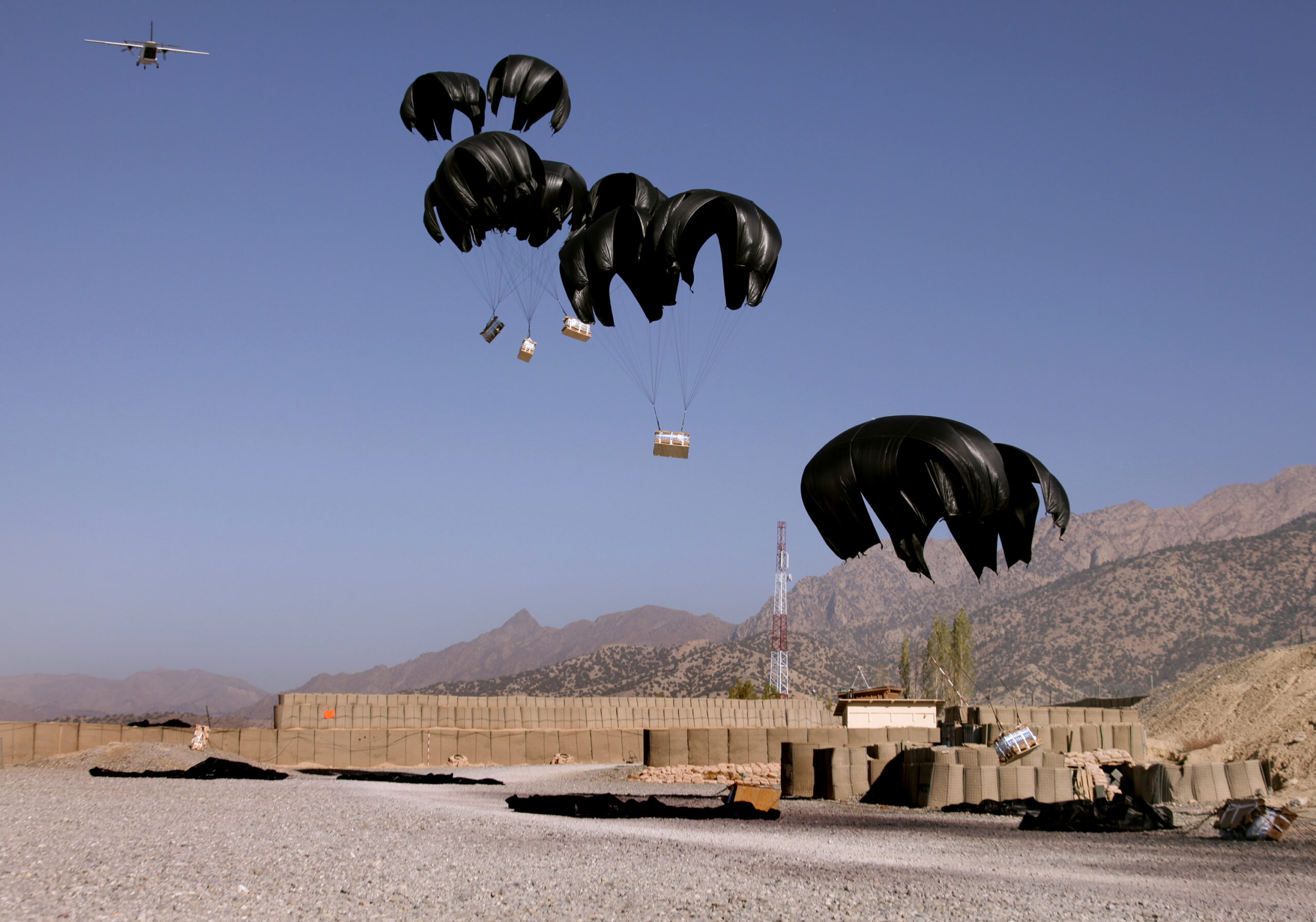
Any sustainment concept for Special Operations Forces (SOF) that begins at D-Day assumes a level of access that Large-Scale Combat Operations (LSCO) explicitly denies. Such concepts are not plans, but a display of optimism. This optimism is particularly dangerous today as the joint force grapples with defining SOF’s role: how to justify specialized, high-cost forces in an era dominated by conventional, theater-wide deterrence. For decades, military logistics has operated on an assumption of permissiveness—a model that is now a recipe for strategic failure. In this emerging Fourth Age of SOF, the decisive element is not kinetic exchange, but the pre-conflict campaign of indirect actions that shape the battlefield.
Therefore, the future of SOF utility depends on treating sustainment not as a rear-echelon afterthought, but as an asymmetric weapon of influence. This article explores the imperative to integrate Irregular Warfare (IW) into sustainment operations to achieve a compounding relative advantage. Ultimately, if SOF is to survive current institutional restructuring and serve as the critical “connective tissue to allies and partners,” it requires a proactive, offensive posture designed to build partner resilience and resistance long before the first shot is fired.
The Conventional Sustainment Fallacy
The intellectual framework underpinning US military sustainment is a relic of an era of permissiveness. It is predicated on assumptions that have been rendered invalid by the democratization of warfare evident by the proliferation of long-range precision-strike capabilities, non-linear battlefields, and the re-emergence of great power competition. The current conventional sustainment paradigm is not simply stressed by the challenges of LSCO; it is conceptually broken by them across three critical, intersecting failures.
First, the operating environment for which we must plan is not merely contested but also denied. A contested environment is one in which logistics are difficult; a denied environment is one in which they are functionally impossible through conventional means. The operational environment in the war between Ukraine and Russia provides a stark illustration of the modern, non-linear battlefield, where the proliferation of drones and advanced sensors has functionally erased the distinction between the front line and the supposedly safe rear area extending kill-zones and removing all sanctuary. Operating under constant observation in this highly transparent environment means that for SOF, the operational area will be contested from the very first moment of conflict.
Second, this reality of denial invalidates our industrial-age metrics of success. For decades, logistics have been defined by the efficiency of “just-in-time” delivery, measuring success by the volume and speed of materiel moved. These metrics are meaningless when the lines of communication required severe. The new paradigm must therefore shift from a focus on flow to a focus on endurance; the intrinsic ability of an isolated element to achieve its mission. While the SOF Truth ‘Quality is better than quantity’ rightly applies to the operator, it creates a dangerous paradox when misapplied to their logistics. In a denied environment, this truth must be balanced with another: for the isolated force, quantity has a quality all its own. Endurance is not achieved through last-minute, precise deliveries, but through the deliberate pre-positioning of sufficient materiel in a “just in case” posture that accepts planned attrition as a prerequisite for mission success.
Finally, the very geography of the future fight is misunderstood. The next conflict will not be linear. Any LSCO scenario will likely extend globally to the periphery where SOF will lead. As SOF core activities like unconventional warfare (UW), foreign internal defense (FID), and special reconnaissance (SR) demonstrate, SOF will be globally engaged on the geographic and political margins of any primary theater through sustained civil network development and engagement.
To solve a problem that is functionally impossible within the current paradigm, one must break the paradigm itself in a Cartesian manner. The solution is not to build a more efficient reactive system but to create a proactive, offensive one that achieves its most decisive effects before the conflict begins. Crucially, this model is not merely about pre-positioning our own supplies; it is about enhancing partner force resilience, turning SOF sustainers into force multipliers who build logistical capacity. This new model is a campaign of operational preparation and adversary disruption executed through four integrated pillars.
Pillar 1: Sustainment – Preparation of the Environment
The first pillar is Sustainment-Preparation of the Environment (S-PE). This is the primary shaping activity, moving beyond passive anticipation to direct, pre-conflict action as an indirect and asymmetric approach. S-PE is the art and science of deliberately setting the theater for future operations. This proactive posture aligns with USASOC’s anthology, A Future Without Equal (Singer & Cole, 2024) which envisions SOF leveraging localized, prepositioned materiel networks established years prior to a crisis to enable strategic shaping operations against a peer adversary. By creating a distributed, low-signature architecture before conflict, S-PE fundamentally lowers risk; ensuring isolated elements can endure while providing commanders with multiple, resilient options so that no single enemy action causes catastrophic failure.
What the SOF builds through S-PE is not just a supply chain, but resilience. By strengthening these capabilities, U.S. forces secure enduring access and placement. In essence, this is the sustainment expression of the ARSOF strategy: persistent engagement allows us to win the first fight by winning the battle for logistics before it begins. The objective is not merely to supply an operation, but to build a nation’s resilience from within, creating a strategic bulwark against adversary aggression that is far more durable than any pre-positioned cache of weapons.
Pillar 2: Counter-Logistics as an Offensive Weapon
The second pillar, Counter-Logistics (C-LOG), reimagines sustainment as a proactive, offensive weapon. While the concept of attacking enemy logistics is not new, its application in the competition phase marks a significant evolution. Foundational work like Maj. Kelly Bennion’s Snapping the Achilles’ Heel focused on kinetic destruction during conventional war. Today’s C-LOG, however, is a tool of statecraft designed to impose strategic dilemmas and alter adversary risk calculus without firing a shot.
In C-LOG, the SOF sustainer’s objective is to conduct continuous Target System Analysis (TSA) of the adversary’s logistical architecture as described in JP 3-60. By mapping the critical nodes and links that constitute their supply webs, SOF logisticians expose vulnerabilities and chokepoints that can be engaged during the competition phase. Transcending purely kinetic strikes, this approach primarily leverages nonlethal targeting to delay, disrupt, degrade, and deny adversary sustainment, ultimately targeting the cognitive domain of adversary leadership. By denying them the confidence that they can project and sustain power, the SOF enterprise effectively deters aggression and delegitimizes the adversary’s coercive economic statecraft. By degrading the enemy’s will and capacity to fight, C-LOG provides friendly commanders with three critical advantages: it provides decision space, creates multiple dilemmas for the enemy, and generates a relative advantage for friendly forces, all without engaging in a costly battle of attrition. In this paradigm, the target is not merely an enemy’s supplies, but their entire system of malign influence.
Pillar 3: The Human Element – Forging the SOF Sustainer
These pillars can only be built by fulfilling the first SOF Truth: Humans are more important than hardware. The new paradigm requires a new archetype of SOF sustainer. The SOF sustainer must be a hybrid warfare practitioner who applies logistical science to the art of IW, serving as the critical node for achieving true Conventional Force-SOF Integration, Interdependence, and Interoperability (CF-SOF I3). They must be masters of non-standard logistics (NSL), fully versed in their core principles of creativity, flexibility, simplicity, and redundancy. They must possess the strategic acumen to leverage local networks, integrate with partner forces, and balance risk to achieve mission success in ambiguous, non-permissive environments. This sustainer is the versatile weapon who applies the right logistical tool that is conventional, unconventional, or a blend of both, to solve the problem at hand.
This new paradigm does not seek to turn sustainers into direct-action operators. Rather, it recognizes that in modern conflict, logistics itself is a weapon. The SOF sustainer’s role is to wield that weapon, building networks while deconstructing the enemy’s, thereby creating the conditions for mission success. They are the logistical advisors and planners who work in concert with, and in support of, the teams conducting kinetic and direct-action missions.
Pillar 4: Sustainment as Influence
Ultimately, these pillars synthesize to achieve the core objective of IW: generating a compounding relative advantage by using sustainment as a tool for influence. In the context of strategic competition, this development of partner logistics is fundamentally a campaign for influence.
When SOF sustainers work “by, with, and through” partner forces to build their logistical capacity, the effects are threefold. First, it directly enhances the partner’s self-reliance. Second, it builds deep, trust-based relationships that provide the enduring access required for integrated deterrence. Third, and most strategically, it enhances the legitimacy of the partner government in the eyes of its own people. This matters profoundly in IW, as logistical competence immunizes a partner nation against adversary subversion, representing deterrence by denial.
This imperative is underscored by recent Army force design updates. The significant reduction of Security Force Assistance Brigades (SFABs) created a vacuum in partner-force enablement, presenting a distinct opportunity for the SOF enterprise. By absorbing this advisory role, SOF sustainers can directly shape both the operational and informational environments. This ensures the critical task of building partner capacity, and the influence that accompanies it, remains spearheaded by forces optimized for IW. Ultimately, this approach builds assurance, legitimacy, and influence while simultaneously imposing dilemmas and compelling adversaries.
The Way Ahead: Recommendations for the SOF Enterprise
To realize the compounding relative advantages of this proactive sustainment model, the SOF enterprise must shift from conceptual agreement to institutional implementation.
To fully leverage ARSOF sustainment as a tool of strategic influence, the following institutional adjustments are required to operationalize logistics during the competition continuum:
- Institutionalize S-PE as a core competition line of effort: The SOF enterprise must formally integrate S-PE into campaign planning, resourcing SOF logisticians to build localized, partner-enabled supply architectures prior to crisis. This proactively fills the partner-capacity gap left by conventional force restructuring and guarantees enduring access and placement for the Joint Force.
- Deliberately integrate sustainers into the joint targeting cycle: SOF logisticians must be elevated from purely support roles and embedded deeply into operational planning and targeting cells. Their specialized expertise is required to conduct TSA of adversary supply webs, enabling the Joint Force and partners to delay, disrupt, and degrade rival logistics through non-lethal, economic, and informational means.
- Modernize sustainer talent management for SOF and IW: The national security enterprise must cultivate a cadre of logisticians assessed and educated for the complexities of the next age of SOF. Future SOF sustainers must possess the acumen and cultural expertise to navigate interagency frameworks, analyze complex human geography, and prioritize network endurance over industrial-age delivery metrics.
- Expand interagency cooperation: SOF logistics planning must synchronize with the efforts of the Department of State and the Intelligence Community focused on partner-nation resilience. Aligning military sustainment capacity-building with broader US diplomatic and economic statecraft would create a unified, whole-of-government fortification against adversary coercion.
In an era of persistent strategic competition, the Joint Force can no longer afford to treat logistics as a reactive, permissive-environment support function. Instead, SOF sustainment must be operationalized as a proactive, offensive capability. This paradigm recognizes that the cumulative effect of persistent sustainment actions enables the Joint Force to influence adversaries, deter aggression, and create a decisive relative advantage long before a crisis erupts.
Just as SOF cannot be mass-produced after an emergency occurs, the resilient, trust-based logistical architecture required for their survival cannot be surged at the point of conflict. Institutionalizing this proactive model today is not merely a logistical necessity; it is a strategic imperative required to secure the nation’s operational reach for tomorrow. Ultimately, the decisive campaigns of the future will not be won at the moment of kinetic contact, but in victory’s shadow—the quiet, relentless campaign of sustainment that secured the advantage before the first shot was ever fired.
Views and recommendations expressed in this paper are those of the author and do not represent the official position of the Department of Defense/Department of War or the U.S. Army.