Strategic Studies and Its Vocabulary: A Conceptual Audit of “Emerging Technologies”

Introduction
Few terms in contemporary strategic and security studies enjoy as much circulation and as little critical examination as “emerging technologies.” The phrase appears in NATO communiques, United States Department of Defense strategy documents, European Union defense-industrial roadmaps, peer-reviewed journals, and think tank publications with such consistency that its meaning is rarely interrogated. Its prevalence has created the impression that scholars and policymakers share a settled definition. Upon closer examination, however, “emerging technologies” turns out to be a placeholder. It functions as an analytical evasion: a label that allows defense officials and scholars to discuss systems as though they are still on the research horizon, deferring the harder questions of doctrine, deterrence, and regulation that operational weapons demand. When the Russian Avangard hypersonic glide vehicle is described in NATO EDT framework as an “emerging” capability, the term conceals seven years of operational deployment and obscures the question of how Western deterrence should respond to a weapon already in active use.
This article conducts a conceptual audit of the term “emerging technologies.” It traces the term’s origin in policy and academic discourse, exposes the mismatch between the label and the technologies it purports to describe, and examines the institutional politics that sustain it. The article then proposes a corrective taxonomy, meaning a more precise classification scheme, organized around operational maturity (how far a system is from active deployment) rather than chronological novelty (how recently the underlying science was first articulated).
What is at stake here is not merely word choice. The vocabulary a discipline uses to describe its core subject matter determines what counts as a research question, what counts as evidence, and which policy recommendations appear sensible. If strategic studies describe technologies shaping warfare and deterrence as if they are in the future, the discipline forfeits its capacity to advise on their use, regulation, and strategic consequences. Strategic studies, grounded in observation of how force is employed, cannot afford a vocabulary that systematically pushes the present into the future. For example, NATO’s Science and Technology Organization (STO) continues to classify hypersonic systems as an “Emerging Disruptive Technology.” As recently as October 2024, the NATO STO research symposium on hypersonic flight reaffirmed this classification. Yet, hypersonic weapons have already been used in combat against Ukraine, displayed by China at successive military parades, and have prompted concrete US Missile Defense Agency procurement decisions worth billions of dollars. Strategic and security studies are analyzing the future of a technology that has been shaping the present for half a decade.
The Genealogy of a Vague Term
The category “emerging technologies” entered policy discourse from innovation studies, the academic field that examines how new technologies arise, diffuse, and reshape industries and societies. The most systematic attempt at definition, by Daniele Rotolo, Diana Hicks, and Ben R. Martin in Research Policy, identifies five attributes of emergence: radical novelty, relatively fast growth, coherence, prominent impact, and uncertainty regarding outcomes. The authors concede that no consensus exists on how to operationalize these five attributes, and that the term’s analytical utility depends on careful empirical work (the systematic measurement of adoption rates, patent activity, deployment timelines, and citation patterns) rather than rhetorical assertion (the casual labelling of a technology as “emerging” without supporting evidence).
In strategic studies, the category was adopted with even less conceptual baggage. NATO formalized “emerging and disruptive technologies” (EDTs) at the 2019 Leaders’ Meeting in London and codified the framework in its 2021 Foster and Protect Strategy, which the 2022 Strategic Concept then absorbed into core Alliance doctrine. The Alliance currently designates nine EDT priority areas: artificial intelligence, autonomy, biotechnology and human enhancement, hypersonic technologies, quantum technologies, space, novel materials and manufacturing, energy and propulsion, and next-generation communications networks.
As the Carnegie Endowment for International Peace has documented, NATO’s own usage conflates “emerging” and “disruptive,” treating them as interchangeable even though the alliance’s Science and Technology Trends 2020–2040 report defines them as separate categories. Disruptive technologies are those expected to alter the character of conflict over the next 20 years, while emerging technologies are those still approaching maturity. The collapse of this distinction produces a working vocabulary that has become routine across NATO planning documents, ministerial speeches, and procurement briefings. It treats fielded systems like the Russian Kinzhal hypersonic missile and a speculative brain-computer interface envisioned in the DARPA Next-Generation Nonsurgical Neurotechnology program as members of the same analytical category. The deeper problem is that no policy community using the term “emerging technologies” has aligned it with the academic literature that defines the concept, beginning with the Rotolo, Hicks, and Martin definition and subsequent work in innovation studies.
Empirical Mismatch
The most damaging objection to “emerging technologies” is empirical, meaning that the label fails when tested against evidence. Several technologies routinely placed under the label are not emerging in any defensible sense. Take hypersonic weapons as a first case. The Kinzhal air-launched ballistic missile has been used in combat against Ukraine and the Tsirkon hypersonic cruise missile is in service with the Russian Navy. China has deployed the DF-17 hypersonic glide vehicle, displayed the YJ-21 anti-ship hypersonic missile, and conducted a fractional orbital bombardment test in August 2021 that took US analysts by surprise. These deployments are no longer in dispute. The United States Congressional Research Service confirms that both Russia and China have “fielded operational hypersonic glide vehicles potentially armed with nuclear warheads.” To label a fielded nuclear-capable system “emerging” is to misuse the term.
Artificial intelligence presents an even sharper case. Russian AI-enabled disinformation operations have been documented across the Russia-Ukraine War by the Royal United Services Institute, including the use of generative models to fabricate intercepted communications, deepfake videos, and synthetic news content at scale. On the same battlefield, Ukrainian forces have routinely employed AI-enabled targeting and computer-vision systems on uncrewed aerial vehicles. In a different theater, Israeli forces are reported to have deployed Lavender and Gospel AI targeting systems during the Gaza campaign, with the Lieber Institute at West Point documenting their integration into the targeting cycle. Lastly, the United States Joint Warfighting Cloud Capability, a nine-billion-dollar cloud contract awarded to Amazon, Microsoft, Google, and Oracle to support enterprise computing, is in active execution. In what sense, then, are AI-enabled disinformation, AI-assisted targeting, computer-vision systems on uncrewed aerial vehicles, and battlefield cloud computing “emerging”? AI-enabled systems are deployed in active combat, integrated into operational planning and rules of engagement, and producing measurable battlefield consequences. The consequences range from compressed kill chains in Donbas, where AI-assisted targeting has reduced sensor-to-shooter times to a matter of minutes to mass information operations that have shifted public opinion across NATO member states.
The Stockholm International Peace Research Institute (SIPRI) has argued that several of the so-called “emerging” categories are better understood through technology convergence. Technology convergence refers to the integration of separately developed mature systems, such as satellites, machine learning algorithms, and precision missiles, into operationally new capabilities. Novelty in a strict sense would require the appearance of unprecedented underlying science, whereas convergence combines existing scientific advances into new applications.
Andrew Futter, Professor of International Politics at the University of Leicester, made a parallel argument. In his SIPRI paper, Explaining the Nuclear Challenges Posed by Emerging and Disruptive Technology, Futter observes that the impact of several disruptive technologies on deterrence is “more marginal, established, and manageable” than sometimes portrayed. He argues that nuclear deterrence has historically absorbed technological change and that policy debate tends to overstate the novelty of new capabilities.
Comparable observations apply across cyber and space domains. Offensive cyber capabilities have been formally constituted as a recognized warfighting domain by NATO since the 2016 Warsaw Summit, with dedicated commands established by the US, UK, France, Germany, Israel, Russia, China, Iran, and others. The 2017 NotPetya operation is estimated to have caused over 10 billion dollars in global damage. The 2020 SolarWinds compromise, a supply-chain cyberattack in which Russian intelligence inserted malicious code into a network management software update, penetrated at least nine US federal agencies. With the cyber dimension of the Russia-Ukraine war, these events demonstrate that cyber operations are well past the experimental stage. Counter-space capabilities are similarly fielded. India’s 2019 Mission Shakti anti-satellite test, China’s 2007 ASAT demonstration, and Russia’s 2021 Cosmos 1408 intercept have already produced concrete policy consequences that the “emerging” label cannot accommodate. To describe these systems as future-tense is to misread the empirical record by at least a decade.
Institutional Politics of Emergence
If “emerging technologies” performs poorly as an analytical category, then why does it persist? The answer lies within the institutional politics of contemporary defense policymaking. The label functions as both a budgetary and a bureaucratic device. As the Council on Geostrategy has analyzed, designating a technology as “emerging” justifies new dedicated organizations within the defense bureaucracy, such as the Chief Digital and Artificial Intelligence Office and the United Kingdom’s Defence AI Centre. New program offices follow, including the Defense Advanced Research Projects Agency (DARPA) Hypersonic Air-breathing Weapon Concept (HAWC), alongside public-private partnerships such as NATO’s Defence Innovation Accelerator for the North Atlantic (DIANA), and new funding instruments such as the €1 billion NATO Innovation Fund.
The label also serves a political function. To label a technology “emerging” is to imply that policy is leaning forward and that institutions are anticipating rather than reacting. The characterization reassures the audience that Western governments are ahead of the curve. This label systematically obscures the fact that several technologies, particularly those developed by Russia and China, have already overtaken Western counterparts in operational deployment. The use of “emerging” as a master label sustains the assumption that Western capabilities define the technological frontier, even as the empirical record contradicts that assumption. Russian and Chinese hypersonic weapons are operational while US equivalents are still in testing, Chinese space and counter-space capabilities now match or exceed US ones, and Russian and Chinese AI-enabled disinformation operations outpace Western analytical responses. The political function of the label has a measurable cost: it sustains a procurement cycle that is perpetually deferred. The United States Hypersonic Conventional Strike Weapon, for example, has been described as “emerging” for over a decade, even as Russia and China have fielded comparable systems such as the Avangard, Kinzhal, and DF-17.
Lastly, the label serves a third function, often less acknowledged. It allows governments to postpone difficult governance questions, including whether existing arms control treaties cover AI-enabled command-and-control systems, whether export controls on dual-use quantum components require fundamental redesign, and how international humanitarian law applies to autonomous targeting decisions. As long as technology is described as “emerging,” existing arms control, export controls, and international humanitarian law frameworks can be presented as needing only minor adjustments rather than fundamental reconsideration. SIPRI’s ongoing work on autonomy in weapon systems demonstrates that this deferral has costs. Operational systems require operational regulation, not endless monitoring of a future that has already arrived. The decade-long discussion of Lethal Autonomous Weapon Systems (LAWS) at the Convention on Certain Conventional Weapons illustrates the cost of treating fielded technologies as if they were still on the conceptual horizon. States have debated definitions and principles for 10 years, while autonomous systems have moved from concept to deployment in Ukraine, Gaza, and the Red Sea.
Toward a Corrective Taxonomy
Corrective taxonomy is defined by a more precise classification scheme, one that distinguishes technologies by what they do and where they sit on the spectrum of deployment, rather than grouping them together under “emerging.” A more accurate vocabulary would organize security-relevant technologies along three intersecting axes: operational maturity (how far a system is from active deployment); dual-use intensity (the degree to which a system has both civilian and military applications); and strategic salience (the extent to which a system shifts the balance of power between states, alters the calculus of escalation, or compels other states to develop counter-capabilities). Figure 1 illustrates all three axes and shows how a single technology occupies a distinct position on each.
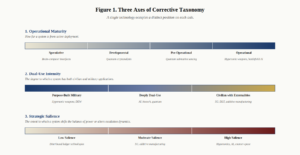
Figure 1. The three axes of corrective taxonomy
The first axis reorders the field around what is actually deployed, rather than what is merely announced or anticipated. Under operational maturity, technologies should be classified as operational (deployed and integrated into doctrine), pre-operational (tested and approaching deployment), developmental (in advanced research and development), or speculative (still at the concept stage). Hypersonic weapons in Russia, China, and increasingly the United States are operational, as are battlefield AI targeting systems. In contrast, quantum sensing for submarine detection is pre-operational, while quantum computing for cryptanalysis (the prospective use of large-scale quantum machines to break public-key encryption) is developmental. Brain-computer interfaces for command-and-control remain speculative. Conflating these four categories under a single label distorts threat assessment, doctrine development, and arms control policy.
Under dual-use intensity, technologies should be located on a separate spectrum. On one end sit purpose-built military systems, such as hypersonic glide vehicles and directed energy weapons. In the middle sit deep dual-use systems, including AI, biotechnology, and quantum information technologies. At the far end sit civilian infrastructures with security externalities, such as 5G, additive manufacturing, and distributed ledger technologies. This axis is decisive for governance, as arms control treaties suit purpose-built military systems, export controls and norms suit deeply dual-use systems, and supply-chain regulations suit civilian infrastructures. The full dual-use intensity spectrum is illustrated in Figure 2 below.
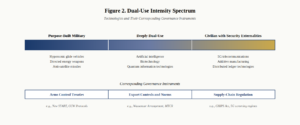
Figure 2. The dual-use intensity spectrum and corresponding governance instruments
Under strategic salience, the question is whether a technology meaningfully shifts strategic balance, alters crisis stability, or transforms the character of war. Some technologies in the “emerging” basket clear this bar decisively, while others do not. Distributed ledger technologies (DLTs), such as blockchain systems used to record transactions across a network of computers, may have important security implications for sanctions architecture (technical infrastructure for enforcing economic sanctions) and central bank digital currencies. However, their effect on deterrence stability (the condition where no side has incentives to strike first or escalate) is indirect at best. Placing distributed ledger technologies in the same analytical category as hypersonic delivery systems is indefensible.
This taxonomy does not require abandoning every term in current use. It does require that “emerging” be reserved for technologies that genuinely satisfy the five criteria proposed by Rotolo, Hicks, and Martin, and that the extension of the label be recognized as the conceptual error it is.
Operational maturity can be measured against open-source procurement records, doctrinal publications, observed combat use, and the existence of dedicated military commands. Dual-use intensity can be measured against the civilian share of underlying research and development funding, with the SIPRI Yearbook and International Institute for Strategic Studies providing useful baseline data. Strategic salience can be assessed against deterrence theory, escalation dynamics, and the distribution of capabilities across great powers, with reference to NATO’s Strategic Concept and the United States National Defense Strategy. Each axis lends itself to comparative case-study work and quantitative indicators that existing “emerging” frameworks actively obscure.
Conclusion
The vocabulary of strategic studies shapes what scholars notice, what policymakers fund, what publics fear, and which governance instruments appear viable. The persistent use of “emerging technologies” as a master category for consequential technological developments has flattened crucial distinctions, deferred urgent governance questions, and sustained a misleading narrative of Western technological leadership. A conceptual audit reveals that the term’s conceptual inadequacy and inability to discriminate between fielded systems and speculative concepts is matched by institutional convenience.
The discipline of strategic and security studies has tolerated this conceptual lag for too long. The technologies in question are not emerging, as hypersonic weapons, military artificial intelligence, cyber capabilities, and counter-space systems are all operational. The intellectual task is no longer anticipating the arrival of hypersonic, AI-enabled, cyber, and counter-space systems but theorizing their consequences for deterrence stability and integrating them into a refreshed deterrence framework. The vocabulary of a discipline is a measure of its self-understanding. By this measure, the discipline has work to do.