Securing Critical Undersea Infrastructure in the New Age of Geopolitical Competition

Editor’s Note:
This essay is from the Security & Defence PLuS Emerging Voices Series, which highlights the next generation of scholars and practitioners shaping thinking on strategy, security, and defense. The series brings together perspectives from PhD candidates and early career researchers, grounded in the complex geopolitical realities of the 21st century.
The collection explores a “Latticework of Resilience” that connects often-overlooked sectors, such as subnational diplomacy and critical infrastructure inherent in agriculture security, to the core of national security. Taken together, the essays emphasize the importance of adaptive, multidisciplinary approaches to building resilience in an increasingly complex global environment.
The first event in the Emerging Voices series was held at Arizona State University on 2 March 2026, with events to follow at King’s College London and UNSW. Watch the event recording: The Emerging Voices Series: Strategy, Security & Defence at Arizona State University.
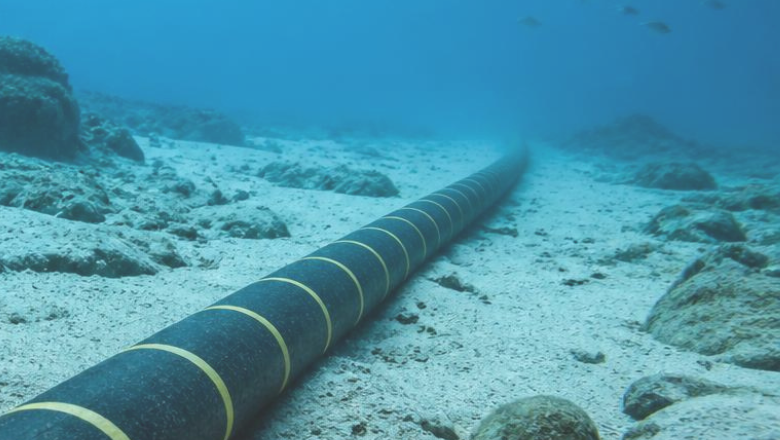
‘Connection is everything’, then Secretary of State for Defense John Healey noted in his speech this April, giving an operational update of Russian activity in the Atlantic. This connection in Britain is largely facilitated by Critical Undersea Infrastructure (CUI): the cables and pipelines on the seabed that enable the British people to heat their homes, engage in global communications and trade, and carry immense quantities of data every day. As an island nation, amidst the return of geopolitical competition, this underwater network is paramount to not only economic security and prosperity but also to its enabling Britain’s global strategic position.
Despite the importance of CUI, it remains vulnerable against emerging threats. Healey’s speech was delivered in response to a month-long operation by the GUGI (Russia’s Main Directorate for Deep-Sea Research) to map British infrastructure in the Atlantic. As this newly spotlighted undersea domain continues to be a primary area of contestation, Britain should reconsider its laissez faire approach to the defense of CUI. While new efforts are underway to safeguard the network, a more comprehensive and proactive strategy, one that integrates resilience, redundancy, and prevention, is essential to protect these critical assets and contain competition at a lower threshold.
The Seabed Landscape
Undersea cables shore up modern life, they carry over 97% of global telecommunications and facilitate around £1.15 trillion in financial transactions worldwide. Britain in particular relies on 60 of these subsea cables to deliver 99% of its data transmission. The critical nature of CUI extends beyond simple data exchange, this connectivity has become the keystone to not only the British economy but it underpins almost all the functions modern society relies on . In October of 2022 when both cables connecting Shetland were cut, residents were unable to or had restricted access to both communication and transport links. If a concentrated attack on CUI were to happen to Britain writ large not only would it cause a major economic incident, but a panicked population would be vulnerable to further attack. There would be long-term consequences too, particularly in undermining public trust and market confidence.
One of the more challenging aspects of defending CUI is that many innocent factors also contribute to the damage incidents. Accidental damage occurs most frequently due to normal maritime activity, such as careless anchor dropping and dragging. In fact, undersea cables often attract fishing trawlers due to the marine life which grows on them. The high density of traffic in the English Channel and North Sea makes it difficult to distinguish these innocent accidents from intentional mapping or damage.
Nevertheless, intentional mapping and damage does occur, as underlined by the 30% increase in Russian incursions into British waters from 2023. A striking example of this is in November 2025 when the Russian vessel ‘Yantar’ neared British waters as a part of a GUGI operation to map CUI. In a provocative and dangerous move, the crew shone lasers into the eyes of Royal Airforce Pilots after patrol planes were dispatched to monitor them. Explicit intent is rarely demonstrated clearly in this way. Instead, the plausible deniability afforded by actions such as anchor-dragging, often from non-military vessels, makes it easier for adversaries to continue without facing major consequences.
Incidents such as the ones involving the Yantar have ensured awareness of the vulnerabilities and importance of CUI is much improved. For example, until recently undersea infrastructure used to be under the remit of the Department of Culture, Media and Sport. Now that awareness has improved, the UK can focus on solutions. One of the most significant challenges is the scale and variety of stakeholders involved. For example, the 6,250km Grace Hopper cable system connecting New York to the Cornish town of Bude links America, Spain, and Britain. Funded initially and owned by Google, its administration is divided among various entities: one company serves as the landing partner for the UK and US, another manages the landing in Spain, and a separate firm operates as the supplier and turn-key provider. On top of this are the array of third-party industries that rely on CUI for their day-to-day activities.
There needs to be a concerted government-led effort to convene these stakeholders and begin comprehensive planning for the security of CUI, identifying primary vulnerabilities, allocating protective responsibilities, and establishing who should finance the operations. The Department of Science, Innovation and Technology (DSIT) announced in May of this year that they have established a regular program of joint exercises with the Irish government, to rehearse what would happen in a crisis, but there is still significant room for improvement.
Towards a New Approach
To adequately protect and strengthen these networks, a new approach is required, while existing tools and strategies are managing the current rate of rising incidents, they would be insufficient during a larger-scale attack. Enhancing global strategic messaging and boosting overall preparedness depends on coordinating a unified strategy focused on resilience, redundancy, and prevention.
Ensuring a resilient CUI network requires robust and rapid repair capabilities. At present, the average time a repair vessel takes to reach a damaged British sub-sea cable is eight days, which is considered a ‘world-leading’ standard. While the Ministry of Defense does not own any cable repair vessels directly, four such ships are registered to Britain, though they are owned by the Singapore-based Keppel Corporation. However, it would not be cost-effective for the Royal Navy to invest in a large fleet of, mostly redundant, cable repair ships. Instead, HM Government should investigate deconflicted retainer agreements alongside allies. Achieving this demands closer public-private cooperation, including examining contractual arrangements with commercial CUI operators to formulate and codify structured incident response protocols.
Developing multilateral frameworks for these retainer agreements will be key. Britain should actively engage with existing international initiatives designed to pool resources and expand collective repair capacity. For instance, the European Union (EU) Commission recently allocated €40 million to bolster European subsea cable repair capabilities, a project that features the creation of two regional hubs located in the Baltic and Mediterranean Seas. Britain should encourage the EU to partner this effort with the North Atlantic Treaty Organization (NATO) to bring both themselves and Norway into the effort, and tie visibly defense of CUI into wider allied deterrence efforts.
To prevent critical bottlenecks, further redundancy options must be investigated. While CUI networks currently feature some built-in redundancy to handle frequent accidental damage by rerouting traffic when a cable fails, this capacity would prove inadequate during a coordinated assault, especially if it targeted multiple cables simultaneously. Acknowledging this vulnerability, DSIT emphasized the importance of addressing it through their ‘resilience through growth’ initiative, asserting that cultivating a robust and expanding cable industry is vital for the development and preservation of infrastructure networks. This will undoubtedly incur additional costs, but if a moment of crisis does come the additional redundancy would be worth every penny.
Finally, successfully deterring future attacks depends on implementing effective preventative measures. The challenge of attribution will remain as long as surveillance gaps persist, and plausible deniability will convince perpetrators they can continue their activities.. Consequently, the first step is ensuring adversaries recognize they will be caught, which necessitates significantly enhanced domain awareness.
While Royal Navy assets like the Multi-Role Surveillance Ship, RFA Proteus, are essential, they are not sufficient on their own. As a result, the government should increase investment in advancing sensing technologies, including artificial intelligence-enabled protection. For example, as part of its Centre for Maritime Research and Experimentation (CMRE) program, NATO’s research vessel is starting to employ AI for early threat detection and preventative predictive analysis. AI can also analyze shipping routes and behaviors to flag suspicious, loitering vessels.
But simply catching adversaries is not enough, to prevent adversaries from operating without facing significant costs, it is essential to establish mechanisms for horizontal escalation. One vital step is updating and strengthening the legal framework; currently, the utilization and protection of subsea cables are governed by outdated frameworks, in particular the 1884 Cable Convention and the 1982 United Nations Convention on the Law of the Sea. A more robust legal structure must be developed and carefully deconflicted with international legal standards to facilitate the successful prosecution of third-party actors when necessary. For example, extending penal jurisdiction to Britain’s Exclusive Economic Zone could indicate a willingness to use the 2023 National Security Act, which criminalizes sabotage. Implementing economic sanctions represents another potential deterrent. Executing these strategies ultimately demands strong political determination and far greater risk tolerance alongside a cultivation of greater public awareness to effectively mobilize citizens and encourage political leaders to act.
To achieve the above steps, a unified and comprehensive approach is essential, requiring collaboration across government departments, international partners, and the armed forces. By effectively combining resilience, redundancy, and prevention, Britain can significantly improve its readiness for a CUI crisis while simultaneously fostering the long-term growth and development of the entire infrastructure network.
Conclusion
With all of this said, it is important to place the renewed emphasis on CUI within the broader landscape of intensifying maritime competition. Sub-threshold warfare directed at undersea networks does not occur in isolation, it reflects an expansive, cross-domain campaign of disruption and intimidation. Proposed measures to safeguard CUI and preempt underwater attacks must therefore align with broader investments in maritime security, supported by a firm foundation of hard power in the form of operational capabilities and equipment. Improved defense of CUI is meaningless if wider deterrence in the maritime domain fails, improving the naval balance of power to convince adversaries to avoid the temptation of escalation needs to be a higher national priority.
CUI plays a critical role in sustaining modern Britain and its way of life. Any major disruption to this network would impose substantial cost across national security, economic and societal spheres. Moving forward, a more unified framework is needed to leverage existing mechanisms for prevention, resilience and redundancy to minimize and manage the consequences of both accidental and deliberate damage. Without this, Britain’s maritime arteries remain dangerously exposed.