





Beyond the Peninsula: Forging a Multi-Domain United States-Republic of Korea Alliance for a New Era
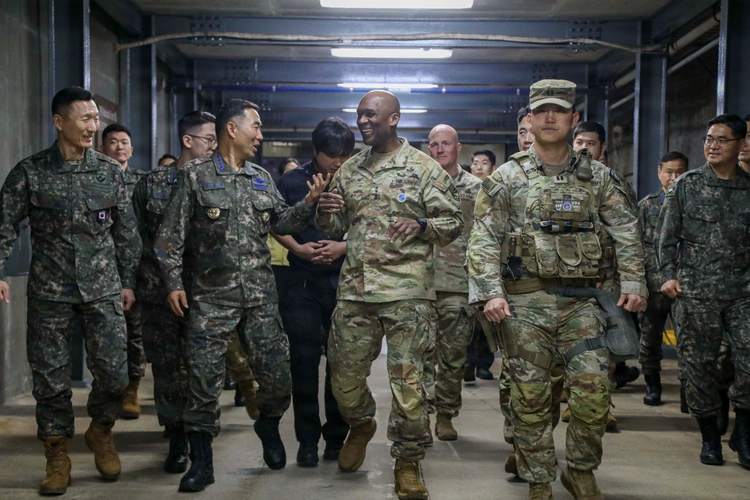

For more than seven decades, the United States–Republic of Korea (ROK) Alliance has served as the cornerstone of peace, security, and prosperity on the Korean Peninsula and across Northeast Asia. Forged in the burden of the Korean War and strengthened through generations of shared sacrifice, this friendship sealed in blood has successfully deterred aggression while preserving the stability necessary for the ROK’s remarkable economic and democratic development. Throughout this history, both nations have embraced the enduring motto We go together (or Katchi Kapshida in Korean).
Today, however, the question is no longer whether the alliance remains indispensable. It is whether its structure is keeping pace with the strategic environment it was built to defend. The alliance was designed primarily to deter a conventional military threat emanating from North Korea. While that mission remains essential, the security landscape has fundamentally changed. Adversaries increasingly coordinate across regions and domains, leveraging cyber operations, space capabilities, information warfare, economic coercion, and long-range precision strike alongside conventional military power. Preserving integrated deterrence in this environment requires more than maintaining existing capabilities—it demands modernizing the alliance itself.
The Networked Threat
The US and its allies no longer confront isolated regional challenges. Instead, they face an increasingly coordinated alignment among China, Russia, Iran, and North Korea (CRINK). Although each pursues its own national interests, these states have demonstrated a growing willingness to cooperate militarily, technologically, diplomatically, and economically in ways that complicate allied planning and stretch US resources across multiple theaters.
North Korea illustrates this evolution. Once viewed primarily as a localized threat confined to the Korean Peninsula, Pyongyang has emerged as a significant contributor to Moscow’s war in Kyiv. By supplying large quantities of artillery ammunition, ballistic missiles, and military personnel in exchange for advanced military technology and political support, North Korea has transformed itself into an active participant in a European conflict. indicate that this cooperation has accelerated its access to missiles, satellites, and aerospace technologies while strengthening its international position through closer alignment with Russia.
This increasingly interconnected security environment means that crises can no longer be viewed in isolation. Conflict in Europe affects integrated deterrence in Northeast Asia. Escalation on the Korean Peninsula influences the Pacific’s force posture. Tensions in the Taiwan Strait could have a direct impact on the logistics, air power, and maritime operations required to defend the ROK. For allied planners, geography no longer defines the battlefield. Strategic interdependence does.
The Multi-Domain Imperative
The alliance’s deterrence architecture must evolve accordingly. Structures designed primarily for large-scale ground combat remain indispensable, but they are no longer sufficient against adversaries capable of contesting every operational domain simultaneously. The next major step should be establishing a US-ROK Combined Multi-Domain Task Force (CMDTF).
Unlike nationally organized formations operating alongside one another, a CMDTF would be jointly organized, jointly commanded, and designed from its inception for integrated operations. Co-led by the US and the ROK commanders, the organization would synchronize operations across cyber, space, the electromagnetic spectrum, long-range precision fires, intelligence, electronic warfare, and information operations.
Rather than creating another headquarters, the CMDTF would serve as an operational integration hub capable of connecting sensors, decision-makers, and strike capabilities across both military bases. During competition, it would enhance persistent intelligence collection, cyber defense, and information sharing. During crises, it would accelerate decision-making while enabling coordinated responses before conflict escalates into conventional warfare.
Consider the opening hours of a regional contingency. Before conventional forces engage, the CMDTF could coordinate cyber operations to disrupt adversary command-and-control networks, employ electronic warfare to degrade communications, integrate space-based intelligence with both nations’ surveillance assets, and synchronize long-range precision fires to deny freedom of maneuver across critical maritime approaches. This is not a futuristic concept. It reflects the operational realities demonstrated in Ukraine, the Middle East, and recent Pacific military exercises, where success increasingly depends on integrating effects across every domain simultaneously.
Building such a force would require more than new equipment. It demands a deliberate effort to overcome classification barriers and data-sharing restrictions that historically stovepipe cyber, space, and electronic warfare capabilities. Establishing a secure, multi-level security digital architecture and modernizing bilateral no foreign release protocols will be critical to achieving a common operational picture.
Importantly, the CMDTF structure must be designed to withstand and support the eventual transition of wartime Operational Control to the ROK. By establishing a co-led, integrated hub now, the alliance ensures that multi-domain synchronization remains seamless regardless of which nation holds ultimate wartime command.
Broadening Regional Architecture
Modernizing the alliance also requires broadening its strategic aperture beyond the Korean Peninsula. The defense of the ROK cannot be separated from the broader security of the Pacific. In any major regional contingency—whether initiated by North Korea or arising from a crisis elsewhere in the First Island Chain—the logistics networks, airfields, ports, and sea lanes surrounding Japan would become indispensable to sustaining allied operations.
Recognizing this reality does not diminish the historical sensitivities between Seoul and Tokyo, nor does it ignore Seoul’s legitimate concerns regarding strategic entanglement in non-peninsular conflicts. Rather, it acknowledges that the ROK’s economic lifeline—its maritime supply chains and air lines of communication—is structurally dependent on the stability of the Taiwan Strait and the First Island Chain. Protecting these common spaces is a matter of direct mutual survival, not external distraction. Strategic necessity increasingly demands deeper trilateral cooperation among the US, the ROK, and Japan.
The path forward should be evolutionary rather than revolutionary. First, build upon the historic trilateral agreements achieved at Camp David by expanding the existing real-time North Korean missile warning data-sharing system to include broader maritime domain awareness and space-based surveillance. Second, institutionalize trilateral operational planning and regularly rehearse integrated responses through combined exercises. Third, establish common procedures for logistics, sustainment, and command-and-control during regional contingencies.
Over time, these initiatives could provide the foundation for a more integrated Northeast Asian security architecture capable of seamlessly connecting the defense of the Korean Peninsula with the broader defense of the First Island Chain. Such architecture would not replace existing alliance structures but would strengthen them by improving interoperability and regional responsiveness.
Overcoming the Policy Challenge
The greatest obstacle to this vision is not technological capability. It is institutional adaptation. Both governments already possess world-class military capabilities. What remains is aligning policies, authorities, and organizational structures to employ those capabilities at the speed required by modern conflict. This begins with expanding authorities for combining cyber and space planning, modernizing bilateral intelligence-sharing agreements, and developing secure digital networks that allow both militaries to operate from a common operational picture.
It also requires revisiting rules of engagement and decision-making authorities for gray-zone activities, cyber operations, and electromagnetic warfare. Future conflicts are unlikely to begin with conventional attacks. They will unfold through a series of ambiguous actions designed to exploit hesitation and bureaucratic delays. Commanders must therefore possess the authorities and institutional flexibility necessary to respond before adversaries gain operational advantage.
Meanwhile, CRINK continues to integrate lessons from ongoing conflicts. Moscow has adapted its battlefield tactics in Kyiv. Beijing continues expanding joint operational capabilities across every military service. Pyongyang is modernizing its missile forces while benefiting from increasingly sophisticated military cooperation with Moscow. Their collaboration demonstrates an appreciation for integrated warfare that the alliance cannot afford to underestimate.
The enduring strength of the US-ROK Alliance has always been its ability to evolve alongside changing strategic realities. From deterring conventional invasion during the Cold War to confronting nuclear coercion in the twenty-first century, the alliance has repeatedly demonstrated resilience through adaptation. The next phase of that evolution must move beyond a peninsula-centric framework toward a genuinely multi-domain regional alliance capable of deterring conflict across every theater where allied interests intersect.
The US and the ROK already possess the military capability, technological innovation, and shared democratic values necessary to meet this challenge. What remains is building an institutional architecture that can integrate those strengths into a single, agile, and resilient force. Our adversaries are adapting rapidly, integrating their campaigns across borders and domains. If the alliance is to preserve peace for the next 70 years, it must shed its twentieth-century geographic boundaries and forge a multi-domain architecture built for twenty-first-century speed. We go together—not just on the peninsula, but into the modern operational theater.
Disclaimer: The views expressed are those of the author and do not reflect the official position of the Department of the Army or the Department of War.


