Schools as Strategic Terrain

Abstract
Stabilization fails when it secures terrain but leaves civic institutions broken. Drawing on Kosovo, Sudan, Somalia, and Ukraine, this article argues that schools are critical infrastructure in the fight for legitimacy and that protecting classrooms, reopening instruction, preventing curricular capture, and coordinating civil-military roles are core stabilization functions.
Introduction
A cleared village is not a stabilized village if local schools remain closed, captured, or feared. In the aftermath of conventional military operations or counterinsurgency campaigns, stabilizing forces often mistake visible signs of tactical control, such as cleared terrain, checkpoints, and cease-fires, for durable security. Yet kinetic dominance is temporary when civil institutions remain broken. The real test of post-conflict stabilization is not only whether hostile forces have been pushed back, but whether legitimate institutions can reoccupy the civic space once controlled by hostile forces.
When a state collapses or a region is torn by civil strife, a vacuum emerges. Insurgent organizations, violent non-state actors, and criminal syndicates are acutely aware of this vacuum. These actors do not merely compete through violence; they compete through governance. To defeat these actors over the long term, the stabilizing coalition must offer a superior, more reliable administrative framework.
In post-conflict environments, schools are central to competitive governance. Too often, military planners treat education as a secondary development concern rather than a primary stabilization line of effort. This is a doctrinal mistake. Secure, locally legitimate schools help restore state credibility, reduce vulnerability to insurgent recruitment, and build the institutional resilience required for durable stabilization. Education alone does not stabilize conflict zones; it supports the conditions required for lasting stability.
The Security-Education Nexus
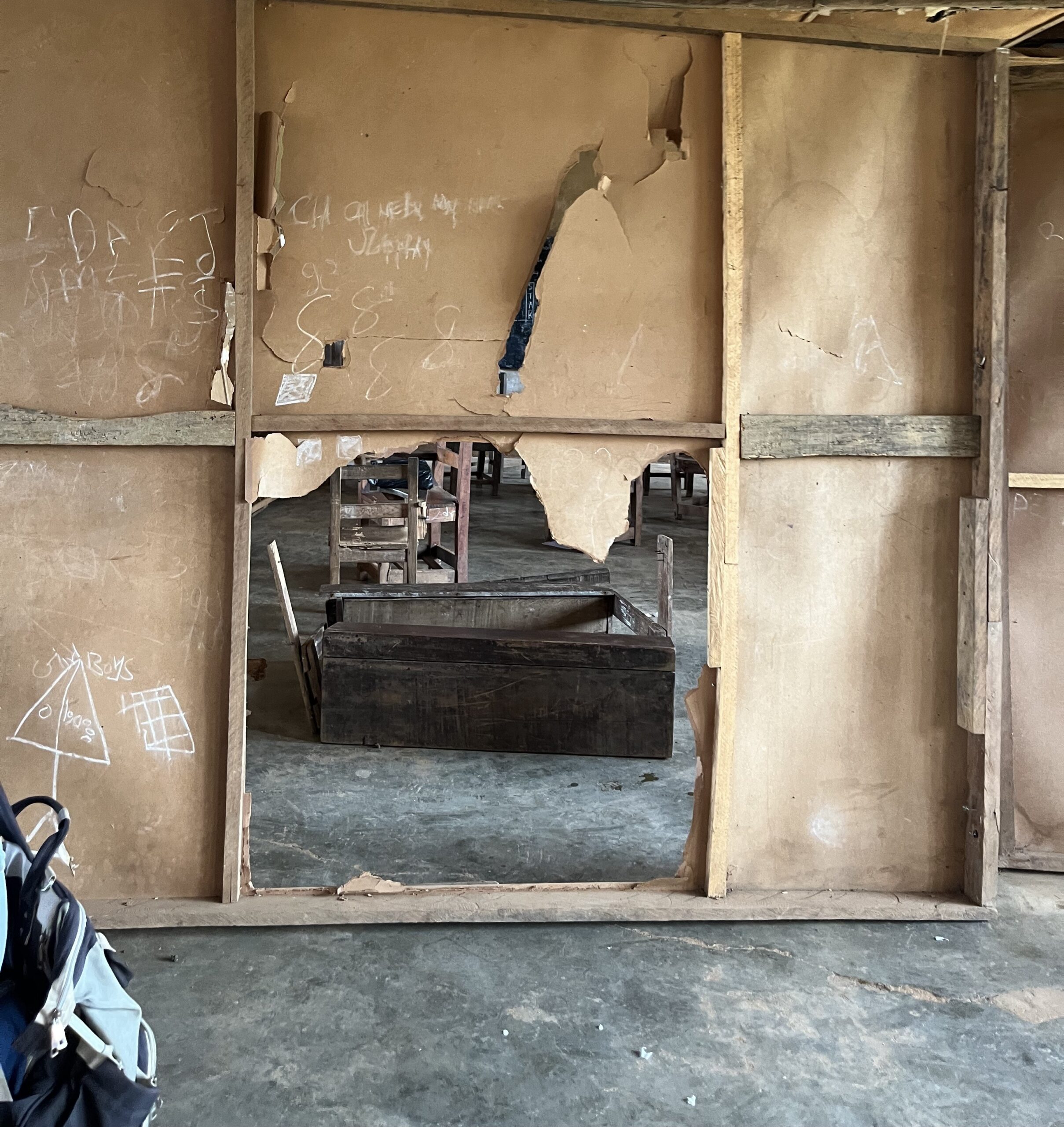
To understand why education is vital to security, military planners must analyze the mechanisms through which violent non-state actors exploit the absence or subversion of legitimate education. In a collapsed state, schools are rarely neutral bystanders. Schools can be targeted for destruction, captured for ideological instruction, or repurposed as tactical strongpoints.
When the state fails to provide functional, safe educational facilities, it signals an inability to guarantee the most basic elements of human security and societal continuity. The failure to provide safe, functioning schools creates a profound crisis of legitimacy, which insurgents exploit through a calculated, sequential pipeline of systemic exploitation.
This cyclical process begins with state governance collapse, which immediately creates an educational infrastructure void. Once civil authority recedes, communities are left without safe, functioning schools. This structural vacuum breeds severe societal vulnerabilities, including widespread youth idleness, pervasive economic despair, and a profound loss of social status among younger generations who see no viable future.
Insurgent factions can step directly into this void by deploying a subversive governance alternative. These factions may open parallel academic networks and use highly subsidized or free schooling options to alleviate localized economic burdens. However, these insurgent-run educational spaces can be weaponized to deliver radical curricula and targeted financial incentives.
A likely output of this pipeline is increased susceptibility to insurgent recruitment. By addressing basic material and psychological needs where the state has failed, the insurgent apparatus can secure local legitimacy, transform vulnerable youth into active combatants, and prolong conflict across generations.
When stabilizing forces prioritize the rapid rehabilitation of educational infrastructure, they can interrupt this pipeline. Operationalizing the security-education nexus means treating the schoolhouse as one layer of defense against radicalization.
- Weaponized Curricula: In the absence of state-monitored schooling, insurgent networks may establish alternative educational ecosystems. These parallel structures can utilize exclusionary curricula that foster sectarian identity, dehumanize ethnic or political rivals, and normalize political violence.
- Recruitment Exploitation: A youth population denied access to structured, safe educational environments faces a vacuum of purpose, routine, and economic viability. Insurgent groups exploit this idleness, offering a sense of identity, belonging, and a predictable livelihood.
- Administrative Legitimacy: By stepping into the infrastructural void and providing basic schooling, even when that instruction is highly ideological, violent non-state actors position themselves as the de facto legitimate government and alienate the population from the recognized state.
A functioning school restores a community’s daily routine and signals the return of predictability and civic order, both of which can undermine insurgent objectives. It serves as a visible, daily manifestation of state utility and competence, undercutting the narrative of state neglect that feeds asymmetric insurgent campaigns.
Educational Infrastructure and the Contest for Governance
The strategic utility of educational infrastructure becomes clearest in historical stabilization and reconstruction environments. Across cases, schools have functioned not merely as humanitarian assets but as instruments through which states, insurgents, and local communities contest legitimacy, identity, and political authority.
The Western Balkans: Education as a Parallel State Instrument
The late twentieth-century conflict in Kosovo highlights how educational infrastructure can become the primary vehicle for political mobilization and parallel governance long before kinetic warfare erupts. After the Milosevic regime revoked Kosovo’s autonomous status, the institutional segregation of the school system served as a catalyst for systemic polarization. Serbo-Croatian was imposed as the sole language of instruction, leading to the collapse of official Albanian-medium classes.
When Albanian-language students and faculty were excluded from official public facilities, Kosovo Albanian communities did not capitulate. Instead, these communities built an extraordinary parallel education system operating out of private homes, garages, and storefronts. Funded by an underground taxation system and diaspora remittances, this parallel education network sustained a vast population of students and teachers.
Kosovo’s parallel education system was not merely a symbolic act of defiance. It was a resilient structure of competitive state-building that preserved national identity and group solidarity under conditions of systematic exclusion. When international stabilization forces entered the theater, rehabilitating the educational framework was a critical security imperative to prevent a relapse into instability and to absorb these highly mobilized parallel governance structures into transparent public institutions.
The enduring return on these institutional investments is best understood as part of a broader stabilization logic rather than as a direct education-to-security causal chain. NATO’s gradual adjustment of its long-standing KFOR mission reflects improved security conditions and the growing capacity of domestic institutions to sustain civic order. This adjusted peacekeeping posture demonstrates that the ultimate metric of stabilization success is not permanent intervention, but the deliberate cultivation of domestic civil capacity that eventually allows international security envelopes to recede safely.
Sudan and the Horn of Africa: Infrastructure Voids and Radicalization
Across Sudan and parts of the wider Horn of Africa, damaged or absent education systems have repeatedly deepened instability by weakening state legitimacy, displacing students and educators, and creating openings for armed groups. In Sudan, decades of civil conflict and the current war have severely disrupted the education sector, turning universities and schools into targets, shelters, or contested civic spaces while displacing students, faculty, and staff.
Attacks on education destroy more than bricks and mortar. They can shatter parental trust, weaken community investment in the state, and reduce the government’s ability to provide visible public goods. When a state cannot reopen schools, protect teachers, or maintain salaries, violent extremist organizations can present themselves as alternative providers of order, livelihood, and identity.
Somalia illustrates this regional pattern. In areas affected by al-Shabaab violence and weak state control, schools have been attacked, disrupted by displacement, or used for military purposes. GCPEA reported at least 80 attacks on schools, students, and education personnel, as well as incidents of military use of schools, during the 2022-2023 reporting period. Limited schooling and employment opportunities increase youth vulnerability, while al-Shabaab has continued to recruit and abduct children in contested areas.
The strategic takeaway is clear: kinetic operations that eliminate hostile actors without a parallel effort to restore secure schooling, protect educators, and preserve educational continuity leave the human terrain vulnerable to renewed insurgent recruitment.
Ukraine: Underground Schools and National Resilience
Ukraine offers a contemporary illustration of educational infrastructure as a component of national resilience. Under sustained aerial bombardment and attacks on civil infrastructure, the Ukrainian state and local municipalities have treated schooling as part of the broader struggle to preserve governance continuity and social cohesion.
In frontline cities such as Kharkiv and Zaporizhzhia, conventional school facilities became increasingly vulnerable. Ukraine’s response has included hardened underground and metro-based learning spaces designed to sustain in-person instruction under bombardment. These facilities are not merely emergency shelters; they are structured educational environments intended to preserve access to standardized state curricula during wartime.
Ukraine’s underground schooling model serves two critical strategic purposes:
- Denying the Kinetic Mirage: Underground schooling counters a coercive effect of sustained attacks: the depopulation of frontline zones, civic disruption, and long-term brain drain. By providing physical safety alongside educational continuity, the state anchors families to their communities and preserves the local demographic and socioeconomic fabric necessary for long-term stabilization.
- Countering Curricular Capture: In occupied territories, forced curricular assimilation is deployed as a weapon of state-building. By maintaining secure access to Ukrainian education, both underground and through digital extensions, the state preserves its administrative legitimacy and civic bond with its youngest citizens, reducing the ideological vacuum that feeds long-term instability.
Ukraine’s underground schoolhouses demonstrate that even in a high-intensity conventional theater, the preservation of the classroom is not a secondary humanitarian concern to be deferred until a post-conflict phase. It is an active, ongoing component of national resilience and institutional continuity.
A stabilization force seeking to secure the classroom should pursue six linked tasks: protect educational facilities, reopen instruction quickly, preserve humanitarian neutrality, prevent curricular capture, audit reconstruction funding, and transition oversight to legitimate local authorities. These tasks translate the security-education nexus from theory into a practical operating framework for commanders, civil affairs teams, host-nation ministries, and development partners.
This framework aligns with United States (US) stabilization and civil affairs doctrine, which treats stabilization as an integrated civilian-military effort to create conditions where locally legitimate authorities and systems can manage conflict and prevent a resurgence of violence. Joint stabilization doctrine also emphasizes the military contribution to broader stabilization efforts, while civil affairs doctrine highlights the need to understand, engage, and integrate the civil component of the operational environment.
Operationalizing Civil-Military Collaboration
Rebuilding educational infrastructure in an active or recent conflict zone is an operational challenge that falls squarely between the capabilities of military stabilization forces and international non-governmental organizations. Effective civil-military coordination is difficult because military stabilization forces and NGOs may operate with mutual suspicion, differing timelines, and divergent operational philosophies. However, because the schoolhouse sits directly at the intersection of security and development, successful reconstruction requires an integrated, cross-functional approach. Implementing this integrated approach requires specific operational practices.
Joint Space-Deconfliction and Security Vectors
Military forces are best positioned to create a security envelope that enables school reconstruction without militarizing the school itself. This means maintaining outer-perimeter security, route clearance, threat-intelligence monitoring, and secure logistics corridors while leaving construction and internal administration to civilian contractors and local communities. Where feasible, locally procured materials and labor can improve transparency, community ownership, and local economic stakes in the project.
Recent operational analyses of complex stabilization environments show that the integrity of frontline delivery systems depends on treating human security and humanitarian infrastructure as active defensive lines. In these environments, logistics can determine the sustainability of the wider conflict theater. Injecting stabilization capital directly into the local economy through school construction can also create local economic stakes that make communities more invested in protecting the facility from vandalism or attack.
Depoliticization and Curricular Standardization
A recurring failure in post-conflict education reconstruction is the rush to rebuild physical structures while ignoring toxic curricular material taught within their walls. Effective implementation requires collaboration among international development organizations, host-nation ministries, and local educators to rapidly implement a standardized, depoliticized curriculum that emphasizes civic cohesion, fundamental literacy, and technical skills. Concurrently, vetting mechanisms are needed to ensure that instructional staff are not using state-funded classrooms to propagate sectarian, insurgent, or factional ideologies.
Operational Roadblocks: The Paradox of Militarized Neutrality
Even well-coordinated education reconstruction can become an operational liability if key roadblocks go unaddressed. The most immediate is the paradox of militarized neutrality: the tension between humanitarian neutrality and stabilization objectives. NGOs and local educators may resist association with military forces because such ties can undermine perceived neutrality and invite retaliation. Stabilization doctrine is better served by preserving civilian independence while enabling limited threat-information sharing through neutral intermediaries.
Graft, Elite Capture, and Aid Diversion
Post-conflict reconstruction environments can involve loosely monitored funding, making these environments vulnerable to systemic corruption. Local elites, compromised host-nation officials, or front companies linked to armed networks may attempt to capture school construction contracts or skim salaries intended for educators. If a stabilizing force fails to audit these resource streams, infrastructure funding can inadvertently subsidize the networks the stabilizing force is trying to dismantle. Mitigating this risk requires transparent supply chains, verified teacher payrolls, and independent construction oversight before funds are released.
The Risk of Post-Reconstruction Capture
Physical reconstruction is not institutional security. Insurgent groups may allow internationally funded schools to open, then later intimidate students and teachers or divert school operating funds once outside forces withdraw. Preventing institutional capture requires a transition from static point defense to mobile, community-entrenched security networks. Community-based reporting mechanisms, including parental councils where appropriate, can help connect schools to rapid-response host-nation security channels if intimidation occurs.
The Classroom as a Measure of Victory
Post-conflict reconstruction cannot wait for security to be permanently established. Security will not endure in an institutional vacuum; when schools remain closed, ruined, or vulnerable to capture, conditions for renewed insurgency persist.
Stabilization metrics should therefore move beyond enemy casualties, seized weapons, checkpoints, and patrol frequency. A stronger framework measures resilience through secure schools, sustained enrollment, civic curricula, and community ownership. For irregular warfare and stabilization, the classroom is a civic space where legitimacy is won or lost. Restoring secure, locally legitimate schools helps contest insurgent governance, preserve the human terrain, and build the foundations of enduring peace.