





Resistance is (Not) Futile: Winning the War for the Narrative Against China about Taiwan
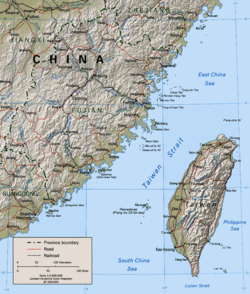

The People’s Republic of China (PRC) is hell-bent on annexing Taiwan and asserting control over the sovereign territory of its neighbors throughout the First Island Chain. To do this, China is engaged in one of the most massive and aggressive narrative warfare campaigns the world has seen in decades.
This campaign is a powerful one. It is built on a series of lies that China repeats tirelessly in a bid to ingrain them in the minds of key audiences. More insidiously, this campaign is reinforced by a stunning military buildup matched by relentless aggression and coercion targeting China’s regional neighbors, most notably Taiwan, Japan, and the Philippines.
The goal of this information war is to annex Taiwan and other territory at the lowest cost possible by convincing Taiwan and the world that Taiwan is part of China, that resistance is futile, that third party intervention will fail, and that staying out of China’s seizure of Taiwan will be the surest guarantor of the rest of the world’s prosperity.
The constantly growing military threat presented by China is gravely dangerous and cannot be ignored. But the story China is trying so hard to tell—that resisting its territorial expansion is futile—is a hollow lie that can and should be broken by the audiences China aims to influence, coerce, and control. By countering these lies and exposing the glaring vulnerabilities to any attempt at the military annexation of Taiwan and the territory of other states in the region, China can be deterred from crossing a threshold that would lead to a foolish, disastrous, and avoidable war.
The Chinese narrative is built on a formula of several interconnected messages, each of which is a deliberate falsehood—they are lies propagated by the Chinese Communist Party (CCP) for the express purpose of influencing target audiences so China can achieve territorial expansion at the lowest possible cost. The core messages, and why they are propagated follow:
Lie #1: Taiwan has always been a part of the People’s Republic of China.
The CCP presses this claim tirelessly, and it is core to the similarly hollow substance of its One China Principle. This falsehood is easily disproved by a glance at the historical record. While parts of Taiwan have been occupied by a host of other powers throughout its long history, including the Netherlands, Spain, the Qing dynasty, and Japan, the PRC has never once exerted any control over Taiwan. This is a fantasy repeated by the CCP following the end of the Chinese Civil War in 1949, one intended to finalize their defeat of the Chinese Nationalists, or Kuo Ming Tang (KMT). The KMT took control of Taiwan from Japan following the end of WWII in 1945. The PRC was not established until 1949. Pursued by CCP forces following its military defeat, the KMT then retreated to Taiwan at the end of that same year.
Despite CCP Chairman and PRC President Mao Zedong having previously acknowledged and called for the independence of Taiwan from Japan during WWII, such sentiments were discarded and replaced with CCP propaganda tailored to convince the world that Taiwan—and its KMT rulers, who were mostly ethnically Han Chinese—was part of the PRC. Yet China never ruled Taiwan, whose people peacefully struggled against and defeated KMT authoritarianism. Today, Taiwan is a vibrant democracy that gives voice and representation to 23 million people, including ethnically Hoklo, Hakka, Waishengren, and indigenous Austronesian tribes, among other groups. Regardless, China repeats the mantra of its ownership over Taiwan to give substance to the idea that its hopes for annexing Taiwan is a return to a temporarily disrupted natural state. China wants the world to believe that the sanitized goal of the ‘unification’ of China and Taiwan is a restoration of harmony, the healing between two broken pieces of a single family—and that anyone who opposes this goal is similarly an agent of chaos opposed to peace and order. In this way, by using the logic of narcissists and abusers, they turn their own aggression into the pursuit of peace, while those who wish to preserve the status quo are recast as malicious actors.
Lie #2: China’s strength is irresistible and Taiwan is too weak to challenge it.
This message communicates that China’s national strength is so overwhelming compared to that of Taiwan that when China seeks to annex Taiwan, nothing and no one can stop it. ‘Unification’ is thus inevitable. Put another way, that China is in total control of the status quo, and that annexation is not a matter of if, but a matter of when, China decides to strike. Indeed, China has pursued one of the most aggressive and exponentially expansive growths in military power known to modern memory. When comparing the numbers of China’s military platforms and total military power to Taiwan’s, China does indeed have incredible numerical superiority. And because Taiwan is so close to Taiwan, it appears that China can easily isolate Taiwan from the world and swallow it up.
The aim of this message is to convince key Taiwan political actors, the Taiwanese people, and their allies that resisting Chinese aggression is a fool’s errand. Attempting to fight will only increase the destruction visited upon Taiwan during an invasion by China. China’s goal here is twofold. First, during an invasion, to rapidly break the will of the Taiwanese people and key political and military leaders so that it can obtain Taiwan’s surrender at minimal cost. But prior to conflict, to convince Taiwan’s people not to ‘waste’ investment in defenses and military expenditures that will be of no use—which would, in the long term, make it easier for China to win should it decide to invade.
But this lie, too, is easily contestable. The geography in play and the inherent difficulties of an amphibious assault makes any invasion of Taiwan an incredibly difficult task, no matter how much power an attacker might possess. During WWII, the Allies abandoned their plans for assaulting the Imperial Japanese forces on Taiwan in part because of this same reason, despite the fact that they’d have possessed almost complete command of the air above and the sea around Taiwan. In none of the Taiwan Strait crises, even those in which Taiwanese and Chinese forces directly fought one another, did China ever attempt a cross-Strait attack onto the main island of Taiwan for similar reasons.
And today, the developments in persistent reconnaissance, drone technology, and long-range precision strike would doom any large-scale amphibious assault. Recent conflicts have shown that the weaker defender, even one that has been pummeled relentlessly by a numerically stronger foe, can still maintain enough striking power to contest key maritime areas and choke points. The Houthis demonstrated the ability to do this in the Red Sea, the Ukrainians did this in the Black Sea, and Iran continues to do this today in the Strait of Hormuz. Taiwan, too, will be able to hold the Taiwan Strait at risk for any Chinese forces, regardless of the disparity in total strength compared to China. Taiwan’s growing investment in these asymmetric capabilities reinforces this porcupine defense, even amidst domestic political discord regarding its defense spending. And Taiwan’s focus on whole-of-society resilience is comprehensively raising awareness within Taiwan of the threat posed by Beijing and the agency that Taiwan’s people have to defend against it.
Lie #3: Anyone who attempts to intervene against China’s invasion of Taiwan will be crushed.
This claim is intended to prevent third party intervention and potential lifelines of external support to Taiwan during a Chinese invasion.
It is a lie based on the realities of enduring military challenges. Indeed, projecting power across sea lines of communication is a daunting task. For the United States, deploying forces and materiel from the continental US across the Pacific to Taiwan would be a struggle. China could commit some of its naval forces to interdict such efforts by the United States in the Pacific before they reach the First Island Chain.
By anchoring on and amplifying these difficulties, China hopes to convince policy makers and electorates in the countries that might intervene—most notably Japan, the Philippines, and the United States—that the power they could commit to the fight will be but a hollow force that will be immediately destroyed. This message further aims to disincentivize policy choices and strategic investment in peace time that would provide meaningful military advantage against China in such a war. It is a line further amplified by the restraint-leaning think tanks funded by organizations with significant business interests in China, by academics seeking to maintain their access to Chinese scholars and resources, and otherwise echoed by the CCP’s United Front activities. Each of these voices serves to discourage national preparation for a fight with China, which serves to make this message a self-fulfilling prophecy.
This message closes by implying that in the aftermath of China consolidating its power on Taiwan, those nations that dared to interfere militarily in China’s ‘internal affairs’ will be forever disadvantaged in the new world order that China will build when it capitalizes on its new, unfettered ability to exert a decisive vote on global maritime trade.
But while the challenges for the United States to project and sustain combat power across the Pacific are real, this assessment discounts the incredible advantage of those other allies already closest to the fight. Japan and the Philippines effectively form the shoulders of a Taiwan focused operational area and can interdict Chinese aggression in myriad ways from their territory. Both are mutual defense treaty allies of the United States, and both offer access, basing, and overflight in different degrees to the United States. In a conflict, the forces, bases, stations, and enhanced defense cooperation agreement sites already present will make the reception of incoming forces and materiel a simpler matter.
This propaganda further dodges the incredible difficulties China would face in such an operation, inherently suggested by the fact that China has not attempted an amphibious assault on any Taiwanese territory since 1955, and has never attempted such an assault on the island of Taiwan itself. China would have to project incredible combat power across the Taiwan Strait to win, a feat more significant than the WWII Allied invasion of Normandy and without the air and maritime dominance the Allies enjoyed during that operation. This would further require China to conduct multiple types of operations that have never succeeded or been executed in combat.
Any Chinese attempt to interdict power projection across the Pacific put them in their weakest military position vis-à-vis US naval power. Indeed, Chinese naval forces may have key advantages within and around the Taiwan Strait, but they face incredible disparity in survivability and capability against US naval forces in the open ocean.
Third party intervention in a Taiwan conflict would be highly viable, and a coalition that would geographically pull mutual defense treaty allies of the United States into the conflict, including Japan and the Philippines, would greatly tip the scales in Taiwan’s favor.
Lie #4: If you appease China by staying out of its annexation of Taiwan, peace will be maintained.
This lie asserts that third party intervention is a threat to peace. It dresses up China’s annexation as an internal matter, much like a police action, and that outside intervention is inherently escalatory and risks spiraling the world into chaos and war. If other parties merely keep to themselves, the harmonious balance can be quickly restored with minimal global disruption, and the rest of the world can quickly carry on in peace—if they just stay out of China’s military seizure of Taiwan.
This lie is a tantalizing one. Nations that choose to intervene will necessarily be assuming incredible risk. In a shooting war with China, all parties will inevitably lose an enormous amount of lives in the fighting and will have to expend an incredible amount of national power. China could use its growing nuclear arsenal for coercion and punishment against intervening states, a nightmarish scenario full of uncertainty. Simply looking the other way as China pursues its aggressive expansionism is tempting, especially if third parties believe that life will carry on as normal if they just don’t get involved.
But this assertion is mere fantasy. The very nature of this operation, given the scope of the maritime space involved, would require China to assert control over maritime spaces under the sovereignty of both Japan and the Philippines. An invasion of Taiwan would be so hostile and disruptive to Japanese and Philippine activities that China would almost certainly have to use violence against them to isolate and assert total control over Taiwan. This is why, as Japanese Prime Minister Sanae Takaichi recently pointed out that a Taiwan contingency would be considered a survival threatening situation to Japan, as currently defined under Japanese law, and enable legal authorities for intervention .
More than that, as with any form of appeasement to expansionists, one bite of the apple is never enough. China has already revealed its intentions in this way through its continuously aggressive and false claims of historical sovereignty over the Batanes islands and the Ryukus.
If China takes Taiwan today, tomorrow they will seek parts of the Philippines and Japan, and perhaps all territory that fall under its ever-expanding claims across East and Southeast Asia. Appeasement almost never works, and when the aggressor has already demonstrated an insatiable appetite for expansion, it will fail.
The free world can win this information campaign against China.
Each of these lies, turned on their head, offer objectives for the narrative war that must be fought as a coalition by Taiwan, Japan, the Philippines, the United States, and other parties invested in a free and open Pacific. Each lie must not only be disputed, but the truth these lies aim to hide must be amplified consistently by and to key audiences, inclusive of policy makers, security planners, think tanks, academia, and the media in each country. This includes:
Uphold the truth of Taiwan’s sovereignty and self-determination, clearly distinguishing it from any false claim of prior or current rule by the PRC.
Demonstrate the incredible likelihood that a cross-Strait attack by China against Taiwan would fail due to the many historical and current principles of military operational art, and reinforce the enormous advantage a defender enjoys against an amphibious invasion in the age of the precision-strike regime.
Reinforce the many advantages that third parties would have if they intervened in support of Taiwan’s defense and highlight the enormous weakness China would have trying to contest force flow across the deep blue of the vast Pacific Ocean.
Amplify the fact that appeasement is a failing strategy, that peace won’t be maintained by avoiding intervention, and highlight China’s consistent behavior indicating an insatiable expansionism.
By countering these four lies that comprise China’s narrative warfare campaign and amplifying the facts regarding Taiwan’s sovereignty and survivability, the free world can discourage China from attempting an invasion of its democratic neighbor.
The views in this article are those of the author and not those of U.S. Marine Corps, the Department of Defense, or any part of the U.S. government.


