





Human Judgment at Machine Speed

The new bipartisan House bill on autonomous weapons asks the right question. The answer cannot be reduced to who clicks last.
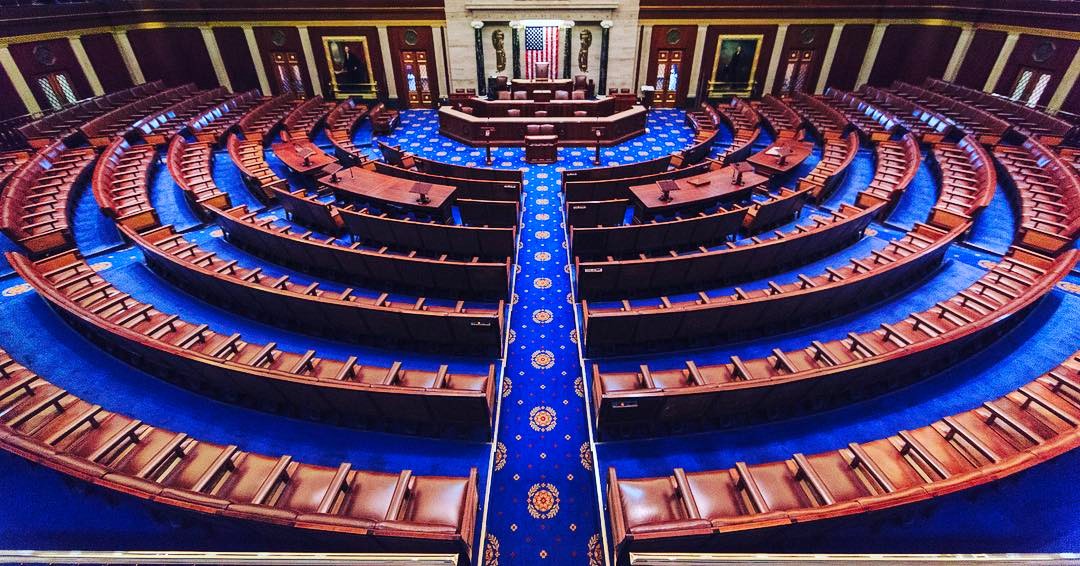
On July 17, Reps. Don Beyer, Tom Barrett and Sara Jacobs introduced H.R. 9729, the bipartisan Human Authority Over Autonomous Weapons Act. The bill would require any use of force involving autonomous or artificial intelligence-enabled systems to remain subject to human command responsibility. It directs the Pentagon to identify the human commanders or operators responsible for authorizing, supervising and terminating such force; ensure “human oversight, approval, or a human-in-the-loop” for intentionally lethal uses; and, for five years after enactment, require target verification against a secondary source not generated exclusively by AI.
The intent is noble. No responsible nation should casually surrender decisions involving human life to machines. But noble intent and battlefield reality do not always produce the same result. Legislation meant to preserve human judgment could, if translated into a rigid requirement for real-time approval, increase civilian deaths, cost American lives and weaken deterrence.
That is not, however, precisely what the bill says. Its key words – oversight, approval, or a human in the loop – leave room for judgment at different points in the chain of command. The real question is not whether humans remain responsible. They must. It is where and when human judgment must occur to be meaningful.
Ever since The Terminator, autonomous weapons have had a public-relations problem: red eyes, metal bones and software deciding who gets to live. The image is cartoonish, but the fear behind it is not. No decent society should feel comfortable handing unconstrained power over life and death to a machine.
Congress is not alone in expressing that concern. At the Air Force Academy in May, Vice President JD Vance told graduating cadets that “decisions over life and death must be made by humans and not machines.” He urged them to use technology without submitting to it.
As a moral instinct, Vance is right. War should never become so technical, distant and frictionless that those who wage it stop feeling the gravity of killing. Human beings authorize force, define missions, interpret the law and answer for the consequences. A machine cannot carry guilt, testify before Congress, resign in protest or stand before history.
But responsibility and physical execution are not identical.
Imagine that a commander authorizes an autonomous system to operate for one hour in a defined battlespace against enemy armored vehicles. The commander establishes geographic boundaries, rules of engagement, target characteristics, confidence thresholds and abort procedures. Every action is recorded and re-constructable.
Human judgment has shaped the mission: where, when, against whom, under what law and within what limits. Is that meaningful human judgment, or must it be repeated by another person clicking “approve” in the final second?
Sometimes final approval will be essential. At other times, the person in the loop may be staring at a sensor feed after 18 hours awake, under fire and with seconds to respond. The system may already have detected, tracked and classified the target. The operator is asked to confirm its work without enough time for an independent review. The click may reassure the public. It may also become a ritual.
We should be candid about the person at the center of this debate. An operator may be tired, afraid, angry, distracted or looking through smoke, glare, static or a damaged feed. None of that makes the operator dishonorable. It makes the operator human.
Retired Gen. John “Mike” Murray, the former commander of Army Futures Command, recalled that a young armored soldier who correctly identified friend and foe on 80 percent of vehicle flash cards could be deemed battle-ready as a tank gunner. Murray contrasted that standard with experimental algorithms reaching about 98.8 percent accuracy on recognition tasks.
The comparison poses an uncomfortable question. If a person identifies the correct target four times out of five while a machine can do so 99 times out of 100, what are we protecting by treating human action itself as the safety standard?
Society has confronted a similar psychological barrier with autonomous cars. Not long ago, a vehicle navigating a crowded city without a human driver sounded reckless. Today, fully driverless ride-hailing services operate commercially in a growing number of American cities. More important, evidence is beginning to show that robocars can outperform human drivers in safety. A peer-reviewed analysis of 56.7 million rider-only Waymo miles found statistically lower rates of injury-reported, airbag-deployment and suspected serious-injury crashes than matched human benchmarks.
War is not transportation, and a car makes no moral decision. The narrower lesson is that we eventually judge technology by how it performs under defined conditions, not by whether it imitates the human process it replaces. A hand on the steering wheel is not automatically safer. A finger on a trigger is not automatically wiser.
Machines bring dangers of their own. They do not understand mercy or dignity. They can fail opaquely and at scale. During the 2003 invasion of Iraq, Patriot batteries fired on coalition aircraft in two incidents, killing three crew members. A Defense Science Board review described a complex chain of failures involving combat identification, weak situational awareness, operating protocols, displays, software and operator trust.
That history demands rigorous testing, redundant information, understandable systems and accountable commanders. It does not prove that the final physical act must always be human.
The law of armed conflict focuses on distinction, proportionality, military necessity and precautions in attack. It asks whether targets are lawful, civilians are protected and unnecessary suffering is reduced. It does not treat the trigger pull as sacred. It treats human life as sacred.
The bill itself recognizes that context matters. It exempts U.S. missile-defense systems and other defensive systems designed to intercept, deflect or engage incoming weapons. That exception acknowledges an operational reality: some threats move too quickly for a person to approve every engagement. Once that principle is accepted, the debate becomes contextual: Which missions require real-time approval, and which can be conducted lawfully through autonomy bounded in advance by human command?
The enemy also gets a vote. The Pentagon’s Replicator initiative was designed to field thousands of autonomous systems across multiple warfighting domains. Future battlefields may contain swarms of inexpensive, networked weapons operating faster than traditional command chains can respond. Adversaries may not accept limits the United States adopts. Restraint that reduces harm is a moral achievement. Restraint that merely makes American forces slower and more vulnerable may produce the opposite result.
International limits will matter only if they are paired with verification, deterrence and consequences for cheating. Unilateral restraint is not arms control.
Congress is not writing on a blank slate. Pentagon policy already requires autonomous and semi-autonomous weapon systems to be designed so commanders and operators can exercise “appropriate levels of human judgment over the use of force.” The new bill expressly says its procedures would supplement, not replace, that directive.
Congress should therefore define human command responsibility across the full chain of decisions, not reduce it to who clicks last. Human commanders should authorize the mission and target class; establish geographic, temporal and operational limits; set confidence and abort thresholds; retain the ability to supervise and terminate operations; preserve an audit trail; and remain legally accountable.
The standard should vary with risk. A system defending a ship from incoming missiles is not morally identical to a drone searching for individuals in a city. Systems operating in populated areas or selecting human targets should face the strongest requirements for direct human review. Systems attacking clearly defined military equipment in a bounded battlespace may warrant greater autonomy.
Autonomous nuclear-launch authority should remain absolutely prohibited, as should systems whose actions cannot be predicted, audited or reconstructed.
There is something deeply unsettling about a machine making the final move that kills a person. We share that unease. But there is danger in romanticizing human killing. Fear is not conscience. Anger is not judgment. A deadly mistake does not become morally preferable because it came from a person rather than a processor.
A carefully bounded autonomous system may one day identify lawful targets more accurately, obey constraints more consistently and make fewer deadly mistakes than a human being under fire. That possibility should trouble us. It should also discipline our thinking.
The Human Authority over Autonomous Weapons Act asks the right question. Congress should ensure that meaningful human judgment is measured by the quality, timing and accountability of human decisions, not merely by whether a person performs the final mechanical act.
Vance’s warning should be the beginning of American policy, not the end of American thought. Human beings must remain the moral and legal authors of force. But on a battlefield moving at machine speed, the most humane human judgment may sometimes occur well before the final second.
The views expressed in this article are those of the authors and no other organization.


