The Signals Before the Storm: What Al-Qaeda’s Public Behavior Can Tell Us About Strategic Change

Abstract
In May 2026, Al-Qaeda released previously unseen imagery of Hamza bin Laden, prompting renewed debate about the organization’s messaging and intent. While much of the discussion has focused on Hamza himself, the more important question may be what the release reveals about Al-Qaeda’s perception of its operating environment. Examining historical examples from Al-Qaeda before 9/11, the rise of ISIS, and the post-2021 environment in Afghanistan, this article argues that organizational confidence can serve as a useful warning indicator for practitioners seeking to distinguish meaningful signals from background noise.
Introduction
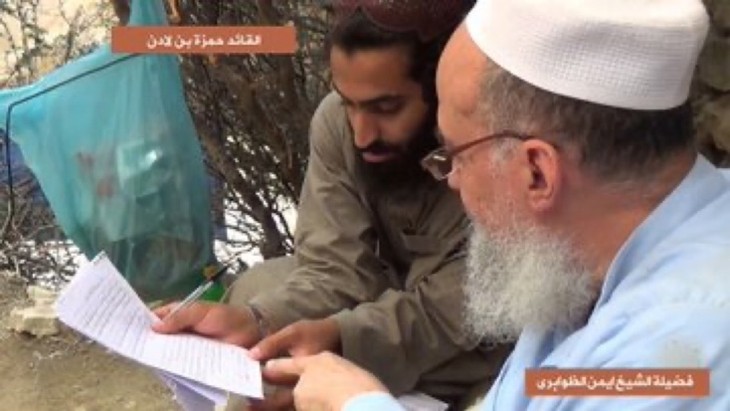
In June 2026, Al-Qaeda released previously unseen imagery of Hamza bin Laden alongside Ayman al-Zawahiri, a key architect of the September 11th attacks. Accompanying the footage was a nasheed featuring a poetic elegy for Osama bin Laden written by Abu Hafs al-Mauritani, Al-Qaeda’s former mufti and member of its Shura Council. The release immediately generated debate, regarding both the date of the footage and what Al-Qaeda intended to communicate by making it public. Many observers have focused on the imagery itself. The more analytically significant question may be why Al-Qaeda chose to release it now.
For most of the post-9/11 era, Al-Qaeda’s senior leadership survived through concealment. Visibility increased the risk of disruption, capture, or death. The organization adapted accordingly, limiting communications, restricting movement, and minimizing unnecessary exposure. The release of previously unseen leadership imagery therefore warrants attention—not simply because it may provide insight into Hamza bin Laden’s status, but because it may begin to reveal how Al-Qaeda currently perceives its operating environment.
Historically, Al-Qaeda sought visibility not when it was weakest, but when it believed conditions were moving in its favor. Public declarations, leadership appearances, recruitment campaigns, propaganda initiatives, and increasingly brazen behavior have repeatedly emerged during periods in which the organization perceived opportunity rather than danger. Confidence alone does not reveal operational intent, nor does it predict a specific attack. History suggests, however, that changes in organizational confidence often precede broader strategic shifts. Understanding how terrorist organizations behave when they believe conditions are improving can provide valuable context for warning analysis long before a specific plot comes into view.
Before 9/11, the Signals Were Visible
One of the enduring lessons of September 11 is that strategic surprise is not always the product of missing information. Often, the relevant information exists but, when viewed in isolation, is not fully understood.
Years before the attacks, Osama bin Laden publicly declared war against the United States and later issued the 1998 World Islamic Front fatwa which outlined Al-Qaeda’s objectives and intentions. Training camps operated openly in Afghanistan. Journalists visited those camps. Recruits traveled to them. Senior leaders increasingly appeared in public messaging and media productions. Al-Qaeda was not behaving like an organization focused exclusively on concealment. It was actively cultivating visibility and influence.
At the same time, Al-Qaeda demonstrated growing operational capability. The 1998 East Africa embassy bombings and the 2000 attack against the USS Cole were not isolated incidents but part of an observable progression in Al-Qaeda’s operational ambition. Public threats continued, recruitment expanded, and Al-Qaeda’s visibility increased.
Viewed individually, many of these developments appeared manageable. A public statement, a training camp, a bombing, a threat. None seemed decisive on its own. Viewed together, however, they reflected an organization that increasingly believed it could challenge the United States directly. The warning signs were visible. The challenge was recognizing that they were all pointing in the same direction: a broader strategic shift with the West in Al-Qaeda’s crosshairs.
Confidence Often Precedes Expansion
A similar dynamic emerged during the rise of the Islamic State in Iraq and Syria. In 2014, ISIS seized Mosul and made it the center of its so-called caliphate in Iraq. But by the time Mosul fell, indicators had been accumulating for years. The organization had rebuilt networks, expanded into Syria, conducted its “Breaking the Walls” prison break campaign, refined its propaganda apparatus, and established increasingly durable safe havens.
Perhaps most importantly, ISIS stopped behaving primarily like a clandestine terrorist movement and increasingly behaved like an organization preparing to govern territory. Its public posture reflected confidence in its trajectory.
This pattern of behavior is not unique to Al-Qaeda or ISIS. Organizations under severe pressure generally prioritize survival. They conceal leadership, restrict communications, and avoid unnecessary exposure. Organizations that believe conditions are improving often behave differently. They expand recruitment, showcase leadership, accept greater visibility, and become more willing to take risks. Changes in organizational confidence can therefore provide valuable insight into how a movement views its strategic environment.
Afghanistan and the Return of Strategic Depth
The Taliban’s return to power in Afghanistan in August 2021 has fundamentally altered the operating environment for extremist organizations, a trend repeatedly documented by the United Nations Analytical Support and Sanctions Monitoring Team. For Al-Qaeda, the collapse of the Afghan government provided something the movement had lacked for much of the post-9/11 period: strategic depth.
The organization is once again benefitting from safe haven, training infrastructure, greater freedom of movement, and reduced external pressure. Whether these developments have translated into specific operational capabilities remains a subject of debate. What is less debatable is that such conditions affect how organizations perceive their opportunities and constraints.
Since 2021, senior terrorist figures, including Saif al-Adel, Al-Qaeda’s key operational strategist, have publicly encouraged migration to Afghanistan. Relationships once denied have become increasingly difficult to conceal. Training activity has expanded, propaganda has grown more confident, and previously unseen leadership imagery has entered the public domain. The recent Hamza bin Laden footage, which many observers assess was recorded years after 2009, fits within this broader pattern. None of these developments independently proves operational intent. Taken together, however, they suggest elements of the Islamic fundamentalist movement perceive today’s environment differently than they did during the height of United States counterterrorism pressure.
That distinction matters. Terrorist organizations rarely become more visible when they believe they are losing. Historically, increased visibility, more confident messaging, and greater public activity have often appeared during periods when leaders believed conditions were moving in their favor. Al-Qaeda may believe this is the case once more.
The Limits of Confidence Indicators
But confidence indicators are not a crystal ball.
Organizations sometimes project strength precisely because they are weak. Propaganda can exaggerate capabilities, conceal internal fractures, attract recruits, reassure supporters, or mask organizational decline. Terrorist groups have long used media operations to create perceptions that exceed reality.
For this reason, confidence indicators should never be viewed in isolation. A propaganda release, leadership appearance, or public statement is rarely meaningful on its own. Their value emerges when they are considered alongside other observable indicators, including safe-haven development, training activity, recruitment trends, alliance formation, operational tempo, and shifts in organizational behavior.
The argument here is not that confidence presages attacks. The argument is that confidence can reveal how an organization views its own circumstances and whether it believes those circumstances are improving.
Why Confidence Matters for Warning Analysis and Implications for Practitioners
Counterterrorism analysis traditionally focuses on two variables: capability and intent. Confidence deserves consideration as a third and should not be dismissed as propaganda.
Confidence indicators should not be treated as wholly predictive. But one of the most persistent lessons from intelligence work is that major warning failures rarely occur because there was no information. More often, they occur because there was too much information. Analysts are forced to separate signals from noise in real time, often without the benefit of knowing which details will matter later. Almost every major intelligence failure appears obvious in hindsight because hindsight gets to see the pattern in full.
The challenge facing practitioners is recognizing when individual pieces of information stop being isolated events and start becoming indicators of broader change. Confidence can be the missing, complementary piece that brings order to the chaos of varying capability and intent. These indicators can help practitioners recognize those changes earlier and place seemingly isolated developments into a broader strategic context.
Conclusion
Prior to 9/11, Al-Qaeda’s declarations, training infrastructure, operational tempo, and increasingly public behavior were visible long before the attacks occurred. By the time ISIS seized Mosul, Iraq, indicators had pointed for years toward a movement gaining strength, confidence, and momentum
Today, Al-Qaeda once again appears increasingly comfortable with visibility at a time when parts of the movement benefit from reduced pressure, expanded safe haven, and renewed strategic depth. No single confidence indicator proves operational intent. The significance may lie in the accumulation of indicators and the pattern they form together.
The challenge for analysts is not simply collecting information. It is recognizing when pieces of information begin to tell a story when viewed together. If confidence has repeatedly served as a precursor to strategic change in the past, then changes in Al-Qaeda’s public behavior deserve attention today—not because they tell us exactly what comes next, but because they may be signaling that the organization believes the next phase has already begun.
In an era saturated with information, the greatest danger may not be the absence of warning. The warning signs that matter most are rarely the loudest—often they are the signals that quietly accumulate until they form a pattern that can no longer be ignored.
Author’s Note: Analysis regarding the Hamza bin Laden imagery is based on the author’s review of primary-source Al-Qaeda media released by As-Sahab in June 2026. A screenshot of Hamza (pictured left) from the video follows: