





Is China a Peaked Power? And So What If It Is?


Previous U.S. foreign, security, and defense policies toward the People’s Republic of China (PRC) and the Chinese Communist Party (CCP) have failed. Contrary to the decades-long hopes and expectations of Western policymakers, the PRC’s rapid economic development via quasi-capitalistic mechanisms did not foster internal democratic norms. While the “opening up” dictates of the post-Deng Xiaoping era brought spectacular economic growth, they failed to transform the CCP into a responsible stakeholder in the U.S.-led international community. Unrealistic expectations that the PRC would cooperate as a stable security partner in the Indo-Pacific never materialized; in fact, the opposite occurred. The CCP has emerged as a revisionist adversary, systematically challenging U.S. and allied security sector dominance not only in the Indo-Pacific but globally.
For more than three decades, China was viewed as an irreversibly rising power. Many international relations (IR) experts, most notably Harvard’s Graham T. Allison, popularized this dynamic as the “Thucydides Trap“—analogizing modern tensions to ancient Sparta’s destabilizing reaction to a rising Athens. In this framework, catastrophic conflict is seen as the likely result when a rising power threatens to displace an established hegemon.
Recently, however, a critical cohort of IR experts and practitioners have challenged Allison’s model, arguing that the PRC is no longer a rising power, but rather a peaked power whose growth relative to the United States has hit its ceiling. In Danger Zone: The Coming Conflict with China, Michael Beckley and Hal Brands demonstrate that the PRC is fundamentally stalling, projecting that it will fail to achieve its stated goal of global military dominance by 2049. They base this stark reassessment on a compounding matrix of internal and external structural failures. Internally, China faces irreversible demographic contraction (the third-order consequences of the One-Child Policy), massive economic distortions driven by real estate insolvency, and populace instability. Crucially, the regime faces a systemic failure of its agricultural sector to reliably feed its own population; intensive agricultural over-extraction has resulted in the severe depletion and degradation of deep aquifers across the North China Plain, triggering acute water scarcity and negative harvest quotas that threaten long-term domestic grain self-sufficiency.
Externally, Beijing faces a wave of defaults across its flagship Belt and Road Initiative (BRI), with recent analysis demonstrating that the overextended program is fracturing as the share of its overseas lending portfolio directed to sovereign borrowers in steep financial distress has surged past 60 percent, forcing Beijing out of infrastructure building and into the costly business of multi-billion dollar emergency rescue bailouts. This structural decay is amplified by deep geopolitical isolation—a direct consequence of its aggressive “Wolf Warrior” diplomacy, predatory trade practices, and overt complicity in Russia’s war against Ukraine.
So, What If China Has Peaked?
As their window of opportunity closes, Xi Jinping and the Politburo face an acute “use it or lose it” dilemma. Recognizing that their long-term prospects of peacefully overtaking the United States are fading, the CCP is highly incentivized to accelerate its timelines and take drastic risks while its relative power is at its apex. This makes a peaked China far more volatile than a rising one.
Crucially, this volatility is compounded by Washington’s current strategic overextension. As the United States expends massive amounts of political energy, financial capital, and critical munitions outlays on the escalating conflict with Iran, Beijing smells a tactical opening. Independent analysis indicates that the multi-week combat campaign in the Middle East has profoundly drained U.S. stockpiles of sophisticated precision-guided weaponry, exhausting long-range capabilities and interceptors like the Terminal High Altitude Area Defense (THAAD) and Patriot systems—essential assets that would take years to restore to prewar baseline levels. For a peaked power tracking a closing window, a heavily distracted hegemon whose weapons magazines are thinned and whose operational focus is tied down in the Middle East creates a highly permissive strategic environment.
While the CCP’s pervasive use of gray-zone warfare—operating systematically just below the threshold of open armed conflict—has been widely chronicled, the immediate danger is that Beijing will exploit this Western overextension to launch a preventative strike. Whether executing a rapid territorial grab in Southeast Asia or launching a localized cross-strait campaign to forcibly annex Taiwan, the temptation for a peaking China to strike while the U.S. is bogged down elsewhere introduces a perilous potential to ignite a direct, major conventional war between China and the United States.
The Current State of Play
This current phase of rapid military modernization must be understood through a precise historical lens. Writing for the U.S. Air Force Institute for National Security Studies (INSS) in 1999, this author analyzed the structural, budgetary, and technological constraints of the Chinese military in a monograph titled The Chinese People’s Liberation Army: ‘Short Arms and Slow Legs’. The core thesis at the time concluded that despite aggressive rhetoric and rising budgets, severe systemic deficiencies in systems integration, joint-force synergy, and power projection would prevent the PLA from emerging as a genuine global peer competitor to the United States until at least the year 2020. That assessment held precisely true for two decades; however, having spent the intervening years systematically lengthening those arms and accelerating those legs, the PLA has finally closed the gap in several critical asymmetric capabilities.
Today, the United States is locked in a multi-domain gray-zone competition with the CCP—and Washington is losing. As detailed in this author’s analysis, “China is Laughing at U.S. Irregular Warfare Strategy,” the U.S. is actively losing ground within the irregular domain due to a flawed, reactive theater framework. This national security vulnerability is severely exacerbated by a critical, generational hollowing out of American deep defense expertise. As noted by the South China Morning Post’s assessment on fading U.S. expertise, a severe pipeline crisis, collapsing student exchange rates, and a lack of direct immersion opportunities have triggered a dangerous generational rupture, leaving Washington dangerously short of specialists who possess true experiential knowledge of the Chinese strategic ecosystem. Current and future U.S. administrations cannot afford to waste time in defensive debates; the U.S. must execute a proactive counter-strategy, lest the CCP misjudge American commitment and mistake strategic inertia for abdication.
Rationale for a Major U.S. Counter-Offensive
The United States is under active ideological and structural attack. The overarching objective of the CCP’s gray-zone strategy is to systematically discredit the U.S. international standing while offering an authoritarian alternative to democratic governance. According to Dr. Isaiah “Ike” Wilson III, former president of the Joint Special Operations University, China executes this campaign through at least six distinct vectors of gray-zone warfare, leveraging what Dr. Wilson defines as the foundational architecture of gray-zone paradigms (See Figure 1) [1]:
- Narrative Warfare: The malicious deployment of propaganda, misinformation, and disinformation designed to erode U.S. credibility. This includes Beijing’s constant promotion of its state-controlled “Whole-Process People’s Democracy” [2], alongside weaponized conspiracy theories alleging that COVID-19 originated in U.S. military laboratories like Fort Detrick, Maryland.
- Civilian Interventions: The subversion of open societies via seemingly benign civilian channels. Key examples include the strategic deployment of Confucius Institutes across Western university campuses and the targeted acceleration of PRC entities purchasing critical agricultural land in the American Midwest.
- Coercive Signaling: High-visibility military posturing, feints, and spatial encroachments designed to alter the status quo without triggering an immediate kinetic response. This is clearly demonstrated by the intensifying People’s Liberation Army Air Force (PLAAF) incursions into Taiwan’s Air Defense Identification Zone (ADIZ) and the extensive militarization of reclaimed outposts in the South China Sea.
- Denial of Prosperity Operations: The manipulation of capital, energy markets, supply chains, and trade policies to undermine U.S. economic dominance. The Belt and Road Initiative functions as a global manifestation of this vector, pairing predatory debt-trap diplomacy with systemic market dumping—exporting artificially subsidized goods to destabilize foreign manufacturing bases and drive domestic inflation.
- Active Infiltration: Sophisticated cyber intrusions, intelligence operations, and information campaigns designed to breach sovereignty and compromise critical networks. While societal concerns regarding platforms like TikTok reflect this vulnerability, the more acute threat is exemplified by state-sponsored cyber actors like Volt Typhoon, which actively compromise American critical infrastructure—including power grids, water utilities, and communication networks—to establish operational access for future sabotage.
- Proxy and Surrogate Disruption: The classic irregular utilization of indirect forces to project power, divert Western attention, and undermine regional stability. Operationally, Beijing leverages this vector by maintaining a posture of strategic enablement—quietly underwriting and supply-chaining adversarial regimes like Tehran. By keeping the United States perennially back-footed and draining its sophisticated precision munitions caches in secondary theaters like the Middle East, the CCP successfully degrades U.S. readiness for an Indo-Pacific contingency without firing a single shot.
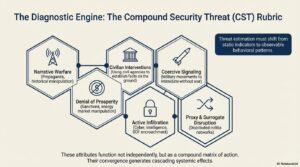
Figure 1: The Diagnostic Engine: The Compound Security Threat (CST) Rubric
Individually, each of these six vectors poses a severe national security challenge. However, the true threat lies in their compounding effects, as the CCP blends all six into a mutually supporting, worldwide anti-U.S. campaign [3]. Neutralizing this compound threat requires the United States to abandon decades of reactive, defensive posterization and immediately execute a synchronized, whole-of-government counter-gray-zone offensive.
Recommended Actions
To effectively halt the PRC’s irregular operations, the United States must transition to an assertive posture built on three foundational pillars:
- Master Strategic Geography
-
- Unambiguous Deterrence in the First Island Chain: The U.S. must explicitly state its intent to militarily defend Taiwan. Taiwan is the vital operational anchor of the First Island Chain; its capitulation would allow the PLA to break out into the deep blue water of the Pacific, permanently fracturing U.S. global credibility. The U.S. must lead an alliance architecture—binding Japan, South Korea, and Australia—to co-sign these security guarantees.
- Fortify the Second Island Chain: The U.S. must immediately expand military infrastructure funding and permanent presence within the Freely Associated States, specifically the Federated States of Micronesia, the Marshall Islands, and Palau.
- Counter South China Sea Encroachment: Washington must aggressively support the asymmetric maritime capabilities of the Philippines and Vietnam, actively assisting Manila in the resupply and defense of its recognized sovereign territorial assets.
- Secure Global Chokepoints: The U.S. must secure binding structural guarantees from Panama to ensure the Panama Canal cannot be leveraged or co-opted for PRC military logistics.
- Protect the Northern Flank: In coordination with Canada and USNORTHCOM, the U.S. must expand its military presence, radar architectures, and cold-weather combat power projection across Greenland and the Arctic circle to counter expanding Sino-Russian polar ambitions.
- Decode Strategic Culture
-
- Operate via Realism: U.S. diplomats and strategists must permanently discard the assumption that China will act as a benevolent global stakeholder. The PRC acts exclusively in its own perceived national interest; cooperation will only occur when those interests temporarily align with Washington’s.
- Anticipate Deception: For centuries, Chinese statecraft has been deeply rooted in strategic deception and political warfare. This institutional playbook is hardcoded and will not be altered by Western diplomatic overtures.
- Leverage Weaponized Interdependence (The U.S. Dollar)
-
- Exploit Financial Vulnerabilities: The Chinese financial architecture remains profoundly reliant on the U.S. dollar, and its largest state-owned enterprises are deeply exposed to the Western financial system. Because the vast majority of BRI loans and global trade invoices are settled in greenbacks rather than the Renminbi, strategic interdiction of dollar liquidity remains Washington’s most potent asymmetric lever to destabilize the PRC’s economic baseline.
Conclusion
The United States is not facing the prospect of a future conflict; it is already at war with the People’s Republic of China within the irregular gray zone. The conceptual foundation of Beijing’s operational design was articulated by Sun Tzu 2,500 years ago: “To win one hundred victories in one hundred battles is not the acme of skill. To subdue the enemy without fighting is the acme of skill.” China has mastered this long game. To fight back and win, the United States must immediately marshal the full spectrum of its national power—integrating its military, diplomatic, industrial, agricultural, and academic sectors into a cohesive offensive capable of turning the CCP’s own gray-zone tactics against them.
Endnotes
[1] For the foundational critique of conventional strategic framing regarding gray-zone challenges, see Isaiah Wilson III & Scott Smitson, “Solving America’s Gray-Zone Puzzle,” Parameters 46, no. 4 (2016).
[2] See Recorded Future Insikt Group, “China’s Narrative War on Democracy,” 2023.
[3] For an extensive analysis of the compounding mechanics of great-power friction, see Isaiah Wilson III & Scott A. Smitson, “The Compound Security Dilemma: Threats at the Nexus of War and Peace,” Parameters 50, no. 2 (2020).
[4] Mark Cancian and Chris Park, “Rebuilding U.S. Missile Inventory: A Multiyear Project,” Center for Strategic and International Studies (CSIS), May 2026.
[5] “New Study Warns U.S. Suffering Extreme Depletion of Missile Stockpiles Due to Iran War,” Military Watch Magazine, March 2026.
[6] For a comprehensive data breakdown of sovereign defaults and restructuring trends within the Belt and Road ecosystem, see the Stanford Center on China’s Economy and Institutions (SCCEI) Research Brief, “Debt Distress on China’s BRI: Who Gets Bailed Out and Why?” (2026).
[7] Meredith Chen, “Fewer opportunities, less passion, no clue? How the US’ China expertise is fading,” South China Morning Post, July 19, 2026.


