Taipei: The Morning After Annexation
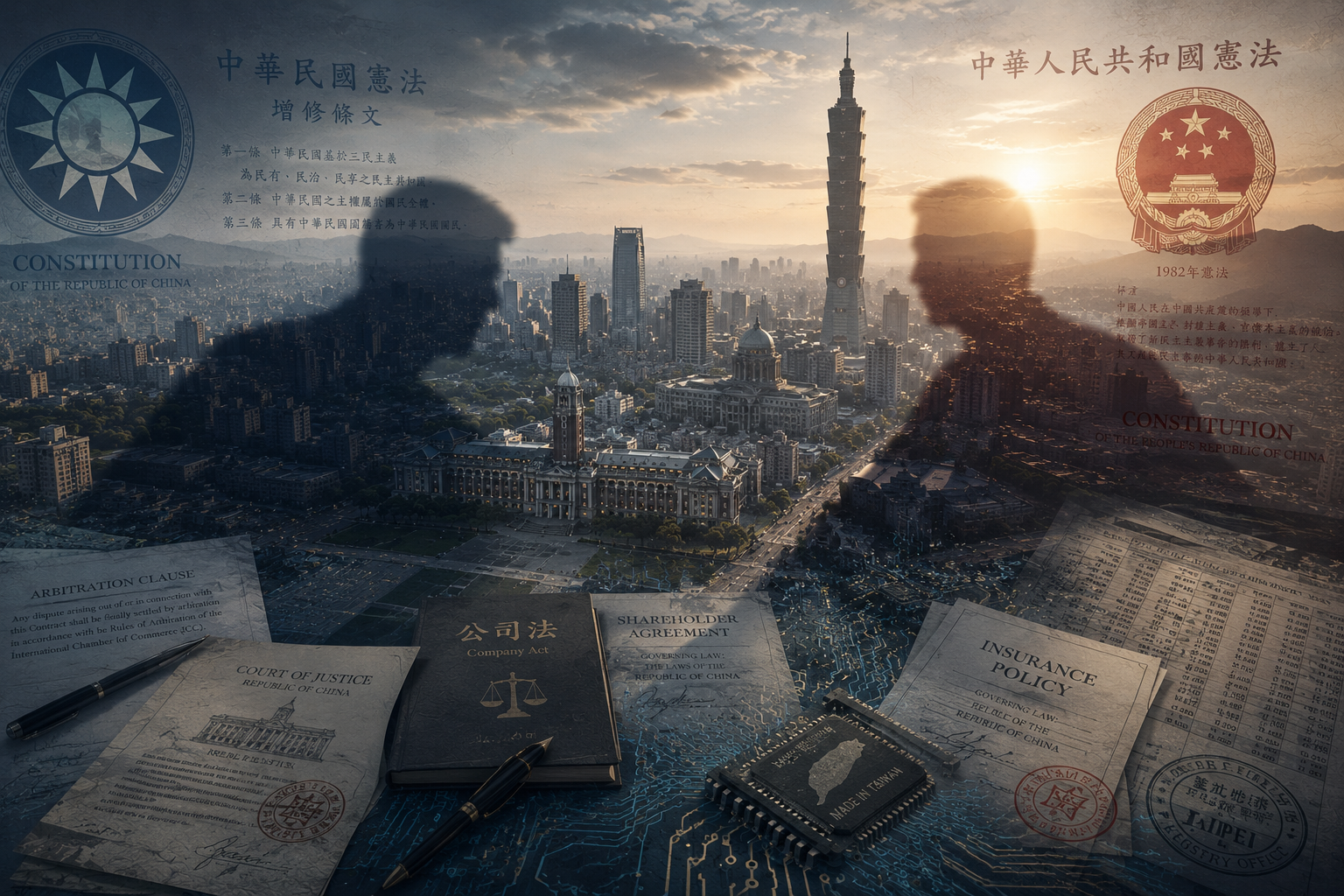

The Baseline and the Questions It Leaves Open
A recent War on the Rocks article by Jude Blanchette and Richard McGregor captures what Chinese internal scholarship has quietly acknowledged for some time: Governing Taiwan after forcible seizure would be far harder than anything Beijing faced in Tibet, Xinjiang, or Hong Kong.
Post-unification administration is now seen in PRC policy circles as a major regime security challenge that would require decades of political control and efforts to reshape Taiwan’s institutions and identity.
That diagnosis is persuasive. Yet the analysis stops short of asking what happens to Taiwan’s legal and commercial order in the hours after annexation is declared or whether Beijing has already settled on a route that renders the question moot.
While China’s Occupation Playbook for Taiwan was under discussion in Small Wars Journal (SWJ), events in Taiwan were proving its central thesis in real time. After months of deadlock, the KMT-TPP majority passed a defense budget roughly 37 percent below the administration’s request, stripping funding for key domestic procurement programs, including drones essential to the porcupine strategy. The government proposed restoring the cuts; legislative balance did not budge.
Meanwhile, KMT chairwoman Cheng Li-wun met Xi Jinping in Beijing at the first CPC-KMT leadership summit in a decade. Returning from his own Beijing summit, Donald Trump called Taiwan’s proposed US $14 billion arms package a negotiating chip. Senior US officials offered conflicting explanations for the resulting pause: munitions conservation for the Iran conflict or broader US-China recalibration, and the very gap between those accounts carried its own message.
What happens to Taiwan’s legal and commercial order the moment annexation is declared, before occupation authorities can establish control? Has Beijing already found a political route that sidesteps that rupture?
Taiwan possesses no legal counterpart to its porcupine strategy. Almost no planning has focused on ensuring that annexation would trigger overlapping legal obligations across private actors and foreign jurisdictions, making rapid absorption far more costly.
The Missing Chapter
Blanchette and McGregor drew on Chinese-language sources to show Beijing’s shift from accommodation toward outright absorption. Identity divergence is no longer something to defer until after unification; it is now an obstacle to be confronted head-on through force, re-education, and political overhaul.
Companion studies in SWJ flesh out the operational side. Jan Gleiman’s 2026 essay offers a different countermeasure: arbitration clauses, fiduciary obligations, and commercial arrangements spread across private actors and multiple foreign jurisdictions. These can generate de facto recognition of the Republic of China (ROC) legal authority by producing in practice what formal diplomatic recognition achieves in principle, without forcing governments into explicit sovereignty declarations.
A common thread runs through these works: occupation begins before any invasion. In Tibet, Xinjiang, and Hong Kong, Beijing shaped legal, institutional, and political conditions long before applying force.
A coercive political settlement that transfers authority without a military campaign is not a milder form of occupation; it is occupation in its most efficient form. It sidesteps what one IWC study identifies as the persistent liability of post-seizure scenarios: the resistance that contested invasion provokes and that negotiated transfer largely avoids, at least initially.
Beijing has handled political opposition and identity conflict before, but it has never inherited a legal and commercial order on which major segments of the global semiconductor supply chain depend. The ROC constitution underpins a US$920 billion economy. Corporate charters, banking relationships, insurance contracts, intellectual property protections, and international commercial agreements all rest on it.
TSMC’s 2025 SEC filing makes the stakes concrete: The company ties its legal standing and intellectual property (IP) rights to ROC law and flags how military conflict or unilateral political-status changes could disrupt operations, erode asset values, and unravel the contractual web holding its global supply network together.
Declare annexation, and that foundation enters immediate dispute. Regulators, insurers, banks, and counterparties do not wait for political resolution before reassessing risk. Uncertainty over governing authority hits contracts, property rights, and corporate obligations at once, with no instructions required. Military administrators can seize ports, airports, and ministries. They have no ready mechanism for resolving the jurisdictional question on which commercial continuity depends.
Blanchette and McGregor note that Beijing’s interest in the Crimea model: securing territory quickly before resistance can organize. Crimea’s economy was not central to global supply chains, and its legal order mattered little beyond its borders. Taiwan is different. Speed might shorten the period of uncertainty, but it would not solve the jurisdictional problem.
The Succession Problem
The standard objection is that occupying powers improvise, businesses adapt quickly, and Beijing would surely preserve much of Taiwan’s institutional machinery during transition. Hong Kong and Crimea appear to support this view. Look closer, however, and both cases reveal the limits of the analogy.
Hong Kong had the pre-negotiated Basic Law, which provided banks, insurers, and foreign parties a workable basis for continuity. Crimea’s economy was not deeply integrated into global supply chains in ways that made its legal status consequential internationally. Taiwan enjoys neither safeguard. Its legal order sustains active, daily commercial relationships on which firms, insurers, and financial institutions across multiple jurisdictions rely. No occupying power has ever absorbed this degree of load-bearing integration alongside Taiwan’s acute political and identity challenges.
The question military administration cannot answer is the one commercial systems cannot defer: Under what legal authority do contracts execute, property transfer, and corporate obligations continue after annexation?
Individual workarounds are possible, but systemic elements involving credit extension, insurance underwriting, technology licensing, and procurement agreements rest on shared assumptions about enforceability that no single actor can rebuild alone. The pressure remains structural even when individual responses appear gradual.
Beijing’s options are all difficult. Rapidly dismantling the ROC legal order would destroy the institutional expertise and commercial confidence needed to keep Taiwan running. Leaving it largely intact would preserve courts, regulators, and registries that outside actors could still use to challenge PRC authority. A hybrid approach might ease the transition, but it would extend a period of contested legal authority that any future administration would eventually have to resolve.
The Xiamen think tank paper highlighted by Blanchette and McGregor, which proposed creating a shadow Taiwan government on the mainland in advance, reflected one attempt to address this problem. It disappeared from Chinese internet platforms soon after publication. Even within Beijing’s own planning, the question of legal succession after annexation appears unresolved.
The Xi-KMT channel points to the real alternative. It showed that Taiwan’s political direction can be influenced without triggering the legal rupture annexation would create. The arms pause matters less for its precise rationale than for the precedent it set: US arms decisions affecting Taiwan are now openly linked to other bilateral priorities. Security commitments can shift faster than the dense web of commercial and legal obligations surrounding Taiwan’s economy.
A gradual transfer of political authority can advance incrementally, shifting balances before legal contradictions become unavoidable. Governments yield to diplomatic pressure one by one; the distributed network of fiduciary duties, insurance obligations, and arbitration clauses across private actors in dozens of jurisdictions does not.
The greater risk for Taiwan is, therefore, an absorption process that moves slowly enough to resemble normal politics, one in which, by the time the succession question arrives in full force, the institutions capable of contesting it have already been hollowed out.
Beijing’s Advantages
Any realistic assessment must acknowledge where the PRC holds real edges. Resistance planning that ignores them is wishful thinking.
Legal coercion may be Beijing’s clearest advantage. Post-National Security Law Hong Kong shows how courts, prosecutors, and security laws can be used to discourage dissent through selective fear. Blanchette and McGregor estimate that roughly 6.5 million DPP-identifying voters could face direct jeopardy, while bureaucrats, journalists, and civil society figures would come under pressure to demonstrate loyalty.
Yet Beijing would still need much of the ROC’s existing institutions to keep Taiwan functioning. As long as those institutions remained in place, they would also preserve an alternative source of legal authority.
Surveillance capacity is formidable but not unlimited. Years of civic mobilization have made it harder to turn monitoring into lasting political obedience. Initiatives such as Kuma Academy have strengthened civil defense awareness and resilience against disinformation, particularly among younger and urban Taiwanese.
Decades of democratic practice have also embedded a distinct Taiwanese identity in electoral behavior, political institutions, and civic life, making society more resistant to top-down re-education than Beijing’s internal assessments may assume.
Political fragmentation may be Beijing’s most immediate advantage. It does not need to manufacture divisions in Taiwan; it can work with those that already exist. The April 2026 Cheng Li-wun summit gave this approach clearer form.
Brookings described it as a formalized “alternative approach” developed through meetings in Nanjing, Shanghai, and Beijing, with Taiwan’s November 2026 local elections as an early test. Taiwan Insight noted that Cheng’s program offers few concrete policy proposals, relying instead on appeals to identity and shared civilization. That emphasis is not incidental. It reflects the same struggle over identity that Blanchette and McGregor identify as Beijing’s long-term battlefield.
Weeks later, Taiwan’s defense budget cuts concentrated remaining funds on US arms purchases, deepening dependence on a relationship Beijing is actively shaping. The DPP nominated Puma Shen to challenge KMT incumbent Chiang Wan-an in Taipei’s mayoral race, placing civil defense and democratic identity at the center of the campaign. Whether Shen’s candidacy broadens support for deterrence or deepens partisan divisions over security policy could shape the next five months.
None of these advantages is automatic. Occupation becomes stable only when the governing authority no longer feels like an occupation. In Taiwan, where democratic identity is embedded in institutions as well as culture, achieving that would require years, if not decades, of effort. That helps explain why gradual political accommodation may appeal more to Beijing than attempts to manufacture popular consent directly.
Winning Before Occupation
The events of April–May 2026 point to four urgent priorities. The first two are active political contests; the latter two demand structural investment ahead of a crisis. Military readiness underpins them all.
Countering political fragmentation is the most immediate task because Beijing’s preferred route may require no occupation at all. The Cheng-Xi summit established an opposition channel with a recognizable leadership structure, political program, and electoral timetable. The defense budget cuts tied Taiwan’s military supply more closely to US approvals, while the subsequent arms pause demonstrated how that leverage could be exercised. Together, these developments suggest a pathway for shaping Taiwan’s strategic trajectory without deploying troops.
Taiwan therefore needs mobilization mechanisms that can function despite legislative gridlock. Civil defense planning, reserve reform, and emergency procurement authorities should be designed to withstand partisan stalemate rather than assume political consensus. Allies, meanwhile, should treat the November 2026 local elections as a strategic event rather than a distant domestic sideshow.
Legal pre-positioning is the most neglected priority and a practical way to reinforce democratic institutions alongside military capabilities. Trade agreements, arbitration clauses, and commercial contracts should preserve ROC jurisdiction wherever possible. Gleiman’s insight is straightforward: A network of private obligations can achieve many of the effects of diplomatic recognition without requiring governments to make formal declarations that political pressure could later reverse.
As the arms pause showed, political commitments can shift quickly. Commercial and legal arrangements are much harder to unwind, and that durability is their strength. Taiwanese firms, regulators, and international partners should begin identifying which contracts, licensing agreements, and dispute-resolution mechanisms can be structured now to preserve legal continuity under conditions of political uncertainty.
Institutional continuity serves the same purpose in law that the porcupine strategy serves in defense. The aim is not to make Taiwan ungovernable, but to prevent control of the island from becoming immediate administrative control. Constitutional courts, financial regulators, and corporate registries should have external or distributed operating capacity if domestic institutions are disrupted. European governments-in-exile maintained recognized authority over financial and commercial affairs in this way during World War II. Taiwan has barely started building these safeguards. Scenario planning exercises involving government agencies, major firms, and overseas partners could identify which functions must continue uninterrupted and which legal authorities require backup mechanisms outside the island.
Redundancy rather than evacuation rounds out the set. Networks linking Taiwanese engineers, lawyers, financial professionals, and technology firms across the United States, Japan, and Europe can preserve critical capabilities beyond Beijing’s reach without emptying the island of talent.
Taiwan-made drone exports to Europe grew from roughly 2,500 units in 2024 to more than 107,000 in 2025, demonstrating how resilience can emerge through dispersed commercial networks. The same principle should guide planning in other sectors central to Taiwan’s security and prosperity, including semiconductors, finance, and legal services. The question is whether Taiwan builds that redundancy before a crisis or is forced to improvise once it is underway.
The Unwritten Chapter
Blanchette and McGregor conclude that Beijing’s hardest problem is not seizing Taiwan but governing it. The difficulty may run deeper still: Beijing is working to avoid ever having to govern Taiwan in the conventional sense.
Taiwan’s institutions support one of the world’s most critical technology economies and evolved entirely outside PRC control. Annexation forces an uncomfortable choice: leave that order largely intact, where it will continue generating competing legal authority, or dismantle it and absorb the resulting damage to commercial confidence and administrative capacity. The short-lived Xiamen shadow-government proposal reflected how unresolved this dilemma remains in Beijing’s planning.
Developments in 2026 have illuminated a third path. The Cheng-Xi summit strengthened a political channel operating within Taiwan’s democratic system. Legislative choices deepened reliance on the US relationship Beijing seeks to influence. The arms pause eroded long-standing norms. None required overt coordination, yet they reinforced one another.
Taiwan’s fundamental question is therefore not only whether it can resist military seizure or outlast occupation. It is whether its legal and institutional order can remain intact and internationally legible long enough to prevent absorption from appearing as a reasonable political outcome.
The hardest part of Beijing’s strategy may not be taking control. It may be what comes after, when a new legal order must be defined for the morning after victory.