Ebola and the Cost of Retreating Global Health Capacity | CFR

The Bundibugyo strain outbreak in eastern DRC — now the third-largest on record — is a stress test for global health architecture at a moment of retreating capacity.
This Discourse is inspired by a Council on Foreign Relations report by Roxy Ekberg, Mariel Ferragamo, and Diana Roy, titled “The Ebola Outbreak in the DRC Is Spreading. Here’s What to Know.” We’ve summarized its key points and laid out our own thoughts below.
Detection Gap, Strategic Risk
The virus likely circulated for three months before detection, a delay experts call almost unfathomable given prior investment in surveillance systems. That gap matters because Ebola containment depends entirely on early detection and contact tracing, and with tracing rates hovering near 60% against a 95% target, the window for uncontrolled spread stays open.
Conflict as Virus Multiplier
Nearly seven million internally displaced people, active armed group movements, and porous, unreported border crossings mean the outbreak is an ungoverned-space problem. Disease control in a conflict zone is inherently harder to model and harder to contain.
Transatlantic Exposure
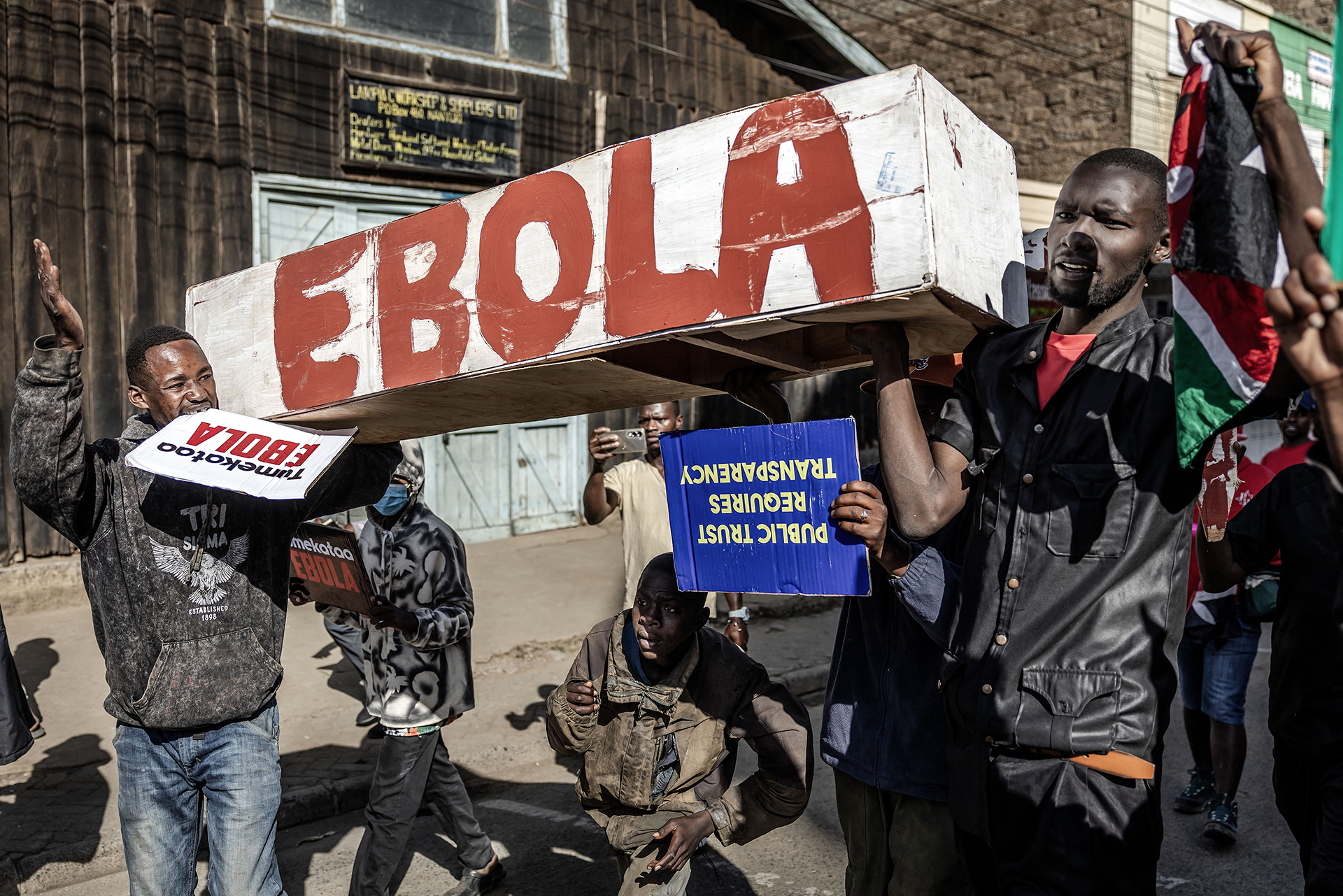
France’s confirmed case and two American aid workers infected (both evacuated to Germany rather than home) show the outbreak already has transatlantic legs, even at “low” assessed global risk. Proposed U.S. quarantine facilities in Kenya have triggered local backlash, complicating both optics and operations for Western partners.
The Aid Retrenchment Problem
The dismantling of USAID and a diminished CDC international footprint are factors slowing this response. A $518 million WHO/Africa CDC response plan is trying to fill the void left by declining global humanitarian funding. Washington is looking for $1.4 billion for the response while simultaneously planning further global health cuts. Delays are having a negative effect; lessons from 2014, once thought hardwired into the post-2014 global response, are being forgotten.
Bottom Line
This outbreak is a case study in what happens when disease surveillance, humanitarian infrastructure, and multilateral trust erode all at the same time. The cost shows up first in African provinces, but rarely stays there. Expect more cases and fatalities before a decline.
While you’re here…
For a perspective on the soft-power and institutional impacts of the Trump administration’s cutting of USAID, read Lt. Col. (Ret.) Seth Middleton’s 2025 article “Non-Military Foreign Assistance is Now DoD’s Problem.” In the DRC today, we’re seeing the consequences in real time.